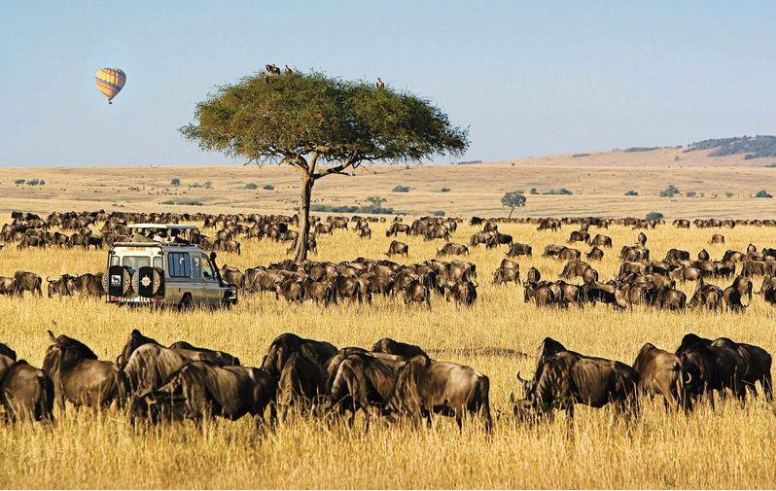
Budget Ruaha Safari Adventure
Explore Ruaha National Park’s baobab country on a guided safari built around your dates, group size and budget. Spend your game drives…
Read articleArusha City - Tanzania
Safari & Travel Tips
October 12, 2026 · 4 min read
Ruaha National Park offers a rewarding Tanzania safari experience, with baobab landscapes, river valleys, and wildlife viewing across a vast wilderness. For travelers watching their budget, the main challenge is balancing accommodation, transport, and enough time to explore the park.
An affordable Ruaha safari cost depends on your starting point, travel dates, group size, and accommodation choice. Camping and simple lodges can reduce expenses, while sharing a vehicle spreads the cost of the guide, fuel, and transport.
This guide explains how to build a realistic budget and compare safari quotations.
For preliminary planning, allow approximately USD 200–400 per person per day for a road-based safari using camping or simple accommodation and sharing vehicle costs. This is an indicative planning range, rather than a confirmed Kilipath African Safaris quotation. Published budget estimates vary considerably with the route and package inclusions.
Using that daily allowance gives these illustrative budgets:
| Safari duration | Estimated cost per person |
|---|---|
| 3 days | USD 600–1,200 |
| 4 days | USD 800–1,600 |
| 5 days | USD 1,000–2,000 |
These figures assume the same daily allowance throughout the trip. International flights, domestic flights, visas, insurance, tips, and additional hotel nights need separate consideration unless explicitly included.
A short safari starting near Ruaha may cost less overall than an itinerary requiring lengthy transfers. Always compare the full journey cost.
Your location before the safari affects both the budget and the time available for wildlife viewing.
Iringa is a practical road gateway. TANAPA gives an approximate driving time of two to three and a half hours from Iringa to Ruaha via Tungamalenga, depending on conditions. A 4x4 is recommended, particularly during the rains.
If you start farther away, request a quotation that clearly includes the journey to Ruaha and the return transfer. Driving may save on airfare, but extra fuel, accommodation, and travel days can reduce that saving.
Compare road and flight options using the total price and the number of game drives each provides.
Sharing a private vehicle with friends or family can lower the cost per person because several travelers divide the transport expenses.
Solo travelers should ask whether a suitable shared departure is available for their dates. Do not assume a budget quotation guarantees a group departure: confirm availability, the minimum number of participants, and what happens if others do not book.
TANAPA lists public and special campsites, park bandas, and tented camps or lodges as accommodation options around Ruaha. Availability and facilities should be checked before booking.
When comparing accommodation, ask about:
A cheaper room farther away can mean more driving each day. Assess the location alongside the nightly rate.
A lower total price does not always mean better value. If much of a three-day itinerary involves transfers, you may have limited time inside the park.
Check the schedule carefully. Ask how many game drives are planned, when you enter Ruaha, and when you leave.
A clear quotation should identify every included service and any additional charges.
Check for:
Park fees depend on the applicable visitor category and activities. TANAPA advises travelers to check its latest fee schedule before visiting, so avoid budgeting from an old tariff alone.
Ask for a final payable total, including applicable taxes, before making a deposit.
Day 1: Iringa to Ruaha
Travel to the park, complete entry arrangements, and enjoy an afternoon game drive if arrival time allows. Overnight at the agreed campsite or lodge.
Day 2: Explore Ruaha
Spend the day on game drives with your guide, with meal breaks arranged around the itinerary.
Day 3: Ruaha to Iringa
Enjoy a morning game drive if included and compatible with your permit and onward schedule, then return to Iringa.
This is a sample route. The final schedule depends on accommodation, road conditions, entry arrangements, and departure requirements.
Ruaha’s dry season generally runs from June to October, while the wet season runs from November to May, according to TANAPA.
During the dry season, wildlife gathers around river systems and remaining water sources. Elephants and buffalo are among the animals associated with these concentrations.
For potential savings, request quotations for several dates. Before choosing a cheaper wet-season trip, confirm road access and accommodation availability. A lower rate is useful only when the itinerary still meets your expectations.
Travel with companions, choose simple accommodation, and keep the route focused. Request both camping and lodge quotations so you can see the actual saving.
Avoid adding distant destinations simply to make the itinerary look fuller. Allow enough time in Ruaha and compare packages by game-drive time, accommodation location, and included services.
Contact Kilipath African Safaris with your travel dates, number of travelers, starting point, and preferred accommodation. Request an itemized quotation to understand your affordable Ruaha safari cost and choose a trip that fits your budget.
Explore Ruaha National Park’s baobab country on a guided safari built around your dates, group size and budget. Spend your game drives…
Read articleDiscover Tanzania’s untamed wilderness without exceeding your travel budget. A budget Ruaha safari adventure offers incredible wildlife encounters, spectacular landscapes, authentic African…
Read articleA Nyerere Tanzania wildlife safari offers an extraordinary opportunity to discover one of Africa's most spectacular wilderness destinations. From magnificent elephants and…
Read articleTarangire National Park sits on Tanzania’s Northern Circuit and is usually visited from Arusha. Ruaha, Nyerere and Mikumi are Southern Circuit destinations.…
Read article