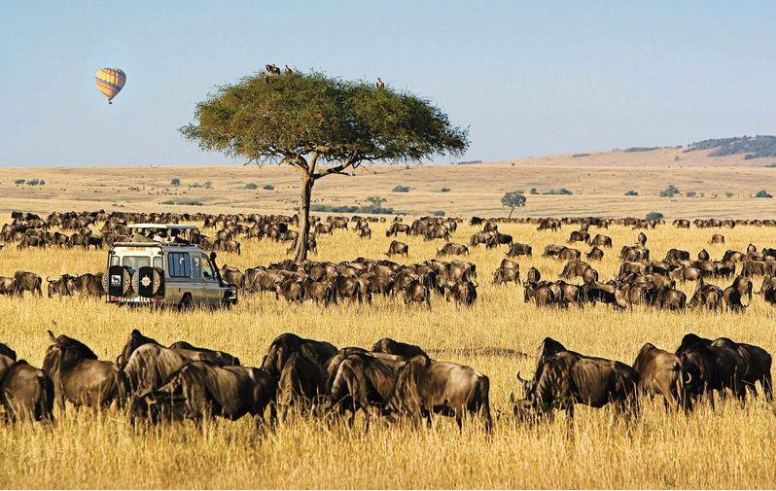
Budget Ruaha Safari Adventure
Explore Ruaha National Park’s baobab country on a guided safari built around your dates, group size and budget. Spend your game drives…
Read articleArusha City - Tanzania
Safari & Travel Tips
August 26, 2026 · 16 min read
Finding affordable Ruaha safari tours is one of the best ways to experience Tanzania's wild Southern Circuit without giving up the excitement, wildlife encounters and spectacular scenery that make an African safari unforgettable.
Ruaha National Park is particularly attractive to travelers searching for something different from Tanzania's famous northern safari circuit. Instead of the busy safari routes found in some better-known parks, Ruaha offers vast wilderness, dramatic baobab landscapes, river valleys and excellent opportunities to see elephants, lions, buffalo, leopards and many other species.
Ruaha covers approximately 20,226 square kilometers, making it Tanzania's second-largest national park. Tanzania National Parks describes it as an outstanding wilderness area in south-central Tanzania, famous for the Great Ruaha River, elephants, buffalo, predators and more than 570 recorded bird species.
The good news for budget-conscious travelers is that visiting Ruaha does not necessarily require an ultra-luxury safari.
Careful planning, choosing road transportation instead of unnecessary flights, traveling with several people, selecting comfortable mid-range accommodation and choosing the right number of safari days can significantly reduce your total safari price.
This complete guide explains how to plan an affordable Ruaha safari, what influences safari prices, when to travel, where to stay, what wildlife you can see and how many days you should spend inside the park.
Ruaha is ideal for travelers who dream of experiencing a quieter and more adventurous side of Tanzania.
Its enormous wilderness includes open plains, rocky hills, miombo woodland, seasonal rivers and ancient baobab trees. The Great Ruaha River is especially important because it attracts wildlife toward remaining pools and river channels during the dry season.
Ruaha is particularly well known for:
The park's location away from Tanzania's busiest safari circuits also means that many wildlife sightings can feel more private and peaceful.
For travelers who value wilderness rather than crowds, this is one of Ruaha's biggest advantages.
Safari prices are influenced by many different factors.
The biggest mistake travelers sometimes make is assuming that every Ruaha safari must be expensive simply because the park is remote.
Ruaha certainly has exceptional high-end safari camps, but there are also ways to organize more economical trips.
Transportation can significantly affect your safari budget.
Flying directly into Ruaha is convenient, but domestic flights can add considerably to the overall price.
Travelers looking for affordable Ruaha safari tours can instead travel by road, usually via Iringa.
According to Tanzania National Parks, Ruaha is roughly 2–3½ hours by road from Iringa, depending on conditions, with a 4x4 recommended particularly during rainy periods.
Traveling by road may take longer, but it can reduce the cost considerably.
It also gives you an opportunity to see rural Tanzania while traveling toward the park.
Private safari costs include expenses such as:
These costs remain relatively similar whether one traveler or several travelers are inside the vehicle.
Therefore, traveling as a couple, family or small group normally reduces the cost per person.
For example, four travelers sharing one private safari vehicle will generally pay substantially less per person than one traveler using the same vehicle alone.
Ruaha has accommodation options ranging from simple campsites to sophisticated luxury safari camps.
Tanzania National Parks lists accommodation choices including public and special campsites, park bandas, tented camps and safari lodges.
Budget-conscious travelers can reduce costs by choosing:
Camping is normally one of the cheapest ways to experience Ruaha.
Your safari can still include:
Camping also provides a genuine African wilderness atmosphere.
Simple lodges located outside or near the park can sometimes offer considerably lower rates than premium camps located deep inside Ruaha.
Mid-range tented accommodation is popular for travelers who want extra comfort without paying luxury safari prices.
Many tented camps provide:
Choosing the right accommodation can therefore make a major difference to your total safari cost.
There is no single fixed price because your total safari cost depends on your itinerary.
Important factors include:
| Cost Factor | How It Affects Price |
|---|---|
| Number of travelers | More travelers generally reduce the per-person cost |
| Number of safari days | Longer safaris cost more overall |
| Accommodation | Camping is usually cheaper than lodge accommodation |
| Transportation | Road safaris generally cost less than fly-in safaris |
| Travel season | Peak-season accommodation can be more expensive |
| Private vs shared safari | Private trips normally cost more |
| Starting location | Starting in Iringa may reduce driving expenses |
| Additional activities | Walking safaris and special activities add costs |
A short road safari from Iringa can therefore be considerably less expensive than a luxury fly-in package from Zanzibar or Dar es Salaam.
Fly-in safaris typically occupy a higher price range because they combine domestic aviation, transfers, accommodation and safari activities. Current Kilipath pricing guidance notes that mid-range 3–4 day fly-in arrangements can commonly reach approximately USD 2,000–3,500 per person, depending on dates and inclusions.
Travelers focused specifically on affordability should therefore compare this against a road-based itinerary.
A two-day safari is ideal for travelers staying in Iringa who have limited time.
Leave Iringa early in the morning and drive toward Ruaha National Park.
After completing park registration, begin your first game drive.
Explore wildlife areas around the river systems and surrounding plains.
Possible sightings include:
Enjoy lunch during the safari before continuing your afternoon game drive.
Overnight at your selected campsite, lodge or tented camp.
Start with an early breakfast followed by another game drive.
Morning hours are particularly rewarding because predators and other wildlife may be more active before temperatures increase.
Continue exploring Ruaha before beginning your return journey toward Iringa.
For many travelers, three days is an excellent minimum for enjoying Ruaha without rushing excessively.
Travel from Iringa to Ruaha.
Enter the park and begin an afternoon game drive.
The first day introduces you to Ruaha's beautiful landscapes, including river valleys, woodland and baobab-covered plains.
Dinner and overnight near or inside the park.
After breakfast, spend the entire day exploring Ruaha.
Your guide may concentrate on productive wildlife areas depending on recent sightings, water availability and animal movements.
During the dry season, the Great Ruaha River and other remaining water sources become particularly important places for wildlife viewing.
You may encounter elephants moving toward water, buffalo herds feeding nearby and predators watching potential prey.
Return to your accommodation for dinner.
Enjoy your final morning safari before leaving Ruaha.
Stop for photographs and wildlife sightings along the way.
After exiting the park, continue toward Iringa.
Four days provides a more relaxed safari experience and allows you to explore more of the park.
A typical itinerary might include:
Day 1: Iringa to Ruaha + afternoon game drive
Day 2: Full-day Ruaha safari
Day 3: Full-day Ruaha safari
Day 4: Morning game drive + return to Iringa
This itinerary is particularly suitable for wildlife photographers because you have additional opportunities to return to productive areas and wait patiently at sightings.
Ruaha can be visited throughout the year, but every season produces a different experience.
The dry season is generally considered excellent for wildlife viewing.
Animals increasingly concentrate around remaining water sources as conditions become drier.
The Great Ruaha River and other river systems become particularly important wildlife gathering areas.
Expect:
However, June through October is also considered a popular safari period, and TANAPA recommends booking accommodation early during peak months.
Therefore, travelers wanting an affordable safari should make reservations in advance.
Rain transforms Ruaha.
The landscape becomes greener and birdlife is outstanding.
This period can be excellent for travelers interested in:
Road conditions can occasionally become more challenging when rainfall is heavy.
These months usually receive heavier rainfall.
Some remote safari camps may close temporarily, while road conditions can become difficult.
However, travelers willing to accept changing weather may sometimes find attractive accommodation rates.
Always confirm road and camp conditions before booking.
One major reason travelers choose Ruaha is the diversity and quality of wildlife viewing.
Ruaha is famous for impressive lion populations.
Large prides can sometimes be found near river systems and open plains.
Early mornings and late afternoons are particularly productive periods for predator activity.
Elephants are one of Ruaha's signature attractions.
During dry periods, large numbers may gather around river channels and remaining water sources.
Watching elephant families drink, feed and interact beside the river can become one of the most memorable moments of your safari.
Ruaha also supports healthy leopard populations.
These elusive cats often use riverine vegetation, rocky areas and woodland for cover.
Seeing one requires patience and a knowledgeable guide.
Wild dogs are among Africa's most exciting predators.
Ruaha forms part of an important wilderness landscape for these highly mobile animals.
Sightings are never guaranteed because packs can travel large distances, but encountering them can become an exceptional safari highlight.
Greater kudu are strongly associated with Ruaha's identity.
TANAPA specifically highlights both greater and lesser kudu among the park's distinctive wildlife.
Their impressive spiral horns make adult males particularly memorable animals to photograph.
Ruaha is also an outstanding destination for bird enthusiasts.
More than 570 bird species have been recorded in the park.
Birders may encounter:
Because Ruaha lies in an ecological transition zone, its birdlife reflects influences from both eastern and southern Africa.
The Great Ruaha River is one of the defining features of the national park.
During the dry season, permanent pools and remaining water sections become critical resources for wildlife.
Elephants may dig into sandy riverbeds looking for water.
Buffalo gather nearby.
Predators follow concentrations of prey.
Hippos and crocodiles occupy deeper pools.
For visitors, this creates excellent opportunities for observing natural predator-prey interactions.
Game drives remain the main safari activity.
Travelers typically explore the park using a 4x4 safari vehicle with an experienced professional guide.
TANAPA highlights buffalo, elephants, lions, leopards, crocodiles and hippos among species visitors may encounter during game drives.
Morning game drives are excellent for predator sightings.
Afternoon drives provide warmer golden light for photography.
Full-day game drives allow travelers to explore more remote areas.
Travelers seeking something different can consider a guided walking safari.
Instead of watching wildlife exclusively from a vehicle, walking allows you to observe smaller details of the ecosystem.
Your guide may explain:
Walking safaris must be arranged through authorized operators and operate under park regulations.
They normally add extra cost, so travelers working with a strict budget can keep game drives as their primary activity.
There are two main options.
Road transportation is usually best for travelers prioritizing affordability.
Iringa serves as the main gateway.
Ruaha lies west of Iringa, and Tanzania National Parks estimates the journey at approximately 2–3½ hours, depending on road and seasonal conditions.
Travelers coming from Dar es Salaam can drive toward Iringa first and then continue toward Ruaha.
Because the full journey from Dar es Salaam is long, many visitors break the trip overnight.
Scheduled and charter flights operate into airstrips including Msembe and Jongomero.
Flying saves considerable time and works particularly well for:
However, flights normally make the safari considerably more expensive.
For the lowest overall price, ask your safari operator to compare road and fly-in options.
Ruaha can be combined with Dar es Salaam, although driving directly requires a long journey.
The drive is roughly 600 km and can take around ten hours depending on route and road conditions.
A comfortable budget itinerary can therefore include:
Day 1: Dar es Salaam → Iringa
Day 2: Iringa → Ruaha
Day 3: Ruaha safari
Day 4: Ruaha safari
Day 5: Return toward Iringa/Dar es Salaam
Travelers with more time can add Mikumi National Park.
Travelers staying in Zanzibar frequently want to add a short mainland safari.
The quickest method is normally flying.
A typical itinerary could be:
Day 1: Zanzibar → Ruaha + afternoon safari
Day 2: Full-day Ruaha game drive
Day 3: Morning game drive + return flight
This itinerary minimizes travel time but is not usually the cheapest Ruaha option because domestic flights increase the package cost.
Budget travelers may instead travel through Dar es Salaam and continue overland, provided they have enough holiday time.
Both destinations are exceptional, but they offer different experiences.
| Ruaha | Serengeti |
| More remote wilderness atmosphere | Famous open plains |
| Generally fewer safari vehicles | More popular tourism circuit |
| Excellent elephant and lion viewing | Famous for Great Migration |
| Strong Southern Circuit experience | Northern Circuit highlight |
| Baobabs and river landscapes | Vast grassland ecosystems |
| Best reached through Iringa or flights | Commonly reached through Arusha |
Travelers primarily interested in the Great Migration should generally prioritize Serengeti.
Those wanting quieter wildlife experiences and dramatic wilderness may prefer Ruaha.
Ruaha and Nyerere form two of the major attractions of Tanzania's Southern Circuit.
Ruaha is particularly strong for traditional vehicle safaris and predator viewing.
Nyerere offers another style of experience, including river-based safari opportunities in areas where boat safaris operate.
Combining both can produce an excellent Southern Tanzania safari.
Example:
Day 1–3: Nyerere National Park
Day 4: Transfer/fly to Ruaha
Day 5–7: Ruaha National Park
This combination costs more than visiting only Ruaha but provides excellent variety.
Travelers searching for the best affordable Ruaha safari tours should follow several simple strategies.
Splitting vehicle expenses between several travelers reduces the per-person cost.
If you have enough time, road transportation is usually more economical.
Simple lodges, campsites and mid-range tented camps can dramatically reduce accommodation expenses.
Focus your budget on game drives rather than numerous optional activities.
Peak-season accommodation can fill quickly.
Booking early gives your safari operator more opportunity to secure lower-priced rooms.
Travel periods immediately before or after the busiest months may sometimes provide better accommodation value.
This sounds counterintuitive, but traveling all the way to Ruaha for only a few safari hours can provide poor value.
A well-designed 3-day itinerary often gives a much better balance between transportation expenses and actual wildlife-viewing time.
Before paying a deposit, check exactly what your package includes.
A properly organized package may include:
Potential exclusions might include:
Always ask for a detailed quotation.
Absolutely—provided that the cost reduction comes from smart planning rather than removing important safari essentials.
Safari quality depends greatly on:
A traveler staying at a simple campsite can potentially see exactly the same lion pride as a traveler sleeping in a luxury lodge.
Accommodation changes your comfort level.
It does not determine where wild animals decide to appear.
For many travelers, allocating more of their budget toward additional game-drive time rather than expensive rooms creates better overall safari value.
Good when traveling from Iringa and working with a very limited schedule.
Excellent introductory safari and one of the best combinations of affordability and wildlife-viewing time.
Recommended for travelers wanting a more complete safari.
Ideal for photographers, wildlife enthusiasts and visitors hoping to explore quieter sectors.
For most first-time visitors, 3–4 days provides very good value.
Bring practical safari clothing and equipment.
Useful items include:
TANAPA specifically recommends binoculars, sunscreen and neutral-colored clothing for Ruaha visitors.
Ruaha is outstanding for wildlife photography because of its uncrowded landscapes and distinctive scenery.
For better photographs:
Early morning light creates softer colors and wildlife can be more active.
Ruaha's massive baobabs provide iconic African compositions.
Wildlife often approaches rivers gradually.
Waiting can produce more interesting interactions.
A 200–400 mm or similar lens is useful for wildlife.
Ruaha's dramatic landscapes deserve photographs too.
Yes.
A private safari works especially well for families because the schedule can be adjusted to children's energy levels.
Families can:
Parents should always follow guide instructions because Ruaha wildlife remains completely wild.
Ruaha is excellent for couples.
The remote atmosphere creates a much more intimate safari experience than heavily visited destinations.
Couples can combine:
Travelers wanting a honeymoon without luxury prices can select mid-range tented accommodation while keeping a private safari vehicle.
Ruaha is generally visited through organized safari arrangements with professional guides.
However, wildlife safety rules must always be respected.
TANAPA advises visitors to remain at safe distances from wildlife, stay inside vehicles except where exiting is permitted, and follow guide or ranger instructions.
Never attempt to approach animals independently.
Walking safaris must be professionally guided.
Planning affordable Ruaha safari tours starts with deciding how much time you have, where you will begin your journey and what level of accommodation you prefer.
For the lowest-cost itinerary, consider starting in Iringa and traveling by road.
For travelers coming from Zanzibar or Dar es Salaam with limited time, a fly-in safari provides greater convenience.
Families, couples, solo travelers and small groups can all enjoy Ruaha, and itineraries can be adjusted between camping, mid-range and luxury accommodation.
Whether you spend three days exploring the river valleys or combine Ruaha with other Southern Circuit destinations, the park offers one of Tanzania's most rewarding wilderness experiences.
With thoughtful planning, you can enjoy lions, elephants, buffalo, greater kudu, baobab-covered landscapes and the Great Ruaha River without automatically choosing the most expensive safari package.
Affordable Ruaha safari tours are therefore not about sacrificing the experience—they are about selecting the smartest route, accommodation and itinerary for your travel budget.
Looking for an affordable Ruaha safari designed around your dates and budget?
Kilipath African Safaris can organize private and customized Ruaha safari packages including transportation, professional safari guides, accommodation, park fees and game drives.
Whether you prefer a short 3-day Ruaha safari, a comfortable mid-range tour or a longer Southern Circuit adventure combining Ruaha, Nyerere and Mikumi, your itinerary can be customized around your interests and available travel time.
Contact our safari team with:
We can then prepare a personalized Ruaha safari itinerary and quotation designed around your budget.
Explore Ruaha National Park’s baobab country on a guided safari built around your dates, group size and budget. Spend your game drives…
Read articleDiscover Tanzania’s untamed wilderness without exceeding your travel budget. A budget Ruaha safari adventure offers incredible wildlife encounters, spectacular landscapes, authentic African…
Read articleA Nyerere Tanzania wildlife safari offers an extraordinary opportunity to discover one of Africa's most spectacular wilderness destinations. From magnificent elephants and…
Read articleTarangire National Park sits on Tanzania’s Northern Circuit and is usually visited from Arusha. Ruaha, Nyerere and Mikumi are Southern Circuit destinations.…
Read article