

Budget Ngorongoro Crater Safari Holiday
Planning a budget Ngorongoro Crater safari holiday from Arusha? Compare a crater day trip, a two-day Tarangire and Ngorongoro safari, or a…
Read articleArusha City - Tanzania
Safari & Travel Tips
September 3, 2026 · 13 min read
Choosing an affordable Tanzania wildlife safari operator is one of the most important decisions when planning a safari in Tanzania. A good safari company does more than organize transport and accommodation. It helps you choose the right national parks, creates a suitable itinerary, arranges professional guides, manages park fees, coordinates accommodation, and makes sure your safari runs smoothly from arrival until departure.
Tanzania is one of Africa’s most famous safari destinations. Travelers come from around the world to experience the Serengeti National Park, Ngorongoro Crater, Tarangire National Park, Lake Manyara, Nyerere National Park, Ruaha National Park, and many other wildlife areas.
However, a Tanzania safari does not always have to be extremely expensive.
With careful planning and the right local safari operator, travelers can enjoy an incredible wildlife experience while keeping costs under control.
This guide explains how to find an affordable safari operator in Tanzania, what affects safari prices, which destinations offer the best value, what is normally included in safari packages, and how to choose between budget camping, mid-range lodges, private safaris, and group safaris.
An affordable Tanzania wildlife safari operator is a tour company that organizes wildlife safaris at competitive prices without unnecessarily reducing the quality of the safari experience.
Affordable does not necessarily mean choosing the cheapest safari available.
A very cheap safari may sometimes exclude important services such as park fees, accommodation, meals, airport transfers, professional guides, or reliable safari vehicles.
Instead, travelers should look for good value.
A reliable affordable operator should offer transparent pricing, realistic itineraries, experienced guides, properly maintained safari vehicles, suitable accommodation, and clear information about everything included and excluded from the safari price.
Local Tanzania safari operators can often offer competitive prices because they organize their own vehicles, guides, camping equipment, accommodation partnerships, and ground operations.
Working directly with a local safari company can therefore help travelers reduce unnecessary intermediary costs.
Tanzania offers one of the greatest varieties of safari experiences in Africa.
The country has enormous national parks, conservation areas, mountains, lakes, forests, and wildlife reserves.
Visitors can see lions, elephants, leopards, cheetahs, buffaloes, giraffes, zebras, wildebeest, hippos, crocodiles, hyenas, antelopes, monkeys, and hundreds of bird species.
Tanzania is also home to some of the most famous wildlife attractions in the world.
The Serengeti is Tanzania's most internationally recognized safari destination.
Its endless grasslands are home to enormous populations of wildlife.
The park is particularly famous for the Great Wildebeest Migration, during which large herds of wildebeest and zebras move across the Serengeti ecosystem in search of fresh grazing.
Visitors may also see lions, cheetahs, leopards, elephants, buffaloes, giraffes, hyenas, jackals, and many other animals.
Because the Serengeti is large, travelers should usually allow enough time to explore the park properly.
For budget-conscious travelers, combining the Serengeti with Ngorongoro and Tarangire can provide an excellent introduction to Tanzania's wildlife.
Ngorongoro Crater is another major highlight of a Tanzania safari.
The crater is a huge volcanic caldera containing grasslands, forests, wetlands, and permanent water sources.
Because wildlife remains inside and around the crater throughout much of the year, visitors often see large concentrations of animals during a relatively short game drive.
Animals commonly seen include lions, zebras, wildebeest, buffaloes, hippos, hyenas, gazelles, elephants, and sometimes black rhinos.
Ngorongoro is especially useful for travelers planning shorter safaris because a single crater game drive can provide an impressive variety of wildlife sightings.
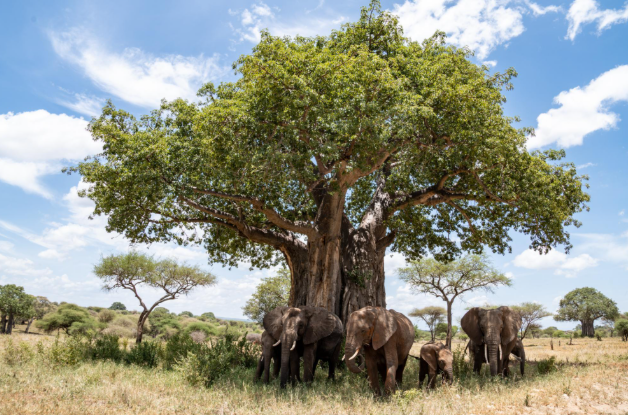
Tarangire is famous for its elephants, baobab trees, beautiful landscapes, and seasonal wildlife concentrations.
During the dry season, wildlife gathers around the Tarangire River, making game viewing particularly rewarding.
Travelers may encounter large elephant families, giraffes, zebras, wildebeest, buffaloes, lions, and many antelope species.
Tarangire is also relatively accessible from Arusha, making it a practical destination for both short and longer Tanzania safari itineraries.
Lake Manyara National Park offers a different environment compared with the open plains of the Serengeti.
The park contains groundwater forest, woodland, lake habitats, and open areas.
Visitors may see elephants, giraffes, zebras, buffaloes, monkeys, hippos, and numerous bird species.
Lake Manyara is often included in Northern Circuit itineraries because of its location between Arusha, Tarangire, Ngorongoro, and the Serengeti.
For travelers interested in southern Tanzania, Nyerere National Park offers a more remote safari experience.
The park is known for elephants, lions, wild dogs, hippos, crocodiles, buffaloes, and diverse birdlife.
Depending on the itinerary and location, safaris may include traditional game drives and boat experiences.
Nyerere can be an attractive alternative for travelers who have already visited Tanzania's northern parks or want a less crowded safari environment.
Ruaha is another important destination in southern Tanzania.
It is famous for rugged landscapes, large elephant populations, predators, and a more remote safari atmosphere.
Because it receives fewer visitors than the Serengeti and Ngorongoro, Ruaha can appeal to travelers looking for quieter wildlife viewing.
The cost of a Tanzania safari varies significantly.
There is no single price for every traveler because safari costs depend on several factors.
These include:
Budget camping safaris are usually among the most affordable options.
Travelers sleep in tents at public campsites while traveling with a safari guide and, depending on the package, a safari cook.
Mid-range safaris cost more because travelers stay in lodges or tented camps with greater comfort and usually private bathroom facilities.
Luxury safaris may include high-end camps, premium lodges, fly-in transfers, private guides, and exclusive services.
A budget camping safari is often the best choice for travelers who want to spend more time in Tanzania's national parks without dramatically increasing their travel budget.
Camping safaris typically include tents, sleeping equipment, meals, transport, guide services, park fees, and campsite fees depending on the package.
Public campsites normally have shared bathroom and shower facilities.
Camping can be simple, but many travelers enjoy the adventurous feeling of staying close to nature.
At night, travelers may hear wildlife sounds from the surrounding wilderness while remaining inside designated campsites.
Camping works especially well for young travelers, backpackers, solo travelers, couples, students, and adventurous families who prioritize wildlife experiences over luxury accommodation.
A private safari provides greater flexibility.
Travelers have their own safari vehicle and guide.
The itinerary can therefore be customized more easily.
Private safaris are ideal for couples, honeymooners, families, photographers, groups of friends, and travelers with specific interests.
Although private safaris can initially appear more expensive, the price per person can become reasonable when several travelers share the same vehicle.
For example, a family or group of four may find that the cost difference between a shared and private safari is smaller than expected.
Safari inclusions vary between operators, so travelers should always check carefully before booking.
A good safari package commonly includes:
Wildlife safaris are usually conducted in specially prepared 4x4 safari vehicles.
A pop-up roof allows travelers to stand comfortably while observing and photographing animals.
A knowledgeable safari guide is extremely important.
A good guide understands animal behavior, wildlife locations, park regulations, driving conditions, and local ecosystems.
The guide can dramatically improve the quality of the safari.
Tanzania national park fees represent a significant portion of the overall safari price.
Travelers should confirm whether all park entrance and conservation fees are included in their quotation.
Accommodation may include public campsites, budget lodges, tented camps, mid-range lodges, or luxury properties.
The accommodation category has a major influence on the final safari price.
Most multi-day safari packages include breakfast, lunch, and dinner while on safari.
Travelers with dietary requirements should inform the operator before arrival.
Vegetarian, vegan, halal, gluten-free, or other dietary requests can often be arranged when communicated in advance.
Safari operators generally provide drinking water during game drives.
Travelers should confirm how much is included.
Some safari packages include airport transfers or hotel pickup.
Others may charge additional transfer fees depending on the arrival airport and location.
Travelers should therefore confirm exactly where their safari begins and ends.
Some expenses are commonly excluded from safari packages.
These can include:
Travelers should ask for a detailed list of inclusions and exclusions before paying a deposit.
Price is important, but it should not be the only consideration.
The quality of the operator can strongly influence the entire safari experience.
An experienced safari operator should understand Tanzania's destinations, park regulations, seasons, travel times, accommodation options, and wildlife patterns.
Experience is particularly important when unexpected changes occur.
Road conditions, weather, accommodation availability, wildlife movements, and flight schedules can sometimes change.
An experienced operator should know how to adjust the itinerary when necessary.
Travelers should look at reviews from previous guests.
Reviews can provide useful information about guide quality, communication, vehicles, accommodation, meals, organization, and customer service.
Rather than focusing only on one review, look for consistent patterns across many traveler experiences.
A professional safari quotation should clearly explain what travelers are paying for.
Avoid packages that simply provide one total price without explaining the main inclusions.
Ask whether the quotation includes:
Clear pricing helps prevent unexpected charges during the safari.
The safari vehicle is extremely important because travelers may spend many hours inside it.
A suitable Tanzania safari vehicle should be designed for rough roads and wildlife viewing.
Most safari operators use 4x4 Land Cruisers with pop-up roofs.
Travelers can also ask about charging facilities, seat arrangements, storage space, and other vehicle features.
A good safari itinerary should be realistic.
Travelers sometimes try to visit too many national parks within a short period.
Although this may look attractive on paper, it can result in long driving hours and limited time watching wildlife.
A professional operator should explain travel distances and suggest an itinerary that provides enough time inside each park.
Several safari combinations can provide excellent value.
This is suitable for travelers with limited time.
Day 1 can focus on Tarangire National Park, followed by Ngorongoro Crater on Day 2.
It provides a good introduction to Tanzania's wildlife without requiring a long safari.
A 3-day Serengeti and Ngorongoro itinerary is popular among travelers whose main goal is to experience Tanzania's most famous wildlife areas.
Although the schedule is relatively compact, travelers can still enjoy both the Serengeti and Ngorongoro.
This is one of the most balanced options for first-time visitors.
A typical itinerary may include:
Day 1: Tarangire National Park
Day 2: Serengeti National Park
Day 3: Serengeti and transfer toward Ngorongoro
Day 4: Ngorongoro Crater and return to Arusha
This itinerary provides varied landscapes and excellent opportunities to see Tanzania's iconic wildlife.
Travelers with additional time can extend the itinerary to five days.
This reduces the amount of rushing and allows more time for wildlife viewing.
The safari may include Tarangire, Serengeti, Ngorongoro, and possibly Lake Manyara depending on the route.
Safari prices can change according to season.
Tanzania has different safari seasons influenced by rainfall, wildlife movement, accommodation demand, and visitor numbers.
The dry season is generally popular because animals are easier to locate around water sources and road conditions are often favorable.
However, traveling outside peak season can sometimes provide better accommodation rates.
The green season can also be beautiful.
Landscapes become greener, birdlife can be excellent, and some safari areas receive fewer tourists.
Travelers who are flexible with their dates should ask operators whether seasonal discounts are available.
No.
An affordable safari can still provide excellent wildlife viewing.
National parks are the same regardless of whether travelers sleep in a simple campsite or a luxury lodge.
A lion sighting in the Serengeti is not reserved for luxury travelers.
Budget travelers and luxury travelers often visit the same wildlife areas.
The primary difference is usually the level of accommodation, privacy, meals, additional services, and exclusivity.
Travelers who prioritize game drives over luxury rooms can save a significant amount by choosing simpler accommodation.
For solo travelers, shared safaris are normally more affordable.
For couples, a shared safari can also provide significant savings.
However, when three, four, five, or more people travel together, private safari costs become more competitive because transportation expenses are divided between more participants.
Private safaris also offer benefits such as:
Travelers should therefore compare both options rather than automatically assuming a group safari is always cheaper.
The ideal safari length depends on the traveler's available time and budget.
A 2-day safari can provide a short introduction.
Three days allows travelers to visit major parks such as Serengeti and Ngorongoro.
Four to five days provides a better balance between driving and wildlife viewing.
Six to eight days gives travelers more time to explore different regions and enjoy slower-paced game drives.
For first-time travelers visiting northern Tanzania, approximately four to six days is often a practical choice.
There are several ways to reduce safari costs without sacrificing the core wildlife experience.
Sharing the safari vehicle reduces transportation costs.
Camping is significantly cheaper than luxury lodges.
Private safari costs become more affordable when vehicle costs are shared between several travelers.
Driving between safari destinations is often cheaper than flying.
Trying to visit too many distant parks can increase fuel, accommodation, and park expenses.
Accommodation rates may be lower during less busy periods.
Working with a Tanzania-based operator may help reduce intermediary costs.
Kilipath African Safaris organizes Tanzania wildlife safaris for travelers with different budgets, travel styles, and interests.
Travelers can choose between affordable camping safaris, shared group departures, private safaris, mid-range lodge safaris, and customized Tanzania itineraries.
Safari routes can include destinations such as:
The goal is to help travelers experience Tanzania comfortably while choosing an itinerary that matches their available time and budget.
Before confirming with any Tanzania wildlife safari operator, ask the following questions:
Receiving clear answers before booking reduces the possibility of misunderstanding later.
Finding the right affordable Tanzania wildlife safari operator does not mean simply choosing the lowest price.
The best value comes from finding a professional local company that offers clear pricing, realistic itineraries, reliable safari vehicles, experienced guides, suitable accommodation, and strong customer support.
Tanzania offers safari opportunities for many different budgets.
Travelers can choose simple camping adventures, shared group safaris, comfortable mid-range lodge packages, or fully private journeys.
For travelers who want to control costs, the most effective strategy is usually to focus spending on the wildlife experience while choosing practical accommodation and a carefully designed itinerary.
Whether you want to see elephants beneath the baobab trees of Tarangire, lions hunting across the Serengeti plains, wildlife inside Ngorongoro Crater, or combine a safari with Zanzibar, careful planning can make the journey both memorable and affordable.
Kilipath African Safaris can help travelers create a Tanzania wildlife safari based on their travel dates, number of people, preferred parks, accommodation level, and available budget.
The right safari does not need to be the most expensive.
It needs to be well planned, fairly priced, safe, comfortable, and focused on giving travelers enough time to experience Tanzania's extraordinary wildlife.
Planning a budget Ngorongoro Crater safari holiday from Arusha? Compare a crater day trip, a two-day Tarangire and Ngorongoro safari, or a…
Read articleA Lake Manyara safari can cost USD 150–220 per person for a shared day trip from Arusha. A published example of a…
Read articleExplore Ruaha National Park’s baobab country on a guided safari built around your dates, group size and budget. Spend your game drives…
Read articleA Nyerere Tanzania wildlife safari can take you from a woodland game drive in the morning to a boat on the Rufiji…
Read article

