

Budget Ngorongoro Crater Safari Holiday
Planning a budget Ngorongoro Crater safari holiday from Arusha? Compare a crater day trip, a two-day Tarangire and Ngorongoro safari, or a…
Read articleArusha City - Tanzania
Safari & Travel Tips
August 27, 2026 · 9 min read
An all-inclusive Tanzania safari itinerary package combines wildlife experiences, accommodation, transportation, meals, professional guiding, and park fees into one organized travel plan. It is one of the easiest ways to explore Tanzania because most essential arrangements are handled before arrival.
Tanzania offers several safari regions, but the Northern Circuit—Serengeti, Ngorongoro, Tarangire, and Lake Manyara—is the most popular choice for first-time visitors. Tanzania’s official tourism platform also promotes this combination as its classic Northern Circuit experience. Tanzania Tourism
The exact inclusions depend on the operator and accommodation category. A comprehensive package will usually include:
Travelers should always request a written list of inclusions and exclusions before paying a deposit.
Even packages advertised as all-inclusive may exclude certain personal and optional expenses:
“All-inclusive” should therefore mean that all essential safari services are covered, not necessarily every possible travel expense.
Serengeti National Park is Tanzania’s most famous safari destination. It is known for its open plains, exceptional predator sightings, and the Great Wildebeest Migration.
Wildlife commonly encountered includes:
The migration is a continuous natural movement, so its location changes throughout the year. The official TANAPA website recommends June through October for dry-season wildlife viewing and January through February for the calving period. TANAPA Serengeti guide
Travelers should spend at least two nights in Serengeti whenever time and budget permit. Three or four nights provide a more relaxed experience and allow visitors to explore different sections of the park.
Ngorongoro Crater is one of the best places in Tanzania to see a high concentration of wildlife in a relatively small area. Safari vehicles descend into the crater for a game drive across grasslands, forests, wetlands, and seasonal water sources.
Animals regularly seen include:
Accommodation is available on the crater rim, inside the wider conservation area, and around Karatu. Crater-rim accommodation offers proximity and beautiful views but is generally more expensive. Karatu provides more affordable options but requires additional driving.
Tarangire is famous for large elephant populations, ancient baobab trees, and the Tarangire River. The river attracts substantial concentrations of wildlife during the dry season. TANAPA Tarangire River
The park is an excellent first destination for travelers beginning their safari in Arusha. It is particularly rewarding between June and October, although it can be visited throughout the year.
Common sightings include elephants, giraffes, lions, zebras, wildebeest, impalas, warthogs, and numerous bird species.
Lake Manyara offers a different environment from the open plains of Serengeti. Its attractions include groundwater forests, the Rift Valley escarpment, wetlands, seasonal flamingos, monkeys, baboons, elephants, and diverse birdlife. TANAPA Lake Manyara attractions
Manyara works well in shorter itineraries because it is located between Arusha, Tarangire, Karatu, and Ngorongoro.
Northern Serengeti is recommended between approximately July and October for travelers hoping to witness wildebeest herds and possible Mara River crossings.
River crossings cannot be scheduled or guaranteed. Travelers should ideally stay for at least three nights because the herds may wait near the river for hours or days before crossing.
Ndutu lies within the wider Serengeti–Ngorongoro ecosystem and is especially popular between December and March.
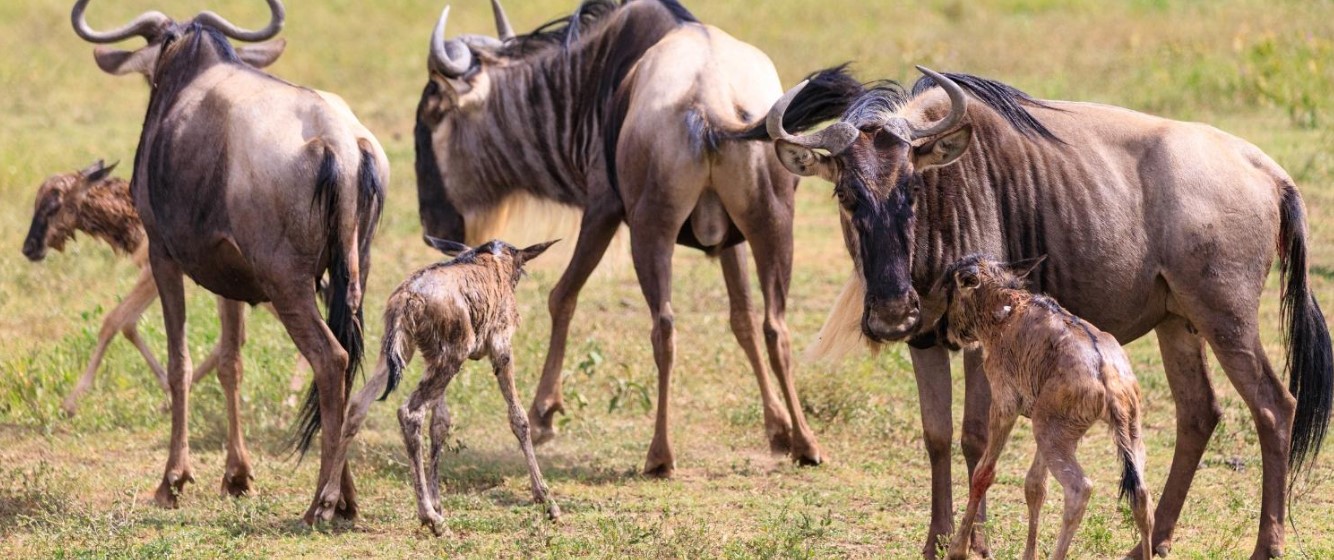
The calving season normally peaks around January and February. Large numbers of wildebeest gather on the nutrient-rich southern plains, attracting lions, cheetahs, hyenas, and other predators.
Nyerere is an excellent Southern Circuit alternative. It offers traditional game drives alongside boat safaris and, where permitted, guided walking experiences.
It is especially convenient for travelers coming from Dar es Salaam or Zanzibar. Fly-in packages can reduce travel time and work well for short holidays.
Ruaha is suitable for travelers seeking a quieter and more remote safari. It is known for elephants, lions, wild dogs, antelopes, baobabs, and dramatic wilderness.
Ruaha is often combined with Nyerere in a longer Southern Circuit itinerary.
Day 1: Arusha to Serengeti
Depart Arusha early in the morning and travel through the Ngorongoro Conservation Area toward Serengeti. Enjoy wildlife viewing along the way and an afternoon game drive.
Day 2: Serengeti to Ngorongoro
Begin with a morning Serengeti game drive. After lunch, continue toward the Ngorongoro area for dinner and overnight.
Day 3: Ngorongoro Crater to Arusha
Descend into Ngorongoro Crater for a game drive. After lunch, begin the return journey to Arusha.
This itinerary is suitable for travelers with limited time, but it includes long driving distances.
Day 1: Arusha to Tarangire National Park
Day 2: Tarangire or Karatu to Serengeti
Day 3: Serengeti to Ngorongoro
Day 4: Ngorongoro Crater to Arusha
This is one of the most popular short Tanzania safari packages because it covers three major wildlife destinations.
Day 1: Arusha to Tarangire
Day 2: Tarangire to Serengeti
Day 3: Full-day Serengeti game drive
Day 4: Serengeti to Ngorongoro
Day 5: Ngorongoro Crater and return to Arusha
The additional full day in Serengeti makes this itinerary considerably more comfortable and rewarding than the shorter options.
Day 1: Arrival in Tanzania and transfer to Arusha
Day 2: Arusha to Tarangire
Day 3: Tarangire to Serengeti
Day 4: Full-day Serengeti safari
Day 5: Another Serengeti game drive
Day 6: Serengeti to Ngorongoro
Day 7: Ngorongoro Crater and return to Arusha
This package offers a better balance between driving and wildlife viewing. Lake Manyara can be added or substituted depending on the client’s preferences.
Day 1: Arrival and overnight in Arusha
Day 2: Tarangire National Park
Day 3: Lake Manyara or Karatu
Day 4: Transfer to Serengeti
Day 5: Full-day Serengeti game drive
Day 6: Serengeti wildlife viewing
Day 7: Ngorongoro Crater
Day 8: Flight to Zanzibar
Day 9: Zanzibar beach holiday or cultural tour
Day 10: Departure
This itinerary combines wildlife, landscapes, culture, and beach relaxation. Tanzania’s main international and regional gateways include Kilimanjaro, Dar es Salaam, and Zanzibar. Official Tanzania travel information
Budget camping is the most affordable option. Travelers usually stay at public campsites in dome tents.
A camping package should include:
Camping provides an adventurous experience but offers less privacy and comfort than lodges.
Budget lodges provide permanent rooms, beds, and private or shared bathrooms. They are comfortable for travelers who want an affordable safari without sleeping in tents.
Some budget packages use lodges outside national parks to reduce costs.
Mid-range accommodation is the most popular choice. It normally provides:
A tented camp is not necessarily basic camping. Many tented camps have proper beds, private bathrooms, furniture, and restaurant facilities.
Luxury safari packages may include:
Luxury accommodation inside or near the parks reduces some travel time, but it can significantly increase the package price.
Prices depend on:
Broad planning estimates commonly fall into these categories:
| Safari category | Typical daily estimate per person |
|---|---|
| Shared camping | USD 250–400 |
| Private budget safari | USD 350–500 |
| Private mid-range safari | USD 450–750 |
| Luxury safari | USD 750–1,500+ |
These are planning estimates, not fixed quotations. Solo private travelers normally pay more because they carry the vehicle and guide costs alone. Couples and groups can divide those costs.
Park tariffs and accommodation rates can change, so travelers should obtain a dated quotation. TANAPA maintains an official tariff section for current national-park charges. TANAPA park tariffs
Tanzania is a year-round safari destination.
This is the main dry season and a popular wildlife-viewing period. Animals frequently gather around permanent water sources, vegetation is less dense, and roads are generally easier to navigate.
It is also high season, so early accommodation reservations are recommended.
Short rains create greener landscapes. These months can offer fewer crowds, excellent photography, and good birdwatching.
These months are excellent for Ndutu and the southern Serengeti, particularly during the wildebeest calving season.
The long-rain period creates lush scenery and dramatic skies. Some camps close temporarily, and road conditions may be more challenging.
TANAPA notes that June through October generally provides easier wildlife viewing, while the short and long rainy periods produce greener scenery and strong birding opportunities. TANAPA trip planning
Ask the safari company:
A reliable company should provide an official itinerary, detailed quotation, booking conditions, and payment receipt.
Recommended items include:
Soft-sided luggage is easier to store in safari vehicles and small domestic aircraft.
Visa requirements depend on nationality. Eligible travelers can submit an application through Tanzania’s official electronic visa system. Applicants complete the online form, pay the applicable fee, and submit the application for review. Tanzania eVisa portal
Travelers should also verify:
Planning a budget Ngorongoro Crater safari holiday from Arusha? Compare a crater day trip, a two-day Tarangire and Ngorongoro safari, or a…
Read articleA Lake Manyara safari can cost USD 150–220 per person for a shared day trip from Arusha. A published example of a…
Read articleExplore Ruaha National Park’s baobab country on a guided safari built around your dates, group size and budget. Spend your game drives…
Read articleA Nyerere Tanzania wildlife safari can take you from a woodland game drive in the morning to a boat on the Rufiji…
Read article

