Planning your dream safari with KiliPath African Safari and wondering what camera is best for safari photography? You’re not alone. One of the most common questions we receive from travelers preparing for a Tanzania safari is:
“What camera should I bring to capture wildlife in Serengeti, Ngorongoro, and beyond?”
In this complete guide, we’ll cover:
- The best camera types for safari
- Recommended lenses for wildlife photography
- Budget vs professional options
- Smartphone vs DSLR comparison
- Expert tips from Tanzania safari guides
- Packing and protection advice
Whether you’re visiting the Serengeti National Park, Ngorongoro Crater, or Tarangire National Park, this guide will help you make the right choice.
Why Safari Photography Is Different
Safari photography is unique because:
- Animals can be far away
- Wildlife moves unpredictably
- Light changes quickly (especially during sunrise and sunset)
- You’ll often shoot from a vehicle
That means zoom power, fast autofocus, and good low-light performance matter more than megapixels alone.
Best Overall Camera for Safari Photography
DSLR or Mirrorless Camera with Telephoto Lens
For the best results on a Tanzania safari, we recommend:
- A DSLR or mirrorless camera
- A telephoto lens (at least 300mm zoom)
These cameras give you:
Fast autofocus
Sharp wildlife detail
Excellent performance in low light
Background blur (beautiful safari portraits of animals)
Top Professional Safari Camera Options
If you want magazine-quality wildlife shots:
- Canon EOS R5
- Nikon Z8
- Sony A1
These are ideal for:
- Great Migration photography
- Fast-moving predators
- Birds in flight
- Sunrise/sunset wildlife shots
Best paired with: 100–400mm or 200–600mm lenses.
Best Mid-Range Cameras for Safari
You don’t need a $5,000 camera to take incredible photos.
Excellent mid-range choices:
- Canon EOS R6
- Nikon Z6 II
- Sony A7 IV
These offer fantastic image quality, fast focus, and strong zoom performance — perfect for most safari travelers.
Best Budget-Friendly Safari Camera
If you prefer something lighter and more affordable:
Bridge / Superzoom Cameras
- Nikon P1000
- Canon PowerShot SX70 HS
These cameras:
- Have built-in extreme zoom
- Are lightweight
- Don’t require changing lenses
They’re ideal for first-time safari travelers who want simplicity without sacrificing zoom reach.
Can I Use a Smartphone for Safari?
Modern smartphones are impressive — but they have limitations.
They’re good for:
- Landscapes
- Lodge photos
- Close elephants near the vehicle
They struggle with:
- Distant animals
- Birds
- Action shots
- Low light
If wildlife photography is important to you, a dedicated camera with optical zoom is strongly recommended.
What Lens Is Best for Safari?
The lens is often more important than the camera body.
Minimum Recommended:
- 300mm zoom
Ideal Range:
- 100–400mm
- 200–600mm
Why?
Animals in Serengeti National Park or Ruaha National Park can be far from the vehicle. A strong zoom lets you capture:
- Lions in the distance
- Leopards in trees
- Cheetahs on the plains
- Birds in flight
Best Camera Settings for Safari
Here are pro tips used by experienced Tanzania safari photographers:
1. Use Shutter Priority Mode (S or Tv)
- 1/1000s for running animals
- 1/500s for walking animals
2. Use Continuous Autofocus (AI Servo / AF-C)
3. Shoot in Burst Mode
Wildlife moves quickly — burst mode increases your chance of the perfect shot.
4. Use ISO Auto
Light changes rapidly during sunrise and sunset game drives.
Safari Camera Packing Tips
When traveling with KiliPath African Safari, we recommend:
Extra memory cards
2–3 batteries
Dust protection bag
Lens cleaning cloth
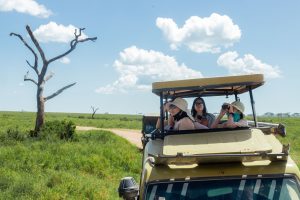
Bean bag (for vehicle window support)
Avoid heavy tripods — most photography is done from the safari vehicle.
Best Camera for Great Migration Photography
If you’re visiting during the wildebeest migration in the Serengeti:
- Choose fast autofocus
- Use 400mm+ zoom
- Shoot in high burst mode
The dust, movement, and dramatic crossings require quick, responsive gear.
Final Recommendation: What Camera Should YOU Bring?
It depends on your goals:
| Traveler Type | Best Option |
|---|---|
| Casual traveler | Bridge camera (Nikon P1000) |
| Hobby photographer | Mirrorless + 100–400mm lens |
| Professional | High-end mirrorless + 200–600mm lens |
| Social media focus | Smartphone + small zoom camera |
Why Book a Photographic Safari in Tanzania?
Tanzania offers some of the best wildlife photography in Africa, especially in:
- Serengeti National Park
- Ngorongoro Crater
- Tarangire National Park
- Lake Manyara National Park
With experienced guides positioning vehicles for the best angles and lighting, your photography opportunities are exceptional.
Ready to Capture Tanzania’s Wildlife?
At KiliPath African Safari, we design safaris with photographers in mind:
- Open-roof 4×4 vehicles
- Expert wildlife positioning
- Sunrise and sunset game drives
- Custom photographic safari itineraries
Contact us today to plan your Tanzania safari adventure — and bring the right camera to capture memories that last a lifetime.