Lake Manyara vs. Nyerere Safari Prices | Tanzania Guide
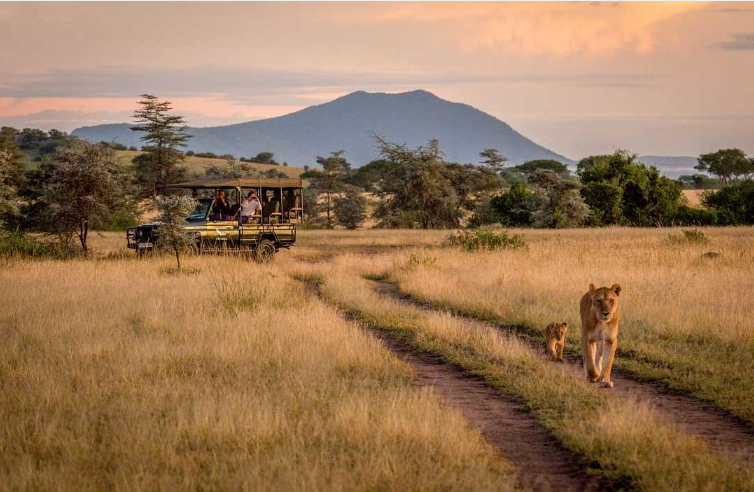
A Lake Manyara safari can cost USD 150–220 per person for a shared day trip from Arusha. A published example of a…
Read articleArusha City - Tanzania
Safari & Travel Tips
September 4, 2026 · 12 min read
A best Lake Manyara safari combines dramatic Rift Valley scenery, diverse wildlife, lush forest, open floodplains, birdlife, and the possibility of seeing Lake Manyara's famous tree-climbing lions.
Lake Manyara National Park lies on Tanzania's popular Northern Safari Circuit and is particularly convenient for travelers combining Arusha, Tarangire, Ngorongoro Crater, and Serengeti National Park.
The park is considerably more compact than Serengeti, making it possible to experience several different habitats during a relatively short game drive. Visitors can move from dense groundwater forest to acacia woodland, wetlands, open floodplains and the alkaline lake shore within one safari day.
Tanzania National Parks describes Lake Manyara as a diverse ecosystem containing groundwater forest, acacia woodland, open floodplains, wetlands, hot springs and the alkaline lake itself.
For travelers with limited time, Lake Manyara can therefore be an excellent introduction to Tanzania's wildlife.
Lake Manyara National Park is situated at the base of the Great Rift Valley escarpment, close to the town of Mto wa Mbu in northern Tanzania.
From Arusha, the journey normally takes around 2–2.5 hours by road, covering approximately 125 km. This convenient location makes the park suitable for both day trips and longer Northern Circuit safari itineraries.
Many visitors explore Lake Manyara:
Its location makes itinerary planning especially flexible.
Lake Manyara offers something different from Tanzania's larger savanna parks.
Instead of endless grasslands, you encounter several ecosystems packed into a relatively small area.
Lake Manyara is widely associated with its unusual tree-climbing lions.
Visitors occasionally see lions resting on branches of acacia or other trees during daytime game drives.
Although sightings are never guaranteed, searching for these lions is one of the park's signature safari experiences. TANAPA prominently identifies tree-climbing lions among Lake Manyara's main attractions.
A knowledgeable safari guide will normally check areas where lions have recently been sighted while communicating with other guides inside the park.
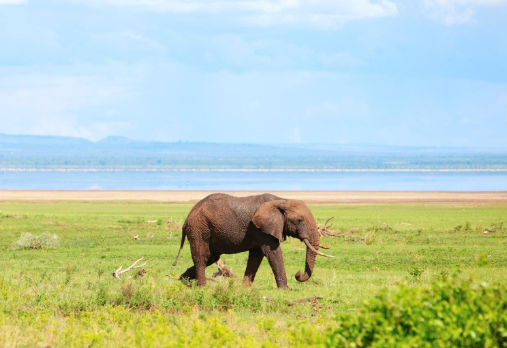
Elephants are another highlight.
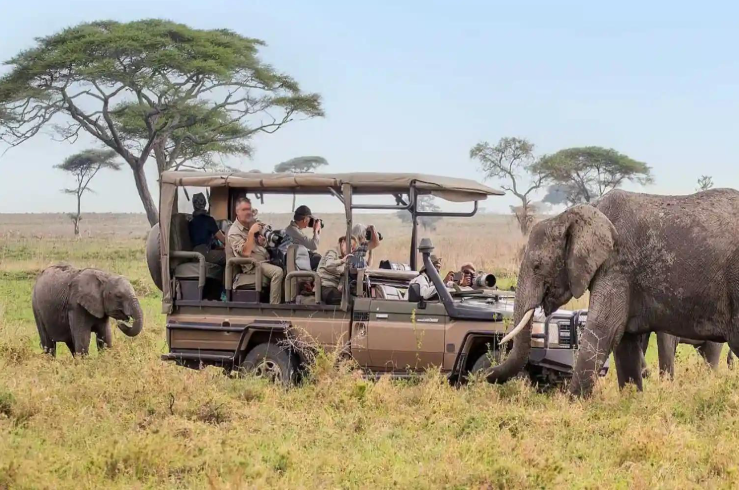
Large elephants may appear remarkably close to safari vehicles as they move through forest roads or feeding areas.
The dense greenery creates a completely different photography experience compared with open Serengeti plains.
You may encounter:
TANAPA specifically identifies elephants among the park's notable wildlife.
Lake Manyara is an alkaline lake attracting numerous waterbirds.
Flamingos may gather along the shoreline when ecological and water conditions are favorable.
Other birds commonly associated with the lake ecosystem include:
TANAPA reports more than 400 bird species recorded across the park's wetlands, forests and woodlands.
However, travelers should understand that flamingo numbers vary seasonally and according to water and feeding conditions. Large pink concentrations should therefore never be promised.
Lake Manyara has surprisingly varied wildlife for a relatively compact park.
Possible sightings include:
The park's groundwater forest is particularly good for primates, while open floodplains support larger grazing animals.
Hippos can often be observed around wetland areas and pools.
Yes.
Lake Manyara can be particularly suitable for first-time safari visitors because it provides many types of scenery within a short driving distance.
You might begin your safari underneath towering forest trees while watching baboons and monkeys, then emerge into open country where elephants and buffalo are feeding.
Later, you may reach wetland habitats where hippos and waterbirds become the focus.
This rapid change of landscape keeps a Lake Manyara safari visually interesting throughout the day.
Lake Manyara National Park can be visited throughout the year.
The best month depends primarily on what you want to experience.
The dry season is popular for general wildlife viewing.
Vegetation may become less dense in some areas, and wildlife can concentrate near reliable water sources.
This period combines particularly well with:
July, August and September are especially popular travel months across Tanzania's Northern Circuit.
Because demand is high, accommodation should normally be reserved well in advance.
November and parts of December may bring short seasonal rains.
The park becomes greener, creating attractive photography conditions.
These months can also be excellent for travelers who prefer lush scenery.
Rain usually does not mean continuous rainfall throughout an entire safari day.
January and February can provide warm temperatures, green scenery and productive wildlife viewing.
These months are also strategically interesting for travelers continuing toward the southern Serengeti and Ndutu ecosystem.
During this period, a safari itinerary can potentially combine:
Lake Manyara → Ngorongoro → Ndutu → Serengeti
for a varied wildlife experience.
The longer rainy season usually occurs during this period.
Advantages can include:
Some tracks may become muddy after heavy rainfall, so experienced safari guides are particularly valuable.
For most visitors, one safari day is sufficient.
Lake Manyara is often incorporated into a broader Tanzania itinerary rather than visited for multiple consecutive days.
A typical game drive might last approximately 4–7 hours depending on:
Travelers particularly interested in birding, photography, night drives or additional activities may choose to stay longer.
A day safari can work well for travelers based in Arusha.
06:30–07:00: Pickup from your Arusha hotel.
07:00–09:30: Drive toward Lake Manyara National Park.
09:30: Enter the park and begin your game drive.
Late morning: Explore groundwater forest and woodland habitat.
Lunch: Enjoy a packed or arranged lunch at a designated area.
Afternoon: Continue toward floodplains, wetlands, viewpoints and suitable wildlife areas.
15:30–16:00: Begin driving back toward Arusha.
18:00 approximately: Arrive at your hotel depending on traffic and safari timing.
Exact schedules should remain flexible because wildlife encounters cannot be predicted precisely.
Lake Manyara becomes even more worthwhile when combined with nearby parks.
Drive from Arusha to Tarangire National Park.
Spend the day searching for elephants, giraffes, zebras, wildebeest and other wildlife.
Overnight near Tarangire, Mto wa Mbu or Karatu.
Travel toward Serengeti through the Ngorongoro highlands.
Begin your first Serengeti game drive and overnight inside or close to the park.
Enjoy another wildlife drive before traveling toward Ngorongoro.
Overnight around Karatu or near the conservation area depending on itinerary design.
Descend into Ngorongoro Crater for a game drive before returning to Arusha.
Lake Manyara can alternatively replace Tarangire depending on traveler interests and seasonal conditions.
A five-day itinerary provides additional flexibility.
Begin your Tanzania adventure with a Lake Manyara game drive.
Look for elephants, primates, buffalo, giraffes and birdlife.
Overnight near Mto wa Mbu or Karatu.
Travel through the Ngorongoro highlands toward Serengeti.
Enjoy an afternoon game drive.
Explore central Serengeti extensively.
Search for lions, cheetahs, elephants, giraffes, buffalo, hyenas and other wildlife.
Enjoy morning wildlife viewing before continuing toward Ngorongoro.
Descend into the crater for a morning game drive and return to Arusha later in the day.
This itinerary creates a strong combination of forests, lakes, plains and crater ecosystems.
Travelers frequently ask which park they should choose.
Both are worthwhile, but they provide different experiences.
| Feature | Lake Manyara | Tarangire |
|---|---|---|
| Landscape | Forest, lake, wetlands, escarpment | Savanna, river, baobabs |
| Elephants | Excellent potential | Especially famous |
| Birdwatching | Excellent | Excellent |
| Tree-climbing lions | Famous attraction | Possible lions but not signature |
| Flamingos | Seasonal | No |
| Baobab scenery | Limited | Outstanding |
| Easy day trip | Yes | Yes |
| Safari area | More compact | Larger |
If you only have one day, the best choice may depend on the season and wildlife priorities.
If you have enough time, visiting both Lake Manyara and Tarangire gives you significantly greater habitat diversity.
Ngorongoro and Lake Manyara are very different.
Ngorongoro provides concentrated wildlife on the crater floor and is one of Tanzania's most famous safari destinations.
Lake Manyara provides:
For that reason, they complement each other rather than compete directly.
An excellent short safari can include both destinations.
Serengeti is significantly larger and normally deserves several safari days.
Lake Manyara is a compact complementary destination.
Choose Serengeti when your priorities include:
Choose Lake Manyara when you want:
For first-time Tanzania visitors, combining both provides far greater variety.
A best Lake Manyara safari can involve more than conventional game drives.
TANAPA lists several tourism activities in and around the park, subject to operational conditions and advance arrangements.
This remains the primary activity.
A 4x4 safari vehicle with a pop-up roof allows visitors to observe animals while remaining protected and elevated for photography.
Early mornings can be particularly enjoyable because temperatures are cooler and wildlife activity may be higher.
Lake Manyara is one of Tanzania's strongest birding destinations.
Bring binoculars if birds are a major priority.
Different habitats support different species, making even the forest entrance worthwhile for dedicated birders.
Lake Manyara also offers a tree-canopy experience with elevated walkways and viewing platforms.
TANAPA highlights the canopy walk as an opportunity to observe forest environments, monkeys, birds and butterflies from a different perspective.
This can be an appealing addition for families and travelers wanting something beyond sitting in a safari vehicle.
Night drives may be available where permitted and properly arranged.
The experience allows visitors to search for nocturnal wildlife that is difficult to encounter during ordinary daytime safaris. TANAPA lists night game viewing among Lake Manyara's available activities.
These activities typically require additional fees and advance organization.
Guided walking experiences may also be arranged in designated areas.
Walking provides a completely different interpretation of the environment because guides can focus on:
Walking arrangements and availability should always be confirmed before travel.
Canoeing can sometimes be possible depending on lake water levels and operating conditions.
Because conditions vary, travelers should not build an entire itinerary around canoeing without receiving confirmation first.
There are several accommodation zones.
Mto wa Mbu lies conveniently near the park entrance.
It works well for:
Karatu offers a wider selection of lodges and is strategically positioned for Ngorongoro.
It is an excellent choice when your itinerary includes Lake Manyara one day and Ngorongoro the next.
Some properties occupy elevated positions along the Rift Valley escarpment.
These can provide spectacular views and a more scenic lodge experience.
Limited accommodation options are also available inside or directly around the park.
TANAPA notes that travelers can stay inside the park or choose accommodation in nearby Mto wa Mbu and Karatu across different comfort levels.
Budget trips may involve:
This is ideal when wildlife is more important than accommodation luxury.
A mid-range safari usually provides:
This is often the best balance between price and comfort.
Luxury options may offer:
Private safaris provide the greatest control over your schedule.
A private safari provides your own vehicle and guide.
This allows more flexibility for:
Shared safaris can reduce cost because vehicle expenses are divided among travelers.
For a short Lake Manyara day safari, either option may work well.
For photographers, families or couples seeking flexibility, private arrangements are usually preferable.
Lake Manyara is particularly suitable for families because wildlife environments change quickly.
Children are less likely to spend extremely long periods driving between sightings compared with some larger parks.
Family-friendly highlights include:
Always keep children supervised around picnic areas because baboons and monkeys may approach food.
TANAPA specifically advises visitors not to feed wildlife and to secure food from primates.
The park provides very different photographic conditions from Serengeti.
Potential subjects include:
A private safari is particularly useful for photographers because your guide can position the vehicle according to lighting and wildlife movement where permitted.
Bring practical safari clothing and equipment.
Recommended items include:
TANAPA advises visitors to bring items such as binoculars, sunscreen and neutral-colored clothing.
Avoid carrying excessive luggage into the safari vehicle.
Lake Manyara is a managed national park where visitors must follow wildlife regulations.
Travelers should:
TANAPA emphasizes remaining on designated roads and using approved areas when leaving vehicles.
A professional guide understands animal behavior and park rules.
Your safari company can significantly affect the quality of the trip.
Look for an operator providing:
A proper safari Land Cruiser should provide good visibility and sufficient space.
Your guide should understand:
Confirm whether the quote includes:
Avoid comparing only the final price.
One safari may look cheaper because important fees or accommodation services are excluded.
A reliable operator should answer your questions clearly before arrival.
Absolutely.
One of the most popular Tanzania vacations combines:
Wildlife Safari + Zanzibar Beach Holiday
For example:
Day 1: Arusha – Lake Manyara
Day 2: Ngorongoro
Day 3: Serengeti
Day 4: Serengeti
Day 5: Return/fly onward
Day 6 onward: Zanzibar beach holiday
This gives travelers both wildlife adventure and Indian Ocean relaxation.
Lake Manyara deserves consideration because it offers:
Its compact nature makes it particularly useful when safari time is limited.
The best Lake Manyara safari is not simply about checking another national park off your Tanzania itinerary.
Its appeal is its contrast.
You can begin beneath the canopy of a lush groundwater forest surrounded by baboons and blue monkeys, continue into open areas where elephants and giraffes feed, watch hippos around wetlands, scan the lake for flamingos and other waterbirds, and finish the day beneath the dramatic Great Rift Valley escarpment.
For first-time travelers, families, birdwatchers and photographers, Lake Manyara adds another dimension to a Tanzania safari.
It becomes even stronger when combined with Tarangire National Park, Ngorongoro Crater and Serengeti National Park.
Whether you choose a one-day trip from Arusha or include the park in a longer Northern Circuit journey, Lake Manyara can provide one of the most varied safari days in Tanzania.
A Lake Manyara safari can cost USD 150–220 per person for a shared day trip from Arusha. A published example of a…
Read articlePlanning a Tanzania safari that combines Lake Manyara National Park and Nyerere National Park is an excellent way to experience the country's…
Read articlePlanning an unforgettable African wildlife adventure from Zanzibar? Understanding the Tanzania safari package Zanzibar price is an important first step toward choosing…
Read articlePlanning an African wildlife adventure? Understanding the group Tanzania safari price is an important step toward choosing an affordable and unforgettable safari…
Read article