Budget Ruaha Safari Adventure
Explore Ruaha National Park’s baobab country on a guided safari built around your dates, group size and budget. Spend your game drives…
Read articleArusha City - Tanzania
Safari & Travel Tips
September 3, 2026 · 12 min read
A budget Ruaha safari itinerary is an excellent choice for travelers who want to experience one of Tanzania's most remote wildlife destinations without paying luxury safari prices. Ruaha National Park combines huge wilderness areas, impressive elephant populations, predators, baobab landscapes and the Great Ruaha River with considerably fewer safari vehicles than Tanzania's better-known northern parks.
Ruaha covers more than 20,000 square kilometers and is located in south-central Tanzania. The Great Ruaha River forms one of the park's major wildlife corridors, attracting elephants, buffalo, lions, crocodiles, hippos and numerous bird species. TANAPA reports more than 570 recorded bird species in the park.
For budget-conscious travelers, the key is choosing the right number of days, traveling overland where practical, sharing safari costs when possible and selecting affordable camps rather than premium lodges.
Ruaha offers a safari experience that feels very different from Tanzania's Northern Circuit.
Instead of busy wildlife sightings surrounded by many safari vehicles, visitors often experience long stretches of wilderness with very little traffic.
The park is particularly attractive for travelers interested in:
TANAPA highlights Ruaha's large buffalo herds, elephants, lions, leopards, crocodiles and hippos as some of its major wildlife attractions.
The combination of wildlife and low visitor density makes the park particularly rewarding for travelers willing to travel beyond Tanzania's traditional Serengeti–Ngorongoro circuit.
Four days is one of the most practical options for travelers looking for a balance between safari time and affordability.
Your budget Ruaha safari itinerary begins in Iringa.
After breakfast, meet your safari guide and depart in a 4x4 safari vehicle toward Ruaha National Park.
The journey normally takes roughly 2–3½ hours from Iringa, depending on road and weather conditions. TANAPA recommends using a 4x4, especially during wetter periods.
As you approach Ruaha, the scenery gradually changes from villages and farmland to increasingly wild landscapes.
After completing park entrance formalities, begin your first game drive.
Possible wildlife sightings include:
Continue toward the Great Ruaha River, which acts as an important water source for wildlife.
During the dry season, animals frequently concentrate around permanent pools and river channels.
Budget campsite, bandas or affordable tented accommodation in or around Ruaha.
Lunch and dinner.
Wake early for breakfast before beginning a full day exploring Ruaha.
Morning hours are particularly productive because temperatures are cooler and predators may still be active.
Your safari guide may explore areas around:
Ruaha is especially well known for its contrasting landscapes.
One moment you might be driving through open savannah surrounded by enormous baobab trees, while another section takes you through miombo woodland.
Keep watching for lion prides.
Ruaha is recognized as particularly strong predator country, with lions, leopards and cheetahs occurring across its varied ecosystems.
You may enjoy a picnic lunch inside the park before continuing your afternoon game drive.
Elephants are another major highlight.
During the dry season, herds frequently gather near the Great Ruaha River and other remaining water sources.
Return to your campsite or lodge before evening.
Budget campsite or affordable lodge/tented camp.
Breakfast, lunch and dinner.
One common mistake travelers make when planning a budget safari is trying to visit too many destinations.
Ruaha is enormous.
Spending another full day inside the park often produces a better safari experience than rushing immediately toward another destination.
Begin with an early morning game drive.
Your guide may explore a completely different section of the park.
Watch especially for:
The greater kudu is one of Ruaha's signature animals.
TANAPA specifically highlights Ruaha as an important habitat where travelers can encounter both greater and lesser kudu.
Ruaha has excellent lion viewing opportunities, particularly around water sources and areas containing large populations of prey.
Look carefully along riverine vegetation and large trees.
Wild dogs occur in the wider Ruaha ecosystem, although sightings can never be guaranteed.
Elephant encounters are among Ruaha's most memorable experiences.
You may encounter individuals walking across dry riverbeds or entire family groups congregating near water.
Ruaha is also outstanding for birdwatching.
TANAPA records more than 570 species, including bee-eaters, rollers, kingfishers and numerous raptors.
Enjoy another picnic lunch inside the wilderness before continuing until late afternoon.
Return to camp for dinner and your final night in Ruaha.
Wake up early for breakfast.
Depending on your accommodation and schedule, enjoy a final morning game drive.
Morning drives provide one more opportunity to search for animals that may have been missed during previous days.
You might encounter:
Afterward, leave Ruaha National Park and drive back toward Iringa.
Your budget Ruaha safari itinerary ends upon arrival.
Travelers can stay overnight in Iringa or continue toward another destination.
Travelers with limited time can also visit Ruaha in three days.
Iringa → Ruaha National Park → afternoon game drive → overnight near or inside the park.
Full-day Ruaha National Park game drive.
Morning game drive → exit Ruaha → return to Iringa.
Three days keeps costs lower while still allowing meaningful game-viewing time.
However, if your budget allows it, four days provides a significantly more relaxed experience.
Travelers wanting more wildlife viewing can extend the trip.
Iringa to Ruaha.
Full-day game drive.
Full-day game drive.
Explore remote areas of Ruaha.
Morning game drive and return to Iringa.
The additional day gives your guide more opportunities to search for predators and explore quieter areas.
Ruaha is often associated with expensive fly-in safari lodges, but luxury accommodation is not the only option.
TANAPA lists several types of accommodation around the park, including public and special campsites, simple bandas and tented camps/lodges.
Choosing camping or basic accommodation can dramatically reduce the cost.
Camping is usually the most affordable option.
A typical camping safari may include:
Public campsites provide a much simpler experience than luxury lodges, but they allow travelers to experience the African wilderness without spending hundreds of dollars per night on accommodation.
The total price depends on several factors.
These include:
Ruaha's official conservation charges and other park costs should always be confirmed using the latest TANAPA tariff because park, vehicle, camping and activity fees can change. TANAPA states that additional charges may apply for accommodation, vehicle categories and activities.
A safari also becomes cheaper per person when several travelers share the same vehicle.
For example, the vehicle and guide cost can be divided between four travelers instead of being paid entirely by one person.
Several strategies can help reduce your safari price considerably.
Starting your safari in Iringa can significantly reduce long road-transfer costs.
Ruaha lies west of Iringa, making the town one of the most practical gateways to the park.
Safari vehicles represent a significant portion of safari costs.
Sharing those costs can make a large difference.
Couples, families and small groups generally achieve better per-person prices than solo travelers.
Public camping is usually much cheaper than luxury tented camps.
You still receive the essential safari experience—wildlife, guide, vehicle and national park access—without paying premium accommodation rates.
June through October tends to receive greater safari demand.
Travel outside the busiest months and accommodation rates may be more attractive.
However, always consider road conditions during wetter months.
Flying directly into Ruaha is convenient but may increase your safari budget considerably.
Traveling by road from Iringa is usually better suited to travelers prioritizing affordability.
Instead of visiting Ruaha, Mikumi, Nyerere and Udzungwa in a very short trip, consider concentrating on Ruaha.
You'll spend less time driving between destinations and more time actually watching wildlife.
Ruaha can be visited throughout the year, although conditions change substantially by season.
This is generally the strongest period for traditional wildlife viewing.
Animals increasingly concentrate around rivers and remaining water sources.
Vegetation becomes thinner, which can make wildlife easier to see.
Elephants, buffalo and predators are frequently observed near river systems.
Because this is a popular safari period, accommodation availability can be tighter.
TANAPA recommends booking early during the June–October period.
Rain transforms the landscape.
Ruaha becomes greener and highly photogenic.
Birdwatching can be outstanding.
Travelers may also find better accommodation value than during the busiest dry-season months.
These months can receive heavier rainfall.
Some roads become difficult.
Certain accommodation properties may close temporarily.
A reliable 4x4 becomes especially important.
A budget safari doesn't mean a budget wildlife experience.
Ruaha supports an extraordinary variety of animals.
One of the park's greatest attractions.
Watch for prides around river systems, open plains and prey-rich areas.
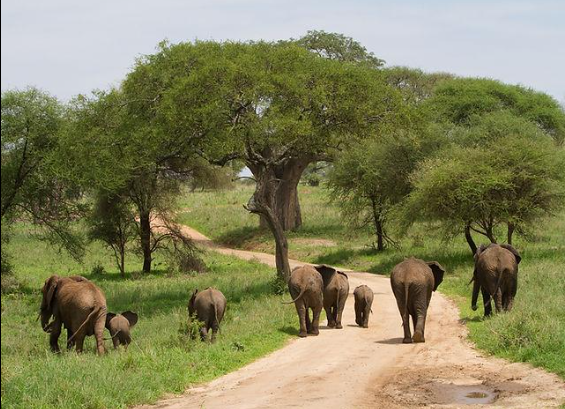
Ruaha's elephant sightings are legendary.
Large herds frequently move between woodland and river environments.
Leopards occur throughout Ruaha but are naturally more difficult to find.
Early mornings and late afternoons often provide the best opportunities.
Large buffalo herds roam the park and also provide prey for Ruaha's lions.
Ruaha is one of Tanzania's best-known destinations for seeing greater kudu.
Their impressive spiral horns make males particularly striking.
Common throughout woodland and savannah areas.
Look around permanent water pools and river systems.
Ruaha is part of one of Tanzania's important wild-dog landscapes.
Sightings are special because packs move across large territories.
Bird enthusiasts should bring binoculars.
Ruaha has more than 570 recorded species according to TANAPA.
Possible sightings include:
The green season is particularly interesting for bird enthusiasts.
The Great Ruaha River is central to the ecosystem.
During the dry season, permanent pools and remaining channels attract animals from surrounding areas.
Elephants may drink or dig into sandy riverbeds searching for underground water.
Buffalo gather nearby.
Predators patrol surrounding areas searching for prey.
Crocodiles and hippos occupy deeper pools.
For photographers, spending time near river systems can produce some of the safari's most memorable encounters.
Wildlife isn't Ruaha's only attraction.
The park's enormous baobab trees create one of southern Tanzania's most recognizable landscapes.
Some areas contain dramatic combinations of:
Baobabs + elephants + golden grass + mountains.
Early morning and late afternoon light can transform these landscapes into outstanding photography locations.
Most budget safaris concentrate heavily on game drives.
A typical safari day may include an early departure followed by several hours exploring the park.
Another option is taking packed breakfast and lunch and remaining in the wilderness for most of the day.
This can be particularly useful because Ruaha is enormous.
Returning to camp during the middle of every day may reduce valuable wildlife-viewing time.
Ruaha also offers guided walking opportunities.
Walking safaris provide a completely different perspective from vehicle-based game viewing.
Instead of focusing only on large animals, travelers can learn about:
Walking safaris must be conducted in authorized areas and under appropriate professional guidance.
Because walking activities may involve additional fees, travelers following a strict budget should discuss costs with their safari operator before adding the activity.
Packages differ between safari companies, but a typical itinerary may include:
Always confirm the exact inclusions before paying.
Common exclusions may include:
A clearly itemized quotation is important when comparing safari offers.
Bring lightweight, comfortable safari clothing.
Recommended items include:
Neutral-colored clothing is particularly suitable for walking safaris.
TANAPA also recommends binoculars, sunscreen, insect repellent and suitable clothing for visitors.
Yes.
Serengeti and Ngorongoro are more famous internationally, but travelers who prefer wilderness and fewer vehicles may actually appreciate Ruaha more.
Ruaha is especially suitable for:
The main consideration is accessibility.
Ruaha requires more travel effort than many Northern Circuit parks.
But that remoteness is also one of its greatest strengths.
The two experiences are very different.
| Ruaha | Serengeti |
|---|---|
| Fewer safari vehicles | More visitors |
| Excellent elephants | Famous migration |
| Strong predator viewing | Exceptional predator viewing |
| Remote wilderness | Iconic open plains |
| Southern Tanzania | Northern Tanzania |
| Great kudu | Massive wildebeest herds |
| Baobab landscapes | Endless grasslands |
Travelers primarily interested in the Great Migration should choose Serengeti.
Travelers wanting remoteness, elephants, lions, kudu, baobabs and fewer vehicles should strongly consider Ruaha.
Ruaha and Nyerere are frequently combined because both form part of Tanzania's Southern Safari Circuit.
Ruaha excels in:
Nyerere adds experiences such as river environments and boat safaris.
Travelers with approximately 7–10 days can consider combining both.
Those with only 3–5 safari days will usually have a more relaxed experience concentrating primarily on Ruaha.
For most travelers:
3 days: Minimum practical short safari.
4 days: Excellent budget option.
5 days: Better wildlife coverage.
6+ days: Ideal for serious wildlife enthusiasts and photographers.
Because the park covers 20,226 km², trying to see Ruaha in one rushed day defeats much of the purpose of visiting such a large wilderness.
A budget Ruaha safari itinerary proves that travelers don't need luxury accommodation to experience one of Tanzania's greatest wilderness areas.
By starting from Iringa, traveling overland, selecting affordable camping or simple accommodation and allowing at least three or four days in the park, travelers can experience elephants, lions, leopards, buffalo, kudu, giraffes, birds and remarkable baobab landscapes while controlling costs.
For the best overall balance, a 4-day Ruaha safari is particularly attractive: one arrival/game-drive day, two strong wildlife-viewing days and a final morning safari before returning to Iringa.
Ruaha's biggest advantage is not simply the animals—it is the feeling of space.
You can spend hours surrounded by wilderness, follow dusty tracks beneath ancient baobabs and watch elephants moving toward the Great Ruaha River without the heavy safari traffic encountered in some better-known destinations.
For travelers seeking an affordable, authentic and wild Tanzania safari, Ruaha deserves a place near the top of the list.
Explore Ruaha National Park’s baobab country on a guided safari built around your dates, group size and budget. Spend your game drives…
Read articleDiscover Tanzania’s untamed wilderness without exceeding your travel budget. A budget Ruaha safari adventure offers incredible wildlife encounters, spectacular landscapes, authentic African…
Read articleA Nyerere Tanzania wildlife safari offers an extraordinary opportunity to discover one of Africa's most spectacular wilderness destinations. From magnificent elephants and…
Read articleTarangire National Park sits on Tanzania’s Northern Circuit and is usually visited from Arusha. Ruaha, Nyerere and Mikumi are Southern Circuit destinations.…
Read article