

Budget Ngorongoro Crater Safari Holiday
Planning a budget Ngorongoro Crater safari holiday from Arusha? Compare a crater day trip, a two-day Tarangire and Ngorongoro safari, or a…
Read articleArusha City - Tanzania
Safari & Travel Tips
August 27, 2026 · 14 min read
Planning a budget Tanzania safari itinerary vacation does not mean giving up the wildlife experiences that make Tanzania one of Africa’s most exciting safari destinations. With the right route, accommodation style, travel season, and safari format, travelers can experience Serengeti National Park, Ngorongoro Crater, Tarangire National Park, and other remarkable destinations while keeping costs under control.
For budget-conscious travelers, the most important decisions are usually the number of safari days, whether to choose a shared or private safari, where to stay, and how much driving is included. A carefully designed itinerary can reduce unnecessary expenses while still providing excellent opportunities to see lions, elephants, giraffes, zebras, wildebeest, hippos, buffalo, and many other species.
This guide explains how to organize an affordable Tanzania safari, what a typical budget itinerary looks like, which parks offer the best value, when to travel, and how to avoid paying for things that do not significantly improve your safari experience.
A budget Tanzania safari is an affordable safari designed to keep accommodation, transportation, and logistical costs lower without removing the essential wildlife experience.
Budget safaris normally use one or more of the following strategies:
The parks themselves remain exactly the same.
A traveler on a budget safari can watch lions hunting in the Serengeti, elephants walking through Tarangire, or descend into Ngorongoro Crater just like someone staying in an expensive luxury lodge.
The biggest difference is usually where you sleep and whether your safari vehicle is private or shared.
For first-time visitors, one of the best combinations is:
Tarangire National Park → Serengeti National Park → Ngorongoro Crater
This route combines three very different ecosystems and offers excellent wildlife diversity.
A typical affordable itinerary takes 3–5 days.
A four-day itinerary is one of the most popular options because it provides enough time to experience the major Northern Circuit destinations without requiring a long and expensive safari.
Your safari normally begins early in the morning from Arusha.
After meeting your professional safari guide, you travel toward Tarangire National Park.
The drive usually takes approximately two to three hours depending on traffic, road conditions, and your starting location.
Tarangire is particularly famous for its elephants and enormous baobab trees.
During your game drive, you may encounter:
The Tarangire River is an important water source, particularly during the dry season, attracting wildlife from surrounding areas.
TANAPA describes Tarangire as a year-round destination, with accommodation ranging from public campsites to lodges and tented camps.
After your game drive, continue to your campsite or affordable lodge near Tarangire, Mto wa Mbu, or Karatu.
Budget camping, lodge, or tented camp.
After breakfast, travel toward the Serengeti.
Depending on your accommodation location, the route normally passes through the Ngorongoro Conservation Area before descending toward the Serengeti plains.
This is one of Tanzania’s most scenic safari drives.
As you approach the Serengeti, the landscape gradually opens into enormous grasslands.
The name Serengeti comes from the Maasai expression associated with the idea of plains extending endlessly into the distance.
After entering Serengeti National Park, begin your game drive while heading toward your accommodation or campsite.
Possible wildlife sightings include:
Central Serengeti, particularly the Seronera region, is one of the most popular areas because wildlife can be found throughout much of the year.
Public campsite, budget lodge, or tented camp in or around Serengeti.
Wake early and begin your morning safari.
Early morning is an excellent time for wildlife observation because temperatures are cooler and many predators remain active.
Your guide will search for wildlife around the plains, rivers, kopjes, and woodland areas.
Serengeti kopjes are especially interesting because lions frequently use the rocks as resting and observation points.
After several hours exploring Serengeti, begin driving toward Ngorongoro.
Depending on your itinerary, you may overnight:
Travelers prioritizing affordability often stay outside the crater area because accommodation around Karatu can sometimes offer better value.
Budget lodge or campsite near Ngorongoro or Karatu.
After an early breakfast, travel toward Ngorongoro Crater.
You descend approximately 600 meters into one of Africa’s most remarkable wildlife environments.
The crater floor contains grassland, woodland, wetlands, and permanent water sources that support a large concentration of wildlife.
Animals commonly observed include:
Ngorongoro is also one of the places where travelers may have an opportunity to see the endangered black rhinoceros, although sightings can never be guaranteed.
After your crater game drive and picnic lunch, ascend the crater and begin the journey back toward Arusha.
Arrival is normally in the late afternoon or early evening, depending on road and traffic conditions.
This completes your budget Tanzania safari itinerary vacation.
Travelers with limited time can choose a three-day safari.
One excellent route is:
Arusha → Serengeti National Park
Serengeti → Ngorongoro area
Ngorongoro Crater → Arusha
This itinerary focuses strongly on Serengeti and Ngorongoro.
However, expect longer driving times.
A three-day itinerary is suitable for travelers who prioritize seeing Tanzania’s most famous safari destinations over having a slower itinerary.
If your budget allows another day, a five-day itinerary usually provides a much more relaxed experience.
A popular route is:
Arusha → Tarangire National Park
Tarangire → Serengeti
Full-day Serengeti safari
Serengeti → Ngorongoro
Ngorongoro Crater → Arusha
The major advantage is the full extra day in Serengeti.
You spend less time worrying about reaching the next destination and more time searching for wildlife.
For many travelers, five days represents an excellent balance between cost and safari quality.
Travelers who want more variety can add Lake Manyara National Park.
A possible route is:
Day 1: Arusha → Tarangire
Day 2: Tarangire → Serengeti
Day 3: Full-day Serengeti
Day 4: Serengeti → Ngorongoro
Day 5: Ngorongoro Crater → Karatu
Day 6: Lake Manyara → Arusha
This itinerary provides four major Northern Circuit wildlife destinations.
Serengeti is often the highest-priority destination for international safari travelers.
The landscape is enormous and supports exceptional populations of predators and herbivores.
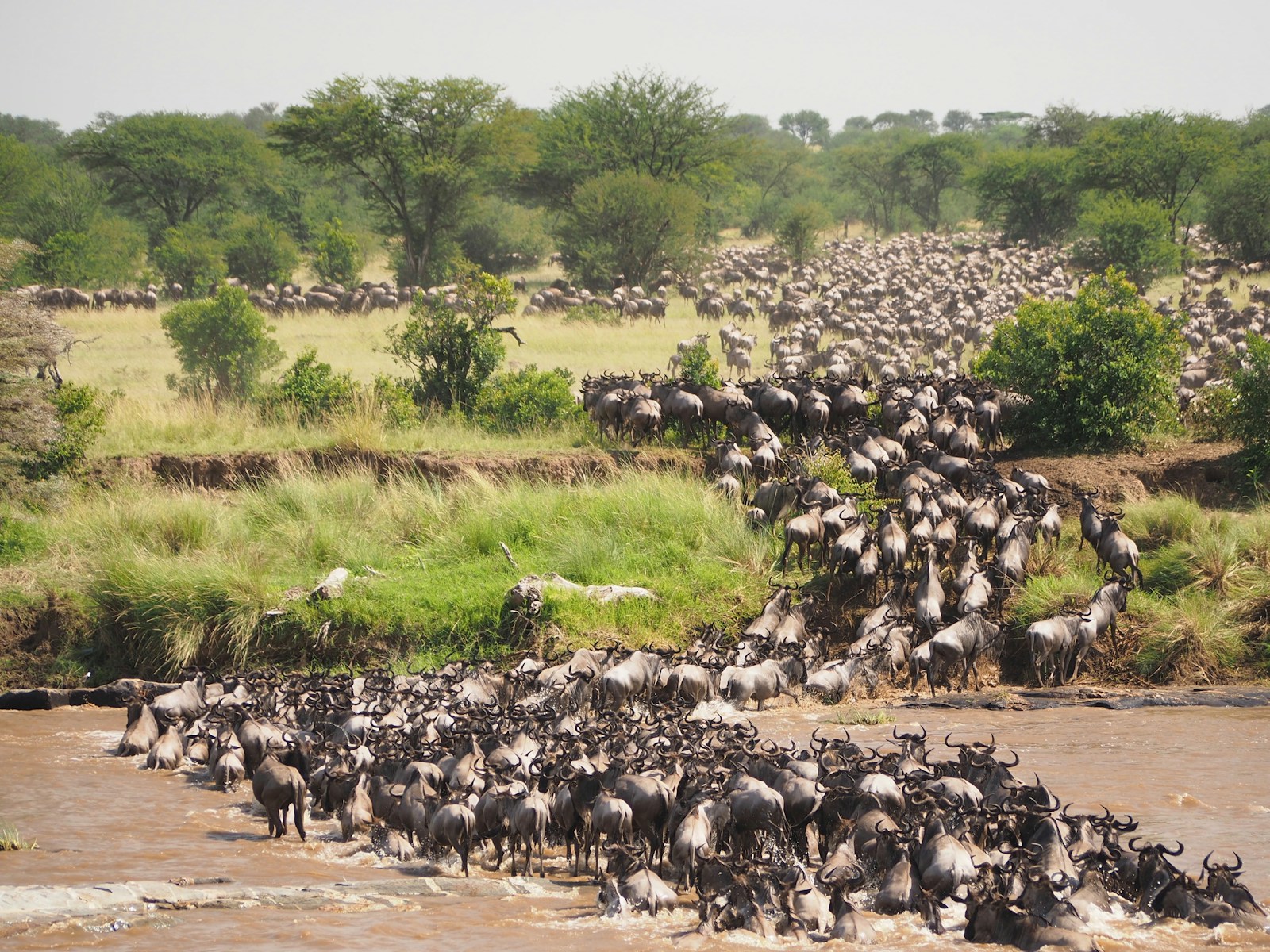
The Serengeti is particularly famous for the Great Wildebeest Migration.
However, even outside major migration periods, Central Serengeti provides strong year-round wildlife viewing.
Budget travelers can stay at public campsites rather than expensive permanent safari lodges.
Ngorongoro provides exceptional wildlife viewing within a relatively compact area.
Because animals occur in high concentrations, travelers may encounter many different species during a single game drive.
For travelers with limited safari days, Ngorongoro therefore provides excellent value.
Tarangire is especially attractive during Tanzania’s dry season.
Large numbers of animals gather around permanent water sources.
Elephants are among the park's highlights, while its ancient baobab trees create distinctive safari landscapes.
TANAPA currently notes that entry fees vary according to visitor category, age, and activity, and advises travelers to confirm the current tariff before traveling.
Lake Manyara is smaller than Serengeti or Tarangire but can be incorporated into longer budget itineraries.
The park contains forests, wetlands, open areas, and dramatic scenery beneath the Great Rift Valley escarpment.
Wildlife can include elephants, baboons, giraffes, buffalo, hippos, antelope, and numerous bird species.
One of the biggest decisions affecting safari cost is whether to choose a shared or private vehicle.
This is one of the easiest ways to reduce the total price.
Instead of paying for an entire Land Cruiser yourself, you divide vehicle costs with other travelers.
Camping can reduce accommodation expenses while maintaining the same wildlife destinations.
You still visit Serengeti, Ngorongoro, and Tarangire.
The difference is mainly your accommodation.
A three- or four-day safari costs significantly less than an eight-day safari.
For a first safari, prioritize:
Serengeti + Ngorongoro
Or choose:
Tarangire + Serengeti + Ngorongoro
Fly-in safaris save time but increase costs.
Budget travelers normally travel between parks by 4×4 vehicle.
The drive itself often provides impressive scenery and additional wildlife opportunities.
Certain accommodation locations inside protected areas can be expensive.
Staying near places such as Karatu or Mto wa Mbu can reduce accommodation costs on suitable itineraries.
Safari prices can sometimes be more attractive outside the busiest travel months.
Accommodation providers may offer lower rates when demand decreases.
However, conditions change throughout the year, so choosing a season should depend on both your wildlife interests and your budget.
Tanzania offers safari opportunities throughout the year.
Northern Tanzania can provide excellent wildlife experiences during this period.
The southern Serengeti and Ndutu ecosystem can be particularly interesting around the wildebeest calving period.
These months generally form part of the long rainy season.
Some roads can become muddy, but fewer tourists and lower accommodation rates can make the period attractive to experienced or flexible travelers.
Landscapes begin becoming drier, and wildlife viewing conditions are generally strong.
This is one of Tanzania’s busiest safari periods.
Weather is generally dry, and wildlife concentrates around water sources.
Northern Serengeti is famous during parts of this period for wildebeest movement and potential Mara River crossings.
Because demand is high, budget travelers should book early.
Tarangire is particularly rewarding during the dry season when animals gather around water sources. TANAPA recommends advance booking for peak dry-season accommodation.
Short rains can refresh the landscape.
These months can offer excellent wildlife viewing combined with fewer visitors during certain periods.
Many travelers assume that seeing the Great Migration requires a luxury safari.
It does not.
Your accommodation category does not determine whether you can see migrating wildebeest.
Location and timing are far more important.
Migration movement changes from year to year because rainfall influences grass and water availability.
Broadly:
Southern Serengeti and Ndutu ecosystem.
Herds gradually move north and west.
Western and central regions may become important.
Northern Serengeti and the wider Mara ecosystem become significant.
Herds generally begin moving south again as rainfall patterns change.
No migration sighting or river crossing can ever be guaranteed because wildlife movements remain natural.
Yes, when organized by a legitimate safari company and operated by trained professionals.
Safari guides understand:
Travelers should always follow their guide’s instructions.
Never leave a safari vehicle in an unauthorized area or approach wild animals.
Most Tanzania safaris use specially modified 4×4 Land Cruisers.
Typical safari vehicles may include:
The pop-up roof makes standing and photographing wildlife easier during game drives.
You do not need expensive safari clothing.
Pack practical items such as:
Ngorongoro mornings can be cold, so bring a warm layer.
Neutral-colored clothing is generally practical for safari.
Carrying a small amount of cash is useful for:
US dollars are widely used within Tanzania’s tourism industry, although Tanzanian shillings are useful for local purchases.
Check the condition and accepted issue dates of foreign currency before traveling.
Most organized multi-day safaris include meals.
Depending on your safari style, this can include:
Dietary requirements such as vegetarian or vegan meals can normally be arranged when communicated in advance.
Yes.
Families can benefit particularly from a private safari because the vehicle cost is divided among several travelers.
A private safari also allows greater flexibility for children.
Families can adjust:
Parents should confirm current park and accommodation child policies when requesting a quotation.
Tanzania is particularly attractive for solo travelers because shared safari departures can reduce the otherwise high cost of hiring an entire vehicle.
A solo traveler can join other guests traveling on the same route.
This creates both financial savings and an opportunity to meet travelers from different countries.
Travelers staying in Zanzibar can combine a beach holiday with a mainland safari.
The most affordable option is often to fly to Arusha and join an existing safari departure.
Possible combinations include:
Zanzibar → Arusha → Tarangire → Serengeti → Ngorongoro → Arusha → Zanzibar
Short fly-in safaris directly to Serengeti are also available, although domestic flights generally make them more expensive than overland safaris.
Arusha is the main gateway for Northern Tanzania safaris.
Starting from Arusha provides convenient access to:
For budget travelers, arriving in Arusha at least one day before the safari is often advisable.
This reduces the risk of missing a safari departure because of delayed international flights.
A budget Tanzania safari itinerary vacation can still deliver the experiences travelers dream about when planning an African safari.
You do not need the most expensive lodge to watch lions crossing the Serengeti plains.
You do not need a luxury tent to see elephants beneath Tarangire’s baobab trees.
And you do not need a premium safari package to descend into Ngorongoro Crater and experience one of Africa’s most extraordinary wildlife environments.
The most effective budget strategy is to spend money on what matters most: park access, a reliable safari vehicle, an experienced professional guide, a well-planned itinerary, and enough time in the right wildlife areas.
For first-time travelers, a 4- or 5-day Tarangire–Serengeti–Ngorongoro itinerary offers one of the strongest combinations of affordability and wildlife diversity.
Travelers looking for the lowest possible cost can choose a shared camping safari, while those wanting additional comfort can upgrade to budget or mid-range lodges without changing the overall safari route.
Plan carefully, compare what each package includes, verify the current official park fees, and select your itinerary according to your wildlife priorities rather than accommodation luxury.
A well-organized budget safari can become one of the most memorable vacations of your life.
Planning a budget Ngorongoro Crater safari holiday from Arusha? Compare a crater day trip, a two-day Tarangire and Ngorongoro safari, or a…
Read articleA Lake Manyara safari can cost USD 150–220 per person for a shared day trip from Arusha. A published example of a…
Read articleExplore Ruaha National Park’s baobab country on a guided safari built around your dates, group size and budget. Spend your game drives…
Read articleA Nyerere Tanzania wildlife safari can take you from a woodland game drive in the morning to a boat on the Rufiji…
Read article

