

Budget Ngorongoro Crater Safari Holiday
Planning a budget Ngorongoro Crater safari holiday from Arusha? Compare a crater day trip, a two-day Tarangire and Ngorongoro safari, or a…
Read articleArusha City - Tanzania
Safari & Travel Tips
September 5, 2026 · 12 min read
Planning a budget Tanzania safari package is one of the best ways to experience world-famous wildlife, beautiful landscapes, and authentic African adventure without choosing high-end luxury lodges. Tanzania offers excellent safari options for travelers who want to visit destinations such as Serengeti National Park, Ngorongoro Crater, Tarangire National Park, and Lake Manyara while keeping their overall travel costs manageable.
A budget safari does not necessarily mean sacrificing the quality of your wildlife experience. In many cases, travelers visit the same national parks, enjoy the same game-drive areas, and have opportunities to see the same animals as guests staying in expensive safari camps. The main differences usually involve accommodation style, whether the safari is shared or private, and the level of additional services included.
For travelers looking for an affordable and well-organized safari, Kilipath African Safaris can arrange budget-friendly Tanzania safari packages based on the number of days, preferred parks, accommodation style, and travel dates.
A budget Tanzania safari package is designed to reduce unnecessary expenses while keeping the essential safari experience intact. These packages commonly use public campsites, affordable lodges, shared safari vehicles, or a combination of camping and lodge accommodation.
Most packages include transportation in a safari vehicle, professional guiding, national park entrance fees, accommodation during the safari, meals, and drinking water.
Budget safari travelers can therefore concentrate on wildlife viewing while the major logistics are organized in advance.
One of the biggest advantages of Tanzania is that budget travelers can access some of Africa's most spectacular wildlife destinations without needing to book luxury accommodation.
Tanzania offers exceptional value because its major safari destinations contain enormous concentrations of wildlife.
Travelers may encounter:
Depending on the itinerary and season, travelers may also witness parts of the Great Wildebeest Migration in the Serengeti ecosystem.
The wildlife experience itself is usually determined more by the national park, season, guide, and time spent on game drives than by how expensive the accommodation is.
Several destinations work especially well for affordable safari itineraries.
Serengeti National Park is one of the most famous safari destinations in the world.
The park is known for vast grasslands, predators, large populations of plains animals, and the annual Great Wildebeest Migration.
Even travelers on budget camping safaris can experience spectacular Serengeti wildlife.
Public campsites provide a particularly adventurous experience because guests stay inside or close to wilderness areas surrounded by the sounds of nature.
Serengeti usually requires additional travel time compared with parks closer to Arusha, so itineraries of at least three or four days are usually preferable when including it.
Ngorongoro Crater is another highlight of many Tanzania safari packages.
The crater contains an impressive concentration of wildlife within a relatively compact area.
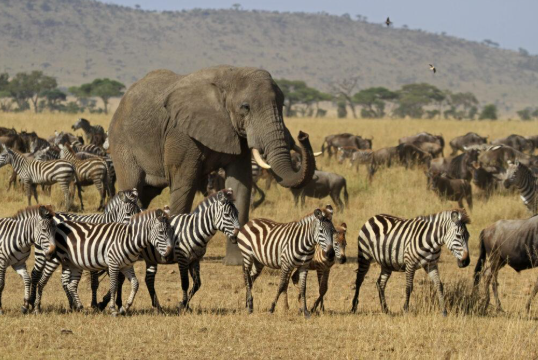
Animals commonly seen include buffalo, zebra, wildebeest, elephants, hyenas, lions, hippos, and various antelopes.
Ngorongoro is particularly attractive for shorter safari itineraries because visitors can experience excellent wildlife viewing during a single crater game drive.
Tarangire is famous for its elephants and ancient baobab trees.
During the dry season, wildlife often gathers around the Tarangire River, creating excellent game-viewing opportunities.
The park is relatively accessible from Arusha, making it a practical destination for budget itineraries.
Visitors may encounter elephants, giraffes, zebras, wildebeest, lions, buffalo, impalas, and numerous bird species.
Lake Manyara is a smaller national park but provides varied scenery, including woodland, groundwater forest, open areas, and lake environments.
Wildlife can include elephants, giraffes, buffalo, baboons, monkeys, hippos, zebras, and numerous birds.
Lake Manyara can be combined conveniently with Tarangire and Ngorongoro.
Camping is usually one of the most affordable ways to experience Tanzania's northern safari circuit.
On a typical camping safari, travelers stay at designated public campsites.
Camping equipment can include tents, mattresses, sleeping bags, and pillows.
Shared bathroom and shower facilities are normally available at public campsites, although standards vary depending on the location.
Meals are often prepared by a safari cook or chef.
Camping offers something that traditional lodge accommodation cannot fully replicate: the feeling of sleeping close to the African wilderness.
At night, travelers may hear hyenas, distant lions, birds, or other wildlife from their campsite.
National park safety regulations must always be followed.
Travelers who prefer greater comfort can choose inexpensive lodges, guesthouses, or tented accommodation.
Budget lodge safaris normally cost more than public camping but provide additional conveniences such as private rooms and bathrooms.
Many affordable lodges are located outside national parks in towns such as Karatu or around safari gateways.
This option is particularly popular with couples, families, and travelers who prefer a proper bed after long game-drive days.
A mixed accommodation safari can be an excellent compromise between price and comfort.
For example, travelers might stay in a lodge near Tarangire or Karatu but camp inside Serengeti National Park.
This arrangement can reduce the overall safari price while allowing comfortable nights at strategic points during the trip.
Mixed accommodation packages are also useful for travelers who want the adventure of camping but do not want to camp every night.
A short budget safari could follow this route:
Depart from Arusha and travel toward Serengeti National Park.
The journey passes through beautiful highland landscapes before reaching the plains.
After entering Serengeti, enjoy an afternoon game drive while searching for lions, elephants, giraffes, zebras, wildebeest, and other wildlife.
Overnight at a campsite or budget accommodation.
Start with an early Serengeti game drive.
Morning hours are often excellent for wildlife activity, particularly predators.
Continue exploring before traveling toward the Ngorongoro Conservation Area.
Overnight near the crater.
Descend into Ngorongoro Crater early in the morning.
Explore the crater floor while searching for lions, buffalo, elephants, hippos, zebras, wildebeest, and potentially black rhinos.
After the game drive, return to Arusha.
A four-day itinerary provides more time and can combine several parks.
Day 1: Arusha – Tarangire National Park
Day 2: Serengeti National Park
Day 3: Serengeti – Ngorongoro Conservation Area
Day 4: Ngorongoro Crater – Arusha
This is one of the most practical Tanzania safari routes because it combines three highly rewarding destinations.
Travelers who prioritize Serengeti may choose an itinerary that provides more time there instead.
With five days, travelers can slow down slightly and spend more time exploring.
A typical route may include:
Day 1: Tarangire National Park
Day 2: Serengeti National Park
Day 3: Full-day Serengeti game drive
Day 4: Serengeti to Ngorongoro
Day 5: Ngorongoro Crater and return to Arusha
Additional days greatly improve the safari experience because wildlife sightings can never be completely predicted.
Having more time increases opportunities to encounter predators, observe animal behavior, and explore different habitats.
A properly arranged budget Tanzania safari package may include:
Safari transportation in a 4x4 vehicle, professional safari guide, national park entrance fees, conservation fees, accommodation, camping equipment where applicable, meals during the safari, drinking water, and game drives according to the itinerary.
Some packages may additionally include airport transfers or accommodation in Arusha before or after the safari.
Travelers should always check the exact inclusions before confirming the booking.
Typical exclusions may include:
International flights, Tanzania visa costs, travel insurance, alcoholic drinks, personal expenses, optional activities, gratuities, and accommodation outside the agreed safari itinerary.
Domestic flights are normally excluded unless they are specifically included in a fly-in safari package.
The cost depends on several factors rather than one fixed rate.
Major pricing factors include:
Number of safari days: Longer safaris include additional accommodation, food, park fees, vehicle use, and guiding.
Accommodation: Public camping normally costs less than lodge or luxury tented accommodation.
Private or shared safari: Shared safaris are generally cheaper for solo travelers and couples.
Number of travelers: Private safari costs can be divided among several guests.
Season: Accommodation availability and prices may change significantly during peak safari seasons.
Parks included: Serengeti and Ngorongoro itineraries generally cost more than safari routes concentrated around parks close to Arusha.
There are several practical ways to reduce safari costs.
Joining other travelers is one of the easiest ways to reduce vehicle and guide costs.
Public camping can dramatically reduce accommodation expenses while still allowing access to the same national parks.
Private safari costs become much more reasonable when divided between several people.
Luxury accommodation can represent a significant part of safari pricing.
Travelers primarily interested in wildlife may prefer putting their budget toward additional safari days instead.
Driving efficiently between parks reduces unnecessary transportation costs and makes better use of park-entry periods.
Tanzania offers safaris throughout the year.
The dry season generally provides excellent game viewing because vegetation becomes thinner and animals concentrate around water sources.
This is also a popular travel season, so accommodation can fill quickly.
Short rains may occur, but safari conditions can remain very good.
Landscapes become greener, and some periods may offer better accommodation value.
This is an important period in the southern Serengeti and Ndutu ecosystem.
The wildebeest calving season generally attracts travelers interested in migration activity and predator interactions.
These are traditionally wetter months.
Some safari camps reduce prices during this period.
For budget-conscious travelers who do not mind occasional rain, this can sometimes provide particularly attractive value.
Many travelers assume the Great Migration can be seen in one location throughout the year.
In reality, the herds move through different parts of the Serengeti ecosystem according to rainfall and grazing conditions.
Broadly speaking, southern areas around Ndutu become important during the calving months, while northern Serengeti becomes especially famous during the dry-season river-crossing period.
Migration locations vary from year to year because wildlife movements depend on natural conditions.
Travelers booking specifically for migration should therefore select their itinerary according to the travel month.
Safari trips generally use specially modified 4x4 Land Cruisers.
A good safari vehicle normally includes a pop-up roof so passengers can stand safely while observing and photographing wildlife.
Window access is particularly important during shared safaris.
Vehicles may also provide charging connections, a cooler or refrigerator, communication radio, first-aid equipment, and other safari necessities.
Budget does not necessarily mean poor food.
Safari meals may include breakfast, packed or hot lunch, and dinner depending on the itinerary.
Camping safaris may have a dedicated chef preparing meals at the campsite.
Travelers with dietary requirements should mention them before the trip.
Vegetarian, vegan, halal, and other dietary requests can often be accommodated with advance planning.
Safari campsites operate according to national park and conservation-area regulations.
Wildlife may occasionally move near campsites because the camps are located in natural environments.
Travelers should therefore always follow the guide's safety instructions.
Guests should avoid walking away from camp alone at night, keep food properly stored, and respect instructions relating to wild animals.
Camping in the Serengeti can feel adventurous, but responsible operators and park procedures make it a popular option for thousands of safari travelers.
Travelers do not need excessive luggage.
Useful items include lightweight neutral-colored clothing, comfortable shoes, sunscreen, sunglasses, hat, insect repellent, small backpack, reusable water bottle, camera, binoculars if desired, power bank, and warm clothing for Ngorongoro.
Ngorongoro mornings can be surprisingly cold due to the crater's elevation.
Soft-sided luggage is generally easier to handle inside safari vehicles than large hard-shell suitcases.
Couples frequently choose shared safaris when keeping costs low is the main priority.
However, a private safari can also provide excellent value when travelers want more privacy or a flexible honeymoon-style experience.
A mixed accommodation package may be particularly suitable because it combines affordable pricing with occasional lodge comfort.
Shared safari departures are usually one of the best options for solo travelers.
Instead of paying the entire vehicle cost, solo guests can join other travelers following similar routes.
This can dramatically reduce the price compared with arranging a fully private vehicle.
Shared safaris also provide an opportunity to meet travelers from different countries.
Families can often benefit from private safari arrangements because vehicle costs are distributed among several family members.
Private vehicles also provide greater flexibility for children.
Families can stop when necessary, adjust departure times, and spend more or less time at individual wildlife sightings.
Accommodation should be selected carefully according to children's ages and the family's preferred comfort level.
A Tanzania safari can technically be arranged from two days onward, but the ideal length depends on the destinations.
For Tarangire and Ngorongoro, two or three days may provide a satisfying introduction.
For Serengeti and Ngorongoro, three days is possible, but four to five days generally provides a more comfortable experience.
Travelers with six or seven days can explore several ecosystems without spending every day moving between destinations.
Arusha is the principal gateway to Tanzania's northern safari circuit.
Many travelers arrive through Kilimanjaro International Airport or Arusha Airport.
From Arusha, safari vehicles can conveniently travel toward Tarangire, Lake Manyara, Ngorongoro, and Serengeti.
Travelers joining an early shared safari departure are normally encouraged to arrive in Arusha the day before the safari begins.
This helps avoid delays caused by same-day flights.
Travelers relaxing in Zanzibar can also combine their beach holiday with a mainland safari.
Flights connect Zanzibar with Arusha and several safari airstrips.
For travelers prioritizing affordability, flying to Arusha and joining a road safari can sometimes be more economical than booking multiple bush flights.
Fly-in Serengeti packages are faster but generally cost more.
Choosing the right local safari operator is an important part of planning an affordable trip.
Kilipath African Safaris can organize customized and shared safari options according to travelers' budgets, available time, accommodation preferences, and wildlife interests.
Travelers can choose between camping, lodge, mixed accommodation, shared departures, and private trips.
The objective is to create a practical itinerary where travelers spend their money on the experiences that matter most instead of unnecessary extras.
A memorable African safari does not have to require luxury accommodation or an enormous travel budget.
By choosing the right combination of parks, safari duration, shared or private transportation, and accommodation style, travelers can experience Tanzania's extraordinary wildlife at a more affordable price.
Whether you want a 3-day Serengeti and Ngorongoro safari, a 4-day Tarangire, Serengeti and Ngorongoro adventure, or a longer 5- to 7-day Tanzania safari package, the itinerary can be adapted to your available time and budget.
Contact Kilipath African Safaris with your travel dates, number of travelers, preferred safari duration, and accommodation preference to receive a personalized budget Tanzania safari package.
Planning a budget Ngorongoro Crater safari holiday from Arusha? Compare a crater day trip, a two-day Tarangire and Ngorongoro safari, or a…
Read articleA Lake Manyara safari can cost USD 150–220 per person for a shared day trip from Arusha. A published example of a…
Read articleExplore Ruaha National Park’s baobab country on a guided safari built around your dates, group size and budget. Spend your game drives…
Read articleA Nyerere Tanzania wildlife safari can take you from a woodland game drive in the morning to a boat on the Rufiji…
Read article

