

Budget Ngorongoro Crater Safari Holiday
Planning a budget Ngorongoro Crater safari holiday from Arusha? Compare a crater day trip, a two-day Tarangire and Ngorongoro safari, or a…
Read articleArusha City - Tanzania
Safari & Travel Tips
September 2, 2026 · 16 min read
A budget Tarangire safari experience is one of the best ways to enjoy Tanzania’s spectacular wildlife without paying the high prices associated with luxury safari packages. Tarangire National Park is famous for its enormous elephant herds, ancient baobab trees, beautiful savannah landscapes, and excellent opportunities to see predators and other African wildlife.
Located within Tanzania’s popular Northern Safari Circuit, Tarangire is especially suitable for travelers who want an affordable safari from Arusha, Moshi, or nearby destinations. Whether you choose a one-day safari, a two-day camping adventure, or combine Tarangire with Serengeti, Ngorongoro Crater, and Lake Manyara, the park offers outstanding value for budget-conscious travelers.
This guide explains everything you need to know about planning an affordable Tarangire safari, including wildlife, transportation, accommodation, safari costs, itineraries, the best time to visit, what is normally included, and how to get the best experience for your budget.
Tarangire National Park is particularly attractive to budget travelers because it is relatively close to Arusha compared with Serengeti National Park.
This makes it possible to visit Tarangire even on a short Tanzania itinerary.
A typical drive from Arusha to Tarangire takes approximately two to three hours depending on traffic, road conditions, and the exact entry gate used. Because of this accessibility, travelers can enjoy a full-day game drive without needing expensive domestic flights.
A budget Tarangire safari experience can therefore provide:
Tarangire can also be combined efficiently with nearby parks, helping travelers reduce overall driving costs while enjoying several destinations.
Tarangire has a completely different character from many other parks in northern Tanzania.
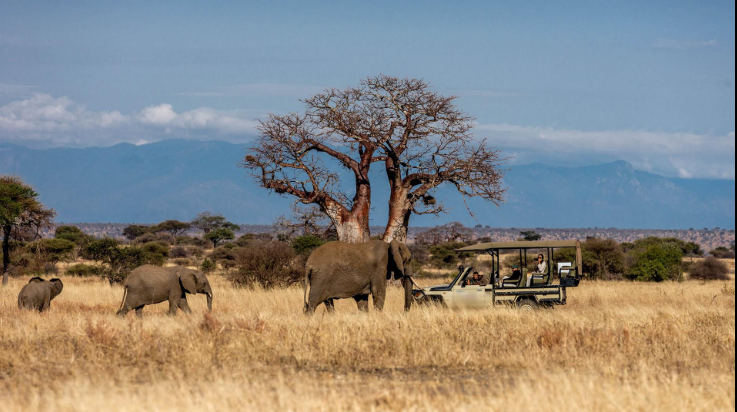
One of its most recognizable features is the presence of enormous baobab trees scattered across the landscape. Some of these impressive trees are believed to be hundreds of years old.
The Tarangire River is another important feature of the ecosystem.
During the dry season, the river becomes one of the main permanent water sources available to wildlife in the surrounding region. As smaller water sources disappear, animals often concentrate around the river and nearby wetlands.
This can create excellent wildlife viewing conditions.
Tarangire is particularly famous for elephants. Visitors may see individual families or very large herds traveling between feeding and watering areas.
Watching elephants walking beneath giant baobab trees is one of the classic safari scenes associated with Tarangire.
A major reason travelers choose a budget Tarangire safari experience is the diversity of wildlife that can be seen even during a relatively short visit.
Tarangire is widely known for its large elephant population.
Visitors frequently encounter elephant families close to safari tracks, water sources, and wooded areas.
Elephants can sometimes be observed feeding, drinking, bathing, playing, or protecting younger members of the herd.
Lions are present throughout Tarangire National Park.
They may be found resting beneath acacia trees, hunting near wildlife concentrations, or relaxing beside the Tarangire River.
Because lions often rest during the hottest parts of the day, early morning and late afternoon game drives can provide particularly good opportunities.
Giraffes are common throughout the park and often provide excellent photography opportunities against the baobab-filled landscape.
Large numbers of zebras and wildebeest may be found in Tarangire, particularly during periods when animals migrate toward permanent water sources.
African buffaloes are also regularly seen.
They may travel in groups or gather around water and grazing areas.
Leopards live inside Tarangire, although they can be considerably harder to locate than elephants or giraffes.
An experienced safari guide will search rocky areas, riverine vegetation, and large trees where leopards may rest.
Cheetahs may occasionally be seen in open areas of Tarangire.
Sightings are less predictable than in some sections of Serengeti, making every encounter particularly special.
Travelers may also encounter:
Every game drive is different, and wildlife sightings can never be guaranteed.
Travelers particularly interested in elephants should strongly consider Tarangire.
The park provides opportunities to observe elephant behavior at close but respectful distances from the safari vehicle.
You might see elephants:
For photographers, elephants surrounded by baobab trees provide some of Tanzania's most memorable wildlife compositions.
The giant baobab trees are an important part of Tarangire's identity.
Their unusually thick trunks and wide branches create dramatic silhouettes throughout the park.
Baobabs also play an important ecological role.
Various animals use the trees for food, shelter, and shade. Elephants may sometimes strip bark from baobab trunks to access moisture and nutrients.
Photography enthusiasts often enjoy capturing wildlife with these trees in the background.
A one-day Tarangire safari is ideal for travelers who have limited time in northern Tanzania.
A typical itinerary may look like this:
Your safari guide collects you from your hotel in Arusha early in the morning.
After meeting your guide and receiving a short safari briefing, you begin the drive toward Tarangire National Park.
After completing park-entry procedures, you begin your first game drive.
Your guide searches for elephants, giraffes, zebras, lions, buffaloes, antelopes, and other animals.
Lunch is usually enjoyed at a designated picnic area inside the park.
Depending on the safari package, meals can be provided as packed lunches or prepared as a more complete safari meal.
After lunch, wildlife viewing continues through another section of the park.
Your guide may follow the Tarangire River or explore areas where animals have recently been reported.
You leave the park and drive back toward Arusha.
Arrival generally takes place in the evening depending on road conditions and the length of the game drive.
Travelers wanting more time can choose a two-day safari.
An overnight safari allows visitors to enjoy a more relaxed experience and often provides additional morning wildlife-viewing opportunities.
Depart Arusha in the morning and drive to Tarangire.
Spend most of the day exploring the park with your professional guide.
After the afternoon game drive, continue to your accommodation near Tarangire, Mto wa Mbu, or another nearby safari area.
Accommodation options can include:
Enjoy dinner and overnight accommodation.
After breakfast, enjoy another game-drive session depending on the chosen itinerary.
Later, leave the park region and return to Arusha.
Alternatively, continue toward another safari destination such as Ngorongoro Crater or Lake Manyara.
One of the most popular affordable safari combinations is Tarangire National Park plus Ngorongoro Crater.
A typical two-day itinerary is:
Depart Arusha and spend the day exploring Tarangire.
Overnight near Karatu, Mto wa Mbu, or another convenient location.
Depart early in the morning and travel to the Ngorongoro Conservation Area.
Descend into the crater for a game drive.
The Ngorongoro Crater supports a dense concentration of wildlife and may provide opportunities to see:
After the game drive, return to Arusha.
This itinerary is particularly attractive for travelers with limited time because it combines two very different ecosystems.
Travelers with three to five days available can build a more complete Northern Circuit safari.
A popular itinerary includes:
Enjoy a game drive among elephants and baobabs.
Travel toward Serengeti National Park while enjoying the changing scenery of northern Tanzania.
Enjoy a full or extended game drive in Serengeti.
Complete another wildlife-viewing session before traveling toward the Ngorongoro region.
Descend into the crater for wildlife viewing before returning to Arusha.
Combining parks increases safari costs but also significantly increases the diversity of wildlife and landscapes experienced.
Accommodation has a major influence on your total safari price.
Travelers wanting the lowest possible price normally choose camping or basic lodge options.
Camping is generally one of the most affordable safari accommodation styles.
A typical camping safari may provide:
Bathroom facilities are normally shared at public campsites.
Camping provides a more adventurous experience because you remain close to nature throughout the night.
Budget lodges are suitable for travelers wanting a private room while controlling costs.
Facilities vary but may include:
Travelers with slightly more flexibility in their budget can choose tented safari camps.
These often combine comfort with a wilderness atmosphere.
A typical room may include:
A proper wildlife safari is normally conducted in a customized 4x4 Land Cruiser.
Features may include:
The pop-up roof allows guests to stand safely inside the vehicle while observing and photographing wildlife.
Your guide is one of the most important parts of the safari experience.
A knowledgeable guide understands animal behavior, park geography, seasonal movements, driving conditions, and wildlife-tracking techniques.
During the safari, the guide may explain:
A good guide does more than drive the vehicle—they help transform sightings into meaningful wildlife experiences.
Tarangire can be visited throughout the year, although wildlife conditions change seasonally.
The dry season is one of the most popular periods.
Wildlife increasingly concentrates around permanent water sources, particularly the Tarangire River.
This can make animals easier to locate.
The landscape becomes progressively drier and more open.
Short rains may transform the landscape into greener scenery.
Wildlife remains present, while traveler numbers may sometimes be lower than during peak months.
The park generally remains green, providing attractive landscapes and opportunities for wildlife photography.
These months typically form part of Tanzania's wetter season.
Some travelers appreciate the dramatic landscapes, fewer safari vehicles, and potentially lower seasonal accommodation prices.
However, heavy rain can affect road conditions and travel times.
The dry season is particularly famous because animals rely more heavily on the Tarangire River.
Elephants, buffaloes, zebras, wildebeest, and antelopes may gather near water.
Predators may also patrol these locations because prey animals are concentrated nearby.
This period is excellent for traditional wildlife photography.
During wetter months, Tarangire becomes lush and colorful.
Advantages can include:
The wildlife may be more dispersed because water is available in more places, but the overall safari scenery can be spectacular.
Tarangire is also an outstanding destination for bird enthusiasts.
Numerous bird species inhabit the park's grasslands, wetlands, woodlands, river systems, and baobab areas.
Travelers may see:
Bird activity can be particularly impressive during wetter periods.
The price varies significantly depending on several factors.
These include:
Generally, a shared camping safari provides the lowest cost.
Private safaris cost more because fewer travelers share the vehicle, guide, fuel, and operational expenses.
Rather than selecting the cheapest advertised package without checking details, travelers should confirm exactly what the quoted safari price includes.
A properly organized budget Tarangire safari package may include:
Always request a written list of inclusions before confirming your safari.
Depending on the operator, exclusions may include:
Read the safari proposal carefully before paying your deposit.
A quality safari does not necessarily need to be expensive.
Here are some useful ways to control your safari budget.
Sharing the safari vehicle significantly reduces transportation and guide costs.
This option is particularly valuable for solo travelers.
Camping is generally considerably cheaper than luxury lodges.
Private safaris become more economical when costs are divided between more travelers.
Tarangire is accessible by road from Arusha, making flying unnecessary for most travelers.
A well-designed route connecting Tarangire, Lake Manyara, Ngorongoro, and Serengeti can reduce unnecessary backtracking.
Booking early gives travelers more accommodation choices, including affordable properties that can sell out first.
Price should never come at the expense of basic safety and professionalism.
Before booking a very low-cost safari, verify that the company provides:
Extremely cheap offers that do not clearly explain park fees, accommodation, and transport should be approached carefully.
Pack light but bring practical safari clothing.
Recommended items include:
Early mornings can feel cool, particularly when traveling during the dry season.
Neutral safari colors such as beige, khaki, green, and brown are generally practical.
Avoid extremely bright clothing when possible.
Dark blue and black clothing may also be less suitable in areas where tsetse flies are present.
Tarangire is excellent for safari photography.
Consider bringing:
Photographers should remain patient.
Animals may move into better positions after several minutes, and experienced guides often understand when it is worth remaining at a sighting.
Tarangire can be a good safari destination for families because driving distances from Arusha are relatively manageable.
Children often particularly enjoy seeing:
A private safari offers families additional flexibility with meal breaks and game-drive duration.
Couples can choose between affordable shared departures and private safaris.
Private arrangements allow more flexibility and privacy, while shared safaris significantly reduce costs.
Adding a comfortable tented lodge can create a romantic atmosphere without requiring a fully luxury itinerary.
Solo travelers often face higher prices on private safaris because they cannot divide the vehicle cost.
Joining a group is therefore one of the most effective ways to enjoy an affordable Tarangire safari.
Solo travelers can share:
This can considerably reduce the final safari price.
Arusha is the main gateway for Northern Tanzania safaris.
Many visitors stay one night in Arusha before departure.
Your operator may arrange pickup from:
An early departure is usually recommended to maximize wildlife-viewing time.
Travelers staying in Zanzibar can also include Tarangire in their Tanzania holiday.
A typical arrangement involves flying from Zanzibar to Arusha or Kilimanjaro before beginning the safari.
Depending on flight schedules, travelers may:
When arranging this option, allow enough time for flight delays, luggage collection, transfers, and the drive to the national park.
Yes.
A popular Tanzania holiday structure is:
Zanzibar → Arusha → Tarangire → Serengeti → Ngorongoro → Arusha → Zanzibar.
This provides both wildlife adventure and beach relaxation.
Both parks provide very different experiences.
If your budget allows, visiting both creates a more complete Northern Tanzania safari.
Tarangire offers a larger, more natural game-drive environment spread across woodland, grassland, and river habitats.
Ngorongoro offers a compact wildlife experience within an enormous volcanic caldera.
Tarangire is particularly famous for elephants, while Ngorongoro is valued for its dense wildlife concentration and possibility of spotting the Big Five.
Combining the two destinations is therefore highly recommended.
Yes, particularly for travelers with limited time.
A single full-day game drive can provide excellent opportunities to see elephants, giraffes, zebras, lions, buffaloes, antelopes, and numerous birds.
However, staying overnight can provide additional wildlife-viewing time and a more relaxed safari schedule.
For Tarangire alone, one or two days can be sufficient for many travelers.
For a complete Northern Tanzania safari, approximately four to six days offers more time to combine Tarangire with Serengeti and Ngorongoro.
Booking with an experienced local safari company provides several advantages.
Local operators understand:
A local team can also customize itineraries depending on your available time and budget.
Tarangire National Park, Tanzania
Budget wildlife safari
1–2 days for Tarangire only
Arusha
4x4 safari Land Cruiser
Professional English-speaking safari guide
Camping, budget lodge, or mid-range tented camp
Game drives and wildlife photography
Elephants, lions, giraffes, zebras, wildebeest, buffaloes, antelopes, monkeys, baboons, and numerous bird species.
A budget Tarangire safari experience allows travelers to enjoy many of the core elements of a classic Tanzania safari while controlling expenses.
You still experience:
The main savings usually come from selecting simpler accommodation, sharing the safari vehicle, and avoiding unnecessary luxury services.
If you dream of seeing elephants beneath giant baobab trees, watching giraffes move across the savannah, searching for lions, and experiencing Tanzania's wilderness without spending a luxury-level budget, Tarangire National Park is an excellent choice.
At Kilipath African Safaris, we can arrange private and shared Tarangire safari packages depending on your travel dates, group size, accommodation preference, and budget.
Whether you are traveling solo, as a couple, with friends, or as a family, your itinerary can be customized to include Tarangire alone or combine the park with Serengeti, Ngorongoro Crater, Lake Manyara, Arusha, or Zanzibar.
Contact us with:
We can then prepare a suitable safari itinerary and quotation for your Tanzania adventure.
Planning a budget Ngorongoro Crater safari holiday from Arusha? Compare a crater day trip, a two-day Tarangire and Ngorongoro safari, or a…
Read articleA Lake Manyara safari can cost USD 150–220 per person for a shared day trip from Arusha. A published example of a…
Read articleA Tanzania safari from Zanzibar can mean a short mainland trip during your beach holiday or a complete package with flights, game…
Read articleLooking for a group Tanzania safari price from Kilipath African Safaris? A published example for our four-day shared camping safari through Tarangire,…
Read article

