A Serengeti safari does not have to mean luxury lodges, private charter flights, and an unlimited budget. With a well-designed cheap Serengeti safari itinerary, travelers can experience game drives, dramatic landscapes, resident predators, and possibly part of the Great Migration while keeping costs under control.
The key is to spend money on the parts that directly improve the safari: enough time inside the park, a reliable 4×4 vehicle, an experienced guide, park fees, meals, and safe accommodation. Costs can then be reduced by joining a small group, choosing public camping or budget tented accommodation, traveling by road, and avoiding unnecessary add-ons.
Serengeti National Park is a UNESCO World Heritage Site known for its vast plains and the annual movement of huge herds of wildebeest, zebra, and gazelle followed by predators. The migration is seasonal and follows rainfall, so no ethical operator should promise a particular sighting or river crossing on a particular day. However, resident wildlife makes the Serengeti rewarding throughout the year.
This guide presents a practical four-day route from Arusha that combines Tarangire, Serengeti, and Ngorongoro Crater. It is one of the best-value options for first-time visitors because it includes three different ecosystems without requiring domestic flights.
Recommended 4-Day Cheap Serengeti Safari Itinerary
Day 1: Arusha to Tarangire National Park
Depart Arusha early in the morning and travel to Tarangire National Park, normally around two hours by road, depending on traffic and the pickup location. After registration, begin a game drive through landscapes shaped by ancient baobab trees, seasonal wetlands, and the Tarangire River.
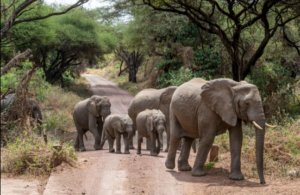
Tarangire is especially known for elephants, but visitors may also see giraffes, zebras, wildebeest, buffaloes, impalas, warthogs, lions, and many bird species. Wildlife concentration changes with the season, so a knowledgeable guide will choose routes based on recent sightings and water availability.
Enjoy a packed or hot lunch at a designated picnic area and continue the afternoon game drive. Later, drive toward Mto wa Mbu or Karatu for dinner and an overnight stay at a budget lodge, campsite, or basic tented camp.
Budget tip: Staying outside Tarangire generally costs less than sleeping inside the park and places you conveniently on the route toward Serengeti.
Day 2: Karatu or Mto wa Mbu to Serengeti National Park
After breakfast, travel through the Ngorongoro Conservation Area toward Serengeti National Park. This is a scenic transfer, with changing views of farmland, highlands, crater slopes, open grassland, and wildlife areas. The journey can take much of the day, but the drive becomes part of the experience.
Enter the Serengeti and begin a game drive en route to the evening accommodation. Central Serengeti, also called the Seronera area, is an excellent choice for a short budget safari because it has reliable resident wildlife and is reachable within a standard Northern Circuit road itinerary.
The Seronera River system and surrounding plains support lions, leopards, cheetahs, elephants, buffaloes, hippos, giraffes, hyenas, jackals, and many antelope species. Arrival time depends on road conditions and formalities at the gates, but a well-planned itinerary still provides useful afternoon wildlife viewing.
Dinner and overnight can be at a public campsite or budget tented camp in or near Central Serengeti.
Budget tip: Public camping is usually the least expensive way to sleep inside the Serengeti. A joining camping safari commonly provides a tent, mattress, sleeping bag, meals, and a cook or safari crew. Bathrooms and showers are shared.
Central Serengeti supports resident predators throughout the year, although every wildlife sighting remains natural and unpredictable.
Day 3: Full-Day Serengeti Game Drive
Wake early for the most important day of the itinerary: a full game drive in Serengeti National Park. Early morning offers cooler temperatures, attractive photography light, and a chance to observe predators and herbivores while they are active.
Your route should depend on the season, road conditions, and recent wildlife movements. In Central Serengeti, a guide may explore the Seronera Valley, riverine woodland, kopjes, and open plains. Kopjes are rocky outcrops that create viewpoints and shelter for lions, reptiles, and smaller animals. Leopards may rest in trees near river corridors, while cheetahs favor more open ground.
Stop for lunch at a picnic area, then continue exploring in the afternoon. A good guide will balance searching for wildlife with allowing enough time to watch animal behavior rather than racing from one sighting to another.
In the late afternoon, begin the return toward the Ngorongoro highlands. Depending on the package, spend the night at a campsite near the crater rim or at budget accommodation around Karatu.
Budget tip: A full day in Central Serengeti normally gives better value than attempting to add the distant Northern Serengeti to a short itinerary. Reaching Kogatende and the Mara River requires more driving, fuel, and usually a longer private safari.
Day 4: Ngorongoro Crater to Arusha
Start early and descend into Ngorongoro Crater for a game drive. The crater floor contains grassland, woodland, wetlands, and a soda lake within a relatively compact area. Wildlife can include zebras, wildebeest, buffaloes, hippos, hyenas, lions, elephants, and several antelope species. Black rhinos live in the conservation area, but sightings are never guaranteed.
After a picnic lunch, ascend from the crater and drive back to Arusha. Arrival is usually in the late afternoon or early evening, depending on traffic, road conditions, and the day’s schedule.
Travelers taking an onward flight should leave a generous time buffer. A same-evening departure from Kilimanjaro International Airport may be possible when scheduled late enough, but an extra night in Arusha is safer when flight timing is tight.
What Makes This Itinerary Affordable?
Safari costs are shaped by park fees, conservation fees, vehicle expenses, fuel, guide wages, food, and accommodation. Many of these expenses are unavoidable. A cheap itinerary works by sharing fixed costs and choosing simpler accommodation, not by removing important safety or operational elements.
Join a Small-Group Safari
In a joining safari, several travelers share the vehicle, guide, and fuel. This can reduce the per-person price considerably. Before booking, ask about the maximum group size, seating arrangement, luggage limit, pickup time, and whether every traveler has a window seat. A well-organized joining safari should also explain whether the route and accommodation are fixed.
Choose Camping or Mixed Accommodation
Public camping is usually the lowest-cost option. Travelers sleep in proper safari tents and use shared campsite bathrooms. A mixed itinerary can combine one camping night in Serengeti with a simple lodge near Karatu, giving more comfort before or after the longest game-drive days.
Budget tented camps cost more than public campsites but normally offer standing beds and private bathrooms. They can be a worthwhile middle ground for couples or travelers who do not want basic camping.
Travel by Road
Driving from Arusha avoids domestic flight costs and allows Tarangire and Ngorongoro to be included along the way. The tradeoff is longer travel time. Travelers with only two or three days should compare the value of a road safari with a fly-in option rather than automatically choosing the cheapest headline price.
Travel in the Green Season
Rates may be more favorable during parts of the rainy or shoulder seasons, and the landscape can be beautifully green. April and May can bring heavier rain, while November often has shorter rains, but weather patterns vary. Some camps may close seasonally, and wet roads can change driving plans.
Avoid Unnecessary Extras
Balloon flights, premium drinks, lodge upgrades, private transfers, and cultural add-ons can be memorable, but they are not required for a rewarding safari. Decide which one experience matters most instead of adding everything.
The Great Migration follows changing rain and grazing conditions, so its location varies by month and from year to year.
Best Time for a Budget Serengeti Safari
There is no single best month for every traveler. Choose dates according to wildlife interests, budget, preferred weather, and tolerance for crowds.
- January to March: Herds are often in the southern Serengeti–Ndutu ecosystem, with calving usually associated with the early-year green season. Ndutu is outside the standard Central Serengeti joining route and may require a private seasonal itinerary.
- April to May: Longer rains can mean greener scenery, fewer vehicles, and occasional accommodation offers. Roads may be muddy, and some properties close.
- June: Conditions become drier and the migration generally progresses through western or central areas, depending on rainfall.
- July to October: Northern Serengeti and Mara River crossings attract strong demand. Crossings cannot be scheduled or guaranteed. Prices are often higher, and reaching the north requires additional days.
- November to December: Short rains refresh the plains and the herds generally move southward again, but their exact location changes with weather and grazing.
For a low-cost four-day safari, Central Serengeti is the most practical year-round choice. Travelers focused specifically on calving or river crossings should budget for a longer private itinerary in the appropriate region.
What Should Be Included in the Price?
Ask for a written quotation showing exactly what is included. A properly described budget package commonly covers:
- Transport in a 4×4 safari vehicle with a pop-up roof
- Professional English-speaking driver-guide
- National park and conservation fees stated in the itinerary
- Crater service fee when Ngorongoro Crater is included
- Accommodation or camping equipment
- Meals during the safari
- Drinking water
- Airport or hotel transfers only when specifically listed
- Government taxes stated by the operator
Common exclusions include international flights, visas, travel insurance, tips, alcoholic drinks, personal purchases, optional activities, and accommodation before or after the safari unless listed.
Never choose an operator from price alone. Check its legal business identity, recent independent reviews, payment terms, cancellation policy, emergency procedures, and the final itinerary. A very low quote may omit mandatory fees or change accommodation after payment.
Packing List for a Budget Camping Safari
Pack light because shared safari vehicles have limited luggage space. Soft-sided bags are easier to store than hard suitcases.
Bring neutral-colored lightweight clothing, a warm jacket for early mornings and the Ngorongoro highlands, comfortable closed shoes, sandals for camp, a hat, sunglasses, sunscreen, insect repellent, personal medication, toiletries, a reusable water bottle, and a small daypack. A headlamp is extremely useful at public campsites.
For photography, carry spare batteries, memory cards, charging cables, and a dust-resistant camera bag. Binoculars may be shared in the vehicle, so keen birdwatchers should bring their own pair. Keep passports, money, and electronics with you rather than in unattended luggage.
How Many Days Do You Need?
Four days is the practical minimum for a road itinerary combining Tarangire, Serengeti, and Ngorongoro from Arusha. It includes long drives but still provides one full Serengeti day. Five days offers a more relaxed pace and can provide an additional Serengeti night or include Lake Manyara.
A three-day Serengeti and Ngorongoro itinerary is possible, but transfer time is significant. A two-day road safari from Arusha is better focused on Tarangire and Ngorongoro rather than trying to force in Serengeti.
Final Planning Advice
The best cheap Serengeti safari itinerary is not necessarily the one with the lowest advertised price. It is the one that clearly includes mandatory fees, places enough time inside the parks, uses safe equipment, and matches the traveler’s expectations.
For most first-time visitors, a four-day joining safari through Tarangire, Central Serengeti, and Ngorongoro Crater offers strong value. Travelers who can add a fifth day will gain a less rushed experience. Those targeting a specific migration stage should choose the correct Serengeti region and allow a larger budget.
Request a detailed itinerary, accommodation names or campsite type, inclusions, exclusions, payment schedule, and cancellation terms before booking. With realistic expectations and a trustworthy local operator, an affordable Serengeti safari can still deliver the wildlife, landscapes, and sense of adventure that make northern Tanzania unforgettable.