Skip to content

A Serengeti safari does not have to be reserved for luxury travelers. With the right itinerary, accommodation, travel season, and safari operator, you can experience Tanzania’s most famous national park without exceeding your budget.
A cheap Serengeti safari trip can still include breathtaking wildlife encounters, professional guides, reliable safari vehicles, satisfying meals, and unforgettable nights beneath the African sky. The key is understanding where to reduce costs without compromising safety or the overall quality of your experience.
This complete guide explains how to organize an affordable Serengeti safari, what a budget package normally includes, which itineraries offer the best value, and how to avoid unnecessary expenses.
Why Visit Serengeti National Park?
Serengeti National Park is one of Africa’s most celebrated wildlife destinations. Located in northern Tanzania, it protects approximately 14,750 square kilometres of open plains, rocky outcrops, rivers, woodland, and seasonal wetlands.
The name Serengeti is derived from the Maasai expression often translated as “endless plains.” Once you enter the park and see the grasslands stretching towards the horizon, the meaning becomes immediately clear.
Travelers visit the Serengeti for several important reasons:
- Outstanding concentrations of wildlife
- Excellent opportunities to see predators
- The Great Wildebeest Migration
- Beautiful African landscapes
- Year-round game viewing
- Experienced professional safari guides
- A wide selection of camping, mid-range, and luxury accommodation
The Serengeti is home to lions, elephants, leopards, cheetahs, buffaloes, giraffes, hippos, crocodiles, hyenas, zebras, wildebeest, gazelles, elands, topis, warthogs, and many other animals. More than 500 bird species have also been recorded in the wider ecosystem.
Is a Cheap Serengeti Safari Really Possible?
Yes. An affordable Serengeti safari is possible, particularly when you join a shared camping tour departing from Arusha.
The total price of a safari is influenced by park fees, transportation, accommodation, food, guide services, government taxes, and conservation charges. These expenses cannot be eliminated completely, but they can be divided among travelers on a group safari.
The most economical arrangement usually includes:
- A shared 4×4 safari vehicle
- Public campsite accommodation
- A professional English-speaking guide
- A safari cook
- Simple but filling meals
- Park entrance and conservation fees
- Camping equipment
- Drinking water
- Transportation from Arusha
Joining other travelers is normally much cheaper than reserving an entire vehicle for one or two people. A shared safari also gives solo travelers an opportunity to meet people from different countries.
Best Affordable Serengeti Safari Options
Shared Camping Safari
A shared camping safari is generally the least expensive way to visit the Serengeti. Travelers share the vehicle and operating costs while following a fixed itinerary.
Groups normally contain no more than six or seven passengers in one safari vehicle. Every traveler should have access to a window seat and a clear view through the vehicle’s pop-up roof.
At the campsite, tents, mattresses, sleeping bags, and pillows are normally provided. A safari cook prepares meals while the guide manages the game drives and transportation.
Public campsites offer a genuine African adventure. However, facilities are basic, and bathrooms are shared. Hot water and electricity may not always be available.
Budget Lodge Safari
Budget lodge safaris offer more comfort than public camping. Depending on the itinerary, guests may stay in simple lodges, guesthouses, permanent tented camps, or basic safari accommodation.
Rooms normally provide real beds and private or shared bathroom facilities. A lodge safari costs more than camping, but it may be suitable for travelers who do not want to sleep in tents.
Mixed Camping and Lodge Safari
A mixed itinerary combines camping inside or near the Serengeti with lodge accommodation in Karatu, Mto wa Mbu, or Arusha.
For example, you might spend one night at a public campsite in the Serengeti and another night in a comfortable lodge near Ngorongoro. This arrangement maintains the adventurous atmosphere while providing a more comfortable night during the journey.
Private Budget Safari
A private safari provides a dedicated vehicle and guide. The departure times, sightseeing pace, and daily activities are more flexible.
Private safaris are more expensive for solo travelers and couples, but they can be economical for families or groups of four to seven people. The vehicle cost is divided among more participants, reducing the price per person.
What Is Included in a Cheap Serengeti Safari Trip?
Before booking, always request a detailed list of inclusions and exclusions. A properly organized budget safari package commonly includes:
- Transportation in a 4×4 Land Cruiser
- A professional English-speaking safari guide
- Serengeti park entrance fees
- Ngorongoro conservation fees when applicable
- Crater service fees when a crater tour is included
- Camping or specified lodge accommodation
- Tents and sleeping equipment for camping tours
- Breakfast, lunch, and dinner during the safari
- Drinking water
- Government taxes
- Game drives listed in the itinerary
- Pickup and drop-off within Arusha
Some packages may also include airport transfers and accommodation in Arusha before or after the safari. Confirm these services before making your payment.
International flights, visas, travel insurance, alcoholic drinks, guide tips, personal expenses, and optional activities are usually excluded.
Popular Cheap Serengeti Safari Itineraries
Three-Day Serengeti and Ngorongoro Safari
A three-day itinerary is one of the shortest practical ways to combine the Serengeti with Ngorongoro Crater.
Day 1: Arusha to Serengeti
You will leave Arusha early in the morning and travel through the Ngorongoro Conservation Area towards Serengeti National Park. The journey is long, but the scenery is spectacular. After entering the Serengeti, you will enjoy an afternoon game drive before proceeding to your campsite or lodge.
Day 2: Serengeti to Ngorongoro area
The day begins with another game drive across the Serengeti plains. Your guide will search for lions, cheetahs, elephants, giraffes, buffaloes, and grazing herbivores. Later, you will travel towards the Ngorongoro Conservation Area for dinner and an overnight stay.
Day 3: Ngorongoro Crater to Arusha
After an early breakfast, you will descend into Ngorongoro Crater. The crater supports an extraordinary concentration of wildlife, including lions, elephants, hippos, buffaloes, zebras, wildebeest, and occasionally black rhinos. After lunch, you will return to Arusha.
This itinerary is affordable and suitable for travelers with limited time. However, it involves several hours of driving.
Four-Day Tarangire, Serengeti and Ngorongoro Safari
A four-day safari offers a more balanced experience.
Day 1: Arusha to Tarangire National Park
Day 2: Travel to Serengeti National Park
Day 3: Serengeti game drive and transfer to Ngorongoro
Day 4: Ngorongoro Crater tour and return to Arusha
Tarangire is known for its enormous baobab trees, elephant herds, giraffes, antelopes, and seasonal wildlife concentrations along the Tarangire River.
Adding Tarangire provides more variety without significantly increasing the duration of the safari.
Five-Day Northern Circuit Budget Safari
Travelers who have more time should consider a five-day itinerary covering Tarangire, Serengeti, Ngorongoro, and Lake Manyara.
A typical route is:
- Day 1: Tarangire National Park
- Day 2: Journey to Serengeti National Park
- Day 3: Full or extended Serengeti game drive
- Day 4: Serengeti to Ngorongoro
- Day 5: Ngorongoro Crater or Lake Manyara and return to Arusha
The exact order may change according to campsite availability, road conditions, and group departures.
A five-day safari provides more game-viewing time and creates a less hurried experience than a three-day trip.
What Wildlife Can You See in the Serengeti?
Lions
The Serengeti is one of the best places in Africa to observe lions. Prides frequently rest on open grasslands, around kopjes, or beneath acacia trees. Early mornings and late afternoons are good times to see them active.
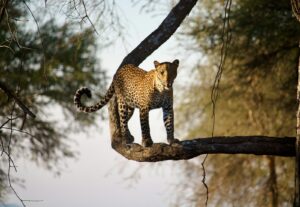
Leopards
Leopards are solitary and secretive. They are sometimes found resting on tree branches, particularly in riverine areas. An experienced guide will look for hanging tails, alarm calls, and vehicles gathered near a sighting.
Cheetahs
The open plains are excellent cheetah habitat. These elegant predators rely on their exceptional speed to hunt gazelles and other small antelopes.
Elephants
Elephants can be seen in several areas of the Serengeti, especially where there is woodland and permanent water. Family herds are often led by an experienced matriarch.
Wildebeest and Zebras
Wildebeest and zebras are among the most numerous animals in the Serengeti ecosystem. During the migration, enormous herds move between Tanzania and Kenya in search of water and fresh grass.
Giraffes
The giraffe is Tanzania’s national animal. Giraffes are commonly observed browsing acacia trees or walking elegantly across the plains.
Hyenas
Spotted hyenas are successful hunters as well as scavengers. They live in organized clans and play an essential role in the ecosystem.
Hippos and Crocodiles
Pools and rivers provide habitat for hippos and Nile crocodiles. Your guide can take you to designated viewing areas where conditions permit.
Understanding the Great Wildebeest Migration
The Great Migration is a continuous movement of wildebeest, zebras, and gazelles through the Serengeti-Mara ecosystem. Its timing depends on rainfall and grazing conditions, so the herds do not follow an exact calendar.
December to March: Southern Serengeti and Ndutu
Large herds gather on the short-grass plains in the southern Serengeti and Ndutu region. The calving season usually reaches its peak between January and February.
Thousands of young wildebeest are born during this period, attracting lions, cheetahs, hyenas, and other predators.
April to June: Central and Western Serengeti
As the southern plains become dry, the herds begin moving through the central and western sections of the ecosystem. Large columns may be observed moving across the landscape.
July to October: Northern Serengeti
The migration reaches the northern Serengeti and the wider Mara River region. River crossings may occur during this season, although sightings are never guaranteed.
Northern Serengeti trips are usually more expensive because the area is remote and requires longer drives or domestic flights. Shared budget tours normally focus on Central Serengeti rather than the far north.
November: Return Towards the South
After the short rains begin, the herds gradually move south through the eastern or central Serengeti.
You do not need to witness a river crossing to enjoy the Serengeti. Resident wildlife remains impressive throughout the year.
Best Time for a Cheap Serengeti Safari
Green Season
The wetter months can provide excellent value. The landscape becomes green, birdlife is abundant, and some lodges reduce their rates.
Short rain showers do not necessarily ruin a safari. Rain often falls during the afternoon or evening, leaving long periods suitable for game viewing.
Shoulder Season
The periods between peak and low season may offer a good combination of favorable weather, wildlife sightings, and moderate accommodation prices.
Peak Season
July through October and the festive holiday period are generally popular. Accommodation availability becomes limited, and prices may rise.
Traveling outside the busiest months is one of the simplest ways to reduce safari costs.
How to Reduce the Cost of Your Serengeti Safari
Join a Shared Departure
A shared safari divides vehicle, guide, fuel, and operational expenses among several travelers. It is particularly valuable for solo travelers and couples.
Choose Public Camping
Public camping is significantly cheaper than staying at luxury tented camps. It also lets you sleep close to nature inside the safari environment.
Travel During the Low or Green Season
Accommodation providers may offer better rates outside the peak months. Parks can also feel quieter, making game drives more peaceful.
Book a Reasonable Itinerary
Adding many distant destinations increases fuel, accommodation, and park-fee costs. A compact itinerary focusing on Serengeti and Ngorongoro often provides better value.
Start From Arusha
Arusha is the principal gateway to Tanzania’s Northern Safari Circuit. Starting from Arusha avoids unnecessary transfer costs.
Travelers coming from Zanzibar should compare the cost of booking domestic flights independently with the price of a flight-inclusive package.
Avoid Unnecessary Upgrades
Luxury lodges, domestic flights, balloon safaris, private transfers, and exclusive activities are enjoyable but not essential for seeing wildlife.
Spend your budget on sufficient game-drive time and a trustworthy operator before considering luxury upgrades.
Travel With Friends or Family
Private safari expenses become more manageable when divided among several travelers. A family or group can sometimes enjoy private flexibility at a reasonable per-person price.
Camping in the Serengeti: What to Expect
Budget camping is adventurous rather than luxurious. Knowing what to expect will help you prepare properly.
Public campsites normally have:
- A designated area for tents
- Shared toilets
- Shared shower facilities
- A cooking and dining area
- Limited electricity or solar power
- Basic water facilities
Wild animals may move near unfenced campsites. Guests must follow the guide’s safety instructions, avoid walking alone at night, and never keep food inside their tents.
Your safari team usually supplies a tent, mattress, sleeping bag, and pillow. You should still confirm the exact equipment included in your package.
Bring a headlamp, power bank, personal toiletries, sandals for the shower, insect repellent, and a warm layer for the evening.
Budget Safari Meals
Meals on camping safaris are normally prepared by a safari cook. Food may include soup, rice, pasta, potatoes, vegetables, meat, eggs, fruit, pancakes, bread, and packed lunches.
Breakfast may consist of:
- Tea or coffee
- Eggs
- Toast
- Fruit
- Pancakes
- Sausages or vegetables
Lunch is eaten at a picnic site or carried in a lunch box, depending on the itinerary. Dinner is usually served at the campsite after the day’s game drive.
Vegetarian, vegan, halal, gluten-free, and other dietary requirements can often be accommodated when communicated in advance.
Shared Safari Versus Private Safari
| Feature | Shared safari | Private safari |
|---|---|---|
| Price | Lower | Higher for solo travelers or couples |
| Vehicle | Shared with other guests | Reserved for your party |
| Itinerary | Fixed | Flexible |
| Departure time | Determined by the group | Based on your preference |
| Guide language | Usually English | Other languages may be requested |
| Suitable for | Budget and solo travelers | Couples, families and private groups |
| Game-drive pace | Shared decision | Customized |
A shared safari is the best choice when price is the main priority. A private safari is better when you need flexibility, additional comfort, specialized photography time, or a particular guide language.
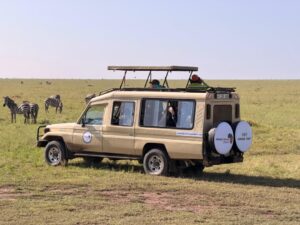
What Type of Safari Vehicle Is Used?
Most Serengeti trips use a specially modified 4×4 Land Cruiser with:
- A pop-up viewing roof
- Individual window access
- Charging sockets or USB ports
- Seatbelts
- A first-aid kit
- Radio communication
- A cooler or small refrigerator
- Space for luggage
Air conditioning may be available, although the windows and roof are often open during game drives. Dust is a normal part of the safari experience, especially in the dry season.
Ask how many passengers will share the vehicle. A group of six or seven guests is normally more comfortable than an overcrowded vehicle.
What to Pack for an Affordable Serengeti Safari
Pack lightly and use a soft-sided travel bag when possible. Large hard-shell suitcases are difficult to store in safari vehicles.
Recommended items include:
- Lightweight neutral-colored clothing
- A warm jacket or fleece
- Comfortable closed shoes
- Sandals
- Sun hat
- Sunglasses
- Sunscreen
- Insect repellent
- Personal medication
- Camera and spare batteries
- Binoculars if available
- Power bank
- Reusable water bottle
- Headlamp for camping
- Small daypack
- Wet wipes and hand sanitizer
- Travel documents
- Cash for tips and personal purchases
Ngorongoro can be cold in the early morning, so warm clothing is important even when the daytime weather is hot.
Essential Safety Advice
A professionally managed budget safari should never compromise safety.
Follow these rules:
- Listen to your guide at all times.
- Never leave the vehicle without permission.
- Do not feed or approach wildlife.
- Stay inside your tent after dark unless accompanied.
- Keep food away from sleeping tents.
- Drink enough water.
- Use sunscreen and insect repellent.
- Inform the operator about medical conditions.
- Purchase comprehensive travel insurance.
- Keep copies of your passport and insurance details.
The term “cheap” should refer to efficient accommodation and shared costs—not poorly maintained vehicles, unqualified guides, or missing park fees.
How to Choose a Reliable Budget Safari Operator
Price should not be the only deciding factor. Before booking, verify the following:
Clear Inclusions
The quotation should state exactly which park fees, meals, accommodation, transfers, and activities are included.
Realistic Itinerary
Extremely rushed itineraries may look inexpensive but provide little time for wildlife viewing. Ask how many hours you will spend driving between destinations.
Vehicle Condition
Confirm that the company uses a properly maintained 4×4 vehicle suitable for Serengeti roads.
Group Size
Ask for the maximum number of travelers in the vehicle and whether everyone receives a window seat.
Accommodation Names
Request the names of the campsites, lodges, or tented camps. Avoid accepting vague descriptions without knowing where you will sleep.
Payment Conditions
Read the deposit, balance-payment, cancellation, and refund policies before transferring money.
Recent Reviews
Look for detailed reviews mentioning guides, vehicles, food, communication, and how the operator handled unexpected situations.
Common Mistakes to Avoid
Selecting the Lowest Price Without Checking Details
A remarkably low quotation may exclude park fees, crater fees, accommodation, transfers, or taxes. Compare packages using the complete cost.
Trying to Visit Too Many Parks
A packed itinerary can mean spending most of your safari on the road. Prioritize quality game-viewing time.
Booking Northern Serengeti on an Unrealistic Budget
Northern Serengeti is distant from Arusha and Central Serengeti. It generally requires a private itinerary, additional nights, or a domestic flight.
Ignoring Arrival Times
Shared safaris leave Arusha early. Travelers should usually arrive at least one day before departure.
Booking a Tight Flight After the Safari
Road conditions and wildlife sightings can affect the return time. Avoid scheduling an early flight immediately after returning from Ngorongoro or Serengeti.
Expecting Luxury From Public Camping
Budget camping is simple. Shared bathrooms, limited electricity, dust, and changing weather are part of the experience.
Final Thoughts
A cheap Serengeti safari trip can deliver the same extraordinary landscapes and wildlife as a more expensive safari. The main differences are accommodation style, privacy, flexibility, and additional luxury services—not access to the national park’s animals.
For the best value, join a small shared camping safari, travel outside the busiest season, begin your trip in Arusha, and select a realistic three-to-five-day itinerary. Most importantly, book with a trustworthy local operator that clearly explains all inclusions, accommodation arrangements, safety procedures, and payment conditions.
Whether you watch lions resting beside a rocky kopje, elephants moving across the plains, or thousands of wildebeest gathering beneath an immense African sky, the Serengeti offers experiences that remain unforgettable long after the safari ends.