

Budget Ngorongoro Crater Safari Holiday
Planning a budget Ngorongoro Crater safari holiday from Arusha? Compare a crater day trip, a two-day Tarangire and Ngorongoro safari, or a…
Read articleArusha City - Tanzania
Safari & Travel Tips
August 27, 2026 · 16 min read
Planning an exclusive safari in Tanzania is about much more than choosing a destination and counting the number of days. Travelers looking for privacy, comfort, flexibility, excellent wildlife viewing, and personalized service naturally want to understand the exclusive Tanzania safari tour cost before committing to their trip.
Tanzania offers an enormous range of private safari experiences. You can travel with your own professional safari guide and private 4x4 Land Cruiser, stay in beautiful tented camps overlooking the Serengeti plains, enjoy sundowners in the wilderness, descend into the Ngorongoro Crater, watch elephants beneath ancient baobab trees in Tarangire, or even fly between remote safari areas.
As a general guide for 2026, private Tanzania safaris can range from approximately $350–$500 per person per day for comfortable private mid-range trips to $900–$2,000+ per person per day for luxury and exclusive fly-in safaris. Premium properties and completely customized experiences can cost considerably more. Current Tanzania safari pricing guides similarly show a very broad range depending on accommodation, season, routing, and exclusivity.
This guide explains exactly what determines the cost, what is normally included, how much different safari durations may cost, and how to get the best experience for your budget.
An exclusive Tanzania safari is usually a private safari designed specifically for one traveler, couple, family, or group.
Instead of joining unrelated travelers in the same safari vehicle, your party has its own safari vehicle and professional driver-guide.
That means your schedule can be adapted around your interests.
Want to spend another 30 minutes photographing a leopard?
You can.
Want to leave your lodge before sunrise?
Your guide can arrange it.
Would you rather spend more time watching elephants than rushing toward another destination?
A private safari provides that flexibility.
Exclusivity can also extend to accommodation, with travelers choosing intimate tented camps, luxury lodges, private villas, fly-in camps, private dining experiences, and personalized bush activities.
The exclusive Tanzania safari tour cost depends primarily on your accommodation level, travel season, number of travelers, itinerary, parks visited, vehicle arrangement, and whether domestic flights are included.
A useful 2026 planning estimate is:
| Safari Style | Approximate Cost Per Person Per Day |
|---|---|
| Private comfortable safari | $350–$500 |
| Private upper mid-range safari | $450–$750 |
| Luxury private safari | $800–$1,500 |
| Premium luxury safari | $1,000–$2,000+ |
| Ultra-luxury fly-in safari | $1,500–$2,500+ |
These ranges are estimates rather than fixed rates. Published 2026 pricing from Tanzania operators also illustrates how widely private safari costs can vary. One current guide places Tanzania safaris broadly around $250–$1,500 per person per day, with genuine luxury beginning around $900, while another gives private safari pricing of roughly $250–$2,500+ per person per day.
A seven-day private safari for a couple therefore might cost roughly $3,500–$5,500 per person for a strong mid-range itinerary, while a luxury safari could easily reach $7,000–$15,000+ per person depending on the lodges and services selected.
There is no single standard price for an exclusive safari.
Two travelers could follow almost exactly the same route and still receive dramatically different quotations.
Here are the biggest reasons.
Accommodation is one of the largest variables.
Tanzania has everything from simple lodges to internationally recognized luxury safari properties.
A comfortable mid-range tented camp might provide:
Luxury properties can add:
At the highest level, the accommodation itself may cost close to or above $1,000 per person per night.
For example, one Serengeti luxury camp currently advertises flexible stays starting around $985 per person per night, including private game drives, meals, drinks, park fees, and other services.
A private vehicle is central to an exclusive safari.
Instead of paying only for your individual seat, your party effectively carries the operating cost of the vehicle.
A typical private Tanzania safari vehicle is a customized 4x4 Land Cruiser with a pop-up roof, allowing travelers to stand comfortably during game viewing and photography.
Private vehicles make an enormous difference to your experience.
You decide:
Families with children especially appreciate this flexibility.
Photographers also benefit because there is much more freedom to position the vehicle and wait patiently for wildlife behavior.
Private safari costs usually decrease per person when more people share the trip.
Why?
Several safari expenses are charged per vehicle rather than per traveler.
For example, a couple and a family of four may use the same Land Cruiser, guide and fuel allocation.
Those fixed expenses are therefore divided among more travelers.
This means a private safari for four people can sometimes provide significantly better per-person value than a private safari for one traveler.
Suppose the vehicle-related expenses for a safari are approximately $2,000.
For two travelers:
$2,000 ÷ 2 = $1,000 per person
For four travelers:
$2,000 ÷ 4 = $500 per person
Accommodation and park fees are still charged individually, but sharing fixed costs makes a noticeable difference.
Park and conservation fees are another significant component of Tanzania safari pricing.
Travelers visiting destinations such as:
must pay applicable conservation and entry fees.
Ngorongoro can be particularly expensive because entering the conservation area and descending onto the crater floor involve additional charges.
Some current 2026 safari cost guides estimate Serengeti entry for non-resident adults at around $82 per person per day, with separate vehicle and conservation costs applying depending on the itinerary.
These government fees explain why even relatively simple Tanzania safaris may appear more expensive than ordinary holidays.
Always check whether your quotation includes park fees.
A properly itemized safari package should make this clear.
Travel season can significantly change the final price.
July through October is extremely popular because of excellent wildlife conditions across Northern Tanzania.
Northern Serengeti is particularly desirable during the period when travelers hope to witness Great Migration river crossings.
Accommodation demand is high, especially during August and September.
Expect higher prices and limited availability at popular camps.
Booking 6–12 months ahead is advisable for sought-after exclusive properties.
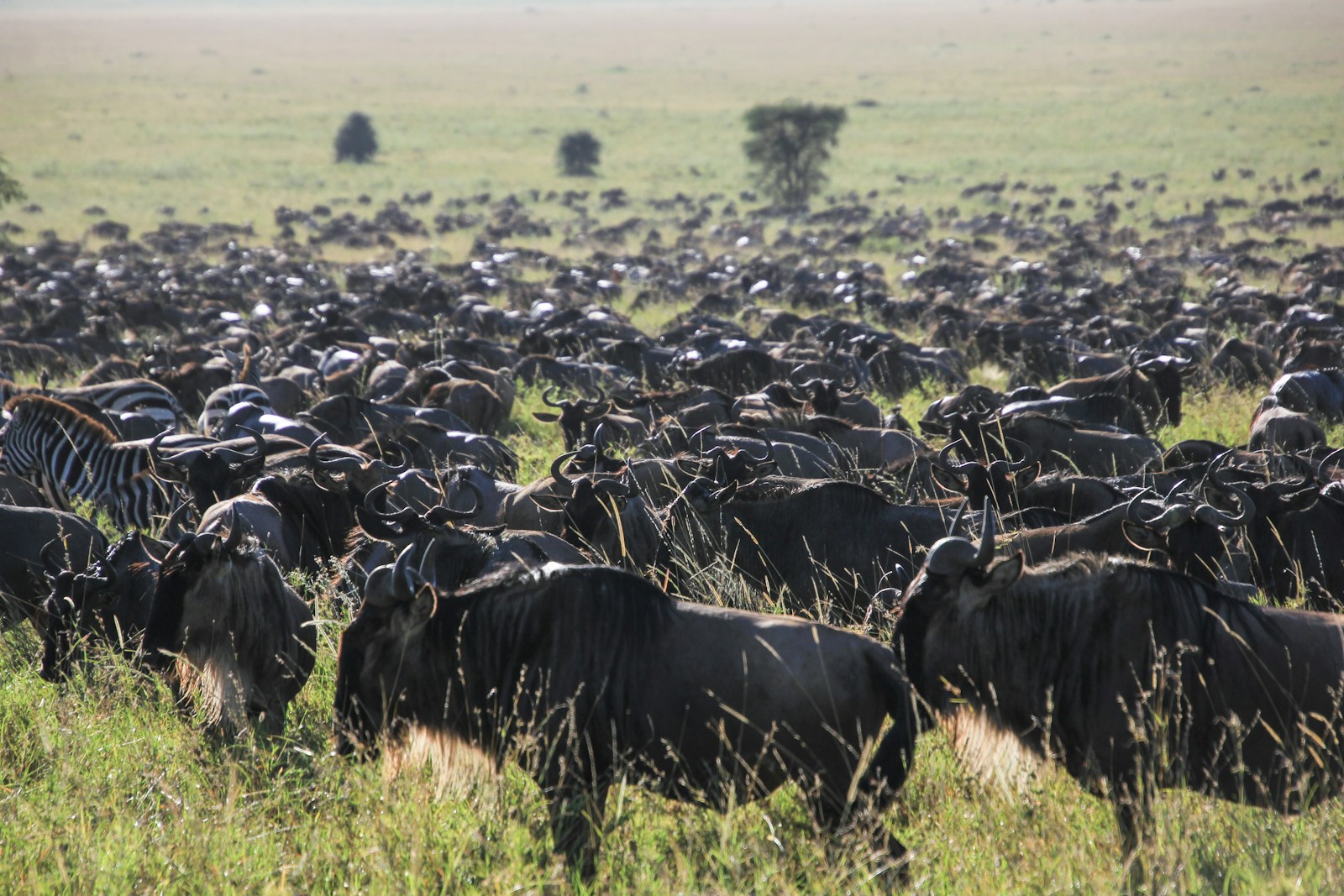
The southern Serengeti and Ndutu region become particularly exciting during the wildebeest calving period.
Large concentrations of wildebeest gather across the grasslands, and predator activity can be exceptional.
Luxury seasonal migration camps positioned near Ndutu can become expensive because demand is strong.
February is especially popular.
April and May generally offer lower accommodation rates.
These months correspond with Tanzania's long rains.
However, the landscape is spectacularly green, traveler numbers are lower, and photography can be outstanding.
Travelers who value privacy and don't mind occasional rain can find excellent value.
Months such as June and November can provide a useful balance between favorable pricing, fewer visitors and excellent wildlife viewing.
For an exclusive safari where privacy matters, shoulder-season travel deserves serious consideration.
The Serengeti is usually the centerpiece of a Tanzania safari.
Its enormous grasslands support lions, elephants, cheetahs, leopards, buffalo, giraffes and countless other species.
It is also home to the Great Wildebeest Migration.
A private Serengeti safari may cost approximately:
$450–$750 per person per day for comfortable private accommodation
or
$900–$2,000+ per person per day for luxury experiences.
Premium locations, fly-in arrangements and migration camps can push prices considerably higher.
Ngorongoro Crater is one of Tanzania's most extraordinary wildlife destinations.
The crater floor contains an unusually dense concentration of animals within a relatively small area.
Visitors may encounter:
Accommodation location affects the price significantly.
Staying near Karatu is generally less expensive.
Staying close to or on the crater rim can be considerably more expensive but reduces travel time before the morning crater descent.
Travelers booking a high-end safari often combine a crater-rim property with Serengeti luxury camps.
Tarangire is famous for its elephants, giant baobab trees and seasonal wildlife concentrations.
It is particularly rewarding between roughly June and October, when animals congregate around permanent water sources.
Tarangire can be incorporated into a luxury Northern Circuit safari without adding excessive transportation costs because it is relatively accessible from Arusha.
Exclusive camps inside or near the park can provide a more intimate experience than visiting Tarangire as a quick day trip.
A three-day private safari is suitable for travelers with limited time.
A common itinerary might include:
Arusha to Tarangire National Park
Ngorongoro region
Ngorongoro Crater and return to Arusha
Approximate costs could range from:
$1,100–$1,800 per person for comfortable private travel
to
$2,500–$5,000+ per person for luxury accommodation.
Short safaris can have relatively high daily costs because vehicle and transfer expenses are divided across fewer days.
Five days provide enough time to include the Serengeti.
A popular route is:
Arusha – Tarangire
Tarangire – Serengeti
Full-day Serengeti safari
Serengeti – Ngorongoro
Ngorongoro Crater – Arusha
A private five-day safari might approximately cost:
$2,000–$3,500 per person for comfortable mid-range accommodation
and
$4,500–$9,000+ per person for luxury travel.
Seven days is one of the best durations for first-time visitors.
It provides a more relaxed pace and greater wildlife-viewing flexibility.
For example:
Enjoy elephants, baobabs and the Tarangire River ecosystem.
Travel through the Ngorongoro highlands toward the Serengeti.
Full-day game drive around Seronera.
Continue exploring wildlife territories.
Morning wildlife viewing followed by travel toward Ngorongoro.
Descend into the crater for a full wildlife experience.
Approximate seven-day private safari pricing can be:
| Safari Level | Approximate Price Per Person |
| Comfortable/private | $3,000–$4,500 |
| Upper mid-range | $3,500–$5,500 |
| Luxury | $6,000–$10,000 |
| Premium luxury | $10,000–$15,000+ |
Recent Tanzania pricing guides similarly place seven-day mid-range trips around $3,500–$5,500 per person, while high-end luxury itineraries can exceed $10,000 per traveler.
Ten days allows travelers to explore Tanzania much more deeply.
You might combine:
A private ten-day safari could cost approximately:
$4,000–$7,000+ per person for mid-range travel
and
$9,000–$20,000+ per person for luxury travel.
Premium safari villas, charter flights and ultra-exclusive camps can push the price above this range.
Travelers wanting the Great Migration should plan their itinerary around seasonal wildlife movements rather than simply booking "Serengeti."
The migration changes location throughout the year.
A simplified seasonal pattern is:
Southern Serengeti and Ndutu
Animals gradually move northwest.
Western and central regions become increasingly important.
Northern Serengeti becomes highly attractive, particularly for potential Mara River crossings.
Migration herds generally begin moving south again as seasonal rains influence grazing conditions.
No operator can guarantee a specific river crossing because wildlife movements depend on rainfall, grazing and natural behavior.
An exclusive migration safari generally costs more because camps located close to the herds are highly sought after.
Travelers visiting Northern Serengeti may also choose domestic flights rather than spending many hours driving.
Flying between destinations can significantly increase your safari cost but dramatically improve comfort and travel efficiency.
Instead of spending six or seven hours driving, travelers may fly directly into airstrips such as:
Fly-in safaris work particularly well for:
Depending on route, airline, season and baggage allowances, domestic flights can add several hundred dollars per traveler.
However, the time savings may make the extra cost worthwhile.
One of Tanzania's biggest advantages is the ability to combine exceptional wildlife viewing with a tropical Indian Ocean beach holiday.
A popular itinerary might include:
7 days safari + 4 or 5 nights Zanzibar
The safari portion may cost approximately $3,500–$8,000+ per person depending on accommodation.
Then add:
A luxury safari-and-Zanzibar trip can therefore range from roughly $5,000 per person to $15,000+.
Ultra-luxury combinations can cost considerably more.
Before comparing safari prices, compare the inclusions.
A well-structured private safari normally includes many major ground costs.
Typical inclusions are:
Depending on the package, you may also receive:
Always check exactly what your quotation covers.
Common exclusions include:
A cheaper quotation is not automatically a better deal if another operator has included transfers, fees and accommodation that the first quotation excludes.
A Serengeti balloon safari is one of the most popular upgrades for travelers arranging an exclusive Tanzania experience.
The activity normally begins before sunrise.
After launch, you float silently above the plains while wildlife and landscapes unfold below.
Flights usually last approximately one hour, depending on weather.
The experience commonly includes a post-flight celebration and breakfast.
Budget roughly $500–$650 per person depending on location, operator and season.
Because balloon flights have limited capacity, reserve early during peak season.
Not necessarily.
Wildlife viewing depends much more on:
A traveler staying at a $500-per-night tented camp could have a better wildlife day than someone staying in a $2,000-per-night lodge.
What luxury accommodation gives you is superior comfort, privacy, service and atmosphere between game drives.
For many travelers, that is absolutely worth paying for.
But safari planning should always prioritize wildlife location first and hotel luxury second.
A shared safari is usually cheaper because several unrelated travelers share the vehicle and associated costs.
An exclusive safari gives you much greater freedom.
Advantages:
The price difference can be substantial, but so can the experience.
Tanzania is an outstanding destination for couples.
A private safari allows you to enjoy sightings without coordinating with unrelated travelers.
Romantic upgrades might include:
For couples, a seven-day mid-range private safari could reasonably begin around $3,500–$5,500 per person, with luxury versions rising substantially depending on lodge selection.
A honeymoon safari usually places more emphasis on accommodation and special experiences.
For a seven-to-ten-day honeymoon, travelers might budget:
$4,000–$7,000 per person for quality upper mid-range travel
or
$7,000–$15,000+ per person for luxury.
For ultra-luxury lodges or villas, there is effectively no fixed ceiling.
One Serengeti luxury camp, for example, currently lists a five-night honeymoon experience at approximately $9,850 per couple.
Private safaris are highly suitable for families because the itinerary can be adapted around children.
Parents can:
Family rooms and interconnected tents can also reduce accommodation costs compared with booking separate rooms.
Ask your safari planner about child discounts because age policies differ between parks and accommodation providers.
Solo private safaris typically have the highest cost per person.
The reason is simple: one traveler covers vehicle, driver, fuel and some accommodation supplements alone.
If complete exclusivity is important, this can still be worthwhile.
Travelers primarily concerned with budget may prefer a small shared safari.
Most first-time visitors choose Northern Tanzania.
Usually includes:
The infrastructure is excellent and wildlife density is outstanding.
Key destinations include:
Southern Tanzania can feel more remote.
Fly-in arrangements are common for higher-end safaris.
The total cost may increase because of domestic flights and the remote location of certain camps.
However, travelers seeking exclusivity may find Southern Tanzania extremely rewarding.
You don't necessarily have to sacrifice privacy to reduce your budget.
Sharing a private vehicle among four travelers instead of two can reduce per-person costs significantly.
A well-located tented camp with private bathrooms can provide a superb safari experience without ultra-luxury prices.
June and November can provide excellent value.
Driving part of your itinerary and flying only on strategically useful routes can control costs.
Longer stays reduce logistical complexity and can create a more relaxing safari.
Some safari expenses are worth prioritizing.
A knowledgeable guide can transform your experience.
Reliable safari vehicles are essential.
Choosing the correct part of the Serengeti for your month is more important than choosing the fanciest lodge.
A flight that replaces eight hours of driving can be worth every dollar.
If your main priority is wildlife, adding another Serengeti night is often more valuable than adding another hotel upgrade.
Before paying your safari deposit, ask:
These questions help you compare packages accurately.
For July through October, reserve early.
Ideally:
6–12 months ahead
For particularly exclusive migration camps, booking even earlier may be helpful.
Christmas, New Year and February's calving season can also fill quickly.
Travelers visiting in quieter periods usually have greater flexibility.
For travelers who value flexibility, privacy and a personalized itinerary, yes.
The most important benefit is not simply luxury.
It is control over your safari experience.
Imagine finding a pride of lions early in the morning.
On a shared safari, the group might need to move because another traveler has different priorities.
On a private safari, you can stay.
That freedom matters.
Photography becomes easier.
Families feel less rushed.
Honeymooners enjoy greater privacy.
Wildlife enthusiasts can follow their interests.
Those differences are what make an exclusive safari special.
Meet your professional safari guide and drive to Tarangire.
Explore elephant country among dramatic baobab trees before heading to your lodge.
Travel through the Ngorongoro highlands toward Serengeti National Park.
Enjoy game viewing as you enter the endless plains.
Spend the entire day searching for lions, leopards, elephants, cheetahs and other wildlife.
Another full wildlife day allows greater flexibility and reduces the pressure to rush.
Enjoy a morning game drive before traveling toward Ngorongoro.
Descend onto the crater floor early in the morning.
Explore its diverse habitats before returning to your lodge.
Enjoy a relaxed breakfast and return to Arusha, with optional cultural or shopping stops depending on your schedule.
The exclusive Tanzania safari tour cost should be viewed as an investment in both logistics and experience.
You aren't simply paying for a hotel room and transportation.
A well-organized safari includes a specialized 4x4 vehicle, professional guide, fuel, remote accommodation, meals, government conservation charges, wildlife access, logistical support and hours of personalized game viewing.
For travelers planning a 2026 trip, a comfortable private safari commonly starts around $350–$500 per person per day, while luxury experiences often range from $800–$1,500+ per person per day. Highly exclusive fly-in safaris and premium villas can exceed $2,000 per person per day. These broad ranges are consistent with several current Tanzania safari pricing guides, although every itinerary needs to be priced individually.
The best safari is not necessarily the most expensive one.
It is the safari designed around the right season, wildlife location, accommodation standard, guide and pace for you.
Whether you dream of watching the Great Migration in the Serengeti, searching for black rhino in Ngorongoro, photographing Tarangire's elephants, celebrating your honeymoon under African skies or combining safari with Zanzibar, Tanzania offers exceptional possibilities for an exclusive journey.
A carefully designed private safari gives you what many travelers value most: time, freedom, privacy and unforgettable wildlife encounters.
Planning a budget Ngorongoro Crater safari holiday from Arusha? Compare a crater day trip, a two-day Tarangire and Ngorongoro safari, or a…
Read articleA Lake Manyara safari can cost USD 150–220 per person for a shared day trip from Arusha. A published example of a…
Read articleExplore Ruaha National Park’s baobab country on a guided safari built around your dates, group size and budget. Spend your game drives…
Read articleA Nyerere Tanzania wildlife safari can take you from a woodland game drive in the morning to a boat on the Rufiji…
Read article

