An exclusive Tanzania safari tour deal brings together private wildlife viewing, carefully selected accommodation, and a travel itinerary designed around your interests. For travelers who want personal attention and more control over their holiday, a private safari offers the opportunity to explore Tanzania at a pace that suits them.
However, the word “exclusive” can mean different things in different safari packages. One offer may include a private vehicle and comfortable lodges, while another may feature luxury tented camps, domestic flights, and special experiences. Understanding these differences helps you choose a safari that delivers the experience you expect.
This guide explains what to look for in an exclusive safari package, how to compare offers, which destinations to consider, and how to build a practical itinerary. Whether you are planning a honeymoon, a family adventure, or a wildlife photography trip, the right safari begins with clear priorities.
What Is an Exclusive Tanzania Safari Tour Deal?
An exclusive Tanzania safari tour deal usually refers to a safari arranged specifically for your traveling party. Instead of joining unfamiliar travelers in a shared vehicle, you travel with your own companions and a dedicated guide.
The package may include accommodation, meals, transport, park entry, and selected activities. Its exact contents depend on the itinerary and quotation.
A well-designed private safari should clearly explain:
- Whether the safari vehicle is reserved exclusively for your group.
- Which accommodation properties and room categories are included.
- How many nights you spend in each destination.
- Which meals and drinks are covered.
- Whether airport transfers are included.
- Which activities require additional payment.
- How booking changes and cancellations are handled.
Private travel does not automatically mean that every part of the journey is exclusive. A lodge may accommodate other guests, a domestic flight may be shared, and popular wildlife sightings may attract several vehicles.
For most travelers, exclusivity means having a dedicated vehicle, personal guidance, and a thoughtfully planned itinerary.
Why Choose a Private Safari in Tanzania?
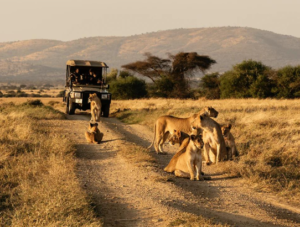
A private safari allows your guide to focus on the interests of your group. You may prefer spending more time observing elephants, photographing birds, or watching a lion pride rather than moving quickly between sightings.
It also makes it easier to discuss meal breaks, departure times, and the overall rhythm of the trip.
More Control Over Your Daily Schedule
Some travelers enjoy early departures and long days of wildlife viewing. Others prefer a slower start, shorter drives, or time to relax at the lodge.
A private itinerary can accommodate these preferences where practical. Your guide still needs to work within park regulations, accommodation arrangements, driving distances, and daylight conditions.
Flexibility is most useful when it is supported by a realistic route.
Personal Attention From Your Guide
Your guide plays a central role in the experience. Beyond locating wildlife, a good guide explains animal behavior, introduces different habitats, manages the route, and helps your group feel comfortable throughout the journey.
Before booking, share your main interests. A photography-focused safari may require a different approach from a family holiday with young children.
Accommodation That Matches Your Preferences
Private safaris can use comfortable mid-range lodges, premium tented camps, or luxury properties.
The best choice depends on what matters to you: location, room comfort, views, privacy, or access to wildlife areas. A well-positioned camp may be more valuable than an impressive property that adds substantial driving time each day.
A Better Fit for Special Occasions
Honeymoons, anniversaries, birthdays, and family reunions often benefit from personal planning.
Tell your operator about the occasion before booking. Special arrangements should be confirmed in writing, including any additional charges.
Exclusive Safari and Luxury Safari: What Is the Difference?
Exclusive and luxury describe different aspects of a safari.
An exclusive safari concerns how the trip is organized for you. A luxury safari concerns the level of accommodation, service, and amenities.
You can book a private safari using mid-range accommodation. You can also stay at a luxury lodge while participating in shared activities.
| Feature | Private Mid-Range Safari | Private Luxury Safari |
|---|---|---|
| Safari vehicle | Dedicated vehicle if specified | Dedicated vehicle if specified |
| Accommodation | Comfortable lodges or tented camps | Higher-end lodges or premium camps |
| Bathrooms | Confirm private facilities in the quote | Confirm facilities for the selected room |
| Daily planning | Personalized within practical limits | Personalized within practical limits |
| Main appeal | Privacy and comfort with controlled spending | Privacy with higher accommodation and service standards |
| Best comparison point | Route, location, and inclusions | Route, location, room category, and service |
The accommodation label alone does not tell you whether a package is good value. Compare the complete itinerary.
Destinations to Consider for an Exclusive Tanzania Safari
Tarangire, Serengeti, and Ngorongoro form a well-established northern safari route. Tanzania’s official tourism website presents these destinations together as part of its northern circuit.
The right combination depends on your available time and wildlife interests.
Serengeti National Park
The Serengeti is closely associated with the Great Migration and its extensive wildlife habitats. Animal movements vary with seasonal conditions, making the location of your accommodation an important part of planning.
For a private itinerary, consider giving the Serengeti enough time to justify the journey. A single overnight stop leaves less room for exploration than a stay with several nights.
Discuss whether your priority is general wildlife viewing, migration herds, photography, or a quieter pace. These interests help determine where to stay and how to allocate your days.
Migration-focused travel requires particular care. A camp in one region cannot provide convenient access to every part of the ecosystem.
Ngorongoro Crater
Ngorongoro Crater combines striking volcanic scenery with a concentration of wildlife. The conservation authority identifies animals such as lions, buffaloes, elephants, black rhinoceroses, zebras, wildebeest, and hippos within the conservation area and crater habitats. Sightings remain dependent on conditions and animal movements.
When comparing packages, check whether the itinerary includes a descent into the crater. An overnight stay in the surrounding area is different from a game drive on the crater floor.
Also consider where you sleep before the crater visit. Accommodation location affects the morning schedule and transfer time.
Tarangire National Park
Tarangire is known for elephants, baobab scenery, and wildlife drawn toward the Tarangire River during dry conditions. TANAPA highlights the river’s importance in attracting animals during the dry season.
A Tarangire visit can provide a contrasting experience within a northern circuit itinerary.
When choosing accommodation, compare properties inside the park with those outside it. Look at the full cost and the effect on daily driving rather than judging by the room photographs alone.
Lake Manyara National Park
Lake Manyara offers a combination of groundwater forest, woodland, wetlands, and lakeside habitats. Its wildlife includes monkeys, elephants, and varied birdlife. Flamingo numbers are seasonal, and the park’s well-known tree-climbing lions should be treated as a possible sighting rather than a promise.
Manyara may appeal to travelers interested in birds, forest scenery, and habitat diversity.
For a shorter trip, discuss whether adding another park improves the experience or reduces time in your priority destination.
How Many Days Should an Exclusive Safari Last?
The ideal duration depends on the route.
A short safari can be rewarding when it focuses on a manageable area. A longer safari creates more room for wildlife viewing, comfortable transfers, and rest.
| Safari Duration | Possible Approach | Main Planning Consideration |
|---|---|---|
| 3 days | Focus on fewer destinations | Avoid spending most of the trip in transit |
| 4–5 days | A compact northern circuit route | Balance park visits with transfer time |
| 6–7 days | More time in the Serengeti and selected parks | Allow full wildlife viewing days |
| 8–10 days | A slower itinerary or a more specialized route | Keep the route focused on your interests |
| Longer holiday | Safari with a beach or other extension | Plan flights and transfers as part of one journey |
These are planning examples rather than fixed package rules.
Before choosing a duration, ask how much of each day is devoted to travel. A “six-day safari” does not necessarily mean six full days of game drives.
Sample Seven-Day Exclusive Tanzania Safari Itinerary
The following itinerary illustrates how a private northern circuit safari could be organized. Accommodation, park access, and the final sequence must be confirmed for your travel dates.
Day 1: Arrival and Overnight in Arusha
Arrive at your agreed airport and transfer to your hotel in Arusha.
Use the evening to rest, organize your luggage, and discuss the safari with your consultant or guide. Confirm your departure time and any dietary requirements.
Suggested overnight: Arusha hotel.
Day 2: Arusha to Tarangire
Depart for Tarangire and begin your wildlife viewing.
Your guide can adjust the day’s route according to conditions and your interests. Allow time to observe animal behavior rather than trying to move constantly between sightings.
Continue to the accommodation selected for your itinerary.
Suggested overnight: Lodge or tented camp in the Tarangire area or Karatu, depending on the route.
Day 3: Travel to the Serengeti
Continue toward the Serengeti.
This is an important transfer day, so the itinerary should explain the expected journey and how much time may remain for wildlife viewing after arrival.
Settle into your camp and prepare for the next day.
Suggested overnight: Serengeti lodge or tented camp.
Day 4: Serengeti Wildlife Viewing
Spend the day exploring with your private guide.
Discuss whether you prefer a full-day outing with a packed lunch or another arrangement compatible with the camp location.
A dedicated safari day allows more time for patient observation and photography.
Suggested overnight: Same Serengeti property.
Day 5: Further Serengeti Exploration
Use a second dedicated day to explore the selected region.
Keeping the same accommodation can reduce packing and preserve time for wildlife viewing. A camp change may be worthwhile when it serves a clear purpose, such as moving toward a different wildlife area.
Suggested overnight: Serengeti property confirmed in your itinerary.
Day 6: Serengeti to the Ngorongoro Area
Depending on your route and access arrangements, enjoy wildlife viewing before continuing toward Ngorongoro or Karatu.
Arrive with time to rest ahead of the crater visit.
Suggested overnight: Crater-rim lodge or Karatu accommodation.
Day 7: Ngorongoro Crater and Return
Descend into the crater for the game drive included in your package.
Afterward, continue to your agreed endpoint. If you plan to fly that evening, have your operator assess the connection using the airport, transfer distance, and airline check-in requirements.
Suggested endpoint: Arusha hotel or confirmed airport transfer.
What Makes an Exclusive Tanzania Safari Tour Deal Good Value?
Good value comes from the relationship between the price and the experience delivered.
A lower quotation may use more distant accommodation, omit transfers, or provide fewer nights in your preferred destination. A higher quotation may include a better location or domestic flights, but those additions are only worthwhile if they serve your priorities.
A Clear and Complete Quotation
The offer should identify the travel dates, number of guests, room arrangements, accommodation names, transport, and activities.
Avoid comparing quotations that describe lodging only as “luxury camp” or “mid-range hotel.” Ask for the actual property and room category.
A Route With Enough Wildlife Viewing Time
Count full safari days separately from arrival and transfer days.
A package that visits more parks is not automatically better. It may be more enjoyable to spend additional time in two destinations than to rush through four.
Suitable Accommodation Locations
Ask why each property was chosen.
Useful questions include:
- How does this location support the next day’s route?
- Will we need long daily transfers to reach wildlife areas?
- Can we stay multiple nights at the same property?
- Does the room arrangement suit our group?
Transparent Optional Costs
A special activity can change the total substantially.
Request a separate list of optional experiences and their booking conditions. This makes it easier to decide what to include without losing track of the overall budget.
What Should the Package Include?
Inclusions vary between operators and itineraries. A comprehensive quotation should address the following items.
Safari Transport and Guiding
Confirm whether the vehicle is private throughout the safari.
Ask about seating, luggage space, charging facilities, and any equipment important to you. If you need a guide who speaks a particular language, request written confirmation before booking.
Accommodation
Every safari night should have a named property or a clearly explained accommodation arrangement.
Confirm the number of rooms, bed configuration, bathroom facilities, and meal plan. Families should ask about age policies and room occupancy limits.
Park and Conservation Charges
Check whether the quoted total includes the charges required for the stated itinerary.
For Ngorongoro, clarify the crater visit and associated vehicle arrangements. Ask how any later changes to official charges would be handled.
Meals and Drinks
Confirm which meals are included on arrival, during the safari, and on departure.
Ask separately about drinking water, soft drinks, alcoholic drinks, and premium beverages. “Full board” should not be assumed to include every drink or special dining arrangement.
Airport Transfers
Identify the pickup and drop-off airport by name.
The quotation should also explain whether transfers before or after the safari are included. This is especially relevant when you book some hotel nights independently.
Common Expenses to Check Separately
Depending on the offer, these may require additional payment:
- International flights.
- Domestic flights.
- Travel documentation and insurance.
- Guide and camp staff tips.
- Balloon safaris.
- Cultural visits.
- Specialist walking activities.
- Premium drinks.
- Laundry.
- Additional hotel nights.
- Transfers outside the agreed route.
The final booking document should settle these details. A general website description is less precise than a quotation prepared for your actual trip.
Understanding Safari Prices
There is no single price that represents every exclusive Tanzania safari.
The total depends on your dates, group size, accommodation, route, transport, and optional activities. A quotation should be calculated for the actual itinerary.
Number of Travelers
Private vehicles and guiding involve costs shared by the traveling party. As a result, the per-person price may change when more guests travel together.
However, room requirements also matter. A group needing several separate rooms may have a different accommodation total from one sharing doubles.
Accommodation Choice
Compare rooms and locations, not just property categories.
A premium tented camp may provide comfort and a useful wildlife location. Another property may offer more amenities but require longer transfers.
Length of Stay
Adding nights increases accommodation and other itinerary costs, but may also create a more satisfying trip.
Consider whether a shorter route with well-chosen accommodation offers better value than a longer itinerary with frequent moves.
Road Travel or Domestic Flights
Flights can reduce certain road transfers, but they add airfare and airstrip logistics.
If you choose a fly-in safari, confirm baggage restrictions, airport transfers, and the meeting arrangements with your safari guide.
Optional Experiences
Set your core safari budget before adding extras.
Ask the operator to present the base itinerary and optional activities separately so you can see how each choice affects the total.
When Should You Travel?
Choose your dates according to your interests and then match the route to those dates.
TANAPA identifies June to October as a dry-season period relevant to Serengeti migration travel and January to February for calving-season experiences. These broad seasonal patterns help with planning, but they do not predict where animals will be on a specific day.
For a migration-focused holiday, request a location-specific itinerary. Ask why the selected camps suit the month of travel.
For general wildlife viewing, discuss a route that provides a balanced experience without depending on one particular event.
Avoid choosing a package solely because it promises river crossings, predator hunts, or a complete list of animals. A responsible operator should explain possibilities and uncertainty clearly.
Choosing Between a Road Safari and a Fly-In Safari
Both approaches can work well for private travel.
Road Safari
A road safari connects destinations overland and gives your group continuity with the vehicle and guide.
It can suit travelers who want to visit several northern circuit destinations. The main issue to assess is time: long transfers should be visible in the itinerary.
Ask for realistic driving estimates and clarify where game viewing begins.
Fly-In Safari
A fly-in safari may help travelers with limited time or those focusing on a particular area.
However, the full journey includes hotel transfers, check-in, the flight, and the airstrip pickup. Compare these arrangements alongside the airfare.
A flight should solve a practical routing problem. It does not automatically improve every itinerary.
Accommodation: Lodge or Tented Camp?
A tented camp can provide substantial comfort. Its name alone does not indicate whether it is basic or luxurious.
Likewise, a lodge can vary widely in location, room design, and service.
Before choosing, check:
- Private or shared bathroom facilities.
- Bed configuration.
- Electricity and charging arrangements.
- Hot-water arrangements.
- Walking distances within the property.
- Accessibility requirements.
- Family room availability.
- Included meals.
Ask for recent information about the actual room category being quoted.
For travelers who need uninterrupted electricity for medical equipment or other essential use, discuss that requirement before making a payment.
Planning an Exclusive Honeymoon Safari
A honeymoon itinerary often benefits from fewer accommodation changes and time to enjoy each property.
Discuss your preferred balance between wildlife viewing and relaxation. If you want a beach extension, plan the connection as part of the complete journey.
Useful details to confirm include:
- Double-bed arrangements.
- Any honeymoon benefits.
- Special dinner requests.
- Optional activities.
- Flight and transfer connections.
- Additional charges for private arrangements.
The most valuable personal touches are those that match the couple’s interests.
Planning a Private Family Safari
Family safaris work best when the daily schedule reflects the ages and needs of the children.
Share those details early. Ask about room arrangements, driving time, meal flexibility, and activity restrictions.
A practical family route may use fewer destinations and allow breaks between long travel days.
Confirm whether connecting rooms or family units are guaranteed. Do not assume that a property can provide them merely because it welcomes children.
Planning a Wildlife Photography Safari
Photography changes how a safari day is used.
You may want to spend longer at one sighting, carry additional equipment, or leave room in the vehicle for camera bags.
Tell the operator about:
- The number of photographers.
- Equipment and luggage requirements.
- Preferred subjects.
- Desired pace.
- Any need for support accessories.
Discuss vehicle layout before booking. A private vehicle still needs to provide adequate space for the number of people and their equipment.
Your guide can help position the vehicle within permitted areas, but animal movements, light, and other vehicles remain outside the operator’s control.
How to Compare Two Safari Offers
Create a comparison using the same travel dates and group details.
| Item | What to Compare |
|---|---|
| Duration | Safari days, nights, and transfer days |
| Vehicle | Private or shared arrangements |
| Guide | Language and any requested specialization |
| Accommodation | Property name, room category, and location |
| Serengeti stay | Number of nights and planned region |
| Ngorongoro visit | Whether crater descent is included |
| Meals | Coverage on every day |
| Transfers | Exact airports and hotel connections |
| Activities | Included experiences and optional extras |
| Payment | Deposit, balance date, and transaction charges |
| Cancellation | Refund terms and supplier commitments |
Ask for clarification wherever one offer is less specific.
Once both quotations describe comparable services, you can judge the price difference more fairly.
Questions to Ask Before Paying a Deposit
Before confirming your exclusive Tanzania safari tour deal, ask:
- Is our vehicle reserved only for our traveling party?
- Which accommodation properties are confirmed?
- What happens if a quoted property is unavailable?
- Which room categories and bed arrangements are included?
- How much driving should we expect each day?
- Which park visits and activities are covered?
- Are all agreed airport transfers included?
- What additional costs should we budget for?
- What are the deposit and balance payment terms?
- Which cancellation charges apply?
Request a written booking summary containing the answers relevant to your trip.
Common Booking Mistakes
Selecting Accommodation Before Planning the Route
An attractive lodge may be poorly positioned for the activities you want.
Build the route around your interests, then choose accommodation that supports it.
Adding Too Many Destinations
Frequent moves can reduce time available for wildlife viewing and relaxation.
Give every stop a purpose.
Assuming “Exclusive” Covers Every Activity
Private safari transport does not necessarily mean a private balloon flight, boat excursion, or lodge activity.
Confirm each arrangement individually.
Ignoring Arrival and Departure Logistics
A flight time can affect what is possible on the first or final safari day.
Have the complete journey reviewed before purchasing separate connecting flights.
Booking Without Clear Cancellation Terms
Different parts of the package may have different supplier conditions.
Understand which payments are refundable and how changes are handled before paying.
Responsible Travel on a Private Safari
Private travel still takes place in shared wildlife habitats.
Follow your guide’s instructions, respect viewing distances, and comply with park rules. Avoid pressuring the guide to disturb animals or enter prohibited areas for a photograph.
For cultural visits, ask permission before photographing people and take time to understand how the visit is organized.
Thoughtful travel also means keeping litter out of the environment and respecting the staff and communities involved in your holiday.