

Tanzania Safari Package Zanzibar Price Guide
A Tanzania safari from Zanzibar can mean a short mainland trip during your beach holiday or a complete package with flights, game…
Read articleArusha City - Tanzania
Safari & Travel Tips
October 9, 2026 · 11 min read
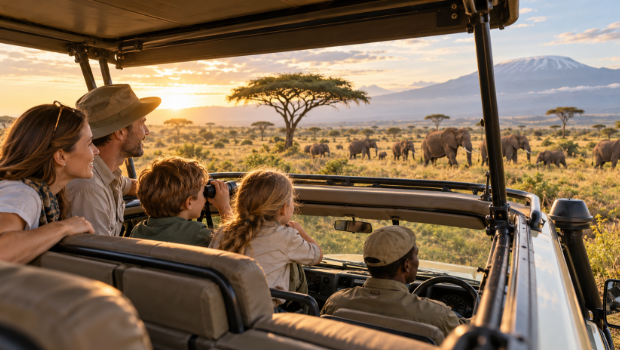
A family Tanzania safari itinerary trip offers the chance to explore remarkable wildlife destinations together, learn about nature, and enjoy experiences that children and adults can share. From watching elephants beside ancient baobab trees to following a pride of lions across the Serengeti, each day brings something new.
The most enjoyable family safari begins with thoughtful planning. Your itinerary should reflect your children’s ages, how comfortably everyone handles longer drives, the accommodation you prefer, and the amount of time you have available. A well-designed trip balances wildlife viewing with meals, rest, and comfortable overnight stays.
Kilipath African Safaris can arrange a private family safari with a dedicated guide and vehicle, selected accommodation, and a route adapted to your interests. Whether you want a short wildlife holiday or a longer safari followed by Zanzibar, your quotation can be built around your family’s needs.
| Package feature | Suggested arrangement |
|---|---|
| Duration | Seven days and six nights |
| Safari style | Private family safari |
| Starting point | Arusha |
| Main destinations | Tarangire, Serengeti, and Ngorongoro Crater |
| Accommodation | Mid-range lodges, tented camps, or luxury properties |
| Transport | Private 4x4 safari vehicle with a pop-up roof |
| Guide | Professional English-speaking safari guide |
| Meals | According to the confirmed accommodation and itinerary |
| Ending point | Arusha or an agreed airport |
| Customization | Duration, accommodation, pace, transfers, and beach extension |
This suggested package includes an arrival day, five days on safari, and a departure day. Airport transfers and accommodation are confirmed according to your actual flight arrangements.
A private safari gives your family its own vehicle and guide throughout the agreed safari route. This makes it easier to adjust the day around your children’s interests and comfort.
If your children become fascinated by a herd of elephants, you can spend more time watching their behavior. If someone needs a break, your guide can plan a stop at an appropriate location. Departure times and game-drive length can also be discussed within park rules, accommodation arrangements, and the distances you need to cover.
Your guide adds depth to the experience by explaining what you see. Children can learn why giraffes feed from tall trees, how predators hunt, and how different animals share the same habitat. Adults can enjoy wildlife photography and ask more detailed questions about the landscape and animal behavior.
Private travel still involves some early starts and longer transfers. Choosing fewer destinations or adding an extra night can make the itinerary more comfortable.
On arrival at your agreed airport, meet your transfer driver and travel to your accommodation in Arusha. The transfer arrangements will depend on whether you arrive at Kilimanjaro International Airport or Arusha Airport.
Keep the first day relaxed, especially after an overnight international flight. Your family can settle into the room, enjoy a meal, and rest before the safari begins. If your accommodation has a swimming pool, children may enjoy some supervised time there.
During your safari briefing, we will explain the route, departure time, luggage arrangements, and what to expect during game drives. This is also the time to confirm allergies, food preferences, room arrangements, and any special requests.
Overnight: Arusha hotel or lodge.
Main focus: Arrival, rest, and safari preparation.
After breakfast, depart for Tarangire National Park. Your guide will introduce the family to safari etiquette and help everyone settle into the vehicle.
Spend the day exploring different parts of the park and looking for wildlife. Elephants are a particular highlight, while giraffes, zebras, antelopes, and birds provide plenty to observe along the way. Children often enjoy watching how animals move, feed, and interact rather than simply ticking species off a list.
Stop for lunch at a designated picnic area. Your guide will explain where it is appropriate to leave the vehicle and how to behave around any animals nearby.
Continue with an afternoon game drive before traveling to your lodge. The overnight location will be chosen to suit your budget and the following day’s journey.
Overnight: Lodge near Tarangire or in the Karatu area.
Main focus: First wildlife encounters and an introduction to game drives.
After breakfast, begin the journey toward Serengeti National Park through the Ngorongoro Conservation Area.
This is one of the longer travel days in the itinerary. The landscape changes along the route, providing plenty to look at, but families should prepare with accessible snacks, water, and quiet activities for children. Your guide will plan suitable breaks where possible.
Once you reach the Serengeti, continue with wildlife viewing on the way to your accommodation. You may encounter grazing herds, giraffes, or predators, depending on conditions and where animals are moving that day.
Arrive at your camp or lodge for dinner and an evening at leisure. Staff will explain the property’s procedures, including movement around the grounds after dark.
Overnight: Serengeti lodge or tented camp.
Main focus: Scenic travel and your first Serengeti game drive.
Spend a full day discovering the Serengeti with your private guide.
An early departure can be rewarding, but the day’s schedule should suit your family. Depending on the camp’s location, you can discuss a full-day outing with a picnic lunch or separate morning and afternoon drives with a break at the accommodation.
Watch for lions, cheetahs, elephants, buffalo, giraffes, and other wildlife. Sightings are unpredictable, so the guide will respond to conditions rather than follow a fixed list of animals.
Make the experience engaging for children by encouraging them to notice details. Which animals stay in groups? Which birds follow grazing herds? What happens when a predator approaches? These observations make the safari an active learning experience.
Overnight: The same Serengeti accommodation.
Main focus: Wildlife viewing without changing accommodation.
Enjoy breakfast and another game drive before leaving the Serengeti.
This final outing gives your family another opportunity to explore, although departure timing must allow enough time to reach the next lodge comfortably. Your guide will explain the day’s plan before setting out.
Travel toward the Ngorongoro highlands and continue to your accommodation near the crater or in Karatu. After several active days, an afternoon with time to relax can be welcome.
Prepare warm clothing for the next morning and confirm the crater departure time with your guide.
Overnight: Lodge near Ngorongoro or in Karatu.
Main focus: Final Serengeti sightings and a comfortable transfer.
Leave early for your Ngorongoro Crater visit.
Explore the crater floor with your guide, looking for wildlife across its different habitats. Lions, buffalo, zebras, wildebeest, and hippos are among the animals you may encounter. A rhinoceros sighting is possible, but it cannot be guaranteed.
Enjoy your planned lunch stop before leaving the crater and traveling back to Arusha. The day includes both game viewing and a substantial return journey, so keeping the evening relaxed is helpful.
An overnight stay in Arusha gives your family time to rest before traveling onward.
Overnight: Arusha hotel or lodge.
Main focus: Crater wildlife and return to Arusha.
Enjoy breakfast before your agreed airport transfer.
You can fly home, continue to another destination, or add a Zanzibar beach holiday. If Zanzibar is part of your package, flights, hotel arrangements, and transfers will be itemized in the quotation.
Main focus: A relaxed departure or the start of your beach extension.
The right duration depends on your family’s priorities and tolerance for travel.
| Duration | Suitable approach | Main consideration |
|---|---|---|
| Three to four safari days | A shorter route focusing on fewer parks | Less time away, but limited scope |
| Five safari days | Tarangire, Serengeti, and Ngorongoro | Includes longer transfer days |
| Six to eight safari days | More nights in selected parks | More room for rest and repeat wildlife drives |
| Safari plus Zanzibar | Wildlife followed by a beach stay | Requires additional flight and transfer planning |
For families with very young children, a shorter route around Tarangire, Karatu, and Ngorongoro may be more practical than traveling all the way to the Serengeti.
Families keen to visit the Serengeti can consider adding another night or requesting a fly-in alternative. Flying may reduce some road travel, but adds cost, baggage restrictions, and airport logistics.
Accommodation influences how comfortably your family experiences the safari. The room layout, location, and available facilities can matter as much as the property’s category.
Mid-range lodges are an option for families seeking comfortable beds, private bathrooms, and a convenient place to relax after game drives.
Some properties have gardens or swimming pools. Facilities vary, so we will confirm the features that matter to your family before booking.
A tented camp offers a closer connection to the safari environment. Many permanent or seasonal camps have furnished tents with proper beds and private bathrooms.
A tented camp is different from basic public-campsite camping. Your quotation should clearly state the accommodation type and facilities.
Because some camps are unfenced, children need close supervision. Follow staff instructions and use an escort after dark when required.
Luxury accommodation may offer larger rooms, more extensive facilities, and additional services. Family suites or villas can suit larger groups, but availability and occupancy limits must be checked.
Possible arrangements include:
Share the exact number of adults and children, each child’s age, and your preferred sleeping arrangements. Connecting rooms should be specifically confirmed before booking.
Meals are an important part of keeping everyone comfortable during a family safari.
Tell us in advance about vegetarian or vegan preferences, food allergies, lactose intolerance, or other dietary requirements. Specific requests should be communicated to each accommodation.
For children, familiar foods and predictable meal times can help. Discuss their preferences before travel, especially if they are selective eaters.
Game-drive lunches may be served as picnic meals, depending on the day’s route. Breakfast and dinner are usually taken at the accommodation according to your booked meal plan.
Drinking water during safari drives can be included in the package. Other drinks and meals outside the stated itinerary should be checked in the quotation.
Your final quotation will specify exactly what is covered. Depending on the selected package, inclusions can cover:
Read the quotation alongside the itinerary so that both the services and overnight locations are clear.
Items that may be excluded or added separately include:
A Zanzibar extension should show its flight, accommodation, meal plan, and transfer arrangements separately.
A family safari requires a personalized quotation because the total depends on several connected factors.
Accommodation prices and availability vary by season and property. School-holiday travel can narrow the choice of family rooms, so planning ahead helps.
Some private safari costs are shared across the vehicle. The total family price still depends on accommodation, park charges, and each traveler’s age.
Child pricing differs between accommodation providers and other suppliers. There is no single discount that applies to every family safari.
Provide each child’s age at the time of travel so the quotation can use the correct rates.
Mid-range lodges, luxury camps, and family villas can produce very different totals. Room occupancy also affects pricing.
Additional safari days increase accommodation and operating costs. Domestic flights can change both the budget and the travel schedule.
To receive an accurate quote, send your dates, number of travelers, children’s ages, preferred accommodation, and approximate budget.
Before traveling, introduce children to the animals they may see through books, pictures, or documentaries.
Explain that wildlife viewing involves patience. Animals may be far away, hidden in vegetation, or resting. A safari is more enjoyable when children understand that smaller discoveries also matter.
Useful activities include:
Allow time for rest. A child who is tired or hungry may enjoy a shorter drive more than an extended outing.
Bring practical clothing and keep essential items within reach during transfers.
Pack lightweight clothes, comfortable shoes, sun hats, and a warm fleece or jacket for cooler mornings. Clothes that can be layered are useful when temperatures change throughout the day.
Carry sunscreen, sunglasses, personal medication, wipes, tissues, and any child-specific supplies you regularly use.
Keep a small supply of familiar snacks and quiet activities in your day bag.
Soft bags are useful because safari vehicle luggage space is limited. Ask about storing large suitcases in Arusha if you are returning there.
If your itinerary includes a domestic flight, confirm the airline’s baggage allowance before packing.
Create a safari that gives your family time to explore, learn, and enjoy Tanzania together. From your first elephant sighting to your final evening sharing stories at the lodge, the experience should suit the people traveling with you.
Contact Kilipath African Safaris today with your preferred dates and family details. We will prepare a personalized family Tanzania safari itinerary trip with selected accommodation, a clear schedule, and an itemized quotation.
A Tanzania safari from Zanzibar can mean a short mainland trip during your beach holiday or a complete package with flights, game…
Read articlePlanning a Tanzania safari that combines Lake Manyara National Park and Nyerere National Park is an excellent way to experience the country's…
Read articleDiscover Tanzania’s untamed wilderness without exceeding your travel budget. A budget Ruaha safari adventure offers incredible wildlife encounters, spectacular landscapes, authentic African…
Read articleA Nyerere Tanzania wildlife safari offers an extraordinary opportunity to discover one of Africa's most spectacular wilderness destinations. From magnificent elephants and…
Read article

