A fly in Ngorongoro Crater safari deal is one of the best choices for travelers who want to experience northern Tanzania’s spectacular wildlife without spending long hours driving from distant destinations. By combining a domestic safari flight with a private 4×4 transfer and game drive, you can spend more of your holiday watching lions, elephants, rhinos, buffaloes, zebras, wildebeest, hippos and other wildlife inside the famous Ngorongoro Crater.
Ngorongoro Conservation Area is a UNESCO World Heritage Site and contains the world’s largest unfilled volcanic caldera. UNESCO also recognizes the area for its extraordinary wildlife, landscapes and important evidence relating to human evolution.
What Is a Fly In Ngorongoro Crater Safari?
A fly-in safari combines an internal flight with a road safari. Instead of beginning your entire trip with a long drive, you fly closer to the Ngorongoro region and meet your safari guide after landing.
Lake Manyara Airport is one of the most useful gateways. The Ngorongoro Conservation Area Authority states that Manyara Airport is approximately 74 km from the conservation area, while Arusha Airport is about 174 km away. The authority also lists an Ngorongoro airstrip adjacent to the crater rim and Ndutu Airstrip within the wider conservation area.
Current airline schedules also show air connections marketed for Lake Manyara/Ngorongoro. Flightlink, for example, lists flights connecting Zanzibar with Lake Manyara/Ngorongoro via Arusha, while Coastal Aviation identifies Lake Manyara Airport as a gateway from which travelers can continue toward Ngorongoro. Flight schedules change seasonally, so exact departure times should always be reconfirmed before booking.
A typical fly-in journey may look like:
Zanzibar → Lake Manyara Airport → Ngorongoro/Karatu → Ngorongoro Crater safari
This arrangement is particularly attractive to visitors staying in Zanzibar who want to add a short wildlife safari to their beach holiday.
Why Choose a Fly In Ngorongoro Crater Safari Deal?
1. Save Valuable Travel Time
The greatest advantage is time.
Travelers with only two or three safari days often do not want to lose a large part of their holiday driving between destinations. Flying brings you much closer to the safari region, leaving more time for game viewing, photography and relaxation.
For honeymooners, families and visitors combining Zanzibar with Tanzania’s northern safari circuit, this can make the trip considerably more comfortable.
2. Experience One of Tanzania’s Greatest Wildlife Destinations
The Ngorongoro Crater has an exceptionally high concentration of wildlife. The Ngorongoro Conservation Area Authority describes the crater as home to more than 25,000 animals, including members of the Big Five.
Wildlife commonly associated with the conservation area includes:
- Lions
- African elephants
- Cape buffaloes
- Black rhinoceros
- Leopards
- Spotted hyenas
- Wildebeest
- Zebras
- Thomson’s and Grant’s gazelles
- Elands
- Hippos
- Warthogs
- Jackals
The endangered black rhinoceros is one of the species that makes Ngorongoro particularly important for wildlife enthusiasts.
3. Combine Safari and Zanzibar Easily
One of the most popular combinations is:
Zanzibar beach holiday + Ngorongoro fly-in safari
You can enjoy Zanzibar’s beaches and then fly into northern Tanzania for a wildlife experience before either returning to Zanzibar or continuing elsewhere.
This makes Ngorongoro suitable even for travelers who did not originally plan a long mainland safari.
4. More Comfortable Than Long Road Transfers
Safari roads are part of the African adventure, but long transfers can be tiring, particularly for:
- Families with children
- Senior travelers
- Honeymoon couples
- Luxury travelers
- Visitors with limited holiday time
Flying reduces the amount of road travel while still allowing you to enjoy a traditional 4×4 safari once you reach the conservation area.
What Makes Ngorongoro Crater Special?
Ngorongoro is not simply another national park.
It is part of a large multiple-use conservation landscape where wildlife conservation, archaeological heritage and traditional pastoral communities form part of the broader area. UNESCO describes Ngorongoro as globally significant for biodiversity and notes the coexistence of wildlife and Maasai pastoral communities within the conservation landscape.
The crater itself is roughly 16 km across, with walls rising more than 600 metres in places.
Once your safari vehicle descends from the highlands to the crater floor, the landscape opens into grassland, wetlands, woodland and seasonal water sources where many different animals can be encountered during a single game drive.
Wildlife Experience Inside Ngorongoro Crater
Lions
Lions are among the crater’s most exciting predators. They can often be observed resting in open grasslands, following buffalo or wildebeest herds, or moving across the plains.
Because much of the crater floor is open, photography can be excellent.
Black Rhinoceros
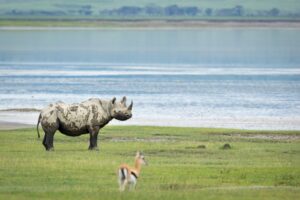
For many safari travelers, seeing a black rhino is one of the highlights of Ngorongoro.
Rhinos are endangered and sightings can never be guaranteed, but Ngorongoro remains an important habitat for the species. UNESCO specifically identifies black rhino among the globally threatened species contributing to the conservation area’s significance.
Elephants
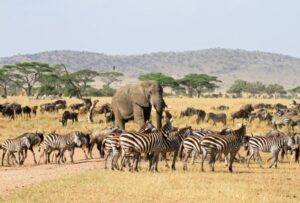
Large bull elephants can sometimes be encountered around woodland and wetter sections of the crater.
Watching an elephant walking beneath the enormous crater walls is one of the classic Ngorongoro safari scenes.
Buffalo
Buffaloes occur in good numbers and may appear individually or in groups. They are also one of the Big Five species visitors hope to photograph during their safari.
Hyenas
Spotted hyenas are particularly successful predators and scavengers within the crater ecosystem. The NCAA notes a substantial hyena population within the crater.
Zebras and Wildebeest
Large numbers of zebras and wildebeest contribute to Ngorongoro’s classic African safari atmosphere.
You may see them grazing against the dramatic crater walls while predators watch from nearby.
Hippos
Wetland areas provide habitat for hippos, making them another memorable species to look for during a crater drive.
Sample 2-Day Fly In Ngorongoro Crater Safari
Day 1: Fly to Northern Tanzania – Transfer to Ngorongoro
Take a morning safari flight from Zanzibar or another Tanzanian destination.
Depending on the airline and itinerary, you may arrive through Lake Manyara Airport or another northern Tanzania aviation connection.
Your professional safari guide meets you after landing.
Continue by 4×4 safari vehicle toward Karatu or the Ngorongoro highlands.
Depending on your arrival time, activities may include:
- Scenic drive through the Great Rift Valley region
- Relaxing at your lodge
- Exploring the highlands
- Visiting a local cultural attraction when arranged
- Enjoying sunset views from the Ngorongoro area
Dinner and overnight at your selected lodge or tented camp.
Day 2: Ngorongoro Crater Game Drive – Flight or Transfer Onward
Wake early for breakfast before travelling toward the crater.
The NCAA currently lists the crater access window as 06:00 to 16:00, while the wider conservation-area gates operate from 06:00 to 18:00.
Descend into the crater with your safari guide.
Spend the game drive searching for lions, buffaloes, elephants, wildebeest, zebras, hyenas, gazelles, hippos and, with some luck, black rhinos.
Enjoy your picnic lunch during the safari before ascending from the crater.
Afterward, transfer toward the appropriate airport or continue to another northern Tanzania destination.
3-Day Fly In Ngorongoro Safari Option
Travelers who have more time should consider three days.
A three-day itinerary can provide a much more relaxed experience.
Day 1
Fly in and transfer to Karatu or the Ngorongoro highlands.
Day 2
Full Ngorongoro Crater safari.
Day 3
Add Lake Manyara, Tarangire or another nearby experience before continuing to Arusha, Kilimanjaro or your onward flight.
The additional day reduces rushing and provides a better balance between wildlife viewing and travel.
Fly In Ngorongoro and Serengeti Combination
For travelers seeking a bigger safari, Ngorongoro can be combined with Serengeti National Park.
A possible itinerary is:
Zanzibar → Serengeti by air → Serengeti game drives → Ngorongoro → Arusha/Zanzibar
This works particularly well for travelers who want both the vast Serengeti ecosystem and the concentrated wildlife experience of Ngorongoro.
Allow at least three or four safari days if possible.
What Is Included in a Fly In Ngorongoro Crater Safari Deal?
Exact inclusions depend on your package, but a well-organized safari commonly includes:
- Domestic safari flight specified in your itinerary
- Airport or airstrip transfers
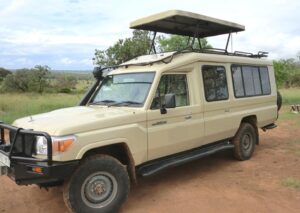
- Private or shared 4×4 safari vehicle
- Professional English-speaking safari guide
- Ngorongoro conservation fees
- Crater vehicle/service fees where applicable
- Accommodation
- Meals according to itinerary
- Drinking water during the safari
- Game drives
- Picnic lunch on safari
- Government taxes relating to included services
Before paying, always check whether your quotation includes domestic flights, transfers and crater-related fees rather than looking only at the headline safari price.
What May Not Be Included?
Depending on your package, exclusions can include:
- International flights
- Tanzania visa
- Travel insurance
- Alcoholic beverages
- Tips
- Personal expenses
- Optional Maasai cultural experiences
- Extra hotel nights
- Balloon safari or other optional activities
- Travel between your Zanzibar hotel and airport unless specifically included
Always read the final itinerary carefully.
Best Time for a Fly In Ngorongoro Crater Safari
Ngorongoro is generally regarded as a year-round wildlife destination because many animals remain in and around the crater throughout the year.
June to October
These are normally the drier months.
The NCAA identifies June through October as the area’s dry season, with June through August among the colder months.
Advantages may include:
- Comfortable wildlife viewing conditions
- Less rain
- Excellent photography
- Popular safari season
Morning temperatures on the rim can nevertheless feel cold.
November to May
This is broadly the wetter period in the Ngorongoro region.
The landscapes can become beautifully green, creating excellent backgrounds for photography.
Visitors should simply travel prepared for possible rain.
What Clothes Should You Pack?
The highlands can be surprisingly cool.
Pack clothing that can be worn in layers.
Useful items include:
- Fleece or warm sweater
- Light jacket
- Comfortable safari trousers
- Neutral-colored shirts
- Comfortable shoes
- Hat
- Sunglasses
- Sunscreen
- Rain jacket during wetter months
- Camera
- Binoculars
- Spare batteries or power bank
The NCAA recommends warm layers because temperatures on the crater rim and in higher areas can be considerably cooler than lower elevations.
Fly In Safari for Couples and Honeymooners
A fly-in Ngorongoro safari is especially attractive for couples combining safari and beach travel.
Instead of dedicating several days to a long northern Tanzania safari, couples can spend most of their holiday in Zanzibar and add a short but memorable wildlife adventure.
For a honeymoon, consider upgrading to:
- Private safari vehicle
- Crater-rim or highland accommodation
- Private dinner
- Special room decoration
- Sundowner experience
- Longer three- or four-day safari
The result is a comfortable combination of wildlife, scenery and romance.
Is a Fly In Ngorongoro Safari Good for Families?
Yes.
Families often appreciate the reduced driving time of a fly-in itinerary.
A private vehicle provides additional flexibility because stops, meal times and game-drive duration can be adjusted more easily around the family.
When traveling with younger children, consider spending at least two nights rather than attempting an extremely rushed one-day trip.
Private vs Shared Fly In Ngorongoro Safari
Private Safari
A private safari is best for travelers wanting:
- Their own vehicle
- Flexible departure times
- More photography time
- Family privacy
- Honeymoon arrangements
- Personalized stops
- Greater control over the itinerary
Shared Safari
A shared safari can reduce costs because some safari services are divided among several travelers.
However, schedules are less flexible, and matching flights to a fixed shared departure can sometimes be more difficult.
For a short fly-in itinerary, a private safari is often easier to coordinate.
How Much Does a Fly In Ngorongoro Crater Safari Cost?
There is no single fixed price because the total depends on several variables.
The main factors are:
Flight route: Zanzibar, Dar es Salaam, Serengeti and Arusha connections have different fares.
Travel season: High-season accommodation and flights may cost more.
Number of travelers: A private vehicle becomes more economical per person when several people travel together.
Accommodation level: Budget, mid-range and luxury properties can create a large difference in the final cost.
Safari duration: Two-, three- and four-day itineraries have different conservation fees, vehicle costs and accommodation requirements.
Private or shared safari: Private safaris generally cost more but provide much greater flexibility.
For the most accurate deal, request a quotation using your exact travel date, number of travelers, Zanzibar hotel or arrival point, preferred accommodation level and desired safari duration.
Why Book Your Ngorongoro Fly In Safari in Advance?
Flights use relatively small aircraft and popular safari lodges have limited rooms.
Early booking is particularly useful for:
- July
- August
- September
- Christmas/New Year
- Easter periods
- Honeymoon travel
- Families needing special room configurations
Booking early also gives your tour operator more flexibility when matching your flight times with the safari itinerary.
Important Flight Planning Tip
Do not plan your fly-in safari using flight time alone.
Your itinerary also needs to account for:
- Hotel-to-airport transfer
- Airport check-in
- Possible connecting flights
- Airstrip-to-lodge transfer
- Ngorongoro gate times
- Crater descent timing
- Final-day flight departure
For example, Flightlink’s current 2026–2027 schedule lists Zanzibar to Lake Manyara/Ngorongoro services connecting via Arusha, demonstrating why exact arrival time matters when designing a short safari.
A well-designed safari should give you enough time to enjoy Ngorongoro instead of simply rushing between an aircraft and a safari vehicle.
Book Your Fly In Ngorongoro Crater Safari Deal
A fly in Ngorongoro Crater safari deal gives you the opportunity to experience one of Africa’s most remarkable wildlife landscapes without committing to a long road journey.
Whether you are traveling from Zanzibar for a short safari, planning a honeymoon, visiting Tanzania with your family or combining Ngorongoro with Serengeti, the itinerary can be customized around your available time, budget and preferred accommodation level.
With spectacular crater scenery, abundant wildlife, opportunities to search for the Big Five and convenient air connections into northern Tanzania, Ngorongoro is an excellent choice for a short but unforgettable African safari.
Ready to explore Ngorongoro Crater? Contact Kilipath African Safaris today with your travel dates and number of travelers, and let us create a personalized fly-in safari package for you.