Lake Manyara vs. Nyerere Safari Prices | Tanzania Guide
A Lake Manyara safari can cost USD 150–220 per person for a shared day trip from Arusha. A published example of a…
Read articleArusha City - Tanzania
Safari & Travel Tips
August 13, 2026 · 17 min read
A group Lake Manyara safari is an affordable and sociable way to explore one of Tanzania’s most distinctive national parks. Situated along the dramatic Great Rift Valley escarpment, Lake Manyara National Park combines groundwater forests, open grasslands, acacia woodland, hot springs, wetlands, and the alkaline lake itself within a relatively compact area.
The park is particularly suitable for travelers who have limited time, want to control their safari expenses, or intend to combine Lake Manyara with Tarangire National Park, Serengeti National Park, and the Ngorongoro Crater.
During a group safari, travelers share a safari vehicle and some operating costs with other guests. Each participant still enjoys a professional guide, wildlife viewing from a specially designed safari vehicle, park entry, meals, and other services specified in the package.
This complete guide explains how group safaris to Lake Manyara work, what animals you may encounter, typical itineraries, accommodation choices, approximate costs, packing recommendations, and answers to frequently asked questions.
The main advantage of joining a group safari is affordability. Private safaris require one traveler, couple, or family to pay the full cost of the vehicle and guide. On a group departure, these expenses are divided among several participants.
This makes it possible to experience a professionally organized Tanzanian safari without sacrificing essential services.
A group Lake Manyara safari may be suitable for:
Group safaris also remove much of the stress associated with planning transportation, permits, meals, and park activities independently. The operator organizes the main logistics, allowing participants to concentrate on the scenery and wildlife.
Lake Manyara National Park is located in northern Tanzania, approximately 120–130 kilometers from Arusha. Driving from Arusha usually takes around two to three hours, depending on traffic, road conditions, and the location of the pickup point.
The park lies close to the town of Mto wa Mbu and beneath the western escarpment of the Great Rift Valley. Its convenient position makes it an important destination on Tanzania’s northern safari circuit.
Lake Manyara can easily be combined with:
Many multi-day group safaris visit Lake Manyara either on the first or final day because it is relatively accessible from Arusha and Karatu.
Lake Manyara is not Tanzania’s largest national park, but it contains an impressive variety of landscapes. Travelers can pass through thick forest, woodland, floodplains, marshes, and lakeshore habitat during one game drive.
The park is also associated with tree-climbing lions. Although lions are present, visitors should understand that seeing them resting in trees is never guaranteed. Wildlife is free to move naturally, and sightings depend on location, season, vegetation, and luck.
Other highlights include elephants, troops of baboons, giraffes, zebras, buffaloes, hippos, monkeys, and a remarkable variety of birds.
The Great Rift Valley escarpment creates a striking background, while the lake and surrounding wetlands attract both resident and migratory species.
Lake Manyara National Park supports a wide range of wildlife despite its compact size. The animals encountered during a group safari vary according to the season, water levels, vegetation, and movement within the ecosystem.
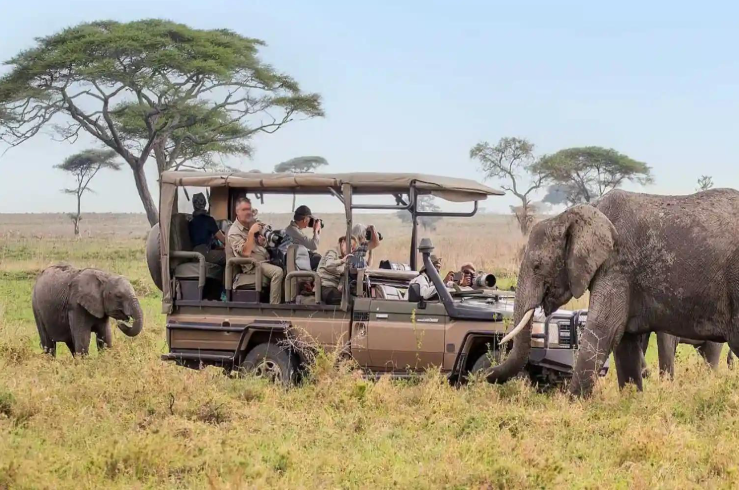
Lake Manyara is known for its elephants. Visitors may see individuals or family groups feeding in the forest and woodland. The dense vegetation can sometimes create surprisingly close but safe viewing opportunities from the safari vehicle.
Guests must follow the guide’s instructions and avoid making sudden movements or loud noises when elephants are nearby.
Lions live within the park and are occasionally seen resting in trees. However, the famous tree-climbing behavior should be treated as a possible highlight rather than a guaranteed attraction.
Lions may also be found on the ground, particularly around open areas where prey animals gather.
Large troops of olive baboons are frequently encountered near the forested entrance and elsewhere in the park. Blue monkeys and vervet monkeys can also be seen among the trees.
The social behavior of baboons often creates entertaining viewing opportunities, especially when young animals are playing.
Masai giraffes are regularly seen feeding on acacia trees and moving across open sections of the park. Their height makes them easier to spot even when vegetation is moderately thick.
African buffaloes are commonly found near water, wetlands, and grazing areas. They may appear alone, in small groups, or in larger herds.
Buffaloes can be unpredictable, so travelers should never leave the vehicle unless the guide has confirmed that it is safe and permitted.
The park has a hippo pool where visitors may observe hippos resting in the water. Depending on conditions, some animals may be partly hidden beneath the surface.
Binoculars are useful for viewing hippos and birds from designated observation areas.
Zebras, wildebeests, impalas, waterbucks, bushbucks and other herbivores may be encountered during the game drive. Their distribution changes with food and water availability.
Leopards are present but are much more difficult to find. Spotted hyenas, jackals and smaller predators may also occur. These sightings are less predictable than encounters with elephants, giraffes, monkeys, or buffaloes.
No ethical safari operator can guarantee a particular wild animal.
Lake Manyara is an excellent destination for bird enthusiasts. The combination of forest, marsh, lake, woodland and grassland habitats supports hundreds of recorded bird species.
Depending on the season, travelers may look for:
Flamingo numbers are not constant. Their presence depends on water depth, food availability, salinity, and regional movement. Travelers should therefore avoid booking only because they expect to see a large pink concentration of flamingos.
A professional guide can help identify different species, but serious birdwatchers should inform the operator before booking. This allows the company to determine whether the group’s pace and guide are suitable for detailed birding.
A group safari brings together travelers who have booked the same route and departure date. Participants normally meet in Arusha or at an agreed accommodation before traveling to the park.
A typical day operates as follows:
Exact timings may change due to traffic, weather, park formalities, wildlife sightings, or the broader itinerary.
A typical group safari uses a customized 4×4 Toyota Land Cruiser with a pop-up roof. The raised roof allows travelers to stand during wildlife viewing while remaining inside the vehicle.
Group size varies among operators. Kilipath African Safaris generally operates small shared departures with a maximum of approximately seven guests in one safari vehicle, subject to the specific arrangement.
The vehicle may include:
Travelers should confirm which features are included because vehicles and services vary between operators.
A shared safari means the vehicle is not exclusively reserved for one booking. The guide must manage the experience fairly so that all participants have opportunities to observe and photograph wildlife.
Reputable small-group operators normally arrange seating so every participant has access to a window. However, seat position can affect the viewing angle, particularly when an animal appears on only one side of the vehicle.
The pop-up roof improves visibility because guests can stand and look in different directions when the vehicle is stationary.
Participants should cooperate and allow others space to take photographs. Remaining in one position for too long can prevent another traveler from enjoying the same sighting.
If you experience motion sickness or have a medical reason for requesting the front seat, notify the operator before departure. The company may try to help, but a specific seat should not be assumed unless it has been confirmed.
A one-day group Lake Manyara safari is ideal for travelers staying in Arusha who have limited time.
Pickup is normally scheduled early in the morning. After meeting the guide and other participants, the group drives toward Mto wa Mbu and Lake Manyara National Park.
The journey passes through towns, villages, farmland, and sections of the Great Rift Valley landscape.
After completing park entry procedures, the group begins exploring the forest and other habitats. The guide looks for elephants, baboons, monkeys, giraffes, buffaloes, antelopes, birds, and predators.
Because the park contains dense vegetation, some animals may appear suddenly and disappear quickly. Travelers should keep cameras and binoculars ready.
A packed or prepared lunch is usually served at a designated picnic area. Participants must avoid feeding wild animals and should dispose of waste responsibly.
Wildlife viewing continues after lunch before the group leaves the park and returns to Arusha. Arrival is generally in the late afternoon or evening, although the exact time depends on road and operational conditions.
Lake Manyara is frequently included in longer northern circuit itineraries.
A possible three-day program may include:
This route is suitable for travelers who want three different parks without visiting Serengeti.
One possible four-day itinerary is:
Lake Manyara is not always included in the standard four-day Serengeti route. Travelers who consider it essential should verify the itinerary before paying.
A common five-day northern circuit program may include:
The order can change according to accommodation, group logistics, permit timing, and the operator’s established departure schedule.
Both formats provide access to Lake Manyara, but the experience differs.
| Feature | Group safari | Private safari |
|---|---|---|
| Vehicle | Shared with other guests | Reserved for your booking |
| Cost | Generally more affordable | Generally more expensive |
| Schedule | Predetermined | More flexible |
| Departure | Based on confirmed group dates | Can often be customized |
| Game-drive pace | Shared among participants | Adapted to your interests |
| Route changes | Limited | More flexibility |
| Social experience | Meet other travelers | Travel only with your party |
| Photography | Time shared at sightings | Easier to prioritize photography |
Choose a group safari if price and social interaction are important. Choose a private safari when flexibility, privacy, young children, specialized photography, or personalized pacing is the priority.
Accommodation depends on the length and style of the safari.
Budget camping usually includes a tent, mattress, sleeping bag, meals, and access to shared campsite facilities. A safari chef may prepare meals during multi-day camping programs.
Public campsite toilets and showers are functional but simple. Hot water is not guaranteed at every budget campsite.
Camping is a good option for adventurous travelers who want to keep the total cost manageable.
Budget lodges and guesthouses offer basic rooms and permanent facilities. They may be located in Mto wa Mbu, Karatu, or another town near the parks.
These properties can provide greater comfort than public camping while remaining relatively affordable.
Mid-range accommodation often provides private bathrooms, proper beds, restaurant service, and more spacious rooms or safari tents.
A permanent safari tent is different from a small camping tent. It may contain a bed, furniture, electricity, and an en-suite bathroom.
Group departures using mid-range accommodation generally cost more than camping programs.
Luxury lodges are uncommon in standard budget group departures. Travelers seeking premium rooms, exclusive service, or particular properties may need a customized private safari.
The exact package differs between operators, but a group Lake Manyara safari may include:
Always check the written quotation instead of assuming that every service is included.
Common exclusions may include:
Request a complete inclusion and exclusion list before booking.
The price depends on the number of days, group size, accommodation standard, park-fee structure, transportation, and services included.
A one-day group trip is normally less expensive than a multi-day safari. However, the cheapest advertised price may exclude transfers, park fees, meals, or taxes.
When comparing quotations, examine:
A slightly higher transparent quotation can offer better value than a low headline price followed by additional expenses.
Lake Manyara can be visited throughout the year, but every season has different characteristics.
This is generally the drier period. Animals may gather around reliable water sources, and some areas can be easier to navigate.
The dry season is popular, so vehicles and accommodations may be busier. Early booking is advisable, particularly when the trip also includes Serengeti or Ngorongoro.
Short rains can refresh the landscape and reduce dust. Rainfall is usually intermittent, although weather cannot be guaranteed.
The park becomes greener, and birdwatching can be rewarding.
These months may offer warm weather, green landscapes and good general wildlife viewing. They also coincide with an important travel season in northern Tanzania, especially for visitors interested in the Ndutu calving area.
Lake Manyara and Ndutu are different destinations, so confirm that both are listed if you want to visit them.
This is the main rainy season. The landscape is lush, bird activity can be excellent, and visitor numbers may be lower.
Heavy rain may affect roads and the daily schedule. Travelers should carry waterproof clothing and protect cameras and electronic devices.
One game-drive day is normally sufficient for a general Lake Manyara experience. The park is often treated as a half-day or full-day destination within a northern circuit safari.
Travelers who are especially interested in birds, photography, or a slower pace may prefer additional time. However, many group itineraries operate on fixed schedules and cannot extend the visit for one participant.
If your main objective is seeing the largest possible variety of wildlife, it is usually better to combine Lake Manyara with Tarangire, Serengeti, and Ngorongoro rather than spending every safari day in one park.
Lake Manyara and Tarangire are both accessible from Arusha, but they provide different experiences.
Lake Manyara is known for its groundwater forest, Rift Valley scenery, primates, birdlife, elephants, and association with tree-climbing lions.
Tarangire is larger and famous for baobab trees, elephants, and dry-season wildlife concentrations around the Tarangire River.
Travelers with enough time should consider visiting both. If only one park can be selected, the best choice depends on the season and personal interests.
Ngorongoro Crater generally offers a higher concentration of large mammals in a relatively small area. It can provide opportunities to see lions, buffaloes, elephants, hippos, zebras, wildebeests, and, with luck, black rhinos.
Lake Manyara offers more varied vegetation, primate encounters, forest scenery, birdlife, and Rift Valley views.
The two destinations complement each other. A multi-day safari combining both parks gives travelers a broader impression of northern Tanzania.
Serengeti is much larger and typically requires more travel time. It is internationally known for extensive plains, predator sightings, and the wider Great Migration ecosystem.
Lake Manyara is more compact and easier to include in a short safari from Arusha.
Travelers with only one day may find Lake Manyara more practical. Those with four or more days should strongly consider including Serengeti, depending on budget and availability.
Pack lightly, especially when sharing a vehicle with other travelers.
Recommended items include:
Soft-sided luggage is easier to store than large hard-shell suitcases. Ask whether excess luggage can be stored safely in Arusha during the safari.
Neutral shades such as khaki, beige, brown, olive, and grey are practical for safari. Bright colors are not prohibited, but muted clothing is generally more comfortable for wildlife activities.
Wear layers because mornings may be cool while afternoons become warm.
Avoid military-style camouflage clothing because its use may be restricted or viewed negatively in some destinations. Comfortable clothing is more important than purchasing an entirely new safari wardrobe.
Wildlife photography from a shared vehicle requires patience and cooperation.
For better results:
Tell the operator before booking if professional photography is the primary purpose of your trip. A private vehicle may be more suitable because photographers often need extra space and longer stops.
A successful group safari depends on cooperation.
Arrive at the meeting point on time, follow safety instructions, and be considerate when taking photographs. Avoid loud conversations when approaching animals and use headphones if listening to personal audio.
Discuss reasonable temperature preferences before opening or closing vehicle windows. Do not smoke inside the vehicle, and only smoke in places where the guide confirms it is safe and permitted.
Travelers should also avoid demanding unplanned route changes. Other guests booked the published itinerary and may have flights, accommodation, or activities scheduled afterward.
Lake Manyara is a protected wildlife area containing potentially dangerous animals. It is safe to visit when park rules and guide instructions are respected.
Important precautions include:
Wildlife encounters cannot be completely controlled. The professional guide will assess animal behavior and position the vehicle at a responsible distance.
Families can join some group Lake Manyara safaris, but suitability depends on the children’s ages and the operator’s policies.
Parents should consider whether children can manage:
A private safari is often easier for families with very young children because stops and pacing can be adjusted.
A group safari is particularly valuable for solo travelers. Instead of paying a private vehicle rate, an individual can join a confirmed departure and share operating costs.
Solo travelers should ask:
Do not book flights around an unconfirmed departure without understanding the operator’s policy.
Group packages normally provide lunch on day trips and scheduled meals on multi-day programs.
Vegetarian meals can usually be arranged when requested in advance. Other dietary needs, including vegan, gluten-free, halal, or allergy-related meals, should be communicated before confirmation.
Travelers with serious allergies should provide clear written details and carry appropriate medication. Remote safari locations may have fewer ingredient choices than large cities.
Visitors can help protect Lake Manyara by following responsible practices:
Wild animals should never be chased, surrounded, touched, or disturbed for photographs.
Before confirming your safari, provide the operator with:
Request a written itinerary, price, payment schedule, cancellation policy, and complete list of inclusions and exclusions.
Confirm that the company is legally registered and uses qualified guides and appropriate safari vehicles.
A group Lake Manyara safari offers an accessible, affordable, and enjoyable introduction to Tanzania’s northern safari circuit. Travelers can explore groundwater forests, wetlands, woodland, and the Rift Valley landscape while looking for elephants, giraffes, buffaloes, hippos, primates, birds, and elusive predators.
The experience is particularly valuable for solo travelers, couples, and budget-conscious visitors who are comfortable sharing a vehicle and following a fixed schedule.
For the most rewarding itinerary, consider combining Lake Manyara with Tarangire, Ngorongoro Crater, and Serengeti National Park. Review the itinerary carefully, verify all inclusions, communicate dietary or medical requirements in advance, and select a reputable local operator.
With proper planning and realistic wildlife expectations, a group Lake Manyara safari can become a memorable part of a wider Tanzania adventure.
A Lake Manyara safari can cost USD 150–220 per person for a shared day trip from Arusha. A published example of a…
Read articlePlanning a Tanzania safari that combines Lake Manyara National Park and Nyerere National Park is an excellent way to experience the country's…
Read articlePlanning an unforgettable African wildlife adventure from Zanzibar? Understanding the Tanzania safari package Zanzibar price is an important first step toward choosing…
Read articlePlanning an African wildlife adventure? Understanding the group Tanzania safari price is an important step toward choosing an affordable and unforgettable safari…
Read article