Skip to content
A group Serengeti safari is one of the most affordable and enjoyable ways to experience Tanzania’s legendary wildlife. Instead of paying for an entire private safari vehicle, travelers share a professionally guided 4×4 Land Cruiser with other safari guests while enjoying the same national parks, wildlife sightings and spectacular landscapes.
For solo travelers, couples, friends and budget-conscious visitors, joining a Serengeti group safari offers excellent value without taking away the excitement of the African safari experience.
Serengeti National Park covers approximately 14,763 square kilometers and forms part of a much larger Serengeti ecosystem. Tanzania National Parks describes the Serengeti as both a World Heritage Site and Biosphere Reserve, famous for its extraordinary concentrations of wildlife and the annual Great Migration.
Why Choose a Group Serengeti Safari?
The major advantage of a group safari is cost sharing. Transportation, professional guiding and some safari logistics are divided among the guests traveling in the same vehicle. This allows travelers to experience destinations such as Serengeti and Ngorongoro while keeping the overall safari budget more manageable.
At Kilipath African Safaris, our shared safari vehicles accommodate a maximum of seven travelers. Every guest is guaranteed a window seat, making wildlife viewing and photography comfortable throughout the journey.
You will travel in a 4×4 Land Cruiser with a pop-up roof specifically designed for African game drives. The open roof provides excellent visibility when photographing lions, elephants, giraffes, zebras and other wildlife.
Most importantly, joining a group does not mean traveling without professional guidance. Your safari is led by an experienced English-speaking safari guide who knows the parks, animal behavior and wildlife-viewing areas.
What Can You See in Serengeti National Park?
Wildlife is the biggest attraction of any Serengeti safari.
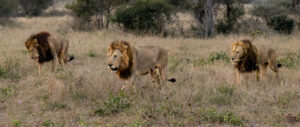
The Serengeti ecosystem supports lions, elephants, buffaloes, leopards, cheetahs, hyenas, giraffes, zebras, wildebeest, gazelles and numerous other species. TANAPA highlights the Great Migration, Big Five, carnivores, herbivores, rare species, birds and remarkable landscapes among the park’s major attractions.
The scenery is equally impressive.
Imagine waking before sunrise, entering the plains as the horizon begins turning golden and watching giraffes moving between acacia trees. Later, your guide may locate a pride of lions resting near a kopje or cheetahs scanning the open grasslands.
Serengeti safari experiences are unpredictable, which is exactly what makes them exciting. Wildlife moves freely, and no responsible safari company can guarantee particular animal sightings.
However, Serengeti’s wildlife diversity gives visitors excellent opportunities for memorable encounters throughout the year.
The Great Migration on a Group Serengeti Safari
Many travelers planning a group Serengeti safari are especially interested in the Great Wildebeest Migration.
It is important to understand that the migration is a natural movement rather than a scheduled event. Rainfall, grazing and water availability influence where the herds move, so exact locations and river crossings cannot be guaranteed.
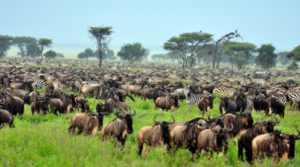
TANAPA describes the migration as involving more than 1.5 million wildebeest accompanied by hundreds of thousands of zebras, gazelles and other grazing animals moving through the ecosystem in search of water and fresh grass.
Broadly, the herds are commonly associated with the southern Serengeti and Ndutu region during the calving months, before moving through other parts of the ecosystem toward the western and northern areas. A Serengeti migration guide notes that large herds are generally associated with the southeast and Ndutu from roughly December through May, the Western Corridor from around May to July and the Serengeti Mara region mainly from July through October, although yearly variations are common.
For travelers specifically interested in a Mara River crossing or remote Northern Serengeti migration safari, a private safari is normally a better option because it provides greater control over the route and number of nights spent in migration areas.
Best Time for a Group Serengeti Safari
Serengeti can be visited throughout the year.
Your ideal month depends more on what you want to experience than on whether the park itself is worth visiting.
January through March attracts travelers interested in the southern ecosystem and calving season. The southeastern plains and Ndutu area usually experience particularly high wildlife concentrations between December and April.
June through October is Tanzania’s main dry-season safari period. Vegetation becomes drier and wildlife often concentrates around available water sources. July through September is particularly popular with travelers hoping to explore areas associated with the northern movement of the migration.
November and December bring seasonal changes and greener scenery as the migration gradually moves south again.
Remember that migration movements vary with rainfall. Choosing a safari solely because someone guarantees a river crossing or a particular migration location is not recommended.
Typical Group Serengeti Safari Itinerary
A shared safari normally follows a fixed itinerary because several travelers are participating in the same departure. A popular Northern Circuit program combines Tarangire, Serengeti and Ngorongoro.
A typical four-day itinerary may look like this:
- Day 1 – Arusha to Tarangire National Park: Leave Arusha in the morning and enjoy a game drive in Tarangire, famous for elephants, baobab landscapes and diverse wildlife. Continue to the scheduled overnight accommodation or campsite.
- Day 2 – Serengeti National Park: Travel toward Serengeti through the Ngorongoro highlands. Enter the Serengeti and enjoy an afternoon game drive before heading to camp.
- Day 3 – Serengeti to Ngorongoro: Start with an early Serengeti game drive before continuing toward the Ngorongoro Conservation Area for the overnight stay.
- Day 4 – Ngorongoro Crater to Arusha: Descend into Ngorongoro Crater for wildlife viewing before driving back to Arusha in the late afternoon or early evening.
Exact arrangements can vary depending on departure date, accommodation type and the safari program selected.
Group Safari vs Private Serengeti Safari
Choosing between group and private safari travel depends mainly on your budget and preferred level of flexibility.
A group safari is particularly suitable for travelers who want to control costs and do not mind sharing their safari vehicle with other guests. Departure schedules and routes are normally fixed because everyone must follow the same itinerary.
Private safaris provide more freedom.
With a private safari you have your own vehicle and guide, making it easier to adjust game-drive times, spend longer photographing animals or travel to specialized areas such as Northern Serengeti.
For our standard shared safaris, routes normally focus on Central Serengeti. Northern Serengeti and Ndutu require private arrangements because of the distance, logistics and additional nights required.
If seeing the Mara River migration area is your main reason for visiting Tanzania, ask us about a customized private Serengeti safari.
Serengeti Group Safari Accommodation
Group safaris are especially popular among travelers choosing camping accommodation.
Public safari campsites offer a more adventurous experience and help keep the overall package affordable. Camping equipment such as tents, mattresses, sleeping bags and pillows can be provided, while a safari cook prepares meals during the tour.
Bathroom and shower facilities at public campsites are shared.
For travelers who prefer private bathrooms, permanent beds and greater comfort, accommodation upgrades or private mid-range safari packages can be arranged.
Your accommodation preference should therefore be discussed before confirming the safari.
Safari Vehicle and Window Seats
Wildlife viewing becomes much more enjoyable when you can see clearly from the vehicle.
Our group safaris use 4×4 Land Cruisers with pop-up roofs. The vehicle carries a maximum of seven travelers, and each guest has access to a window seat.
During game drives, the roof is raised so travelers can stand comfortably while viewing and photographing wildlife.
Safari vehicles may also include charging connections, a cooler or fridge and binoculars shared among travelers.
The exact vehicle configuration may vary, but the goal is always to provide practical and comfortable wildlife viewing.
Meals During Your Safari
Safari packages normally include meals according to the itinerary as well as drinking water during game drives.
Hot lunches may be served instead of relying exclusively on traditional lunch boxes, depending on the route and day’s arrangements.
Travelers with dietary requirements should tell us before departure. Vegetarian, vegan, halal and other dietary arrangements can normally be organized when requested in advance.
If you have allergies, clearly communicate them while making your reservation so your safari team can prepare accordingly.
Who Should Book a Group Serengeti Safari?
A shared safari works particularly well for solo travelers who would otherwise face the high cost of operating a private vehicle alone.
It is also excellent for couples who would rather spend their budget on additional safari days than pay for exclusive vehicle use.
Friends, backpackers and adventurous travelers often enjoy the social side of group safaris too. During several days together, guests from different countries share wildlife encounters, meals and stories from their travels.
However, travelers wanting complete privacy, special photography positioning, luxury accommodation or highly customized schedules will generally benefit more from a private safari.
Photography in Serengeti
You do not need professional photography equipment to return home with memorable Serengeti pictures.
A smartphone with a good zoom can capture landscapes and nearby animals, while cameras with telephoto lenses provide better results for wildlife farther from the vehicle.
Morning and late-afternoon light is particularly attractive for photography.
Keep your camera ready because sightings can happen quickly. A leopard may suddenly appear in an acacia tree, elephants may cross the road or lions may begin moving after hours of resting.
Visitors must also respect park regulations. TANAPA’s Mara River crossing guidelines, for example, require vehicles to remain within designated viewing areas and emphasize giving migrating animals sufficient room without blocking them.
What to Pack for Your Group Safari
Pack light, especially when joining a shared safari where luggage space is divided among several travelers.
Comfortable neutral-colored clothing, closed shoes, sunscreen, sunglasses, a hat, insect repellent, personal medication, camera equipment and a light jacket are useful.
Ngorongoro can be surprisingly cool in the early morning, so warm clothing is recommended even when the days are sunny.
Soft-sided travel bags are generally easier to fit inside safari vehicles than large rigid suitcases. If you have excess luggage, ask whether storage can be arranged in Arusha during the safari.
Starting Your Safari from Arusha
Arusha is the main starting point for Tanzania’s Northern Circuit safaris.
For shared departures, travelers should normally arrive in Arusha at least one day before the safari begins. Group safaris depart early because everyone must be collected and begin the journey toward the national parks on schedule.
If you arrive through Kilimanjaro International Airport or Arusha Airport, airport transfer arrangements can be discussed when making your reservation.
Guests continuing to Zanzibar after their safari can also ask us about suitable domestic flight options.
Why Book Your Group Serengeti Safari With Kilipath African Safaris?
Planning Serengeti travel requires more than simply arranging a vehicle. Park routes, accommodation, transfers, meals and daily timing all need to work together.
Kilipath African Safaris organizes shared departures designed for travelers looking for an affordable way to explore Tanzania’s Northern Circuit.
Our group safari experience includes professional safari guidance, 4×4 transportation and carefully planned wildlife routes. With a maximum of seven travelers per vehicle and guaranteed window seats, guests can enjoy the social advantages of a group safari without overcrowding the jeep.
We can also help travelers combine their Serengeti experience with Tarangire, Ngorongoro Crater, Lake Manyara, Zanzibar or other Tanzania destinations.
Book Your Group Serengeti Safari
The Serengeti is more than a place to check off a travel list.
It is waking up before sunrise and driving onto endless plains. It is hearing lions call in the distance, watching elephants move silently through the grass and seeing thousands of wildebeest spread across the horizon.
A group Serengeti safari makes this experience accessible while giving you the opportunity to share the journey with other travelers.
Whether you are traveling solo, as a couple or with friends, we can help you choose the right departure based on your dates, budget and preferred number of safari days.
Ready to experience Serengeti? Contact Kilipath African Safaris today with your travel dates and number of travelers, and we will help you find an available group safari departure in Tanzania.