

Budget Ngorongoro Crater Safari Holiday
Planning a budget Ngorongoro Crater safari holiday from Arusha? Compare a crater day trip, a two-day Tarangire and Ngorongoro safari, or a…
Read articleArusha City - Tanzania
Safari & Travel Tips
September 2, 2026 · 14 min read
Planning a group Tanzania safari cost tour is one of the smartest ways to experience Tanzania’s famous wildlife destinations while keeping your safari budget manageable. By sharing a safari vehicle, professional guide, fuel, and some logistical expenses with other travelers, you can visit iconic destinations such as Serengeti National Park, Ngorongoro Crater, Tarangire National Park, and Lake Manyara without paying the higher cost of a private safari.
For 2026, Tanzania safari prices vary considerably according to trip duration, accommodation style, season, parks visited, and whether you choose a shared group safari or organize a private group with friends and family. Current published Tanzania safari pricing guides show budget and mid-range experiences spanning a wide range, while official park fees remain an important part of the final safari price.
This guide explains what you should expect to pay, what is normally included, how group safaris work, and how you can reduce your Tanzania safari costs without compromising the wildlife experience.
For travelers joining a shared safari, approximate prices can look like this:
| Safari duration | Typical group safari price per person |
|---|---|
| 2 days | $450–$650 |
| 3 days | $600–$850 |
| 4 days | $730–$1,000 |
| 5 days | $900–$1,250 |
| 6 days | $1,050–$1,450 |
| 7 days | $1,200–$1,700+ |
These figures are useful planning estimates rather than guaranteed quotations. Your final price depends especially on accommodation, season, itinerary, number of Serengeti nights, and additional activities.
Current 2026 market pricing confirms that sharing safari costs can substantially reduce the amount paid per traveler because vehicle and guide expenses are distributed across several passengers.
A group Tanzania safari allows several travelers to travel together in the same safari vehicle and follow a predetermined itinerary.
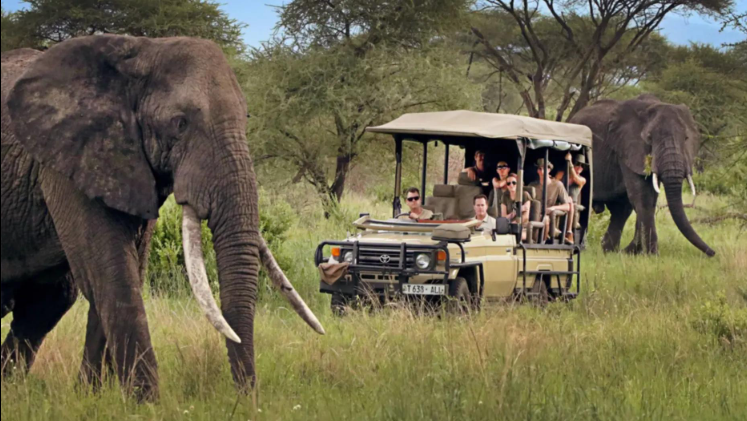
At Kilipath African Safaris, a typical shared safari uses a 4x4 Land Cruiser with a pop-up viewing roof, with a maximum of approximately seven travelers. Each traveler receives a window seat for wildlife viewing.
This arrangement is particularly attractive to:
Instead of one or two travelers paying for an entire vehicle and driver-guide, those expenses are shared among the group.
That is one of the biggest reasons group safari tours are cheaper than private safaris.
A good budget for a group Tanzania safari cost tour is approximately $200–$350 per person per safari day, although shorter itineraries sometimes have a higher average daily cost.
Published 2026 Tanzania safari pricing demonstrates that safari prices differ substantially across budget, mid-range and luxury categories. Mid-range private safaris can run roughly $450–$750 per person per day in some published estimates, while shared camping arrangements can be considerably cheaper.
Group safaris reduce costs because several major expenses are shared.
For example, a safari Land Cruiser requires:
Whether there are two travelers or six travelers in the vehicle, many of these expenses remain relatively similar.
More passengers therefore generally means a lower cost per person.
A two-day group safari generally costs approximately:
$450–$650 per person
A popular itinerary is:
Day 1: Tarangire National Park
Day 2: Ngorongoro Crater
This option is excellent if you have limited time.
Tarangire is particularly famous for elephants, baobab trees, giraffes, zebras, wildebeest and numerous antelope species.
Ngorongoro Crater offers opportunities to see lions, elephants, buffaloes, hippos, zebras, wildebeest, hyenas and sometimes black rhinos.
Because of the short duration, however, Serengeti is normally excluded.
Expect approximately:
$600–$850 per person
One popular three-day combination is:
Drive toward Serengeti and enjoy an afternoon game drive.
Enjoy another Serengeti game drive before traveling toward the Ngorongoro Conservation Area.
Descend into the crater for wildlife viewing before returning to Arusha.
This is one of the most affordable ways for travelers with limited time to combine Serengeti and Ngorongoro Crater.
Approximately:
$730–$1,000 per person
A classic route is:
Day 1: Tarangire
Day 2: Serengeti
Day 3: Serengeti
Day 4: Ngorongoro Crater
This is one of our most popular recommendations because travelers get both Serengeti and Ngorongoro while also experiencing the elephant-rich landscape of Tarangire.
Four days provides a more relaxed experience than trying to fit everything into three days.
Approximate cost:
$900–$1,250 per person
A possible five-day itinerary is:
| Day | Destination |
|---|---|
| Day 1 | Tarangire National Park |
| Day 2 | Serengeti National Park |
| Day 3 | Serengeti National Park |
| Day 4 | Ngorongoro Conservation Area |
| Day 5 | Ngorongoro Crater |
Five days gives travelers substantially more time for wildlife viewing.
It is particularly suitable for first-time safari travelers who want to experience the highlights of Tanzania’s Northern Circuit without rushing.
Expect approximately:
$1,050–$1,450 per person
Six days allows additional game-drive time and sometimes includes Lake Manyara.
A possible route is:
Tarangire National Park
Serengeti National Park
Full-day Serengeti
Serengeti to Ngorongoro
Ngorongoro Crater
Lake Manyara National Park
The exact sequence can vary according to the group departure schedule.
A seven-day safari may range approximately from:
$1,200–$1,700+ per person
Seven days gives travelers enough time for a more complete Northern Circuit safari.
Research into current Tanzania group safari prices shows that seven-day budget group tours can sometimes reach roughly $2,000 or more depending on accommodation and inclusions, so travelers should compare exactly what each operator includes rather than looking only at the headline price.
A typical longer safari might include:
The main reason is cost sharing.
Imagine that a safari vehicle, guide and operational costs amount to a certain fixed amount for one day.
If one traveler uses the vehicle, that person covers most of the cost.
But when six travelers share the vehicle, those expenses are divided among six people.
Published pricing comparisons show this clearly: the per-person cost for larger groups can fall significantly because the vehicle and guide are shared.
This makes group joining safaris especially attractive to solo travelers.
A well-organized package normally includes most essential safari expenses.
With Kilipath African Safaris, inclusions may include:
You travel in a specially equipped safari vehicle with a pop-up roof for wildlife viewing and photography.
An experienced English-speaking driver-guide accompanies the group.
Park entrance fees are normally included in your confirmed safari package.
The Ngorongoro crater vehicle descent charge is normally incorporated when the itinerary includes a crater game drive.
Depending on the package, accommodation could include:
Full-board arrangements normally include:
Hot lunches may be provided during selected safari days.
Drinking water is supplied during safari.
For camping packages, equipment normally includes:
Camping safaris usually include a cook or chef who prepares meals for the group.
Travelers should budget separately for expenses such as:
Always read the specific inclusions in your quotation before paying.
Government conservation charges make up a considerable portion of Tanzania safari prices.
Official TANAPA information confirms that visitors pay conservation fees and that fees generally operate within 24-hour entry periods. TANAPA also notes that rates can vary according to visitor status and age category.
Published 2026 estimates put approximate adult non-resident fees around:
| Destination | Approximate conservation charge |
|---|---|
| Serengeti National Park | Around $83 per adult/day |
| Tarangire National Park | Around $53 |
| Lake Manyara National Park | Around $53 |
| Ngorongoro Conservation Area | Around $82 |
| Ngorongoro crater vehicle descent | Around $295 per vehicle |
These figures are useful for understanding why Tanzania safaris have a meaningful base cost. Actual charges should always be verified at the time of booking because government fees can change.
Accommodation has a major effect on safari price.
This is normally the cheapest option.
Travelers stay at public campsites inside or close to national parks.
Camping packages usually include:
Camping is particularly popular with younger travelers, backpackers and adventurous visitors.
It also allows you to stay remarkably close to nature.
At night you may hear:
The campsite itself remains managed according to park rules.
A mid-range safari generally uses lodges or permanent tented camps.
You receive greater privacy and comfort.
Rooms typically offer:
Mid-range accommodation raises the safari price but gives travelers a better balance between adventure and comfort.
Luxury group safaris can include:
Published Tanzania safari cost guides place genuine luxury safaris significantly above standard budget or mid-range tours, sometimes above $900 per person per day depending on the property.
Serengeti is arguably Tanzania’s most famous safari destination.
Its enormous grassland ecosystem supports:
It is particularly famous for the Great Wildebeest Migration.
Travelers interested in safari photography should prioritize spending sufficient time in Serengeti rather than attempting to visit too many parks in a short itinerary.
Ngorongoro is often one of the highlights of a Northern Tanzania safari.
The crater contains an unusually high concentration of wildlife.
Animals may include:
Wildlife densities make Ngorongoro particularly rewarding for travelers on shorter safaris.
Tarangire is famous for enormous baobab trees and large elephant populations.
During the drier months, animals concentrate around the Tarangire River.
Common sightings include:
It is an excellent first destination on a Northern Circuit safari.
Lake Manyara offers a noticeably different ecosystem.
The park combines:
You may encounter:
It is particularly convenient because of its location between Arusha and Ngorongoro.
Safari prices usually fall during Tanzania's greener months.
This is generally one of the most affordable periods.
Some lodges lower their prices significantly during the rainy season.
Certain 2026 safari pricing analyses estimate accommodation reductions of approximately 20–40% or even more in green-season periods compared with peak-season rates.
Advantages include:
Rainfall can make some roads more challenging, but safari is still possible.
July through October is among Tanzania’s busiest safari periods.
Demand is particularly high because of:
Accommodation can become considerably more expensive.
Booking well in advance is strongly recommended.
January and February are excellent safari months.
Southern Serengeti and the Ndutu region become particularly important during the wildebeest calving period.
Large numbers of newborn wildebeest also attract predators.
However, Ndutu is generally better suited to private safaris, because regular shared group itineraries usually operate fixed routes through Central Serengeti.
Which should you choose?
| Group Safari | Private Safari |
|---|---|
| Lower price | Higher price |
| Shared vehicle | Exclusive vehicle |
| Fixed itinerary | Flexible itinerary |
| Fixed departure | Flexible departure |
| Meet other travelers | Travel with your own party |
| English guide | Other languages can often be arranged |
| Best for budget travelers | Best for families/photographers |
| Limited itinerary changes | Highly customizable |
A group safari is ideal when affordability is your priority.
A private safari is better if you value complete flexibility.
With Kilipath African Safaris, our shared safari groups typically have a maximum of seven travelers in one 4x4 Land Cruiser.
A small group is preferable because it provides better:
Each traveler receives a window seat.
This is important because wildlife viewing is the main reason you are visiting Tanzania.
Absolutely.
A Tanzania group joining safari is one of the best options for solo travelers.
Instead of paying the high cost associated with a private vehicle, you simply join other travelers departing around the same dates.
You also have the opportunity to meet travelers from different countries.
Solo travelers frequently choose:
Yes.
Couples can reserve two seats in a shared vehicle while normally sharing one tent or one lodge room.
This can considerably reduce the total safari cost compared with booking a private Land Cruiser for two people.
Children can participate in many safaris, although a private safari is often more suitable for families with younger children.
Private trips give parents more control over:
Families with older children can generally participate comfortably in group safari programs.
Yes.
Dietary requirements can normally be arranged if communicated before departure.
We regularly cater for:
Always inform the operator before your safari begins.
This depends on the package.
Some Kilipath African Safaris arrangements include airport and hotel transfers.
Travelers should provide:
Common arrival airports include:
Kilimanjaro International Airport – JRO
and
Arusha Airport – ARK
Yes.
For shared safaris, arriving at least one day before departure is strongly recommended.
Group departures normally begin early in the morning.
If your flight arrives on the same morning and is delayed, the entire group cannot necessarily wait.
Arriving the previous day makes the beginning of your safari much easier.
Most Tanzania group safaris use a specially modified Toyota Land Cruiser 4x4.
Typical features include:
The pop-up roof provides excellent wildlife viewing and photography opportunities.
Yes, drinking water is normally provided throughout the safari.
Depending on your package, soft drinks may also be available.
Alcoholic drinks are generally additional unless specifically stated.
Tips are usually excluded from safari prices.
A commonly suggested guideline is approximately:
$10 per traveler per safari day
for your guide and safari staff, depending on the quality of service.
Tipping is voluntary.
Yes.
A Serengeti hot-air balloon experience can usually be added to a group safari when your itinerary allows enough time.
Balloon safaris normally begin before sunrise.
You fly above:
Ballooning is optional and should be booked early because spaces are limited.
Yes.
A Maasai cultural visit can be incorporated into many itineraries.
Travelers may learn about:
Cultural activities are usually optional.
One of Tanzania's most popular travel combinations is:
Safari + Zanzibar
For example:
Northern Tanzania safari
Fly from Arusha or Kilimanjaro to Zanzibar
Relax on Zanzibar
This offers travelers two completely different experiences in one holiday.
During safari you explore:
Then in Zanzibar you can enjoy:
Several strategies can significantly lower your total safari budget.
This is usually the biggest saving.
Public camping costs substantially less than lodge accommodation.
March to May often provides lower accommodation rates.
Direct booking can reduce intermediary costs.
Adding distant destinations increases fuel and accommodation expenses.
A well-designed route saves both travel time and money.
Booking early improves your chance of securing reasonably priced accommodation before cheaper rooms sell out.
No.
A very low safari price should be examined carefully.
Ask whether the package includes:
Since official park fees represent an unavoidable cost, quotations dramatically below market norms deserve careful scrutiny.
Choosing a safari should be about value, not simply finding the smallest number.
A good group safari should combine affordability with professional safari operations.
With Kilipath African Safaris, travelers can experience Tanzania in specially equipped 4x4 safari vehicles accompanied by knowledgeable local guides.
Our group safari approach focuses on:
Whether you are a solo traveler, couple or small group of friends, we can help you identify a safari program that matches your available days and travel budget.
Tanzania does not have to be reserved only for luxury travelers.
A carefully planned group Tanzania safari cost tour can provide outstanding wildlife experiences while distributing the major operating expenses among several travelers.
For travelers wanting the classic Northern Tanzania experience, consider:
3 days: Serengeti + Ngorongoro
4 days: Tarangire + Serengeti + Ngorongoro
5 days: Tarangire + Serengeti + Ngorongoro
6–7 days: Extended Northern Circuit
The right itinerary depends on your travel dates, accommodation preference and total budget.
Planning a budget Ngorongoro Crater safari holiday from Arusha? Compare a crater day trip, a two-day Tarangire and Ngorongoro safari, or a…
Read articleA Lake Manyara safari can cost USD 150–220 per person for a shared day trip from Arusha. A published example of a…
Read articleExplore Ruaha National Park’s baobab country on a guided safari built around your dates, group size and budget. Spend your game drives…
Read articleA Nyerere Tanzania wildlife safari can take you from a woodland game drive in the morning to a boat on the Rufiji…
Read article

