Skip to content
A group Tanzania safari itinerary brings together wildlife viewing, shared transport, and the opportunity to explore with fellow travelers. For solo visitors, couples, and friends, joining a safari group can help reduce transport costs while making the journey more social.
Before booking, it helps to understand how the route works, how much time you will spend traveling, and what your accommodation includes. A carefully planned itinerary balances game drives with realistic transfer times and enough rest between destinations.
This guide explains a typical northern Tanzania group safari, including a four-day itinerary, accommodation choices, and practical questions to ask before confirming your trip.
What Is a Group Tanzania Safari?
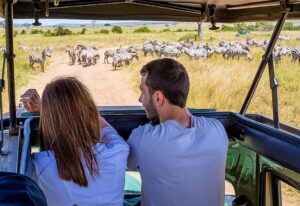
A group safari usually means joining other travelers in the same safari vehicle. Guests follow a common itinerary and share the guide, transport, and daily schedule.
There are two main arrangements:
- Shared departure: You reserve individual seats and travel with guests who booked separately.
- Private group safari: Your family, friends, or organization books a dedicated vehicle and guide.
Shared departures suit travelers who are comfortable following a fixed route. Private groups have more freedom to arrange departure times, accommodation, and activities around their interests.
For Kilipath African Safaris’ shared trips, vehicles carry a maximum of seven guests, with guaranteed window seats. Confirm the accommodation arrangement separately, particularly if you are traveling alone and want your own room or tent.
Which Parks Fit a Group Tanzania Safari Itinerary?
Tarangire, Serengeti, and Ngorongoro form an established northern safari route. Tanzania’s official tourism information presents these destinations together as a Northern Circuit combination. site.tanzaniatourism.go.tz
Tarangire National Park
Tarangire offers a memorable introduction to safari landscapes, with elephant families, baobab trees, and river habitats. During dry conditions, wildlife gathers around the Tarangire River and other remaining water sources. Tarangire National Park
Serengeti National Park
The Serengeti provides a different setting, with extensive landscapes and opportunities to search for wildlife during game drives. Its inclusion also adds significant road travel, so the itinerary should clearly explain how much time is available inside the park.
Ngorongoro Crater
A crater visit adds another distinct landscape to the journey. On a short shared safari, it is commonly scheduled toward the end of the route before returning to Arusha.
Wildlife sightings depend on conditions and animal movements. Treat any promised sighting of a particular species with caution.
Sample Four-Day Group Tanzania Safari Itinerary
The following example includes three safari nights. Your arrival night in Arusha is additional unless the quotation specifically includes it.
| Day | Route and activities | Overnight area |
|---|---|---|
| Arrival day | Arrive in Arusha, settle in, and attend your briefing | Arusha |
| Day 1 | Arusha to Tarangire; game drive | Karatu or Mto wa Mbu area |
| Day 2 | Travel to Central Serengeti; game viewing as time allows | Central Serengeti |
| Day 3 | Morning Serengeti game drive; transfer toward Ngorongoro | Ngorongoro area |
| Day 4 | Ngorongoro Crater game drive; return to Arusha | Not included unless arranged |
Arrival Day: Prepare in Arusha
Arriving the previous day gives you time to rest and prepare for an early departure. Share your hotel name and contact details with your consultant so the pickup can be coordinated.
During the briefing, confirm the departure time, luggage arrangements, dietary requirements, and overnight accommodation. Keep your camera, warm clothing, and other essentials accessible.
Day 1: Arusha to Tarangire
Your safari begins with a morning pickup and drive to Tarangire. Once inside the park, the guide follows an appropriate game-drive route based on conditions and recent sightings.
Lunch is arranged according to the package. After game viewing, continue to your accommodation outside the park for dinner and rest.
This first day is also a chance to get comfortable with the group and understand how stops, meals, and photography time will work.
Day 2: Travel to Central Serengeti
After breakfast, begin the journey toward the Serengeti. This is a substantial transfer day, so expect several hours on the road.
Arrival time, gate procedures, and road conditions determine how much game viewing is possible that afternoon. The itinerary should describe this realistically rather than promising a full day of game drives.
Spend the night at the campsite or lodge listed in your booking.
Day 3: Serengeti Game Drive and Ngorongoro Transfer
An early start allows time for a morning game drive before traveling toward Ngorongoro.
The guide searches for wildlife along the planned route, with stops when suitable sightings occur. Later, continue to your overnight accommodation.
This four-day example includes one Serengeti night. Travelers wanting a full additional day there should request an itinerary that explicitly includes two Serengeti nights and confirm whether it is available as a shared departure.
Day 4: Ngorongoro Crater and Return to Arusha
After an early breakfast, proceed with the crater visit according to the booking and applicable entry arrangements.
Following game viewing and lunch, return to Arusha. Avoid planning a tight flight connection immediately afterward: the return time can change with traffic, weather, and road conditions.
Send your proposed flight details to your consultant before purchasing tickets.
How Many Days Should You Choose?
The right duration depends on your priorities.
A three-day safari requires careful choices about park coverage and transfer time. A four-day itinerary can combine Tarangire, Central Serengeti, and Ngorongoro, but includes substantial driving. A five-day trip can provide more time, although the additional day may introduce another destination rather than another Serengeti night.
Read the overnight schedule closely. The number of days alone does not tell you how much wildlife-viewing time you will have.
Camping or Lodge Accommodation?
Accommodation has a major effect on comfort and price.
Budget camping typically uses tents at public campsites with shared bathroom facilities. Confirm whether tents, mattresses, sleeping bags, pillows, and meals are supplied.
Lodge or tented-camp accommodation can offer beds and private bathrooms. However, the word “tented” does not automatically mean public camping: a tented lodge may have furnished rooms and en-suite facilities.
Ask for accommodation names and room arrangements in writing. Solo travelers should also check whether a single supplement applies.
What Affects the Safari Price?
A group Tanzania safari itinerary has no single standard price. The quotation depends on travel dates, trip length, accommodation, park charges, and the services included.
Sharing the vehicle can reduce the transport cost per guest, but individual expenses still apply.
Before comparing offers, check whether each includes:
- Park entry and crater-related charges.
- Accommodation and specified meals.
- Guide and safari transport.
- Drinking water and camping equipment.
- Airport transfers and Arusha hotel nights.
Also ask about tips, optional activities, flights, and payment charges. Compare the complete trip cost rather than the headline price.
When Should You Travel?
Choose dates around your wildlife interests and preferred travel conditions. TANAPA identifies June to October as Tarangire’s peak dry-season period and advises booking ahead for those months. Tarangire National Park
For migration interests, the Serengeti region matters as much as the month. A fixed Central Serengeti shared itinerary should not be assumed to include northern migration areas or southern calving grounds.
Ask your consultant whether your chosen route matches your main wildlife goal before booking.
What Should You Pack?
Bring comfortable clothing, a warm layer, sun protection, sturdy footwear, and your camera or phone charger. A soft bag is useful where vehicle luggage space is limited.
Keep valuables and daily essentials in a small bag. If you have a large suitcase, ask whether storage is available in Arusha.
For shared travel, arrive promptly for agreed departures, respect other guests’ viewing space, and tell the team about dietary needs before the trip.