

Budget Ngorongoro Crater Safari Holiday
Planning a budget Ngorongoro Crater safari holiday from Arusha? Compare a crater day trip, a two-day Tarangire and Ngorongoro safari, or a…
Read articleArusha City - Tanzania
Safari & Travel Tips
September 3, 2026 · 17 min read
A group Tanzania wildlife safari holiday is one of the most affordable and exciting ways to explore Tanzania's spectacular national parks. Instead of paying for an entire safari vehicle yourself, you travel with a small group of other adventure-loving travelers while sharing transportation, guiding and some safari expenses.
For solo travelers, couples, friends and budget-conscious visitors, group safaris provide an opportunity to experience famous destinations such as Serengeti National Park, Ngorongoro Crater and Tarangire National Park without requiring the budget of a private safari.
Tanzania remains one of Africa's major wildlife safari destinations, with experiences ranging from the Great Migration in the Serengeti to elephant herds among the baobab landscapes of Tarangire. Tanzania's official tourism authority highlights wildlife safaris, the Serengeti, Ngorongoro and Tarangire among the country's signature tourism experiences.
This complete guide explains how group safaris work, where you can go, what animals you might see, accommodation options, safari vehicles, recommended itineraries and practical tips for planning your trip.
A group safari is a wildlife tour where several travelers share the same safari vehicle, driver-guide and itinerary.
Instead of booking a private Land Cruiser exclusively for one person, couple or family, you join other guests who are traveling along the same route.
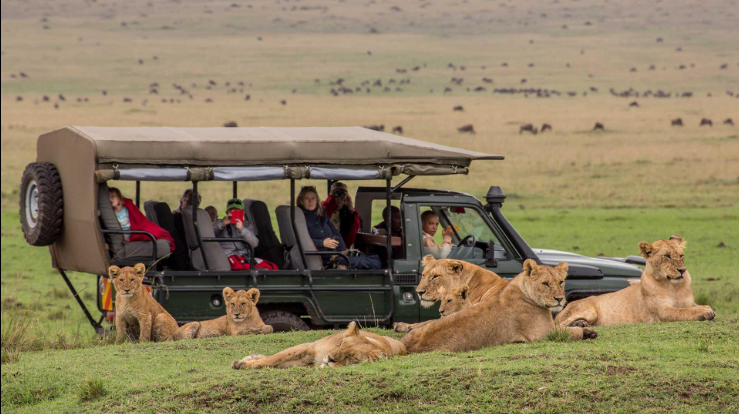
A typical Tanzania group safari might have approximately 4–7 travelers inside a 4x4 safari vehicle, depending on the safari operator and vehicle configuration.
Everyone follows a predetermined itinerary, such as:
Day 1: Tarangire National Park
Day 2: Serengeti National Park
Day 3: Serengeti → Ngorongoro
Day 4: Ngorongoro Crater → Arusha
Group safaris are particularly attractive for travelers who want to experience Tanzania's famous wildlife while controlling the overall cost of their holiday.
There are several reasons why joining a Tanzania safari group can be a smart option.
One of the biggest advantages is affordability.
Many safari expenses are connected to the safari vehicle itself, including:
When several travelers share the vehicle, these costs are distributed among the participants.
That can make a group safari considerably more economical than traveling privately.
Traveling alone does not mean you need to hire an entire safari vehicle.
Joining a group allows solo travelers to share their safari experience with people from different countries.
You may start the trip as strangers but spend several days together watching elephants, lions, zebras, giraffes and spectacular sunsets.
For many travelers, the social experience becomes an important part of their Tanzania holiday.
Choosing a group safari does not mean sacrificing Tanzania's most important wildlife destinations.
Typical group safari itineraries include:
Famous for its expansive plains, predators and enormous populations of grazing animals.
The Serengeti is also associated with the annual movement of wildebeest and zebras known as the Great Migration. Tanzania's official tourism website describes the park as one of the country's most iconic safari landscapes and notes the large-scale migration of wildebeest and zebra.
The Ngorongoro Crater offers one of Tanzania's most concentrated wildlife-viewing experiences.
Safari vehicles descend into the crater for a game drive across grasslands, woodland and wetland habitats.
Travelers commonly search for:
Tarangire is particularly famous for its elephants, impressive baobab trees and landscapes surrounding the Tarangire River.
The official Tanzania tourism authorities also identify elephants and baobab landscapes as important features of Tarangire.
Wildlife is never guaranteed because Tanzania's animals live naturally in large protected ecosystems.
Nevertheless, the country's northern safari circuit offers excellent opportunities to encounter an extraordinary variety of wildlife.
Tanzania is one of Africa's classic lion safari destinations.
Lions may be encountered resting beneath trees, walking through the grasslands or watching herds of herbivores.
The Serengeti and Ngorongoro are particularly famous for predator sightings.
Elephants can be seen in several Tanzania safari destinations, but Tarangire deserves special mention.
Large elephant families frequently move through its woodlands, river areas and plains.
Leopards are considerably more elusive.
Guides normally search trees, rocky areas and woodland where leopards may rest during the day.
The open Serengeti plains provide excellent habitat for cheetahs.
They prefer areas where their speed gives them an advantage while hunting animals such as gazelles.
African buffalo are widespread in Tanzania's northern safari circuit.
Large herds can sometimes be seen grazing or approaching water sources.
The black rhino is much more difficult to encounter than many other safari animals.
Ngorongoro is among the locations where travelers may have an opportunity to see one.
Tanzania's national animal can be encountered throughout many safari regions.
Giraffes are especially beautiful when photographed against acacia woodland and African sunsets.
Huge populations of zebras and wildebeest are found throughout the Serengeti ecosystem.
During migration periods, travelers may encounter vast herds spreading across the plains.
Many visitors arrive in Tanzania hoping to see the famous African Big Five:
Tanzania offers opportunities to encounter all five.
However, it is important to approach safari with realistic expectations.
A safari is not a zoo.
Animals move freely, and sightings depend on:
Some travelers may see four members of the Big Five in a single day, while another group might need several days.
The unpredictability is part of what makes safari exciting.
For many travelers, Serengeti is the highlight of Tanzania.
Its name has become almost synonymous with African safari.
The landscape includes enormous open plains, kopjes, woodland and river systems supporting an impressive variety of wildlife.
The park is also one of the main locations associated with the Great Wildebeest Migration.
After visiting Serengeti, many group safari itineraries continue toward Ngorongoro.
Safari vehicles normally descend from the crater rim onto the crater floor early in the morning.
The landscape contains grasslands, marshes, forests and seasonal water systems.
Wildlife can often be seen relatively close together compared with Tanzania's enormous open ecosystems.
One morning might include:
Wildebeest crossing the grasslands, zebras grazing nearby, lions resting in the distance and hippos occupying freshwater pools.
That concentration of landscapes and wildlife makes Ngorongoro an excellent addition to a short group safari.
Tarangire deserves much more attention than it sometimes receives.
Its scenery is dramatically different from the endless plains of Serengeti.
You'll discover:
Tarangire is roughly a few hours' drive from Arusha and forms a natural starting point for many northern-circuit itineraries. TANAPA's current visitor guide describes road access from Arusha and recommends planning ahead for the peak June–October period.
Lake Manyara can be included on longer group safari programs.
The park is well known for its variety of environments, including groundwater forest, woodland, lake shore and escarpment scenery.
Wildlife may include:
Flamingos and other waterbirds can sometimes be present depending on conditions.
Both options provide excellent wildlife experiences, but they suit different travelers.
| Group Safari | Private Safari |
|---|---|
| Lower cost | Higher overall cost |
| Shared safari vehicle | Exclusive safari vehicle |
| Fixed itinerary | Flexible itinerary |
| Meet other travelers | Travel only with your party |
| Excellent for solo travelers | Excellent for couples and families |
| Fixed departure schedule | Flexible departure times |
| Less control over sightings | More control over game drives |
| Great for budget travelers | Great for photographers |
A group Tanzania wildlife safari holiday works best if saving money and socializing are important.
A private safari is often better when flexibility is your biggest priority.
Most northern Tanzania safaris operate using specially modified 4x4 Land Cruisers.
A typical safari vehicle has a pop-up roof that opens during game drives.
Passengers can stand safely inside the vehicle and photograph wildlife through the open roof.
Depending on the vehicle, equipment may include:
The raised viewing position from the pop-up roof makes spotting and photographing animals much easier.
The number varies between operators.
Smaller groups are usually more comfortable because everyone has better space to photograph wildlife.
A typical small-group safari may operate with approximately 4–7 guests.
Before booking, ask your operator:
How many guests will be inside the safari vehicle?
Also confirm whether every traveler receives a window seat.
A small group generally provides a much better experience than squeezing too many travelers into a vehicle.
Your choice of accommodation has a major influence on the total safari price.
Camping is usually the cheapest option.
Travelers sleep in tents at public campsites.
Depending on the operator, camping equipment may include:
A safari cook may prepare meals during the journey.
Bathrooms and showers at public campsites are generally shared facilities.
Budget camping works well for adventurous travelers who prioritize wildlife over luxury.
Tented safari camps provide a significant upgrade.
Unlike basic camping tents, many permanent tented camps offer:
Sleeping in a tented camp inside or close to the Serengeti can provide a particularly atmospheric safari experience.
You may hear hyenas, zebras or other animals during the night while remaining safely inside your accommodation.
Lodges provide the most hotel-like experience.
They can include:
Mid-range group safari packages may use lodges outside some parks and tented camps while inside Serengeti.
A four-day safari provides a good introduction to northern Tanzania.
Your safari begins with an early departure from Arusha.
After meeting your driver-guide and fellow travelers, you'll travel toward Tarangire National Park.
Once inside the park, the game drive begins.
Keep your camera ready for:
Tarangire's enormous baobab trees provide a spectacular backdrop.
Enjoy lunch during the safari before continuing with an afternoon game drive.
Later, drive to your campsite or lodge.
Dinner and overnight stay.
After breakfast, continue toward the Serengeti.
The journey passes through northern Tanzania's beautiful highland landscapes before entering the Serengeti ecosystem.
As the landscape opens into seemingly endless plains, wildlife sightings begin to increase.
Possible encounters include:
Continue your afternoon game drive before reaching your accommodation.
Dinner and overnight in Serengeti.
Wake early and continue exploring the Serengeti.
Morning hours can be especially rewarding because predators may still be active and temperatures are cooler.
Search for lions, cheetahs, hyenas and perhaps leopards.
After your game drive and lunch, begin traveling toward Ngorongoro.
The scenery gradually changes as you approach the Ngorongoro highlands.
Arrive at your accommodation for dinner.
Overnight near Ngorongoro.
Wake early for one of your safari's biggest highlights.
Drive to Ngorongoro and descend into the crater.
Spend several hours exploring the crater floor.
Possible wildlife includes:
Enjoy a picnic lunch during the excursion.
Later, ascend from the crater and begin your journey back to Arusha.
Your group Tanzania wildlife safari holiday finishes with an evening arrival in town.
Travelers with an additional day can slow the itinerary down.
Arusha → Tarangire National Park
Tarangire → Serengeti
Full-day Serengeti safari
Serengeti → Ngorongoro
Ngorongoro Crater → Arusha
The major advantage is having a full day inside Serengeti.
More time inside the park generally means more opportunities for interesting wildlife encounters.
Tanzania is a year-round safari destination.
Different seasons offer different advantages.
This is one of Tanzania's busiest safari periods.
Advantages include:
Because demand is high, accommodations can book well in advance. TANAPA currently advises advance booking for Tarangire during the June–October peak dry season.
This period is particularly interesting in the southern Serengeti ecosystem.
Large migratory herds can concentrate in the southern plains and Ndutu region.
January and February are especially popular for travelers interested in the wildebeest calving season.
These months are usually quieter.
Advantages can include:
However, rainfall can occasionally affect roads and travel conditions.
Short rains can begin around this period.
The landscapes gradually become greener and tourist numbers may be lower than in peak months.
Wildlife viewing can still be excellent.
Safari inclusions differ between tour operators.
A typical package may include:
The Tanzania Tourism Board's current safari information similarly describes packages commonly including safari vehicles, professional driver-guides, park fees, game drives, meals, accommodation and transfers where specified.
Always check the exact package inclusions before making payment.
Common exclusions are:
Official Tanzania tourism package guidance also lists international flights, visas, insurance, gratuities and personal expenses among typical exclusions.
There is no single fixed safari price.
Costs depend on:
A two-day safari naturally costs less than a six-day itinerary.
Serengeti and Ngorongoro itineraries can cost more because of distances, conservation fees and accommodation requirements.
Budget camping is normally cheapest.
Then prices increase through:
Camping → Budget lodge → Mid-range → Luxury → High-end luxury
July through October and Christmas/New Year periods can be more expensive because demand is high.
More travelers sharing a vehicle can reduce the cost per person.
Price should not be your only consideration.
Ask potential operators these questions before booking.
Prefer a small group.
This is particularly important for photography.
Check the itinerary carefully.
More nights normally provide more wildlife-viewing time.
Ask for the actual names of camps, campsites or lodges where possible.
These represent a significant portion of Tanzania safari costs.
Most organized safaris provide water.
Confirm whether your arrival airport is covered.
You do not need enormous amounts of luggage.
Soft-sided bags are normally easier to transport inside safari vehicles.
Useful items include:
Ngorongoro can be surprisingly cold early in the morning, particularly around the crater rim.
Bring at least one warm layer.
You don't need professional equipment to enjoy safari photography.
Modern smartphones can capture excellent landscapes and animals close to your vehicle.
However, a camera with a telephoto lens provides more flexibility.
Consider carrying:
Avoid changing lenses unnecessarily on dusty safari roads.
Sharing a vehicle means respecting other travelers.
Don't remain standing when somebody behind you is trying to take a photograph.
Loud conversations can disturb animals and other passengers.
If your group agrees to leave at 6:00 a.m., everyone should be ready.
Being 30 minutes late reduces wildlife-viewing time for the entire group.
If some seats provide better viewing angles, cooperate with your fellow travelers.
Guides understand wildlife behavior and national park regulations.
Never leave the vehicle unless your guide confirms it is permitted.
Yes, but parents should consider children's ages.
Safari days can involve:
Families with very young children may find a private safari easier because schedules are more flexible.
Older children who enjoy nature can find Tanzania safari incredibly educational and exciting.
Absolutely.
Couples frequently choose group safaris because they can spend their savings on:
A couple can still enjoy an incredible safari without needing their own private vehicle.
They are one of the best safari options for solo travelers.
Without group departures, solo travelers often face substantial single-person vehicle costs.
Joining a group distributes transportation expenses while providing natural opportunities to meet other travelers.
A popular Tanzania holiday combines wildlife safari with the beaches of Zanzibar.
For example:
Tanzania group wildlife safari
Flight or transfer to Zanzibar
Zanzibar beach holiday
This creates a balanced itinerary combining adventure and relaxation.
After several early safari mornings, spending a few days beside the Indian Ocean can be the perfect conclusion to the trip.
Many travelers want their group safari to coincide with the Great Migration.
However, the migration is a year-round movement rather than one event occurring on a fixed date.
Its approximate location changes according to rainfall and grazing conditions.
Broadly:
Southern Serengeti and Ndutu ecosystem
Herds begin moving north and west
Western and central/northern movement
Northern Serengeti and Maasai Mara region become particularly important
Movement gradually turns south again
Actual wildlife movement varies every year.
Tanzania's tourism authority also describes the Serengeti migration as a movement of wildebeest and zebras seeking fresh pasture.
Organized Tanzania wildlife safaris generally involve experienced professional guides operating within designated parks and conservation areas.
Nevertheless, safari travelers must follow wildlife rules.
Never:
Wild animals may walk through unfenced safari camps, which is part of the wilderness experience.
Always follow guidance from camp staff.
Good if time is extremely limited.
Tarangire + Ngorongoro is one possible combination.
Suitable for travelers wanting a short introduction.
Possible combinations include Serengeti + Ngorongoro or Tarangire + Ngorongoro + another nearby destination.
One of the most popular choices.
It provides enough time for Tarangire, Serengeti and Ngorongoro.
Highly recommended.
A five-day itinerary can provide additional time in Serengeti.
Best for travelers who want a slower pace and deeper safari experience.
Arusha is Tanzania's main gateway to the northern safari circuit.
From the city, travelers can travel toward:
Many safari companies operate from Arusha.
Travelers can arrive through either:
Arusha Airport (ARK) or
Kilimanjaro International Airport (JRO).
Kilimanjaro International Airport handles many international connections, while Arusha Airport is commonly used for domestic flights.
A few small decisions can significantly improve your experience.
Arrive in Arusha one day before your safari. This provides a buffer against delayed flights and makes an early safari departure easier.
Book early during high season. Accommodation availability becomes limited during popular travel months.
Carry soft luggage. Large hard-shell suitcases consume considerable vehicle space.
Bring a warm jacket. Ngorongoro mornings can be cold.
Bring binoculars. Even when wildlife is visible, binoculars dramatically improve distant sightings.
Ask questions. Your guide can explain animal behavior, ecosystems, plants, birdlife and Tanzania's culture.
Most importantly, don't treat the safari like a checklist.
Sometimes the best experience isn't seeing another member of the Big Five.
It might be watching a cheetah scanning the plains, elephants protecting a calf or a lion pride waking as the sun sets.
A group Tanzania wildlife safari holiday offers an excellent combination of affordability, adventure and exceptional wildlife viewing.
You'll share the experience with other travelers while exploring some of Africa's most celebrated natural environments.
Imagine beginning your morning beneath giant baobab trees in Tarangire, watching elephants beside your safari vehicle, crossing the endless Serengeti plains, searching for lions and cheetahs, and finally descending into the magnificent Ngorongoro Crater.
That is what makes a Tanzania safari special.
For travelers who don't require the complete flexibility of a private vehicle, a small-group safari can provide exceptional value without taking away the essential wildlife experience.
Choose a well-designed itinerary, confirm the group size and accommodation standards, arrive with curiosity, and allow enough time for Serengeti and Ngorongoro.
Your group Tanzania wildlife safari holiday may be a few days long, but the wildlife encounters, landscapes and memories can last for years.
Planning a budget Ngorongoro Crater safari holiday from Arusha? Compare a crater day trip, a two-day Tarangire and Ngorongoro safari, or a…
Read articleA Lake Manyara safari can cost USD 150–220 per person for a shared day trip from Arusha. A published example of a…
Read articleExplore Ruaha National Park’s baobab country on a guided safari built around your dates, group size and budget. Spend your game drives…
Read articleA Nyerere Tanzania wildlife safari can take you from a woodland game drive in the morning to a boat on the Rufiji…
Read article

