

Budget Ngorongoro Crater Safari Holiday
Planning a budget Ngorongoro Crater safari holiday from Arusha? Compare a crater day trip, a two-day Tarangire and Ngorongoro safari, or a…
Read articleArusha City - Tanzania
Safari & Travel Tips
September 3, 2026 · 14 min read
Planning a safari in Tanzania can feel overwhelming at first. There are famous national parks to choose from, different safari routes, accommodation categories, transportation options, seasonal wildlife movements, and important decisions about whether to travel privately or join a group.
Good guided Tanzania safari package planning brings all of these details together into one carefully organized journey.
Instead of worrying about park entrances, driving routes, accommodation reservations, game-drive schedules, meals, airport transfers, and local logistics, travelers can enjoy Tanzania while an experienced safari team coordinates the journey.
At Kilipath African Safaris, guided safari packages can be designed around your travel dates, budget, preferred wildlife experiences, accommodation style, and the amount of time you have available.
Whether you are planning a short two-day safari from Arusha or a longer adventure combining Serengeti, Ngorongoro, Tarangire, Lake Manyara, Lake Natron, cultural activities, and Zanzibar, careful planning can make a major difference to the quality of your safari.
This guide explains how to plan a guided Tanzania safari package, which destinations to consider, how many days you may need, what is normally included, how much different safari styles can cost, and how to choose an itinerary that matches your expectations.
A guided Tanzania safari package is an organized wildlife trip where a professional safari guide accompanies you through the national parks and conservation areas.
Most guided safaris use a specially equipped 4x4 safari Land Cruiser with a pop-up roof for wildlife viewing and photography.
Depending on the package, your safari can include:
Additional activities such as balloon safaris, Maasai village visits, hiking, night game drives, cultural tours, and Zanzibar extensions can also be added.
The advantage of guided safari planning is that the complicated logistics are arranged before your arrival.
Tanzania is a large country, and the most popular safari areas are spread across considerable distances.
A safari itinerary that looks simple on a map may involve several hours of driving between destinations.
For example, a Northern Circuit safari may involve traveling between:
Arusha → Tarangire → Ngorongoro → Serengeti → Karatu → Arusha.
Without realistic planning, travelers sometimes try to include too many destinations in too few days.
A properly designed itinerary balances three important things:
Driving time, game-viewing time, and relaxation.
The objective is not simply to visit as many parks as possible. The objective is to spend enough time inside each destination to enjoy meaningful wildlife experiences.
Several wildlife destinations can be included when planning your guided Tanzania safari package.
Serengeti National Park is often the centerpiece of a Tanzania safari.
The park is famous for its enormous plains, predators, abundant wildlife, and the Great Wildebeest Migration.
Wildlife commonly seen in the Serengeti includes:
Because Serengeti is large, travelers should ideally allow enough time for several game drives rather than rushing through the park.
Two or three nights can provide a much richer experience than a very short visit.
Ngorongoro Crater is another major highlight of guided Tanzania safari packages.
The crater is a vast volcanic caldera containing an exceptionally high concentration of wildlife.
During a crater game drive, travelers may encounter:
Early morning crater visits are particularly rewarding because temperatures are cooler and wildlife is often active.
Ngorongoro works especially well when combined with Serengeti.
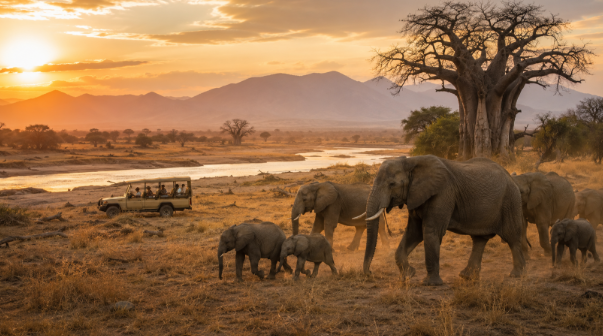
Tarangire is famous for elephants and giant baobab trees.
During the dry season, animals gather around the Tarangire River, creating excellent wildlife viewing.
Possible sightings include:
Tarangire is approximately a few hours from Arusha depending on traffic and the exact starting point, making it convenient for both short and longer safaris.
Lake Manyara can be included in several Northern Tanzania safari itineraries.
The park offers a mixture of forest, wetlands, lake scenery, and open areas.
Wildlife may include:
Manyara can work particularly well on itineraries where travelers have an additional day before returning to Arusha.
Lake Natron offers a very different experience compared with Tanzania's traditional wildlife parks.
It is known for:
Travelers interested in adventure, photography, hiking, and landscapes may consider adding Lake Natron to a longer itinerary.
For first-time visitors, the Northern Safari Circuit is often the easiest place to begin planning.
The main destinations include:
Most safaris begin and end in Arusha.
Arusha is conveniently located close to both Arusha Airport and Kilimanjaro International Airport.
Travelers looking for quieter wildlife experiences may also consider Southern Tanzania.
Popular destinations include:
Formerly part of the Selous Game Reserve, Nyerere offers large wilderness areas with fewer safari vehicles than many Northern Circuit destinations.
Activities can include:
Ruaha is known for wild landscapes, elephants, predators, and relatively low visitor numbers.
Southern Circuit safaris are particularly attractive to experienced safari travelers searching for a less crowded experience.
There is no single perfect safari length.
The correct duration depends on your destinations and travel style.
A two-day safari is suitable for travelers with limited time.
A common itinerary could be:
Day 1: Tarangire National Park
Day 2: Ngorongoro Crater
This is an excellent short safari combination because both destinations offer strong wildlife viewing.
A three-day itinerary allows slightly more flexibility.
Possible route:
Day 1: Tarangire
Day 2: Ngorongoro Crater
Day 3: Lake Manyara
Another option is a Serengeti and Ngorongoro itinerary for travelers whose priority is the Serengeti.
Four days is one of the most popular safari durations.
Example itinerary:
Day 1: Arusha → Tarangire
Day 2: Serengeti National Park
Day 3: Serengeti → Ngorongoro
Day 4: Ngorongoro Crater → Arusha
This provides a strong introduction to Northern Tanzania.
A five-day safari offers significantly more wildlife-viewing time.
Example:
Day 1: Tarangire
Day 2: Serengeti
Day 3: Full-day Serengeti safari
Day 4: Serengeti → Ngorongoro
Day 5: Ngorongoro Crater → Arusha
This itinerary allows an additional full day in Serengeti.
Six days allows travelers to enjoy the parks at a more comfortable pace.
Example:
Day 1: Tarangire
Day 2: Serengeti
Day 3: Serengeti
Day 4: Serengeti
Day 5: Ngorongoro
Day 6: Lake Manyara → Arusha
The exact itinerary can be adjusted according to the season.
Seven days is excellent for travelers who want a complete Northern Circuit experience.
A possible itinerary includes:
Day 1: Tarangire
Day 2: Serengeti
Day 3: Serengeti
Day 4: Serengeti
Day 5: Ngorongoro
Day 6: Lake Eyasi or Lake Manyara
Day 7: Return to Arusha
Longer itineraries may also include cultural activities or Lake Natron.
One of the most important decisions during guided Tanzania safari package planning is whether to choose a private or shared safari.
A private safari means the vehicle and safari guide are dedicated to your booking.
Private safaris offer greater flexibility.
You can often:
Private safaris are particularly popular with couples, families, honeymooners, photographers, and small groups of friends.
This is Tanzania's main dry season.
Advantages include:
July, August, September, and October are especially popular.
Accommodation availability can become limited, so advance planning is important.
This period is particularly interesting for travelers hoping to see the migration in the Southern Serengeti and Ndutu region.
January and February are famous for the wildebeest calving season.
Thousands of young wildebeest are born during this period, attracting predators including lions, cheetahs, and hyenas.
These months are part of Tanzania's greener season.
There may be heavier rainfall, but travelers can enjoy:
Road conditions can occasionally be more challenging.
The Great Wildebeest Migration does not happen in one single location.
The herds move through the Serengeti-Mara ecosystem throughout the year.
Therefore, migration safari planning should match the itinerary with the expected seasonal location of the herds.
A simplified guide is:
December-April: Southern Serengeti and Ndutu
May-June: Western and central areas
July-October: Northern Serengeti
November-December: Herds gradually move south again
Wildlife is natural, so exact locations and river crossings can never be guaranteed.
Northern Serengeti is particularly famous for migration river crossings between approximately July and October.
Travelers specifically targeting this region should usually consider a private itinerary or a safari designed specifically for Northern Serengeti.
Additional travel time is required because Northern Serengeti is far from Arusha and Ngorongoro.
For travelers with limited time, flying into or out of Serengeti can sometimes improve the itinerary.
A reliable safari vehicle is extremely important.
Most Tanzania safaris use specially modified 4x4 Land Cruisers.
Useful vehicle features include:
The pop-up roof allows travelers to stand safely while observing and photographing wildlife.
Your guide plays an enormous role in the quality of your safari.
An experienced Tanzania safari guide understands:
Guides also communicate with other safari professionals through radio networks to help locate interesting wildlife activity.
Pack lightly when possible.
Useful items include:
Ngorongoro mornings can be cold, so a warm layer is recommended.
Soft-sided bags are generally easier to manage inside safari vehicles than large hard-shell suitcases.
One of Tanzania's greatest advantages is the possibility of combining safari and beach holidays.
A popular journey could be:
Day 1-5: Northern Tanzania safari
Day 6: Fly to Zanzibar
Day 7-10: Zanzibar beach holiday
Domestic flights connect safari areas, Arusha, Kilimanjaro, Dar es Salaam, and Zanzibar.
This makes Tanzania particularly attractive for honeymooners.
Private guided safaris work particularly well for honeymooners.
A honeymoon itinerary may combine:
Accommodation can also be selected specifically for romantic settings.
Families often benefit from private safaris because the schedule can be adapted around children.
For example, families may prefer:
The best itinerary depends heavily on children's ages.
Photographers often require more flexibility than standard safari travelers.
A private safari allows your guide to spend longer at promising wildlife sightings.
Photography-focused planning may include:
Serengeti is particularly suitable for wildlife photography because of its open landscapes.
Travelers already staying in Zanzibar can easily add a mainland safari.
Common options include flying from Zanzibar to:
For short safaris, carefully coordinating flight times is essential.
Travelers flying into Arusha early in the morning may sometimes begin their safari on the same day, depending on the itinerary.
The main airports used for Northern Tanzania safaris are:
Arusha Airport mainly handles domestic flights.
It is convenient for connections between Arusha, Zanzibar, Serengeti, and other Tanzanian destinations.
Kilimanjaro International Airport handles international and domestic services.
It is located outside Arusha, so additional transfer time is required.
Your safari planning should consider the airport, arrival time, and first safari destination.
Whenever possible, arriving in Arusha the day before your safari is recommended.
This gives you time to:
Starting rested is particularly important on itineraries involving long drives to Serengeti.
Before requesting a safari quotation, decide the following:
Sharing these details allows the safari operator to prepare a much more accurate itinerary.
After breakfast, meet your safari guide and begin the drive toward Tarangire National Park.
Enjoy a game drive searching for elephants, giraffes, zebras, antelopes, and predators.
Lunch will be enjoyed during the safari.
Later, continue to your accommodation.
Travel toward Serengeti National Park through the Ngorongoro highlands.
Enjoy changing landscapes as you enter the Serengeti ecosystem.
Continue with an afternoon game drive before reaching your accommodation.
Spend the day exploring Serengeti.
Your guide will search different wildlife areas according to recent animal movements.
Potential sightings include lions, cheetahs, elephants, giraffes, buffalo, wildebeest, zebras, and many antelope species.
Enjoy another Serengeti game drive before traveling toward Ngorongoro.
Overnight near the crater or surrounding highlands.
Descend into Ngorongoro Crater early in the morning.
Spend several hours exploring the crater floor.
After lunch, begin the journey back to Arusha.
The best safari package is not necessarily the itinerary with the greatest number of destinations.
It is the itinerary that gives you enough time to enjoy the wildlife while remaining realistic about travel distances, budget, accommodation preferences, and seasonal conditions.
A well-designed guided Tanzania safari package planning process should consider your complete journey—from airport arrival and safari routing to accommodation, park fees, meals, game drives, transfers, and your final departure.
At Kilipath African Safaris, we can help organize private, shared, camping, mid-range, and luxury safari experiences across Tanzania.
Tell us:
From there, we can build a guided Tanzania safari itinerary designed around your trip.
Ready to start planning your Tanzania safari? Request your personalized safari package and let our local team help you create a journey through Serengeti, Ngorongoro, Tarangire, and beyond.
Planning a budget Ngorongoro Crater safari holiday from Arusha? Compare a crater day trip, a two-day Tarangire and Ngorongoro safari, or a…
Read articleA Lake Manyara safari can cost USD 150–220 per person for a shared day trip from Arusha. A published example of a…
Read articleExplore Ruaha National Park’s baobab country on a guided safari built around your dates, group size and budget. Spend your game drives…
Read articleA Nyerere Tanzania wildlife safari can take you from a woodland game drive in the morning to a boat on the Rufiji…
Read article

