Lake Manyara vs. Nyerere Safari Prices | Tanzania Guide
A Lake Manyara safari can cost USD 150–220 per person for a shared day trip from Arusha. A published example of a…
Read articleArusha City - Tanzania
Safari & Travel Tips
July 22, 2026 · 17 min read
A Lake Manyara and Ruaha safari combines two remarkably different wildlife destinations in Tanzania. Lake Manyara National Park offers groundwater forests, alkaline-lake scenery, elephants, primates, and rich birdlife, while Ruaha National Park delivers vast wilderness, dramatic landscapes, predators, and a wonderfully remote safari atmosphere.
Although the parks are located in different safari circuits, Kilipath African Safaris can connect them through a carefully organized private itinerary. This journey is ideal for travelers who want to experience Tanzania beyond the usual safari route and enjoy both famous northern scenery and the untamed wilderness of southern Tanzania.
| Safari detail | Information |
|---|---|
| Destinations | Lake Manyara National Park and Ruaha National Park |
| Country | Tanzania |
| Recommended duration | 6–10 days |
| Best safari style | Private road-and-fly itinerary |
| Starting points | Arusha, Kilimanjaro Airport, Dar es Salaam, or Zanzibar |
| Best time | June–October; January–February can also be rewarding |
| Main experiences | Game drives, birdwatching, photography, and wilderness exploration |
| Accommodation | Midrange, luxury, or customized combinations |
| Suitable for | Couples, families, photographers, honeymooners, and private groups |
| Operator | Kilipath African Safaris |
Many Tanzania itineraries concentrate on one geographical safari circuit. Combining Lake Manyara and Ruaha creates a more diverse journey for travelers who have enough time and want contrasting environments.
Lake Manyara is compact and beautifully varied. Within a relatively small area, travelers can encounter forest, woodland, floodplains, hot springs, and lake-edge habitats. Ruaha, by comparison, is enormous, remote, and rugged. Wildlife is distributed across river systems, dry woodland, rocky hills, and open plains.
Together, the two parks provide:
This is not simply a journey between two national parks. It is an exploration of two different sides of Tanzania.
Lake Manyara National Park lies at the base of the Great Rift Valley escarpment in northern Tanzania. It is often included in itineraries connecting Arusha, Tarangire, Ngorongoro, and Serengeti.
The park is famous for its environmental diversity. Visitors can travel from a lush groundwater forest into acacia woodland, open floodplains, and alkaline-lake habitats within a single game drive.
Lake Manyara supports a variety of animals, although sightings change according to rainfall, water levels, season, and natural wildlife movement.
Animals that may be encountered include:
The park has historically been associated with tree-climbing lions. However, these lions should be considered a possible highlight rather than a guaranteed sighting. Wildlife is free to move naturally, and every safari experience is different.
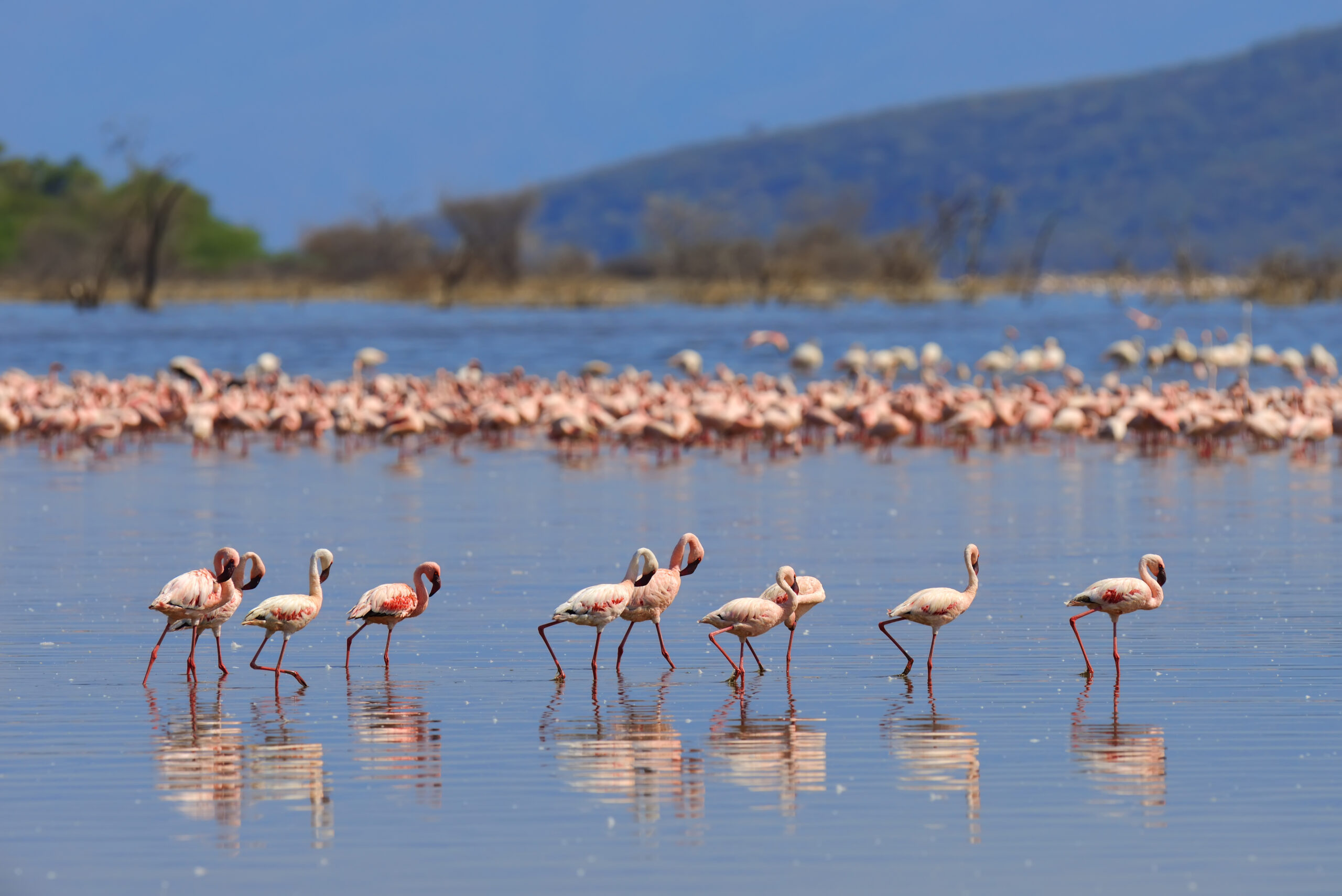
Lake Manyara is especially attractive to bird lovers. Its forest, woodland, wetland, and lake habitats support an impressive diversity of resident and migratory birds.
Depending on the season, travelers may look for:
Flamingo numbers vary with water conditions, food availability, and seasonal movement. They cannot be guaranteed on a particular travel date.
One reason to include Lake Manyara in a Tanzania safari is its scenery. The steep Rift Valley escarpment forms a dramatic background, while the forest near the entrance creates an unexpectedly green beginning to the game drive.
Important habitats include:
This concentration of habitats makes the park especially rewarding for first-time safari travelers, families, and photographers.
Ruaha National Park is one of Tanzania’s most impressive wilderness destinations. Located in the southern part of the country, it offers a remote safari experience characterized by vast landscapes, low visitor density, and excellent wildlife viewing.
The Great Ruaha River and its associated seasonal waterways attract animals, particularly during the dry months. Baobab trees, rocky hills, dry woodland, and open plains create a distinctive southern Tanzania setting.
Ruaha is celebrated for its elephants, predators, and variety of antelope. The park’s large size means that wildlife viewing feels adventurous and natural rather than confined.
Possible sightings include:
No ethical safari operator can guarantee sightings of a particular wild animal. Nevertheless, experienced guides study tracks, alarm calls, weather, water sources, and recent animal movements to improve the chances of rewarding encounters.
Ruaha is highly regarded by travelers interested in predators. Lions are among its best-known inhabitants, and sightings may include individuals, prides, or hunting behavior.
Leopards may be found around riverine vegetation and rocky environments, while cheetahs favor more open areas. African wild dogs are also present, although their wide-ranging nature makes every sighting special.
Spending at least three nights in Ruaha is recommended. Additional time gives your guide more opportunities to explore different areas and follow changing wildlife activity.
Ruaha feels dramatically different from Lake Manyara. Its scenery includes:
The combination of East and Southern African vegetation contributes to the park’s unusual range of wildlife. It also provides photographers with strong colors, striking trees, wide landscapes, and beautiful natural backgrounds.
| Feature | Lake Manyara | Ruaha |
|---|---|---|
| Safari circuit | Northern Circuit | Southern Circuit |
| General character | Compact and environmentally diverse | Vast, remote, and wild |
| Main scenery | Forest, lake, floodplain, and escarpment | Rivers, baobabs, woodland, and rocky plains |
| Major wildlife highlights | Elephants, primates, birds, and possible tree-climbing lions | Elephants, lions, leopards, wild dogs, and antelopes |
| Recommended stay | One day or one night | At least three nights |
| Crowd levels | Can be busier during peak periods | Generally quieter |
| Best suited for | Short game drives and northern-circuit combinations | Immersive wilderness safaris |
| Birdwatching | Excellent | Excellent |
| Photography | Forest, escarpment, birds, and lake scenery | Predators, baobabs, rivers, and wide landscapes |
Neither park replaces the other. Their differences are exactly what make this combined itinerary so attractive.
Lake Manyara and Ruaha are not neighboring parks. Lake Manyara belongs to Tanzania’s Northern Safari Circuit, while Ruaha lies in the Southern Circuit. A direct road journey between them would be long and tiring.
For most travelers, the best arrangement is a combination of private road transfers and domestic flights.
A typical route may involve:
Flight schedules and routes can change by season and travel date. Kilipath African Safaris checks the available connections before confirming the final itinerary.
The following itinerary is an example. It can be adjusted according to flight schedules, accommodation preference, travel pace, and international arrival arrangements.
Arrive at Kilimanjaro International Airport, where a representative from Kilipath African Safaris will welcome you. You will be transferred to your accommodation in Arusha.
Depending on your arrival time, you can relax at the lodge or arrange an optional activity, such as:
Your safari guide or representative will brief you about the upcoming journey.
Accommodation: Arusha
Meals: According to the selected package
After breakfast, depart from Arusha in a private 4×4 safari vehicle. The journey takes you through northern Tanzania’s rural landscapes toward Lake Manyara National Park.
After completing the entrance procedures, begin your game drive. Explore the groundwater forest, acacia woodland, and lake-edge environments while looking for elephants, monkeys, baboons, giraffes, buffaloes, zebras, hippos, and birds.
A packed or hot lunch will be provided according to the chosen arrangement. Continue exploring the park in the afternoon before driving to your lodge or tented camp.
Accommodation: Lake Manyara, Mto wa Mbu, or Karatu
Meals: Breakfast, lunch, and dinner
Enjoy breakfast and a relaxed morning. Depending on your interests and onward flight plan, the day can include an additional activity before returning to Arusha.
Possible options include:
Continue to Arusha for an overnight stay before the southern safari section.
Accommodation: Arusha
Meals: Breakfast and lunch; dinner according to package
After breakfast, transfer to the appropriate airport for your scheduled flight to Ruaha National Park. Flight arrangements depend on the travel date and may include a connection.
Upon arrival at the airstrip, your Ruaha guide will welcome you. Begin a game drive while traveling toward your camp. This first introduction may reveal elephants, giraffes, antelopes, buffaloes, and predators.
Arrive at your accommodation for dinner and your first night in the Ruaha wilderness.
Accommodation: Ruaha National Park
Meals: Breakfast, lunch, and dinner
Depart for a full day of wildlife exploration. Your guide will choose the route according to recent sightings, seasonal water availability, and wildlife movement.
You may explore the Great Ruaha River, seasonal riverbeds, woodland, and open plains. Watch for elephants, lions, leopards, buffaloes, kudus, zebras, giraffes, hippos, crocodiles, and birds.
The day can be organized with a picnic lunch in the bush or a return to camp, depending on location and your preferred safari pace.
Accommodation: Ruaha National Park
Meals: Breakfast, lunch, and dinner
A second full day provides time to explore a different section of this enormous park. Early morning is particularly rewarding because the temperature is cooler and many animals are active.
You may follow animal tracks near a seasonal river, search for a lion pride, observe elephants approaching water, or spend time photographing antelopes against Ruaha’s striking baobab scenery.
Your guide will avoid rushing between sightings. A private safari allows you to spend more time with the wildlife and subjects that interest you most.
Accommodation: Ruaha National Park
Meals: Breakfast, lunch, and dinner
Begin with another game drive, depending on your camp location and flight schedule. This is a final opportunity to appreciate Ruaha’s scenery and look for wildlife you may not have encountered on previous days.
Later, transfer to the airstrip for your domestic flight. You may fly to Dar es Salaam, Zanzibar, Arusha, or another available destination.
Accommodation: Dar es Salaam, Zanzibar, or Arusha, depending on the itinerary
Meals: Breakfast and lunch
After breakfast, transfer to the airport for your international flight. Alternatively, continue your Tanzania holiday with a Zanzibar beach extension.
Kilipath African Safaris can help arrange:
Travelers who want a more relaxed experience can choose a 10-day itinerary:
Adding Ngorongoro introduces a third distinctive ecosystem and an opportunity to search for a high concentration of wildlife on the crater floor.
This combination can be enjoyed throughout much of the year, but seasonal conditions influence road access, wildlife distribution, scenery, and photography.
The dry season is generally the most popular time to visit Ruaha. As seasonal water sources diminish, animals gather around rivers and remaining pools.
Possible advantages include:
July, August, and September are particularly popular, so booking flights and accommodation early is recommended.
The short rains can transform dry landscapes and produce fresh vegetation. Migratory birds begin arriving, and the parks often appear greener.
Rainfall patterns are unpredictable. Showers may be brief and may not disrupt the entire safari day.
January and February can be excellent for travelers who enjoy green landscapes, birds, and fewer vehicles in some areas.
This period may offer:
The long-rain period can bring heavy showers, muddy roads, high vegetation, and possible seasonal changes to camp or flight operations. Some Ruaha properties may close temporarily.
Travel is still possible in selected areas, but the itinerary must be checked carefully. Kilipath African Safaris will recommend suitable accommodation and routing based on availability.
A minimum of approximately six days is advisable, but seven to ten days creates a better experience.
Suitable for travelers with limited time, but domestic-flight connections must work well. The itinerary may feel relatively fast.
Eight days provides a balanced experience, including:
Ten days is ideal for travelers who want:
Kilipath African Safaris can organize different comfort levels according to your budget and preferred travel style.
Midrange lodges and tented camps usually offer:
This category offers a good balance between comfort and cost.
Luxury camps and lodges may provide:
Luxury does not mean losing the feeling of nature. Many camps are designed to provide comfort while maintaining a strong connection to the surrounding wilderness.
Families may request:
Age restrictions may apply to certain activities or properties. Families should provide children’s ages when requesting a quotation.
A private safari is strongly recommended for a Lake Manyara and Ruaha combination. Because the journey involves different circuits, domestic flights, and personalized transfers, it does not fit easily into a standard shared-group departure.
A private safari provides:
A standard shared safari may be possible for the Lake Manyara section, but Ruaha arrangements usually need to be coordinated separately. Kilipath African Safaris will explain the most practical option before booking.
For road-based game drives, Kilipath African Safaris uses suitable 4×4 safari vehicles designed for wildlife viewing.
Vehicle features may include:
Soft-sided luggage is generally more convenient, especially when domestic flights are included. Small aircraft often impose stricter baggage limits than international airlines.
Your exact package will be listed in the confirmed quotation. A typical Lake Manyara and Ruaha safari may include:
Unless specifically included in your quotation, the following may be excluded:
Travelers should read the final inclusion and exclusion list carefully before paying the deposit.
The price of this safari depends on several factors:
A solo traveler generally pays more per person because vehicle and transfer costs are not divided among several guests. Couples and small groups can often share these costs.
Instead of offering an inaccurate universal price, Kilipath African Safaris prepares a personalized quotation based on your actual dates and preferences.
When requesting a quote, provide:
Ngorongoro can be added after Lake Manyara. It is known for dramatic scenery and a high concentration of wildlife within the crater.
Tarangire is a convenient addition for travelers interested in elephants, baobab landscapes, and seasonal wildlife concentrations.
Travelers with more time can include Serengeti before flying to southern Tanzania. This creates a comprehensive safari but requires additional days and a higher budget.
Nyerere can be combined with Ruaha as part of a longer Southern Circuit itinerary. Depending on the current regulations, chosen camp, and confirmed arrangements, experiences may include game drives and boat-based wildlife viewing.
Mikumi may be included in an extended road-based southern itinerary. It is more accessible from Dar es Salaam than Ruaha, although total travel time must be considered.
Zanzibar is an excellent place to relax after several days of game drives. Flights can connect the mainland safari with the islands, depending on schedules.
Yes. However, a private itinerary is usually the best choice for families.
Advantages include:
Parents should consider the long distances and small-aircraft flights involved. Young children may prefer a slower itinerary with fewer hotel changes.
Lake Manyara and Ruaha make an excellent honeymoon combination. Lake Manyara provides beautiful forest and escarpment scenery, while Ruaha offers privacy and a sense of adventure.
Honeymoon upgrades may include:
Tell Kilipath African Safaris that you are celebrating your honeymoon when requesting the package.
Both destinations offer excellent photography, but they require slightly different techniques.
In Lake Manyara, photographers may encounter:
In Ruaha, photographic subjects may include:
Useful equipment may include:
Inform us if photography is your main priority. We can design a private itinerary with fewer passengers, more equipment space, and additional time at sightings.
Recommended safari items include:
Avoid bringing unnecessary valuables. Keep essential medication, documents, and camera equipment in your hand luggage.
Travelers should obtain comprehensive travel insurance before departure. It should cover:
Consult a qualified travel-health professional about recommended vaccinations and malaria precautions. Health requirements vary according to personal history, travel route, and current regulations.
Kilipath African Safaris encourages responsible wildlife tourism. During your journey:
Responsible behavior protects wildlife and improves the experience for future visitors.
Kilipath African Safaris is based in Tanzania and designs journeys around the traveler’s interests, available time, and preferred comfort level.
When you book with us, you benefit from:
Our goal is to create a safe, comfortable, and unforgettable Tanzania safari from arrival to departure.
Discover the forested beauty of Lake Manyara and the untamed wilderness of Ruaha National Park on one personalized Tanzania adventure.
Kilipath African Safaris can organize your accommodation, private vehicle, professional guide, park fees, meals, airport transfers, and domestic flights. Every itinerary can be adjusted to match your travel dates, budget, group size, and preferred comfort level.
A Lake Manyara safari can cost USD 150–220 per person for a shared day trip from Arusha. A published example of a…
Read articlePlanning a Tanzania safari that combines Lake Manyara National Park and Nyerere National Park is an excellent way to experience the country's…
Read articlePlanning an unforgettable African wildlife adventure from Zanzibar? Understanding the Tanzania safari package Zanzibar price is an important first step toward choosing…
Read articlePlanning an African wildlife adventure? Understanding the group Tanzania safari price is an important step toward choosing an affordable and unforgettable safari…
Read article