Skip to content

A Lake Manyara safari Ruaha trip offers travelers an opportunity to experience two remarkably different sides of Tanzania. Lake Manyara National Park lies along the famous Northern Safari Circuit, while Ruaha National Park sits much farther south in one of Tanzania’s largest wilderness areas. Combining them creates a journey filled with forests, Rift Valley scenery, elephants, predators, birdlife, baobabs, rivers, and remote African landscapes.
Rather than visiting parks that look and feel similar, travelers experience dramatic contrasts. Lake Manyara is compact, green, and strongly influenced by its alkaline lake and the Great Rift Valley escarpment. Ruaha is enormous, rugged, remote, and characterized by baobab-covered landscapes, miombo woodland, rocky hills, and river systems.
For wildlife enthusiasts, photographers, honeymooners, families, and returning safari travelers looking for something beyond Tanzania’s most familiar routes, combining these two destinations can create an exceptional itinerary.
Why Combine Lake Manyara and Ruaha National Park?
The greatest advantage of combining Lake Manyara and Ruaha is diversity.
Lake Manyara National Park covers approximately 648.7 square kilometers and contains an unusually wide variety of habitats within a relatively small area. Visitors encounter groundwater forest, acacia woodland, wetlands, floodplains, hot springs, an alkaline lake, and the dramatic cliffs of the Great Rift Valley.
Ruaha provides almost the opposite experience. TANAPA describes the park as covering approximately 20,226 square kilometers, making it Tanzania’s second-largest national park. Its landscapes include baobab-studded savanna, rocky areas, miombo woodland and important river systems, particularly the Great Ruaha River.
A Lake Manyara safari Ruaha trip therefore feels less like visiting two safari parks and more like exploring two different wilderness regions within the same country.
Exploring Lake Manyara National Park
Lake Manyara is an excellent introduction to Tanzania’s wildlife.
The park is located beneath the Great Rift Valley escarpment near Mto wa Mbu and can normally be reached from Arusha by road in approximately 2–2.5 hours. Its relatively accessible location means it can easily form the first stage of a longer Tanzanian safari.
One of the first environments travelers encounter is the groundwater forest. Towering trees and dense vegetation create a completely different atmosphere from Tanzania’s open grasslands. Blue monkeys, baboons and numerous forest birds inhabit this area.
As the vegetation opens, visitors encounter floodplains, acacia woodland and views toward Lake Manyara itself.
The park is famous for its tree-climbing lions, although wildlife sightings can never be guaranteed. Elephants, buffaloes, giraffes, zebras, wildebeest and several antelope species may also be encountered. TANAPA additionally highlights hippos and the park’s extensive birdlife.
Flamingos and Birdlife at Lake Manyara
Bird lovers have another strong reason to include Lake Manyara.
TANAPA reports more than 400 recorded bird species within the park’s different habitats. Flamingos may gather around the alkaline lake when ecological conditions are suitable, while pelicans, storks, herons, spoonbills, fish eagles and many other species can also occur. Flamingo concentrations are seasonal, so travelers should avoid planning a safari with the expectation that huge flocks will always be present.
For photographers, this combination of birds, wetlands, mountains and Rift Valley scenery creates excellent opportunities for landscape and wildlife images.
The Great Rift Valley Landscape
Wildlife is only one part of a Lake Manyara safari.
The Great Rift Valley escarpment rises dramatically above the park, creating a spectacular backdrop. Forest, water, mountains and wildlife frequently appear together within a single view.
Lake Manyara also has hot springs known as Maji Moto, scenic viewpoints, wetlands and designated boardwalk areas. Game drives remain the principal safari activity, while birdwatching and selected additional experiences may also be available depending on current park regulations.
This combination makes Manyara particularly attractive to travelers who appreciate scenery as much as animal sightings.
From Lake Manyara to Ruaha: Understanding the Distance
Travelers should understand that Lake Manyara and Ruaha are not neighboring parks.
Lake Manyara belongs to Tanzania’s northern safari region, while Ruaha lies west of Iringa in south-central Tanzania. This means a Lake Manyara safari Ruaha trip requires more logistical planning than a conventional Northern Circuit itinerary covering Tarangire, Ngorongoro and Serengeti.
Flying can significantly reduce travel time. Scheduled and charter aircraft serve Ruaha’s Msembe and Jongomero airstrips, while road access generally involves reaching Iringa and continuing toward the park. TANAPA estimates the journey from Iringa to Ruaha at roughly 2–3½ hours depending on road and seasonal conditions.
Travelers with limited vacation time should discuss flight connections with their safari operator. Those who enjoy overland travel can incorporate overnight stops and turn the transfer into part of a longer Tanzanian journey.
For this reason, allowing approximately seven to ten days generally produces a more relaxed combination than trying to squeeze both destinations into a very short safari.
Welcome to Wild Ruaha National Park
After Lake Manyara’s lush environment, arriving in Ruaha can feel like entering another world.
Ancient baobabs dominate parts of the landscape. Dry riverbeds, rocky hills, woodland and open plains stretch far into the distance. The Great Ruaha River and other waterways influence where wildlife gathers, particularly during drier periods.
Ruaha’s scale is one of its defining characteristics. There is space to explore, and its relatively remote location contributes to its strong wilderness atmosphere.
TANAPA highlights elephants, buffalo, lions, leopards, cheetahs, crocodiles and hippos among the wildlife travelers may encounter during game drives. Greater kudu, sable antelope, roan antelope and African wild dogs are among the other notable species associated with the wider Ruaha ecosystem.
Predator Viewing in Ruaha
Predators are a major attraction.
Ruaha is particularly associated with lions, while leopards, cheetahs, spotted hyenas and African wild dogs may also occur. River systems and water sources become important areas to explore because both prey animals and predators are drawn toward them.
Early mornings and late afternoons can be especially rewarding times for wildlife observation because temperatures are cooler and many animals become more active.
Nevertheless, a responsible safari should never promise a particular wild animal encounter. Wildlife movement changes daily according to water, weather, prey distribution and countless other natural factors.
A skilled professional guide therefore plays an important role in interpreting tracks, alarm calls, recent sightings and animal behavior.
Elephants and the Great Ruaha River
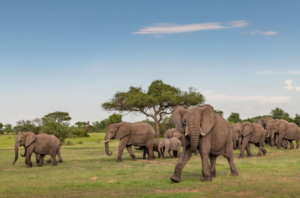
Elephants are another highlight of Ruaha.
During the dry season, water becomes increasingly important and wildlife can concentrate around remaining river pools and water sources. TANAPA specifically notes dry-season gatherings of elephants and buffalo around the Great Ruaha River and sand rivers.
Watching elephants walking beneath enormous baobabs or approaching a river can become one of the most memorable scenes of a Tanzania safari.
The river itself also supports hippos, crocodiles and abundant birdlife, creating opportunities to observe several species within one ecosystem.
Birdwatching in Ruaha
Lake Manyara may be famous for birds, but Ruaha is equally compelling for serious birdwatchers.
TANAPA records more than 570 bird species in Ruaha. Its geographical position creates an interesting overlap between eastern and southern African ecosystems, while woodland, riverine habitats and open country support diverse species.
Combining Manyara and Ruaha can consequently produce an exceptionally varied birding safari.
At Manyara, attention may center on wetlands, forest and waterbirds. In Ruaha, travelers can encounter woodland species, raptors, kingfishers, bee-eaters and birds associated with river systems and dry savanna.
Best Time for a Lake Manyara Safari Ruaha Trip
Both parks can be visited during different periods of the year, but the experience changes with the seasons.
For Ruaha, the dry months are especially popular because wildlife tends to concentrate around rivers and other remaining sources of water. TANAPA notes that dry-season conditions can create particularly strong wildlife concentrations around the Great Ruaha River.
Lake Manyara remains attractive in both greener and drier periods. During wetter months, vegetation becomes lush and birding can be rewarding, although rain may occasionally affect road conditions.
Travelers particularly interested in combining reliable road conditions, Ruaha wildlife viewing and pleasant safari weather often consider the June-to-October period. Those interested in greener scenery, fewer visitors and birdlife may prefer other months.
There is no single perfect safari month because wildlife experiences are always influenced by natural conditions.
Suggested Lake Manyara and Ruaha Safari Itinerary
A comfortable itinerary should give travelers enough time to enjoy the parks rather than spending most of the journey transferring between destinations.
| Day | Suggested Experience |
|---|---|
| Day 1 | Arrival in Arusha and overnight |
| Day 2 | Arusha to Lake Manyara National Park, game drive |
| Day 3 | Additional Manyara/Mto wa Mbu experience or travel preparation |
| Day 4 | Transfer or flight toward Ruaha |
| Day 5 | Full-day Ruaha game drive |
| Day 6 | Full-day Ruaha wildlife safari |
| Day 7 | Ruaha game drive or guided activity |
| Day 8 | Fly or transfer onward |
Travelers with additional time can extend the itinerary with Tarangire, Ngorongoro, Serengeti, Nyerere National Park or the Udzungwa Mountains.
Because transport schedules and flight connections can change, the final route should always be confirmed according to the travel dates.
Safari Accommodation
Accommodation can significantly influence the overall experience.
Around Lake Manyara, travelers can choose accommodation near Mto wa Mbu, around the Rift Valley escarpment, in Karatu, or at selected properties closer to or inside the park. TANAPA notes that nearby areas provide options ranging from relatively simple accommodation to higher-end lodges.
Ruaha offers a mixture of public and special campsites, park accommodation, tented camps and safari lodges. Some properties focus heavily on remote wilderness experiences, making them attractive to couples and travelers seeking greater privacy.
Budget, comfort expectations and transportation method should therefore be considered together when selecting accommodation.
What to Pack
Packing should focus on comfort rather than fashion.
Lightweight neutral-colored safari clothing works well for game drives, while a warm layer is useful for early mornings and evenings. Comfortable closed shoes, sun protection, insect repellent, binoculars, a reusable water bottle and a camera are particularly useful.
Travelers using small safari aircraft should also check baggage restrictions before departure. Soft-sided luggage is generally more practical than hard suitcases when traveling on light aircraft.
Dust can be considerable in Ruaha during dry months, so protecting cameras and other electronic equipment is sensible.
Responsible Safari Travel
Both Lake Manyara and Ruaha are protected ecosystems, and visitors have an important role in conserving them.
Travelers should remain on authorized tracks, avoid disturbing wildlife, follow instructions from guides and rangers, maintain safe viewing distances and never feed wild animals. TANAPA specifically emphasizes responsible wildlife viewing and adherence to designated roads and visitor regulations in both parks.
Choosing responsible operators, reducing unnecessary plastic use and respecting local communities also contribute to more sustainable travel.
A safari should leave visitors with memories and photographs while leaving the environment as undisturbed as possible.
Is This Safari Combination Suitable for Families?
Yes, although itinerary design matters.
Lake Manyara is particularly convenient for families because it is relatively close to Arusha and offers considerable variety within a compact area. Ruaha requires a longer journey but can provide children and adults with an exceptional wilderness experience.
Families may prefer flying for some sections to reduce long driving days. Private safari vehicles can also provide greater flexibility for meal stops, photography, rest periods and children’s schedules.
The best itinerary depends on children’s ages and how accustomed they are to longer days of travel.
Is It Good for Honeymooners?
A Lake Manyara safari Ruaha trip can also work beautifully for honeymoon travelers.
Lake Manyara provides dramatic scenery and comfortable lodge options, while Ruaha offers the remote atmosphere many couples associate with an exclusive African safari.
A private vehicle, carefully selected tented camp and several nights in Ruaha can make the journey slower and more intimate.
Rather than rushing through multiple national parks, honeymooners may benefit from spending additional time in fewer destinations.
Why Choose This Safari Instead of a Traditional Northern Circuit?
The traditional Tanzania Northern Circuit is famous for good reason, but combining Lake Manyara and Ruaha creates something different.
Manyara provides a taste of northern Tanzania’s Rift Valley ecosystems, while Ruaha introduces travelers to a much larger southern wilderness.
This is particularly attractive for visitors who want contrasting landscapes, diverse birdlife and a safari extending beyond the most commonly traveled route.
It can also work well for repeat visitors who have already experienced Serengeti and Ngorongoro and now want to discover another side of Tanzania.
Final Thoughts
A Lake Manyara safari Ruaha trip is a rewarding way to appreciate the extraordinary ecological diversity of Tanzania.
At Lake Manyara, the journey passes beneath the Great Rift Valley escarpment through groundwater forest, wetlands and acacia woodland, with opportunities to encounter elephants, primates, hippos, birds and, with luck, the park’s famous tree-climbing lions.
Ruaha then changes the atmosphere completely. Vast wilderness, giant baobabs, the Great Ruaha River, elephants, buffalo herds and predator country create a more remote safari experience.
The distance between the parks means the itinerary needs thoughtful planning, but that contrast is precisely what makes the journey memorable.
With enough time, carefully arranged transfers and knowledgeable guides, travelers can experience both northern and southern Tanzania within one remarkable adventure—and gain a much broader understanding of what a Tanzanian safari can be.