Lake Manyara vs. Nyerere Safari Prices | Tanzania Guide
A Lake Manyara safari can cost USD 150–220 per person for a shared day trip from Arusha. A published example of a…
Read articleArusha City - Tanzania
Safari & Travel Tips
September 4, 2026 · 18 min read
A Lake Manyara safari Southern Circuit vacation combines two wonderfully different wildlife regions in one unforgettable Tanzania itinerary. You can explore Lake Manyara National Park beneath the Great Rift Valley escarpment before continuing to the remote landscapes of Ruaha National Park, Nyerere National Park or Mikumi National Park.
Lake Manyara belongs geographically to Tanzania’s famous Northern Safari Circuit, while Ruaha, Nyerere and Mikumi form the core of the Southern Circuit. Combining them allows travelers to experience the wildlife diversity of northern Tanzania and the uncrowded wilderness of the south during one vacation.
Lake Manyara offers groundwater forests, open floodplains, hot springs and spectacular views of the Rift Valley. Tanzania’s Southern Circuit presents a contrasting landscape of rivers, baobab woodlands, rocky hills and vast untouched savannahs.
This combination is ideal for travelers who want more than a standard safari route. It offers different ecosystems, varied safari activities and excellent opportunities to encounter elephants, lions, giraffes, hippos, buffaloes, leopards and hundreds of bird species.
At Kilipath African Safaris, we can customize your vacation according to your travel dates, interests, preferred accommodation and budget.
Why Choose This Tanzania Safari Combination?
Many first-time visitors follow the traditional Northern Circuit route through Tarangire, Serengeti and Ngorongoro. These destinations are magnificent, but Tanzania also has quieter parks where travelers can enjoy a more intimate wilderness experience.
A combined Lake Manyara and Southern Circuit itinerary offers:
Contrasting northern and southern ecosystems
Excellent birdwatching opportunities
Large elephant and buffalo populations
Fewer safari vehicles in southern parks
Boat safaris in Nyerere National Park
Walking safaris in selected areas
Traditional game drives in customized 4x4 vehicles
Flexible private safari itineraries
Opportunities to add Serengeti, Ngorongoro or Zanzibar
Accommodation ranging from affordable camps to luxury lodges
It is an especially appealing choice for couples, honeymooners, families, wildlife photographers and returning visitors who want to discover a quieter side of Tanzania.
Where Is Lake Manyara National Park?
Lake Manyara National Park is located in northern Tanzania, approximately two hours from Arusha by road. The park lies at the base of the dramatic Great Rift Valley escarpment, near the lively town of Mto wa Mbu.
Although relatively compact, Lake Manyara contains an impressive variety of habitats. During one game drive, you may pass through dense groundwater forest, acacia woodland, grassy floodplains and the lakeshore environment.
The combination of forest, grassland, water and steep escarpment creates a beautiful setting for wildlife watching and photography.
Lake Manyara is often included at the beginning or end of a longer Northern Circuit safari. When paired with the Southern Circuit, travelers normally connect through Arusha, Kilimanjaro or Dar es Salaam using a scheduled domestic flight.
Lake Manyara’s Wildlife
Lake Manyara National Park is famous for its elephants and diverse birdlife. Troops of baboons are regularly encountered near the forest, while vervet monkeys move through the trees above the road.
Possible wildlife sightings include:
African elephants
Masai giraffes
Cape buffaloes
Zebras
Wildebeest
Hippos
Impalas
Waterbucks
Warthogs
Blue monkeys
Baboons
Lions
Leopards
Spotted hyenas
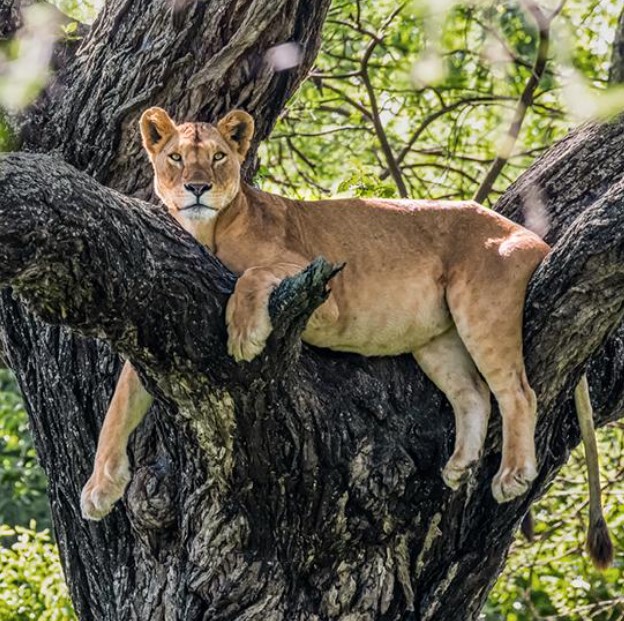
The park is historically associated with tree-climbing lions. However, wildlife is never staged or guaranteed. Seeing lions resting in tree branches depends on their natural movements, the season and a little safari luck.
Lake Manyara is also a rewarding destination for bird enthusiasts. Pelicans, storks, kingfishers, hornbills, herons, raptors and many smaller species may be observed around the park’s varied habitats. Flamingo numbers change according to seasonal water levels and feeding conditions.
Highlights of a Lake Manyara Safari
The Groundwater Forest
Your safari usually begins in a lush forest fed by underground water originating from the Ngorongoro highlands. The tall trees and dense vegetation create an atmosphere that feels very different from the open plains commonly associated with East Africa.
Baboons, blue monkeys and elephants are regularly found around this part of the park.
The Great Rift Valley Escarpment
The escarpment rises dramatically behind the national park, providing an impressive natural backdrop. Several viewpoints around the Lake Manyara region offer sweeping views over the park, lake and surrounding plains.
Hippo Pool
Lake Manyara’s hippo pool provides opportunities to observe hippos resting in the water. Waterbirds often gather nearby, while buffaloes and other animals may appear across the surrounding floodplain.
Maji Moto Hot Springs
Maji Moto, meaning “hot water” in Swahili, is located toward the southern section of the park. The area is known for its natural springs, open scenery and attractive views of the lakeshore.
Treetop Walkway
Travelers can request an optional treetop walkway experience near Lake Manyara. Suspended bridges pass through the forest canopy, offering a different perspective of the vegetation and surrounding environment.
Availability, operating conditions and current fees should be confirmed while arranging your safari.
What Is Tanzania’s Southern Safari Circuit?
The Southern Circuit describes a collection of national parks and wildlife reserves in southern Tanzania. Its principal safari destinations include Nyerere National Park, Ruaha National Park and Mikumi National Park.
These protected areas are known for their enormous landscapes, lower vehicle density and sense of genuine wilderness. They are generally quieter than Tanzania’s busiest northern parks.
Because the distances are considerable, scheduled bush flights are often the most comfortable way to combine Lake Manyara with a southern destination. Road itineraries are possible in certain combinations, particularly from Dar es Salaam to Mikumi or Nyerere, but they require additional travel time.
Nyerere National Park
Nyerere National Park forms part of the greater Selous ecosystem and is one of Africa’s most impressive wilderness destinations. The Rufiji River and its network of lakes support abundant wildlife and create beautiful safari scenery.
The park is particularly attractive because it offers several ways to experience nature.
Game Drives
Morning and afternoon game drives explore woodland, open plains, lakes and riverine environments. Animals that may be encountered include elephants, giraffes, buffaloes, lions, wildebeest and numerous antelope species.
Boat Safaris
A boat safari on the Rufiji River or adjoining waterways is one of Nyerere’s signature activities. It offers opportunities to observe hippos, crocodiles and waterbirds from a completely different perspective.
Sunset boat excursions can be especially beautiful, with golden light reflecting across the water.
Walking Safaris
Guided walks may be organized by selected camps and lodges. Accompanied by qualified professionals, guests learn about animal tracks, plants, insects, birds and the smaller details that are easily missed from a safari vehicle.
Walking safaris are subject to local regulations, safety considerations and camp arrangements.
African Wild Dogs
The greater Nyerere ecosystem is known as an important habitat for African wild dogs. These endangered predators range across large territories, so sightings cannot be guaranteed, but finding a pack can become one of the most memorable moments of a Southern Circuit safari.
Ruaha National Park is one of Tanzania’s finest destinations for serious wildlife enthusiasts. Its immense landscape includes baobab-studded hills, dry woodland, seasonal rivers and open plains.
Ruaha feels remote, wild and wonderfully spacious. Even during productive wildlife sightings, visitors frequently encounter fewer vehicles than in Tanzania’s most famous northern destinations.
Ruaha is renowned for its predator populations. Lions are a major attraction, and some prides can be particularly large. Leopards and cheetahs also occur in the ecosystem, although their sightings depend on location, habitat and natural movement.
African wild dogs may also be encountered in and around the wider Ruaha ecosystem.
Elephants are among Ruaha’s most characteristic animals. During the dry season, wildlife often concentrates around dependable water sources, creating rewarding game-viewing opportunities.
Large buffalo herds may move through the park, sometimes attracting the attention of lion prides.
Ruaha lies in a transitional ecological zone where eastern and southern African wildlife species overlap. Greater kudu, sable antelope, roan antelope and other species contribute to the park’s exceptional diversity.
The Great Ruaha River is an important focus for wildlife, especially as the dry season advances. Elephants, antelopes, predators and birds may gather near the remaining water.
The river’s rocky channels and sandy banks also create excellent photographic settings.
Mikumi is one of the most accessible Southern Circuit destinations, especially for travelers beginning or ending their safari in Dar es Salaam.
The Mkata floodplain is the park’s most famous game-viewing area. Its open landscape may contain zebras, wildebeest, buffaloes, elephants, giraffes and lions.
Mikumi can be included as:
Although Mikumi may receive more visitors than remote Ruaha, it can still provide a relaxed safari experience with productive wildlife viewing.
Lake Manyara and the main Southern Circuit parks are separated by considerable distances. A carefully planned itinerary is therefore essential.
The most practical options are:
Begin with Lake Manyara from Arusha, return to Arusha or Kilimanjaro and take a flight to Dar es Salaam. From there, continue by road or bush flight to the selected southern park.
This arrangement works well for travelers who also want to visit Zanzibar after their safari.
Depending on seasonal schedules and availability, domestic connections can reduce long road journeys. Your exact routing may involve Arusha, Kilimanjaro, Dar es Salaam or an airstrip inside the national park.
Luggage on smaller safari aircraft is normally limited, and soft-sided bags are strongly recommended. We will confirm the applicable allowance before booking.
Another option is to explore Lake Manyara with Tarangire, Ngorongoro and Serengeti before flying to Ruaha or Nyerere.
This creates a comprehensive Tanzania safari but normally requires at least ten to fourteen days to avoid making the itinerary feel rushed.
The following itinerary is an example and can be customized.
You will be welcomed at Kilimanjaro International Airport or Arusha Airport and transferred to your accommodation.
Depending on your arrival time, you can relax at the lodge or explore Arusha. Your safari representative will explain the itinerary and answer any final questions.
Overnight: Arusha
Meals: According to your hotel plan
After breakfast, meet your professional safari guide and depart for Lake Manyara National Park.
Enjoy a game drive through the groundwater forest and surrounding habitats. Look for elephants, giraffes, baboons, buffaloes and colorful birds. A picnic or hot lunch can be arranged, depending on the itinerary.
Later, continue to your lodge or tented camp around Mto wa Mbu, Karatu or the Lake Manyara region.
Overnight: Lake Manyara or Karatu
Meals: Breakfast, lunch and dinner
Begin with a relaxed breakfast. You may add a cultural tour, village walk, local market visit, cycling activity or treetop walkway experience.
After lunch, return to Arusha and prepare for the Southern Circuit portion of the vacation.
Overnight: Arusha
Meals: Breakfast and lunch, with dinner according to your hotel plan
Transfer to the airport for your flight toward Nyerere National Park. After landing at the bush airstrip, your guide will welcome you and transfer you to the camp.
Depending on the flight schedule, enjoy an afternoon game drive or boat safari.
Overnight: Nyerere National Park
Meals: Breakfast, lunch and dinner
Spend the day exploring Nyerere by safari vehicle. Follow wildlife tracks through woodland and across open areas while searching for elephants, lions, giraffes, buffaloes and wild dogs.
Your guide will select the most promising areas based on recent wildlife movements and local conditions.
Overnight: Nyerere National Park
Meals: Breakfast, lunch and dinner
Start with an optional guided walking safari or relaxed morning game drive. In the afternoon, enjoy a boat safari along the Rufiji River system.
From the boat, you may see hippos, crocodiles, kingfishers, herons and animals approaching the riverbanks.
Overnight: Nyerere National Park
Meals: Breakfast, lunch and dinner
After breakfast, transfer to the airstrip and fly to Ruaha, subject to the selected flight schedule.
Upon arrival, meet your Ruaha guide and begin exploring the park. Watch for elephants moving through baobab woodland and predators resting near seasonal rivers.
Overnight: Ruaha National Park
Meals: Breakfast, lunch and dinner
Enjoy an extensive game drive in Ruaha. The itinerary remains flexible so your guide can respond to wildlife activity.
You may spend time following a lion pride, observing elephants near the river or photographing giraffes among the baobab trees. A picnic lunch can maximize your time in the wilderness.
Overnight: Ruaha National Park
Meals: Breakfast, lunch and dinner
Enjoy breakfast and, if the flight schedule permits, a final short game drive. Transfer to the airstrip for your onward flight.
You may finish the vacation in Dar es Salaam, connect with your international departure or fly to Zanzibar for a beach holiday.
Travelers with more time can create a broader itinerary:
This itinerary combines the Rift Valley, Ngorongoro highlands and two premier Southern Circuit parks. It is best arranged as a private safari because flight times and accommodation choices must be coordinated carefully.
Road-based sections are normally operated in a customized 4x4 Land Cruiser with a pop-up roof. The raised roof provides a clear view during wildlife encounters and allows guests to photograph animals safely from inside the vehicle.
Depending on the final package, the vehicle may include:
Southern fly-in camps sometimes conduct game drives in open-sided vehicles. These provide wide viewing angles and a close connection to the environment.
Your guide plays a central role in the experience. Beyond locating animals, the guide interprets behavior, identifies birds, explains habitats and ensures that park regulations are respected.
Your accommodation will have a major influence on the final price and style of your vacation.
Affordable guesthouses, public camping and simple permanent camps help control costs. Budget options are more readily available around Arusha, Karatu and Lake Manyara than inside remote Southern Circuit parks.
Mid-range properties usually provide private bathrooms, comfortable beds, restaurant service and attractive natural settings. They offer a strong balance between comfort, location and price.
Luxury camps may include spacious suites, premium meals, personalized service, beautiful river or wilderness views and exclusive safari activities.
Couples can request romantic rooms, private dinners, celebratory decorations and other thoughtful touches. Special arrangements depend on the selected property and should be requested in advance.
Tanzania can be visited throughout much of the year, but each season creates a different safari experience.
The dry season is generally excellent for traditional wildlife viewing. Vegetation becomes thinner, and animals often gather around rivers and other dependable water sources.
This period can be particularly rewarding in Ruaha and Nyerere. It is also a popular travel season, so flights and well-located camps should be booked early.
The landscape begins turning greener, birdlife is excellent and visitor numbers may be lower in some locations. Rain usually arrives in intermittent showers rather than continuing all day, although patterns vary.
Green scenery, dramatic skies and birding opportunities make this an attractive period for photographers. Some Southern Circuit camps may close seasonally, so availability must be checked carefully.
Heavy rain can affect roads, flight schedules and camp operations. Several remote properties close during part of this period.
Nevertheless, certain accessible locations may remain open and offer reduced seasonal rates. The precise itinerary should be designed around current accessibility and operating schedules.
A minimum of approximately eight or nine days is recommended for a combined Lake Manyara and Southern Circuit vacation.
Attempting to include too many destinations in a short itinerary creates unnecessary transfers. It is usually better to explore fewer parks properly than to spend most of the vacation moving between locations.
Game drives remain the central safari activity. Early morning and late afternoon are often productive because temperatures are cooler and many animals are more active.
Boat safaris are available in Nyerere and offer a welcome change from traveling by road. They are particularly good for hippos, crocodiles, waterbirds and sunset photography.
Walking allows travelers to explore tracks, plants and smaller wildlife details. It provides an understanding of the ecosystem that differs from vehicle-based viewing.
Around Lake Manyara and Mto wa Mbu, guests may visit local farms, markets, workshops or villages. These activities should be organized respectfully through established local guides.
Both Lake Manyara and the Southern Circuit are excellent for bird enthusiasts. A private itinerary allows more time to stop, identify and photograph different species.
Photographers benefit from a private vehicle, fewer passengers and additional time at sightings. We can design the itinerary around early light, sunset conditions and productive habitats.
Zanzibar is a natural extension of this safari because many Southern Circuit flights connect through Dar es Salaam or continue toward the islands.
After days of wildlife viewing, you can relax on Zanzibar’s beaches, explore historic Stone Town, visit a spice farm or enjoy snorkeling and diving.
A combined package can include:
For the best experience, allow at least four nights in Zanzibar after the safari.
A Lake Manyara safari can cost USD 150–220 per person for a shared day trip from Arusha. A published example of a…
Read articlePlanning a Tanzania safari that combines Lake Manyara National Park and Nyerere National Park is an excellent way to experience the country's…
Read articlePlanning an unforgettable African wildlife adventure from Zanzibar? Understanding the Tanzania safari package Zanzibar price is an important first step toward choosing…
Read articlePlanning an African wildlife adventure? Understanding the group Tanzania safari price is an important step toward choosing an affordable and unforgettable safari…
Read article