Lake Manyara vs. Nyerere Safari Prices | Tanzania Guide
A Lake Manyara safari can cost USD 150–220 per person for a shared day trip from Arusha. A published example of a…
Read articleArusha City - Tanzania
Safari & Travel Tips
September 2, 2026 · 16 min read
A Lake Manyara safari offers one of the most beautiful and diverse wildlife experiences on Tanzania’s famous Northern Safari Circuit. Located beneath the dramatic escarpment of the Great Rift Valley, Lake Manyara National Park combines evergreen groundwater forest, acacia woodland, wetlands, open floodplains, hot springs and an alkaline lake within one remarkably compact destination.
For travelers looking for a safari that combines wildlife, scenery, birdwatching and convenient access from Arusha, Lake Manyara is an excellent choice.
The park is particularly famous for its legendary tree-climbing lions, large elephants, troops of baboons and monkeys, hippos, giraffes, buffaloes and spectacular birdlife. Flamingos can also occur around the alkaline lake depending on water levels, food availability and seasonal conditions.
Whether you are planning a one-day Lake Manyara safari from Arusha or combining the park with Tarangire, Ngorongoro Crater and Serengeti National Park, Lake Manyara can add a very different landscape and wildlife experience to your Tanzania safari.
Many travelers arriving in Tanzania immediately think about Serengeti and Ngorongoro, but Lake Manyara deserves a place on a well-designed Northern Circuit safari.
The biggest attraction of Lake Manyara is diversity.
During a single game drive, the scenery can change from dense green forest to open woodland, marshes, lake shores and dramatic views of the Rift Valley.
Tanzania National Parks describes Lake Manyara as a compact ecosystem containing groundwater forest, acacia woodland, floodplains, wetlands, hot springs and the alkaline lake itself.
This variety means your safari is not simply about looking for one particular animal. It is about experiencing a complete ecosystem.
A Lake Manyara safari is especially suitable for:
Lake Manyara is also relatively easy to combine with other parks because of its position between Arusha and the Ngorongoro highlands.
Lake Manyara National Park lies below the Great Rift Valley escarpment near Mto wa Mbu in northern Tanzania.
According to Tanzania National Parks, the park covers approximately 648.7 square kilometers and contains several distinct habitats within its boundaries.
The contrast between the steep Rift Valley wall and the flat lake basin creates spectacular scenery.
As you enter the park, you may initially drive through dense groundwater forest where large trees provide shade for monkeys, baboons, bushbuck and birds.
Further into the park, the habitat opens into woodland, floodplain and wetland environments.
This transition is one reason Lake Manyara can feel completely different from the open grasslands of Serengeti or the dry savannah landscapes found in parts of Tarangire.
Wildlife sightings vary from day to day because this is a completely natural ecosystem. No responsible safari company should guarantee specific wild-animal sightings.
However, Lake Manyara supports an impressive variety of animals.
Depending on the season, location and a little safari luck, you may encounter:
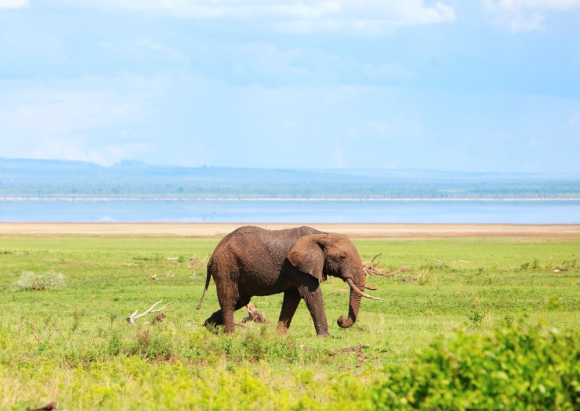
Lake Manyara has long been associated with elephants.
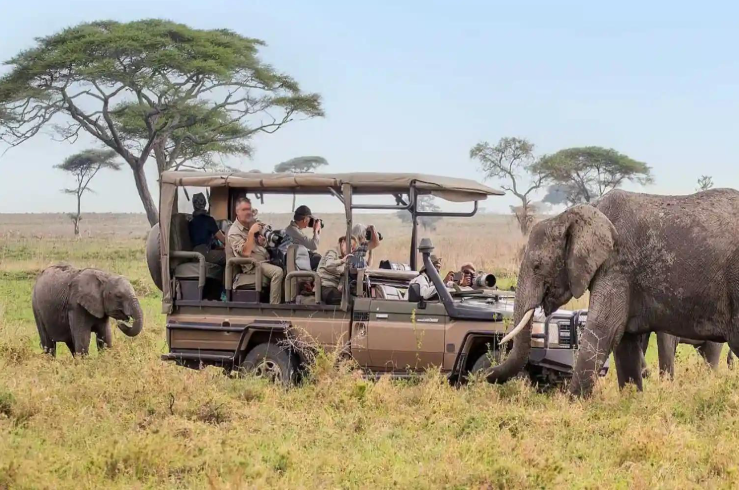
Watching elephants move between the woodland and forest is one of the most memorable experiences available inside the park.
They may appear individually, in small groups or as family herds.
Because of the park's vegetation, sightings can sometimes be surprisingly close as elephants emerge from woodland beside the safari road.
Always remain inside your vehicle and follow your professional guide's instructions.
Tree-climbing lions are probably Lake Manyara National Park's most famous wildlife attraction.
Lions may occasionally be seen resting on branches above the ground.
The behavior has made Lake Manyara internationally famous, although visitors should remember that lions are wild animals and seeing one in a tree can never be guaranteed.
Finding them is part of the excitement.
Your guide will search suitable areas and use professional knowledge of the park to maximize wildlife-viewing opportunities.
Giraffes are another common safari favorite.
Their height makes them especially impressive against the Rift Valley escarpment.
Photographers often enjoy Lake Manyara because animals can be photographed against forests, wetlands, woodland and dramatic cliffs rather than a single type of landscape.
African buffaloes can also be encountered around Lake Manyara.
They are powerful animals and may be found grazing in open areas or relaxing near wetlands and muddy sections of the park.
The park's wetlands provide habitat for hippos.
Certain viewing locations provide opportunities to observe them in or around water while birds gather nearby.
Lake Manyara's hippo areas can be particularly rewarding for photographers and families because several species may sometimes be observed within the same landscape.
Lake Manyara is particularly famous for its primates.
Large troops of baboons can be encountered, especially in and around forested environments.
Blue monkeys are another highlight of the groundwater forest.
Watching the social behavior of baboons can be fascinating. Young animals play while adults groom, feed and move together through their territory.
TANAPA specifically lists baboons and blue monkeys among the characteristic wildlife associated with Lake Manyara's groundwater forest.
Zebras and wildebeest may also be spotted in more open sections of Lake Manyara.
The concentrations are different from the enormous herds associated with Serengeti, but they contribute to the park's impressive wildlife diversity.
Other animals that may be encountered include antelopes and various smaller mammals.
Predator sightings are possible, but Lake Manyara should not be visited solely with the expectation of seeing predators.
Its greatest strength is the combination of wildlife, vegetation, birdlife and scenery.
Many photographs of Lake Manyara show spectacular pink concentrations of flamingos.
Flamingos are indeed associated with the alkaline lake, but their presence and numbers vary seasonally.
Changes in water levels, salinity and food conditions affect where flamingos gather.
For that reason, travelers should avoid booking Lake Manyara under the assumption that enormous flamingo concentrations are guaranteed on a particular day.
When conditions are suitable, however, flamingos can create extraordinary views along the lake.
TANAPA identifies both lesser and greater flamingos among the seasonal birdlife of the lake.
Even when flamingo numbers are lower, birdwatching throughout Lake Manyara remains excellent.
Bird lovers have an especially strong reason to visit Lake Manyara.
The combination of alkaline lake, wetlands, woodland and forest creates habitat for an exceptional range of species.
TANAPA reports more than 400 recorded bird species in the Lake Manyara ecosystem.
Depending on season and habitat, travelers may observe species such as:
Professional bird photographers can spend considerable time around Lake Manyara because different habitats provide completely different photographic opportunities.
If birding is your main interest, let us know while planning your safari so that more time can be allocated to appropriate areas.
One of the most distinctive parts of a Lake Manyara safari is the groundwater forest.
Natural springs emerging around the base of the Rift Valley escarpment help sustain lush evergreen vegetation.
Large fig and mahogany trees create an environment that feels very different from Tanzania's classic open savannah.
Blue monkeys move among the trees while baboons travel along the forest floor and roadside.
Bird calls surround the safari vehicle.
During warmer parts of the day, the shade can also provide a pleasant environment for wildlife.
For travelers visiting Tarangire, Serengeti and Ngorongoro during the same safari, this forest creates welcome visual contrast.
Wildlife may be the main reason people book Tanzania safaris, but Lake Manyara is equally memorable for its scenery.
The towering Great Rift Valley escarpment rises dramatically beside the park.
Below it lies a mosaic of forest, grassland, wetland and lake.
This geographical setting creates excellent opportunities for landscape photography.
Early mornings can be particularly beautiful as changing light reaches the escarpment and surrounding vegetation.
The landscape alone makes Lake Manyara worth considering as part of a Northern Circuit itinerary.
The southern area of Lake Manyara National Park contains natural hot springs known as Maji Moto.
These geothermal features are another example of the geological activity connected with the Great Rift Valley.
Depending on road and park conditions, your itinerary may include scenic areas around the southern part of the park.
TANAPA identifies the Maji Moto hot springs as one of Lake Manyara's natural highlights.
Travelers who want an experience beyond a standard vehicle game drive can consider Lake Manyara's canopy walkway.
Tanzania National Parks describes it as a series of elevated bridges and viewing platforms through the forest. TANAPA's tourism publication reports that the walkway extends approximately 370 meters and reaches heights of up to about 18 meters.
The walkway provides a completely different perspective of the forest.
You may see monkeys, birds, butterflies and vegetation from above the forest floor.
It can be particularly enjoyable for adventurous travelers and families.
Optional activities should normally be requested in advance because additional fees and scheduling may apply.
The standard Lake Manyara safari experience is a day game drive.
You explore the park in a 4×4 safari vehicle accompanied by a professional driver-guide.
A good safari vehicle normally includes a pop-up roof so travelers can stand safely when the vehicle is stationary and enjoy unobstructed wildlife viewing and photography.
Your guide searches different habitats according to wildlife movements and conditions.
Unlike visiting a zoo, there is no fixed sequence of animals.
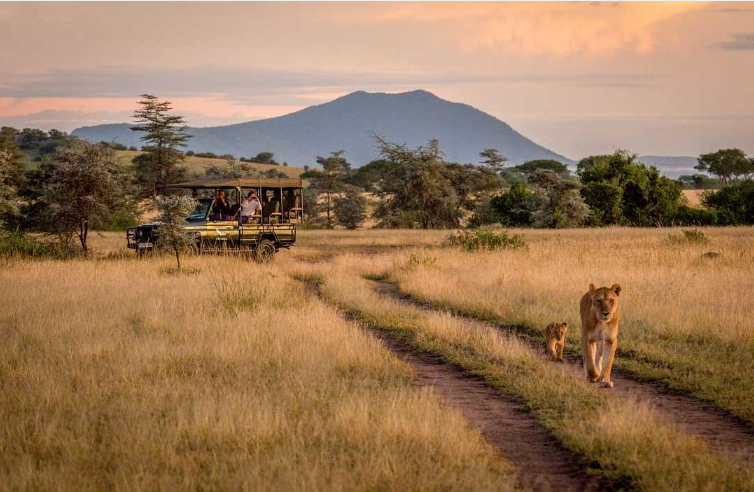
One moment you may be photographing monkeys in the forest; later you could encounter elephants crossing the road before eventually reaching wetlands filled with birds.
That unpredictability is part of what makes an African safari special.
Lake Manyara is one of the best options for travelers who have only one free day in northern Tanzania.
TANAPA's visitor information places the main gate near Mto wa Mbu and estimates the road journey from Arusha at approximately 125 kilometers, normally around 2–2.5 hours depending on conditions.
A typical Lake Manyara day safari can follow this structure:
Your professional guide collects you from your hotel or agreed pickup point in Arusha.
After a short safari briefing, you begin driving toward Lake Manyara.
The route crosses northern Tanzania's countryside before approaching the Great Rift Valley.
After completing entrance procedures, you enter Lake Manyara National Park.
The wildlife experience begins almost immediately in the groundwater forest.
Watch for monkeys, baboons, elephants and forest birds.
Continue exploring different parts of the park.
Depending on your package, lunch may be served at a designated picnic site.
You then continue your game drive through woodland and wetland areas.
Spend more time exploring Lake Manyara while your guide searches for giraffes, buffaloes, elephants, hippos, zebras and, with luck, the famous tree-climbing lions.
Birdwatchers can also focus on waterbirds and forest species.
Exit Lake Manyara National Park and begin your drive back to Arusha.
Arrival time depends on road conditions, wildlife sightings and your final drop-off location.
Destination: Lake Manyara National Park
Starting Point: Arusha
Ending Point: Arusha
Safari Style: Private or shared depending on availability
Vehicle: 4×4 safari Land Cruiser
Guide: Professional English-speaking safari guide
A standard package can include:
Unless specifically included in your quotation:
Always check your final confirmed itinerary because inclusions can vary between packages.
Combining Lake Manyara and Tarangire creates an excellent short Northern Circuit safari.
The parks offer different environments.
Tarangire is particularly famous for its baobab landscapes and elephant viewing, while Lake Manyara provides forests, wetlands, Rift Valley scenery and lake environments.
A two-day itinerary could include:
Day 1: Arusha – Tarangire National Park – overnight near Karatu or Mto wa Mbu
Day 2: Lake Manyara National Park – Arusha
The route can also be reversed depending on accommodation availability and overall itinerary design.
Lake Manyara and Ngorongoro work extremely well together because of their geographical proximity.
A popular two-day or three-day safari might include:
Day 1: Arusha – Lake Manyara National Park
Day 2: Ngorongoro Crater game drive – return to Arusha
Ngorongoro offers dramatic crater scenery and dense wildlife viewing, while Lake Manyara adds forest, lake and Rift Valley ecosystems.
The combination is ideal for travelers who have limited time but still want to experience two very different safari environments.
If you have four or more days, Lake Manyara can become part of a complete Northern Tanzania safari.
A possible itinerary is:
Day 1: Arusha – Lake Manyara National Park
Day 2: Travel to Serengeti National Park – game drive
Day 3: Serengeti game drives
Day 4: Serengeti – Ngorongoro Conservation Area
Day 5: Ngorongoro Crater – Arusha
This itinerary provides an excellent contrast between the forest and wetlands of Lake Manyara, the vast Serengeti plains and the wildlife-rich Ngorongoro Crater.
Yes, it is possible to combine Lake Manyara with a Zanzibar holiday.
Many travelers enjoy relaxing on Zanzibar before or after their mainland safari.
Domestic flights connect Zanzibar with northern Tanzania, making safari-and-beach itineraries relatively straightforward to organize.
Depending on flight times, you can fly from Zanzibar to Arusha or Kilimanjaro and begin your safari either the same day or after an overnight stay.
For the smoothest itinerary, we recommend considering flight arrival times carefully before planning a same-day safari departure.
We can also arrange a complete Tanzania itinerary combining:
Lake Manyara National Park can be visited throughout the year, according to TANAPA.
However, the experience changes between seasons.
These months generally correspond with northern Tanzania's drier period.
Wildlife may be easier to locate in certain areas as vegetation becomes less dense and animals concentrate around available water.
Conditions are also popular for combining Lake Manyara with Serengeti, Ngorongoro and Tarangire.
July through September are among Tanzania's busiest safari months, so accommodation should ideally be booked early.
Short rains can transform the landscape.
Vegetation becomes greener, birding can be excellent and photography conditions can be beautiful.
Rainfall usually does not mean continuous rain throughout every day, although weather is never completely predictable.
These months can provide warm conditions and excellent Northern Circuit safari opportunities.
Travelers combining Lake Manyara with southern Serengeti and Ndutu may also be visiting Tanzania around the broader wildebeest calving period.
This period includes Tanzania's traditional long-rain season.
The landscape can become particularly green and beautiful.
There are often fewer safari vehicles than during peak season, although rain can affect individual roads and activities.
For most travelers, one day is enough to enjoy the main Lake Manyara safari experience.
The park is compact compared with Serengeti.
A full or substantial game drive can therefore be incorporated efficiently into a Northern Circuit itinerary.
However, travelers interested in birdwatching, photography, walking experiences, cultural activities around Mto wa Mbu or the canopy walkway may choose to stay longer.
Visitors have several accommodation options.
You can stay:
TANAPA notes that Mto wa Mbu and Karatu provide a broad selection of accommodation, while accommodation inside the park is more limited.
Budget accommodation is suitable for travelers prioritizing wildlife experiences over luxury.
Options may include simple lodges, guesthouses or camping depending on your safari style.
Mid-range lodges are popular with couples, families and travelers who want private bathrooms, comfortable beds and good meals without choosing premium luxury properties.
Luxury Lake Manyara safari packages can include high-end lodges with spectacular Rift Valley views, spacious rooms, premium dining and personalized services.
Tell us your preferred comfort level and budget, and we can recommend an appropriate option.
A private Lake Manyara safari gives you exclusive use of the safari vehicle and guide.
This option is ideal for:
The main advantage is control over your schedule.
If you want to spend longer photographing elephants, birds or scenery, your guide can adapt the game drive where park regulations and timing allow.
Private safaris are also excellent for families because rest stops and travel pace can be adjusted more easily.
Shared safaris are popular with budget-conscious travelers.
Instead of paying for an entire safari vehicle, you share transportation costs with other guests.
They are especially attractive to:
Group availability depends on travel date and routing, so travelers with fixed dates should enquire early.
Lake Manyara can be an excellent national park for families.
Driving distances from Arusha are manageable compared with longer overland journeys into Serengeti.
Children can enjoy seeing monkeys, elephants, giraffes, hippos and colorful birds while adults appreciate the landscape and photography.
For families, private safari vehicles usually provide the greatest flexibility.
We can also select family-friendly accommodation and adjust the schedule according to children's ages.
Lake Manyara is highly rewarding for photographers because of its environmental diversity.
Possible photographic subjects include:
If photography is your main priority, a private safari is usually recommended because it allows greater flexibility at sightings.
For a comfortable safari, consider bringing:
TANAPA also advises visitors to carry water, sun protection and insect repellent and to follow ranger and guide instructions.
Lake Manyara is a sensitive natural ecosystem.
Visitors should help protect it.
Always:
Responsible tourism helps protect Lake Manyara for future generations.
Choosing an experienced local safari company makes your trip easier from the planning stage until your final drop-off.
We can help organize every major part of your Lake Manyara safari.
Your guide plays a major role in the quality of your safari.
Our experienced guides understand animal behavior, safari routes and Tanzania's ecosystems and work hard to provide an enjoyable wildlife-viewing experience.
Explore Tanzania in a safari vehicle designed for wildlife viewing.
A pop-up roof provides better visibility during game drives and allows excellent opportunities for photography.
Lake Manyara can be booked as a day trip or included within a longer Tanzania safari.
We can combine it with:
We can prepare:
Instead of forcing every traveler into the same package, we can adjust the accommodation and safari style to suit your preferences.
A Lake Manyara safari is an excellent choice for travelers who want wildlife, spectacular Rift Valley scenery, rich birdlife and diverse landscapes within one destination.
You can visit Lake Manyara as a single-day safari from Arusha or combine it with Tarangire, Serengeti, Ngorongoro and Zanzibar for a complete Tanzania holiday.
Whether you are looking for an affordable group safari, comfortable mid-range trip, private family adventure, photography safari or luxury Tanzania experience, we can design an itinerary around your travel dates, budget and preferred accommodation.
Send us:
Your travel date
Number of travelers
Number and ages of children, if any
Preferred safari duration
Budget range
Preferred accommodation level
Arrival and departure location
We will recommend the best available Lake Manyara safari itinerary for your trip.
Experience the groundwater forests, elephants, monkeys, hippos, abundant birdlife, dramatic Great Rift Valley landscapes and the possibility of spotting Lake Manyara's legendary tree-climbing lions.
Your Tanzania safari adventure begins here.
A Lake Manyara safari can cost USD 150–220 per person for a shared day trip from Arusha. A published example of a…
Read articlePlanning a Tanzania safari that combines Lake Manyara National Park and Nyerere National Park is an excellent way to experience the country's…
Read articlePlanning an unforgettable African wildlife adventure from Zanzibar? Understanding the Tanzania safari package Zanzibar price is an important first step toward choosing…
Read articlePlanning an African wildlife adventure? Understanding the group Tanzania safari price is an important step toward choosing an affordable and unforgettable safari…
Read article