

Budget Ngorongoro Crater Safari Holiday
Planning a budget Ngorongoro Crater safari holiday from Arusha? Compare a crater day trip, a two-day Tarangire and Ngorongoro safari, or a…
Read articleArusha City - Tanzania
Safari & Travel Tips
September 5, 2026 · 16 min read
A Lake Manyara Serengeti safari combines two remarkably different wildlife destinations in one unforgettable Tanzania itinerary. Lake Manyara National Park offers lush groundwater forests, dramatic Rift Valley scenery, abundant birdlife, elephants, monkeys, and the possibility of seeing its famous tree-climbing lions. The Serengeti delivers vast golden plains, exceptional predator sightings, large animal herds, and seasonal Great Migration experiences.
This safari package is ideal for couples, families, photographers, honeymooners, solo travelers, and small groups who want to experience Tanzania’s contrasting landscapes. It can be arranged as a private safari with a dedicated vehicle or, on selected routes and dates, as an affordable shared group adventure.
From your first game drive beneath Lake Manyara’s escarpment to watching lions, elephants, giraffes, and wildebeest roam the Serengeti, every day introduces a new side of Tanzania’s wilderness.
The recommended Lake Manyara Serengeti safari normally takes four to six days, depending on your budget, travel dates, preferred accommodation, and the number of game-drive hours you want.
A four-day itinerary offers an efficient introduction to both parks, while five or six days provide a more relaxed experience with additional time in the Serengeti. Travelers can also include the Ngorongoro Crater, Tarangire National Park, or a cultural visit to a Maasai village.
Lake Manyara and Serengeti National Parks complement each other beautifully. They have different landscapes, ecosystems, and wildlife-viewing experiences, allowing travelers to see more of Tanzania’s natural variety within one journey.
Lake Manyara is compact and green. Its groundwater forest creates a cool environment where baboons, blue monkeys, elephants, bushbuck, and numerous birds can be observed. The landscape then opens toward the lake, with views across floodplains and the towering Rift Valley wall.
The Serengeti is significantly larger and more open. Its grasslands support tremendous numbers of herbivores and predators. Lions rest on kopjes, cheetahs scan the plains, and leopards often hide in acacia trees. Depending on the season, migrating wildebeest and zebras may also be present.
Beginning with Lake Manyara provides a gentle introduction to Tanzania’s wildlife before the itinerary moves into the enormous Serengeti ecosystem.
Lake Manyara National Park is situated between the alkaline lake and the steep wall of the Great Rift Valley. Although smaller than the Serengeti, the park contains a surprising diversity of habitats.
A typical game drive begins in the groundwater forest. Tall trees, dense vegetation, and underground springs create an environment that feels completely different from Tanzania’s open savannahs. Troops of baboons are frequently encountered near the road, while blue monkeys move through the canopy.
Elephants are another important attraction. They may appear surprisingly close as they walk through the forest or feed beside the tracks. Giraffes, buffaloes, zebras, hippos, impalas, warthogs, and various antelope species can also be observed.
Lake Manyara is widely associated with tree-climbing lions. Lions may climb trees to rest, escape insects, enjoy a breeze, or gain a better view of their surroundings. However, these sightings are never guaranteed. The animals move freely, and dense vegetation can sometimes make them difficult to locate.
Even when the lions remain hidden, Lake Manyara offers rewarding scenery and wildlife encounters. Travelers should approach the park as a complete ecosystem rather than visiting for a single species.
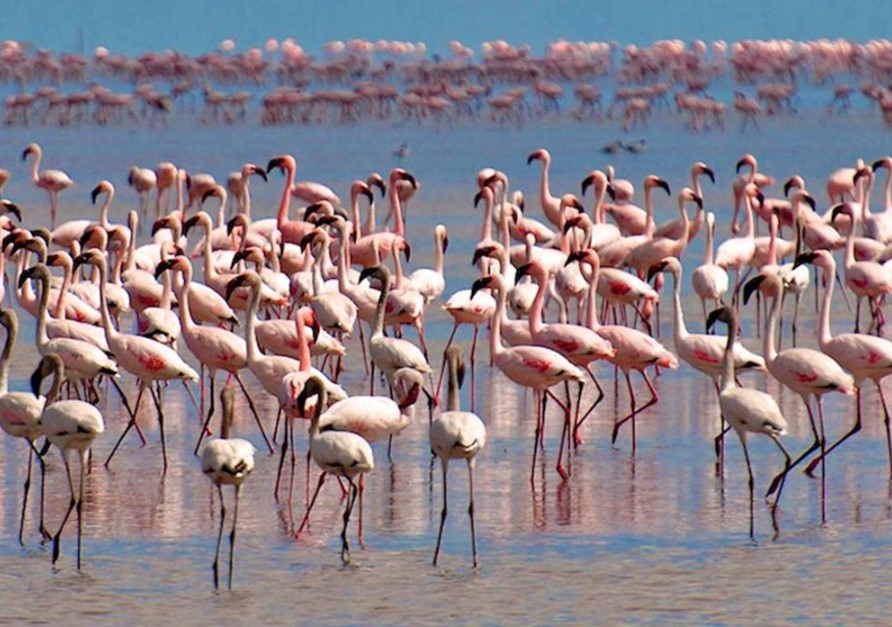
Lake Manyara is an excellent destination for birdwatchers. The lake, forests, wetlands, and grasslands support hundreds of resident and migratory bird species.
Depending on water levels and seasonal conditions, visitors may see:
Flamingo numbers change as water conditions and food sources fluctuate. Large congregations should therefore be considered a seasonal possibility rather than a guaranteed sighting.
Serengeti National Park is one of Africa’s most celebrated wildlife destinations. Its name comes from a Maasai expression commonly interpreted as “endless plains,” an appropriate description of the sweeping grasslands visible across much of the park.
The Serengeti is famous for the Great Migration, but its resident wildlife makes it a superb year-round destination. Lions, cheetahs, leopards, elephants, buffaloes, hippos, giraffes, zebras, wildebeest, hyenas, and many antelope species live throughout the ecosystem.
Most Lake Manyara Serengeti safari packages visit the Central Serengeti, particularly the Seronera region. Central Serengeti is accessible throughout the year and supports permanent water sources, attracting wildlife during both wet and dry seasons.
The area is especially well known for:
Central Serengeti is a practical choice for first-time visitors because it offers reliable wildlife sightings without requiring a very long seasonal migration itinerary.
The Great Migration is a continuous natural movement involving enormous herds of wildebeest, zebras, and gazelles. The herds travel through the Serengeti–Mara ecosystem in search of fresh grazing and water.
Their location changes with rainfall, and exact movements cannot be guaranteed. Broad seasonal patterns are useful for planning:
River crossings are dramatic but unpredictable. Travelers seeking northern Serengeti crossings usually require a longer private safari because standard shared safaris generally concentrate on Central Serengeti.
The following itinerary balances driving time and wildlife viewing. It can be customized according to your arrival point, accommodation preference, budget, and onward travel arrangements.
After breakfast, your safari guide will collect you from your hotel in Arusha. You will receive a short briefing before traveling toward Lake Manyara National Park.
The drive passes through rural communities, small towns, farms, and the scenic Great Rift Valley region. On arrival, you will begin your first game drive.
Explore the groundwater forest while looking for baboons, blue monkeys, elephants, and forest birds. As the landscape opens, search for buffaloes, giraffes, zebras, hippos, antelopes, and possibly lions.
Lunch may be served at a designated picnic area inside the park. In the afternoon, continue exploring different habitats before driving to your lodge, tented camp, or campsite near Mto wa Mbu or Karatu.
Accommodation: Budget, mid-range, or luxury option
Meals: Lunch and dinner
After breakfast, depart for Serengeti National Park. The journey normally passes through the Ngorongoro Conservation Area, offering impressive views of the highlands.
You may stop at a scenic viewpoint before continuing toward the Serengeti. The landscape gradually changes from cultivated highlands to open plains.
After completing the park-entry formalities, begin a game drive while traveling toward Central Serengeti. Watch for giraffes, elephants, wildebeest, zebras, gazelles, lions, cheetahs, and hyenas.
Arrive at your selected accommodation in the late afternoon or evening. Enjoy dinner while listening to the sounds of the African wilderness.
Accommodation: Serengeti campsite, tented camp, or lodge
Meals: Breakfast, lunch, and dinner
Wake early for a full day of wildlife viewing in Central Serengeti. Early morning is often particularly rewarding because temperatures are cooler and many predators are active.
Your guide will select game-drive areas based on recent animal movements, road conditions, and information shared through the guides’ radio network. You may explore open plains, river valleys, kopjes, and acacia woodland.
Look for lions resting near rocks, cheetahs walking through short grass, leopards concealed in trees, and hyenas returning from nighttime activity. Elephants, giraffes, buffaloes, hippos, wildebeest, zebras, and gazelles may also be encountered.
A picnic lunch allows you to maximize time inside the park. Alternatively, travelers staying at selected lodges can sometimes return for lunch before continuing with an afternoon game drive.
The day concludes at your Serengeti accommodation.
Accommodation: Serengeti campsite, tented camp, or lodge
Meals: Breakfast, lunch, and dinner
Begin with another morning game drive in the Serengeti. This provides an additional chance to locate animals missed during the previous day and enjoy the plains in softer morning light.
After lunch, leave the Serengeti and travel toward the Ngorongoro Conservation Area. Depending on your chosen package, you may stay at a campsite near the crater rim, a lodge in the highlands, or comfortable accommodation around Karatu.
Travelers may also add an optional Maasai cultural experience, subject to available time. During the visit, local hosts introduce aspects of traditional dress, livestock culture, dance, family life, and community customs.
Accommodation: Ngorongoro or Karatu area
Meals: Breakfast, lunch, and dinner
Although the main focus of this package is Lake Manyara and Serengeti, including the Ngorongoro Crater creates a more complete Northern Circuit experience.
After an early breakfast, descend into the crater for a game drive. The crater floor supports an impressive concentration of animals, including wildebeest, zebras, buffaloes, hippos, hyenas, lions, and various antelope species. Black rhinos may be seen from a distance, although sightings are never guaranteed.
Enjoy a picnic lunch before ascending from the crater. Continue to Arusha, where you will normally arrive during the late afternoon or early evening.
Drop-off can be arranged at your Arusha hotel, Arusha Airport, or another agreed location. Travelers using Kilimanjaro International Airport should allow sufficient transfer and check-in time.
Meals: Breakfast and lunch
Travelers with limited time can complete a condensed four-day itinerary:
This option covers the major destinations but involves longer driving hours and less time in the Serengeti. It is suitable for travelers prioritizing value and efficiency.
Those who want relaxed game drives or better photography opportunities should consider five or six days.
A six-day itinerary provides additional flexibility:
The extra Serengeti night allows travelers to visit more distant wildlife areas, wait patiently at sightings, and enjoy a less hurried schedule.
Your accommodation has a significant influence on the overall experience and package cost.
Budget camping is adventurous and offers close contact with nature. Travelers sleep in tents at public campsites, while the safari team normally provides camping equipment and meals.
Typical facilities include shared toilets and showers. Hot water and electricity may be limited. Campsites in wildlife areas are generally unfenced, so visitors must follow the guide’s safety instructions and avoid walking alone after dark.
Mid-range accommodation balances comfort and cost. Rooms or permanent safari tents usually include private bathrooms, proper beds, mosquito nets, and meal service.
This option is well suited to couples, families, and travelers who want a comfortable place to rest without paying premium luxury rates.
Luxury lodges and tented camps may feature spacious suites, scenic locations, high-quality dining, swimming pools, lounges, attentive service, and carefully designed interiors.
Luxury does not necessarily mean staying outside nature. Many premium tented camps retain an authentic bush atmosphere while providing private bathrooms and hotel-level comfort.
This itinerary can be enjoyed throughout the year. The best time depends on whether your priority is dry-season wildlife, lush scenery, photography, fewer visitors, or the Great Migration.
The dry season usually provides excellent general wildlife viewing. Vegetation becomes less dense, and animals often gather near dependable water sources.
The weather is typically dry and sunny, although mornings around Ngorongoro can be cold. July through September is popular, so early accommodation booking is strongly recommended.
Short rains may transform the landscape into fresh green scenery. The rains are often intermittent rather than continuous, although weather cannot be guaranteed.
This period can provide beautiful photographic conditions, newborn animals among some resident species, and fewer visitors than peak dry-season months.
This is an excellent period for travelers interested in the southern Serengeti and Ndutu calving season. Large numbers of wildebeest may gather across the short-grass plains, attracting lions, cheetahs, hyenas, and other predators.
A private itinerary is normally needed to focus properly on Ndutu because standard Central Serengeti packages may not follow the herds into the southern seasonal areas.
These months generally receive heavier rainfall. The landscapes are green, birdlife is excellent, and visitor numbers are lower.
Some roads may become muddy, but experienced guides adjust routes according to conditions. Selected lodges may offer better value during this quieter period.
No ethical safari operator can guarantee wild-animal sightings. Nevertheless, the Lake Manyara–Serengeti route offers opportunities to encounter an impressive range of species.
Potential sightings include:
Adding Ngorongoro also provides an opportunity to search for black rhinos. They are rare and may only be visible at a considerable distance.
A standard Lake Manyara Serengeti safari package commonly includes:
Every quotation should clearly state its specific inclusions because flight arrangements, beverages, and transfers can vary.
Common exclusions include:
A hot-air balloon safari offers a unique aerial view of the Serengeti. Guests are collected before sunrise and transferred to the launch site. After a safety briefing, the balloon rises above the plains as daylight spreads across the landscape.
The exact wildlife visible from the balloon varies, but the experience provides a memorable perspective on the Serengeti’s scale and geography.
Balloon flights require advance booking and remain subject to weather and operational conditions. They are especially popular during peak season and for honeymoons, birthdays, and anniversaries.
Game drives are normally conducted in a specially prepared 4x4 Land Cruiser with a pop-up roof. The raised roof improves visibility while allowing guests to stand safely during sightings.
Depending on the operator and vehicle, features may include:
The guide plays an essential role in the experience. Beyond driving, a knowledgeable guide interprets animal behavior, identifies birds, tracks wildlife, explains ecosystems, and manages park-entry timing.
Safari meals may be served at lodges, camps, or picnic sites. Many itineraries include breakfast, lunch, and dinner, with drinking water available throughout the journey.
Vegetarian, vegan, halal, gluten-free, and other dietary needs can generally be accommodated when communicated in advance. Travelers with allergies should provide clear details before booking so the accommodation and safari teams can prepare safely.
Pack lightly and prioritize practical clothing. Soft-sided luggage is easier to fit inside the safari vehicle than a large hard-shell suitcase.
Recommended items include:
Ngorongoro and early Serengeti mornings can be cold, even when daytime temperatures are warm. Dressing in layers is the most practical approach.
Avoid relying on camouflage clothing, particularly military-style patterns, as such clothing can create unnecessary complications in some destinations.
Travelers should consult a qualified medical professional or travel clinic well before departure for personalized health guidance. Requirements and recommendations can depend on your country of origin, transit route, medical history, and current regulations.
Comprehensive travel insurance is strongly recommended. A suitable policy should cover medical treatment, emergency evacuation, trip interruption, cancellation, baggage problems, and activities included in your itinerary.
Keep essential medication in your hand luggage and bring enough for the entire trip.
Most Northern Circuit safaris begin in Arusha. International travelers commonly arrive through Kilimanjaro International Airport, while domestic flights from Zanzibar and Dar es Salaam may arrive at Arusha Airport or Kilimanjaro International Airport.
Travelers joining an early shared departure should spend the previous night in Arusha. Attempting to begin immediately after a flight creates a risk if the flight is delayed.
A private safari can provide more scheduling flexibility, but realistic driving times and park-entry hours must still be considered.
A Lake Manyara Serengeti safari pairs naturally with a Zanzibar beach holiday. Travelers can enjoy several days of wildlife viewing before flying to Zanzibar for relaxation, swimming, cultural experiences, and time in Stone Town.
Possible arrangements include:
If flying directly from a Serengeti airstrip, observe the airline’s luggage limits. Soft bags are often preferred on small aircraft.
The cost depends on several factors:
Budget camping provides the lowest-cost option, while luxury lodges and fly-in arrangements increase the price. Private safaris may initially appear more expensive, but the per-person price becomes more attractive when several guests share the vehicle.
Request a detailed quotation based on your exact dates rather than relying on a general online estimate.
Responsible tourism helps protect wildlife habitats and support communities living near conservation areas.
During your safari:
Patience is one of the most valuable safari habits. Allowing animals to behave naturally often produces more memorable sightings than moving constantly in search of a checklist.
A Lake Manyara Serengeti safari brings together the forested beauty of Lake Manyara and the legendary plains of the Serengeti. It is an excellent choice for travelers seeking elephants, big cats, birdlife, dramatic landscapes, and the possibility of witnessing part of the Great Migration.
Kilipath African Safaris can customize the itinerary according to your travel dates, budget, accommodation preference, group size, and arrival arrangements. Whether you prefer an adventurous camping safari, a comfortable mid-range journey, or a luxury private experience, the route can be designed around your priorities.
Contact us with your preferred dates, number of travelers, accommodation level, and arrival location to receive a personalized Lake Manyara Serengeti safari quotation.
Planning a budget Ngorongoro Crater safari holiday from Arusha? Compare a crater day trip, a two-day Tarangire and Ngorongoro safari, or a…
Read articleA Tanzania safari from Zanzibar can mean a short mainland trip during your beach holiday or a complete package with flights, game…
Read articleLooking for a group Tanzania safari price from Kilipath African Safaris? A published example for our four-day shared camping safari through Tarangire,…
Read articlePair game drives on Tanzania’s mainland with a few days on Zanzibar’s coast. With Kilipath African Safaris, you can start in Arusha…
Read article

