

Budget Ngorongoro Crater Safari Holiday
Planning a budget Ngorongoro Crater safari holiday from Arusha? Compare a crater day trip, a two-day Tarangire and Ngorongoro safari, or a…
Read articleArusha City - Tanzania
Safari & Travel Tips
September 1, 2026 · 14 min read
A Ngorongoro Crater safari Northern Circuit itinerary is one of the best ways to experience Tanzania's extraordinary wildlife, dramatic landscapes and famous safari destinations in a single journey.
The Northern Safari Circuit generally connects Arusha, Tarangire National Park, Lake Manyara, the Ngorongoro Conservation Area and Serengeti National Park. Depending on the number of days available, travelers can combine several of these destinations or concentrate on Serengeti and Ngorongoro.
Ngorongoro Crater is particularly attractive because an enormous concentration of wildlife can often be seen within a relatively compact area. The crater lies inside the Ngorongoro Conservation Area, a multiple-use conservation landscape rather than a conventional national park. The wider conservation area also contains volcanic highlands, archaeological sites and important wildlife habitats.
For first-time visitors to Tanzania, combining Ngorongoro with Serengeti and Tarangire creates a remarkably complete safari experience.
Ngorongoro Crater is one of Tanzania's most recognizable safari landscapes.
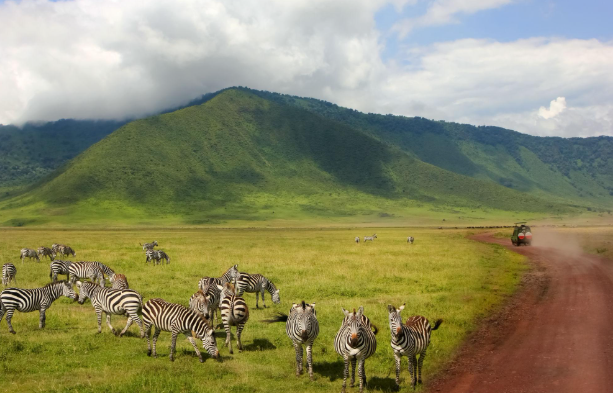
Millions of years ago, a massive volcano collapsed, leaving behind the enormous caldera travelers explore today. Steep walls surround grasslands, wetlands, springs, forests and shallow lakes, creating several habitats within a relatively small area.
The crater is famous for wildlife including:
The wider conservation area is also an important habitat for black rhinos.
Because the crater floor concentrates wildlife into a manageable game-viewing area, it can deliver excellent sightings even during a single safari day.
For travelers with limited time, five days provide an excellent balance between driving time and wildlife viewing.
A classic route is:
Arusha → Tarangire → Serengeti → Serengeti → Ngorongoro → Arusha
This itinerary gives travelers three very different safari environments without making the journey unnecessarily complicated.
Your safari begins in Arusha, Tanzania's main gateway to the Northern Circuit.
After breakfast, meet your professional safari guide and depart in a 4x4 Land Cruiser with a pop-up roof.
The journey toward Tarangire takes you through rural northern Tanzania before arriving at the park.
Tarangire fits naturally into Northern Circuit itineraries and connects conveniently toward Lake Manyara, Karatu, Ngorongoro and Serengeti.
Tarangire is particularly famous for elephants.
During a game drive you may encounter large elephant families moving between woodland, river areas and open plains.
Other wildlife can include:
Ancient baobab trees create one of the most distinctive landscapes anywhere on Tanzania's Northern Circuit.
Enjoy lunch during the safari before continuing your afternoon game drive.
Later, leave the park and travel toward Karatu or another nearby accommodation area.
Accommodation may be arranged as:
Budget: campsite or simple lodge
Mid-range: comfortable lodge or tented camp
Luxury: premium lodge or boutique safari property
Meals: Lunch and dinner
After breakfast, continue toward one of Africa's greatest wildlife destinations: Serengeti National Park.
The drive itself is part of the experience.
You travel through the spectacular Ngorongoro highlands before descending toward the Serengeti plains.
On clear days, viewpoints along the route provide impressive views over the surrounding landscape.
Eventually, the scenery begins to change.
The highlands give way to huge open grasslands stretching toward the horizon.
Welcome to Serengeti.
After entering Serengeti, your safari immediately becomes a game drive.
Possible sightings include:
The exact wildlife encountered varies because these animals are completely wild.
Your guide will communicate with other professional guides and use knowledge of animal behavior to search for the best sightings available that day.
Spend the night at a lodge, tented camp or public campsite inside or near Serengeti.
Falling asleep surrounded by the sounds of the African wilderness is one of the memorable elements of a Tanzania safari.
Wake early for a full day exploring Serengeti.
Early mornings are particularly rewarding because temperatures are cooler and predators may still be active.
After breakfast, begin your game drive across the plains.
Serengeti is famous for its predator populations.
Your guide may search rocky kopjes, river valleys, woodland edges and open plains for:
Lions: often resting around kopjes or watching grazing herds.
Cheetahs: frequently found scanning open grasslands where they can use speed while hunting.
Leopards: usually more difficult to locate and often resting in trees.
Hyenas: extremely successful predators and scavengers frequently seen throughout the ecosystem.
Every game drive is different, which is part of the excitement.
The Great Wildebeest Migration moves continuously through the broader Serengeti ecosystem.
More than simply one event, it is a year-round movement influenced by rainfall and fresh grazing.
Different areas become important at different times.
During the wet-season period, the southern Serengeti and adjoining Ngorongoro short-grass plains are important grazing and calving areas; official Ngorongoro information notes that migratory herds typically occupy these plains between approximately December and May.
During other periods, wildlife may concentrate farther west or north.
Therefore, travelers specifically interested in migration sightings should choose their Serengeti accommodation according to travel month rather than assuming Central Serengeti is always the best location.
Lunch may be enjoyed at a designated picnic area or arranged by your safari camp.
Many Tanzania safari itineraries now use prepared hot lunches rather than relying exclusively on packed lunch boxes.
After lunch, continue exploring another section of Serengeti.
Late afternoon provides excellent photography conditions as softer sunlight illuminates the plains.
Return to your accommodation before evening.
Serengeti lodge, tented camp or campsite.
Begin the morning with another Serengeti game drive.
This provides an additional opportunity to search for animals you may not have seen the previous day.
Wildlife viewing is unpredictable, so additional time in Serengeti significantly improves the overall safari experience.
After exploring the park, begin traveling toward Ngorongoro.
Depending on your schedule, you may stop at interesting locations along the route.
Travelers interested in archaeology and human history may visit Olduvai Gorge.
The Ngorongoro Conservation Area contains globally important archaeological evidence, including fossil remains, stone tools and ancient tracks associated with human and animal evolution.
This makes Ngorongoro unusual because the destination combines:
wildlife conservation,
volcanic landscapes,
human history,
and living cultural traditions.
Olduvai is normally an optional activity and may involve an additional entrance charge.
A cultural visit can also be arranged.
Maasai communities have long lived within parts of the Ngorongoro Conservation Area.
When choosing a cultural experience, travelers should favor respectful visits that allow meaningful interaction rather than treating local communities simply as a tourist attraction.
Continue toward the Ngorongoro highlands.
Temperatures become noticeably cooler as your vehicle climbs.
Eventually you reach your lodge or campsite near the crater rim or around Karatu.
Ngorongoro or Karatu.
Prepare for an early start the following morning.
This is one of the biggest days of the entire itinerary.
Wake early, enjoy breakfast and travel toward the crater descent road.
From the crater rim, the landscape below appears enormous.
Then your safari vehicle begins descending toward the crater floor.
Once inside, your guide begins searching for wildlife across grasslands, forest patches, wetlands and lake areas.
Ngorongoro's extraordinary variety of habitats supports abundant large wildlife. The conservation authority describes the crater as a world-famous volcanic caldera known for substantial concentrations of large animals.
Possible sightings include:
Lions are among the crater's most sought-after animals.
You may find prides resting beside safari tracks or watching herbivores across the grasslands.
The black rhino is one of the rarest animals travelers hope to see during a Tanzania safari.
Ngorongoro remains an important rhino habitat, although sightings can never be guaranteed.
Your guide may use binoculars to scan open areas where rhinos occasionally appear.
Large bull elephants are sometimes encountered around forested sections of the crater.
Female elephant herds are generally less commonly seen on the crater floor than in destinations such as Tarangire.
African buffaloes are regularly encountered.
They may appear alone, in small groups or in substantial herds.
Several wetland areas provide habitat for hippos.
A designated picnic area near a hippo pool is one of the popular places for safari travelers to stop for lunch.
Never approach wildlife independently; remain in approved areas and follow guide and ranger instructions.
Large numbers of plains animals may spread across sections of the crater floor.
Zebras and wildebeest frequently graze together, creating classic East African safari scenes.
Around midday, stop at an approved picnic location.
Enjoy lunch while surrounded by spectacular crater scenery.
Your guide remains nearby and explains wildlife behavior, geography and the history of Ngorongoro.
After lunch, continue your final game drive.
Later in the afternoon, ascend the crater wall and begin driving back toward Arusha.
Arrival is generally in the late afternoon or early evening depending on road conditions and the day's program.
Your Ngorongoro Crater safari Northern Circuit itinerary then comes to an end.
Travelers with only four safari days can still experience Serengeti and Ngorongoro.
A good itinerary is:
Day 1: Arusha → Tarangire
Day 2: Tarangire/Karatu → Serengeti
Day 3: Serengeti → Ngorongoro
Day 4: Ngorongoro Crater → Arusha
This itinerary works well but involves more driving and less time inside Serengeti than a five- or six-day itinerary.
If wildlife photography is a priority, additional Serengeti nights are recommended.
Six days provide a more relaxed safari.
Game drive and overnight near Tarangire or Karatu.
Explore Lake Manyara National Park before continuing to Karatu.
Lake Manyara lies directly along Tanzania's Northern Circuit, roughly 125 km from Arusha, and is commonly combined with Ngorongoro and Serengeti.
Travel through Ngorongoro toward Serengeti.
Spend the entire day searching for wildlife.
Morning game drive followed by travel toward Ngorongoro.
Morning crater safari followed by the return journey.
For first-time visitors, this is one of the most balanced Northern Tanzania safari itineraries.
Travelers with seven days can enjoy a slower and more immersive experience.
A recommended route is:
| Day | Destination | Main Experience |
|---|---|---|
| 1 | Arusha | Arrival and safari briefing |
| 2 | Tarangire | Elephant and baobab safari |
| 3 | Lake Manyara | Rift Valley wildlife |
| 4 | Serengeti | Afternoon game drive |
| 5 | Serengeti | Full-day safari |
| 6 | Ngorongoro | Serengeti morning + crater highlands |
| 7 | Ngorongoro Crater | Crater safari and return Arusha |
This itinerary minimizes rushing and provides enough time to appreciate the differences between Tanzania's Northern Circuit ecosystems.
For most travelers, Serengeti should be the first destination combined with Ngorongoro.
While Ngorongoro provides concentrated wildlife viewing, Serengeti offers enormous landscapes and longer predator searches.
Together they provide complementary experiences.
Tarangire is highly recommended for elephant enthusiasts.
Its baobab landscapes are dramatically different from both Serengeti and Ngorongoro.
It also sits conveniently along the road network linking Arusha with Lake Manyara and the Ngorongoro highlands.
Lake Manyara works particularly well for itineraries lasting six days or longer.
The park is known for:
Accommodation is available both around Mto wa Mbu and nearby Karatu, making it logistically convenient for Northern Circuit itineraries.
Possible, but fast-paced.
Usually:
Arusha → Serengeti
Serengeti → Ngorongoro
Ngorongoro → Arusha
Better.
Allows approximately two Serengeti game-drive periods plus Ngorongoro.
Excellent for first-time travelers.
Provides a good combination of Tarangire, Serengeti and Ngorongoro.
Best for travelers who prefer slower travel, photography or additional destinations.
Ideal for migration-focused safaris, Northern Serengeti, Ndutu, Lake Natron or additional cultural experiences.
Ngorongoro can be visited throughout the year.
However, the safari experience changes between seasons.
This is Tanzania's main dry season.
Advantages include:
This period is also popular, particularly July through September.
Advance accommodation reservations are recommended.
Short rains may begin during this period.
The landscape gradually becomes greener.
Safari crowds may sometimes be lighter than peak dry-season months.
Rain usually does not mean continuous rainfall throughout the day.
This is a particularly interesting period for travelers combining Ngorongoro with the southern Serengeti and Ndutu ecosystem.
Migratory herds use the short-grass plains during the wet-season period, and this general region is strongly associated with calving-season wildlife viewing.
Predators follow the concentrations of herbivores, making this an excellent period for wildlife photography.
These months form the main rainy period.
Advantages can include:
Road conditions can occasionally be challenging, but professionally operated 4x4 safari vehicles are designed for these environments.
A standard private Northern Circuit safari normally uses a 4x4 Toyota Land Cruiser.
Important safari features may include:
The pop-up roof allows travelers to stand safely inside the vehicle and photograph wildlife.
Both options can work depending on budget and travel style.
A private safari provides:
greater flexibility,
your own vehicle,
your own guide,
more control over game-drive timing,
longer photography stops,
and easier customization.
It is especially recommended for:
families,
couples,
honeymooners,
photographers,
and travelers wanting a customized Northern Circuit itinerary.
Group safaris are usually less expensive because transport and guide expenses are shared.
They work well for solo travelers or budget-conscious visitors.
However, group departures normally follow fixed routes and schedules.
Travelers wanting specialized routes, seasonal migration locations or extended time in particular areas may find private safaris more suitable.
There are three common strategies.
The main advantage is location.
You can reach the descent road relatively early and may enjoy spectacular views.
However, crater-rim accommodation is often among the more expensive options.
Karatu has many:
It can offer excellent value while remaining conveniently located for Ngorongoro.
Camping offers the most adventurous experience and helps reduce safari costs.
Travelers should distinguish between public camping and luxury tented camps.
A luxury tented camp may include:
private bathroom,
proper bed,
hot shower,
restaurant,
and electricity,
while public camping provides a more traditional safari experience with shared facilities.
Bring lightweight and practical safari clothing.
Recommended items include:
Most importantly, bring a warm jacket or fleece for Ngorongoro.
The crater rim sits at high elevation, and mornings can feel surprisingly cold.
Layers work better than one heavy jacket because temperatures rise after descending onto the crater floor.
Yes.
Ngorongoro can be excellent for family safaris because wildlife densities can make game viewing exciting for children.
Families may prefer private safaris because they allow:
flexible stops,
adjustable departure times,
private vehicle space,
and easier management of children's needs.
TANAPA's current tariff information distinguishes child rates from adult rates, although exact charges vary by destination, residency and activity and should be checked when booking.
Absolutely.
Couples can combine Ngorongoro with luxury lodges in Serengeti and Tarangire to create a romantic safari.
Possible additions include:
A popular honeymoon combination is:
Arusha → Tarangire → Serengeti → Ngorongoro → Zanzibar
Yes.
This is one of Tanzania's most popular holiday combinations.
Travelers can enjoy several days of wildlife safari followed by relaxation on Zanzibar's beaches.
A typical itinerary might include:
Day 1: Tarangire
Day 2: Serengeti
Day 3: Serengeti
Day 4: Ngorongoro
Day 5: Return to Arusha / flight toward Zanzibar
Longer itineraries may include domestic flights directly from Serengeti or nearby safari airstrips depending on the chosen route.
For normal travel periods, booking several months in advance is sensible.
For:
July, August and September: book as early as possible.
For Christmas and New Year: accommodation should also be reserved well ahead.
For January–February migration and calving safaris: early booking is highly recommended if you want specific Ndutu camps.
Booking early matters particularly when searching for high-quality mid-range or luxury lodges.
Packages vary by operator, but a properly organized itinerary commonly includes:
Some packages may additionally include:
airport transfers,
pre-safari accommodation,
domestic flights,
soft drinks,
cultural experiences,
or Zanzibar extensions.
Always check the final itinerary carefully before payment.
Depending on the package:
The exact inclusions should always be written clearly in the safari quotation.
For most first-time visitors, this is the ideal balance:
Arusha → Tarangire National Park
Elephants, baobabs and afternoon game drive.
Tarangire/Karatu → Serengeti
Travel through the Ngorongoro highlands and begin your Serengeti safari.
Full-Day Serengeti
Spend the entire day searching for lions, cheetahs, leopards, elephants and other wildlife.
Serengeti → Ngorongoro
Morning game drive followed by travel toward the crater highlands.
Ngorongoro Crater → Arusha
Descend into the crater for a wildlife safari, enjoy lunch inside and return to Arusha.
This route keeps driving manageable while giving travelers meaningful time in Tanzania's most famous wildlife areas.
A well-designed Ngorongoro Crater safari Northern Circuit itinerary offers far more than one crater game drive.
It can take you from Tarangire's baobab forests and elephant country to Serengeti's endless plains before ending beneath the immense volcanic walls of Ngorongoro.
Whether you have four days or ten, the itinerary can be adapted around your:
travel dates,
budget,
preferred accommodation level,
group size,
wildlife interests,
migration season,
and onward travel plans.
For travelers who want the classic Tanzania experience, a 5–7 day private Northern Circuit safari combining Tarangire, Serengeti and Ngorongoro Crater remains one of the strongest choices.
The result is a journey filled with wildlife encounters, changing landscapes, expert guiding and some of the most memorable safari scenery in East Africa.
Planning a budget Ngorongoro Crater safari holiday from Arusha? Compare a crater day trip, a two-day Tarangire and Ngorongoro safari, or a…
Read articleA Lake Manyara safari can cost USD 150–220 per person for a shared day trip from Arusha. A published example of a…
Read articleA Tanzania safari from Zanzibar can mean a short mainland trip during your beach holiday or a complete package with flights, game…
Read articleLooking for a group Tanzania safari price from Kilipath African Safaris? A published example for our four-day shared camping safari through Tarangire,…
Read article

