

Budget Ngorongoro Crater Safari Holiday
Planning a budget Ngorongoro Crater safari holiday from Arusha? Compare a crater day trip, a two-day Tarangire and Ngorongoro safari, or a…
Read articleArusha City - Tanzania
Safari & Travel Tips
August 21, 2026 · 12 min read
A Ngorongoro Crater safari Ruaha travel guide brings together two remarkably different wildlife destinations in Tanzania. Ngorongoro Crater offers concentrated wildlife viewing inside one of Africa's most famous volcanic landscapes, while Ruaha National Park provides a much wilder safari experience characterized by vast wilderness, baobab-covered landscapes, predators, elephants, and fewer safari vehicles.
Combining these destinations is an excellent choice for travelers who want to experience more than Tanzania's traditional Northern Safari Circuit. Instead of visiting only parks around Arusha, this journey introduces you to both northern Tanzania and the country's spectacular Southern Circuit.
The experience can include game drives, photography, cultural encounters, comfortable safari lodges, tented camps, private transfers, domestic flights, and professional safari guiding.
Because Ngorongoro and Ruaha are located in different regions of Tanzania, good planning is essential. Domestic flights are particularly useful for reducing long road transfers and allowing travelers to spend more of their holiday watching wildlife.
This guide explains everything you should consider when planning your safari.
Ngorongoro Crater and Ruaha provide two very different safari environments.
Ngorongoro Crater is famous for its extraordinary concentration of wildlife. During a crater game drive, travelers may encounter lions, elephants, buffaloes, zebras, wildebeest, hippos, hyenas, gazelles, and many species of birds.
The crater is also one of the places where fortunate visitors may encounter the endangered black rhinoceros.
Its relatively compact ecosystem means travelers can potentially see many different species during a single game drive.
Ruaha feels completely different.
The park is enormous, remote, rugged, and considerably less crowded than many famous northern Tanzania safari destinations.
Visitors come to Ruaha for its wilderness atmosphere, elephants, lions, leopards, African wild dogs, buffaloes, giraffes, antelopes, and impressive birdlife.
The Great Ruaha River and seasonal waterways attract wildlife, particularly during the dry season.
Combining both destinations means your journey changes from the wildlife-rich crater floor to an expansive African wilderness.
Ngorongoro Crater is one of Tanzania's most recognizable natural attractions.
The crater formed following the collapse of a huge ancient volcano. Today, its floor contains grasslands, wetlands, woodland, freshwater areas, and seasonal habitats supporting a remarkable diversity of wildlife.
Visitors normally descend from the crater rim in the morning.
The road winds downward until the enormous crater floor opens ahead.
Once inside, your safari guide searches for animals across different habitats.
Common wildlife sightings can include:
Black rhinos also live within the wider Ngorongoro ecosystem, although sightings can never be guaranteed.
Wildlife density is one of the biggest attractions of a Ngorongoro safari.
Large herds of wildebeest and zebra frequently move across the grasslands while predators patrol nearby.
Spotted hyenas are especially interesting to observe. Travelers may see them resting, hunting, feeding, or interacting with lions.
The crater is also excellent for birdwatching.
Depending on season and conditions, visitors can observe flamingos and many other waterbirds around wetland environments, alongside raptors and grassland species.
A typical crater game drive lasts several hours, giving travelers enough time to explore multiple sections before ascending toward the crater rim.
Ruaha National Park appeals especially to travelers looking for a quieter and more adventurous safari.
The landscape includes rolling hills, open plains, rocky areas, enormous baobab trees, woodland, river systems, and seasonal watercourses.
Ruaha's size contributes greatly to its wilderness character.
You may spend considerable time driving through beautiful landscapes without encountering many other safari vehicles.
That makes Ruaha particularly attractive for:
Ruaha supports an impressive diversity of animals.
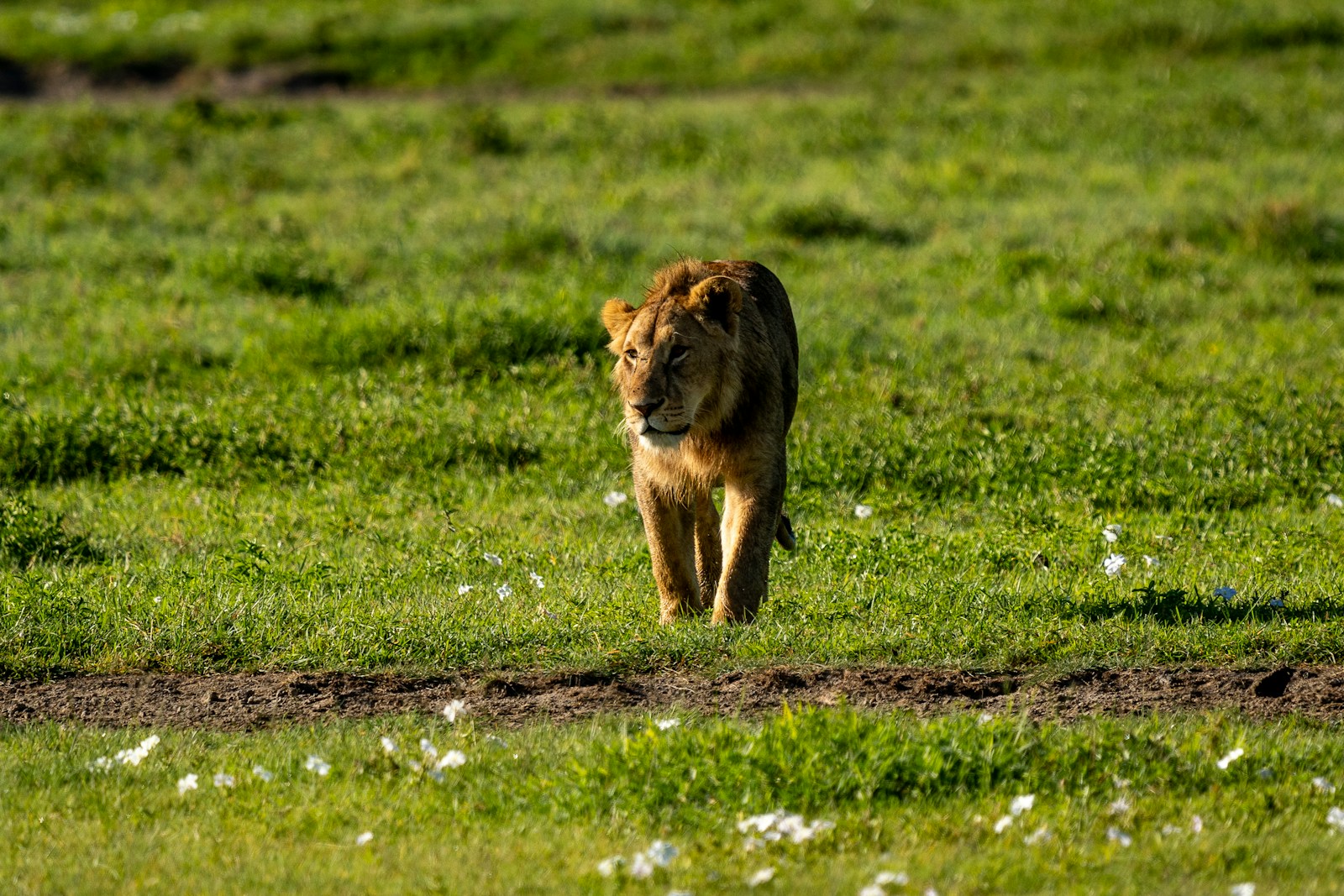
Ruaha is especially famous for predators, including lions.
Watching a pride resting beneath trees, moving across open terrain, or preparing for an evening hunt can become one of the highlights of a safari.
Elephants are another iconic part of the Ruaha experience.
They may appear around rivers, woodland, and water sources. Family groups can sometimes be observed feeding or moving through areas dominated by baobab trees.
Leopards are present but naturally more difficult to locate.
An experienced safari guide searches trees, rocky landscapes, riverine vegetation, and other suitable habitat for signs of leopard activity.
Ruaha is also known as an important landscape for African wild dogs.
These highly social predators can travel significant distances, so finding them requires both patience and luck.
Travelers may also encounter:
No wildlife sighting is guaranteed because animals move freely throughout their natural environment.
Although both destinations provide excellent wildlife experiences, they feel dramatically different.
| Feature | Ngorongoro Crater | Ruaha National Park |
|---|---|---|
| Landscape | Volcanic caldera | Vast wilderness |
| Wildlife density | Very high | Widely distributed |
| Safari style | Concentrated game viewing | Exploratory wilderness safari |
| Crowds | Can be busy | Generally quieter |
| Predators | Excellent | Excellent |
| Elephants | Present | Major attraction |
| Rhino possibility | Yes | Not a primary attraction |
| Photography | Excellent | Excellent |
| Best for | First-time safari visitors | Wilderness enthusiasts |
For many travelers, this contrast is exactly what makes the combination worthwhile.
The itinerary can be customized according to your travel dates, budget, preferred accommodation category, and arrival/departure airports.
Arrive at Kilimanjaro International Airport or Arusha Airport.
Meet your representative and transfer to your accommodation in Arusha.
Depending on your arrival time, spend the remainder of the day relaxing and preparing for the safari.
Overnight: Arusha
After breakfast, meet your professional safari guide and begin your journey toward the Ngorongoro Conservation Area.
The drive introduces you to the landscapes of northern Tanzania.
Depending on the final itinerary, stops can be arranged along the route.
Arrive at your lodge or tented camp and enjoy the evening overlooking the surrounding highlands.
Meals: Breakfast, lunch and dinner
Overnight: Ngorongoro/Karatu area
Start early for one of the highlights of your Tanzania adventure.
After breakfast, drive toward the crater entrance and descend approximately 600 meters toward the crater floor.
Your guide begins searching for wildlife immediately.
Possible sightings include lions, buffaloes, elephants, zebras, wildebeest, hyenas, hippos, gazelles, and—if you are fortunate—a black rhino.
Enjoy lunch at an appropriate picnic area before continuing the afternoon game drive.
Later, ascend from the crater and return to your accommodation.
Meals: Breakfast, lunch and dinner
Overnight: Ngorongoro/Karatu area
After breakfast, begin your onward journey toward Ruaha.
Because Ngorongoro and Ruaha are separated by considerable distance, the most comfortable itinerary may involve a combination of road and domestic air travel.
Flights can reduce transfer time significantly and make the overall itinerary more relaxing.
Upon reaching Ruaha, meet your safari guide and continue to your lodge or tented camp.
The first views of Ruaha immediately reveal how different it is from Ngorongoro.
Meals: Breakfast, lunch and dinner
Overnight: Ruaha National Park
Wake early and prepare for a full day exploring Ruaha National Park.
Morning hours are often excellent for wildlife activity.
Your guide may explore river areas, woodland, open plains, and known wildlife corridors depending on current conditions.
Search for lions, elephants, buffaloes, giraffes, antelopes, leopards, wild dogs, and other animals.
Enjoy lunch before continuing your afternoon game drive.
Return to camp in the evening for dinner and relaxation.
Meals: Breakfast, lunch and dinner
Overnight: Ruaha National Park
Spend another full day exploring Ruaha.
Having at least two full safari days here is valuable because of the park's enormous size.
Rather than rushing between destinations, you can spend longer observing interesting animal behavior.
Photographers can also use the additional time to wait for better lighting, positioning, or wildlife activity.
Return to your accommodation after another memorable day.
Meals: Breakfast, lunch and dinner
Overnight: Ruaha National Park
Enjoy breakfast before beginning your onward journey.
Depending on your international travel arrangements, you can fly from the Ruaha region toward Dar es Salaam or connect with onward transportation toward Arusha.
The safari can also be extended to Zanzibar for a beach holiday.
The safari can be arranged throughout much of the year, although conditions change significantly between seasons.
This is generally the dry season and an excellent period for wildlife viewing.
In Ruaha, animals increasingly concentrate around dependable water sources as the landscape becomes drier.
Vegetation can also become thinner, potentially making animals easier to locate.
Ngorongoro remains productive throughout this period.
Travelers should expect cooler conditions around the crater rim, particularly early in the morning and at night.
The landscapes become greener as seasonal rains arrive.
This can be an excellent period for photographers because vegetation is lush and skies can become dramatic.
Birdwatching is also rewarding.
Wildlife remains present, although animals in Ruaha may become more dispersed when water is widely available.
These months commonly correspond with Tanzania's heavier rainy period.
Travel can still be possible, but road conditions and accessibility should be considered carefully.
Some camps may operate seasonally.
For a combined Ngorongoro and Ruaha safari, 6–9 days is generally more comfortable than attempting both destinations in a very short itinerary.
A seven-day itinerary provides a useful starting point.
Travelers with additional time can add:
A longer safari also gives photographers and wildlife enthusiasts more time in each destination.
The total cost depends on how the safari is designed.
Important pricing factors include:
Private safari vehicle and guide costs are divided among the travelers in your booking.
For this reason, the per-person cost can often decrease when more people travel together.
Accommodation has a major impact on the final safari price.
Options generally include:
Budget: Simple accommodation or camping designed for travelers prioritizing value.
Mid-range: Comfortable lodges and tented camps offering private facilities and good locations.
Luxury: High-quality lodges and camps offering premium rooms, dining, locations, and personalized service.
Flying between regions costs more than traveling exclusively by road, but it can save substantial travel time.
For a Ngorongoro and Ruaha combination, flights are particularly worth considering.
High-season accommodation and flights can cost more because demand is higher.
Booking early is recommended for travelers visiting during popular safari months.
A private safari provides greater flexibility.
You have your own safari vehicle and guide, making it easier to control departure times and spend longer at interesting sightings.
Depending on the package selected, your safari can include:
Always review your final quotation because inclusions vary according to the specific itinerary.
Items commonly excluded include:
Accommodation can dramatically change the overall safari experience.
Mid-range accommodation is ideal for travelers seeking comfort without choosing premium luxury properties.
You can expect comfortable rooms or permanent safari tents, private bathrooms, meals, and attractive locations.
Luxury itineraries emphasize premium locations, high service levels, spacious accommodation, quality dining, and additional comfort.
Luxury tented camps can provide an immersive wilderness experience while maintaining high standards.
Camping can be arranged for adventurous travelers.
It creates a stronger connection with the surrounding wilderness while keeping the safari more budget-conscious.
Yes.
Ngorongoro and Ruaha can create an exceptional Tanzania honeymoon because the destinations combine iconic wildlife with secluded wilderness.
Ruaha is especially attractive for couples seeking privacy and quieter safari surroundings.
A honeymoon itinerary can be customized with:
Adding Zanzibar after the safari creates a popular bush-and-beach honeymoon.
This combination is excellent for photographers.
Ngorongoro provides opportunities to photograph multiple wildlife species against the dramatic crater landscape.
Ruaha provides a completely different visual character.
Baobab trees, dry riverbeds, elephants, predators, open wilderness, and dramatic seasonal landscapes create excellent photographic possibilities.
A private vehicle is particularly valuable for serious photographers because it provides more control over positioning and time spent at sightings.
Safari travelers should prioritize lightweight and practical clothing.
Recommended items include:
The Ngorongoro highlands can become surprisingly cold, particularly early in the morning.
Always pack at least one warm layer.
Yes.
A Zanzibar extension is one of the best ways to finish this safari.
After several days of early game drives and wilderness exploration, travelers can relax beside the Indian Ocean.
A Zanzibar extension can include:
This creates a complete Tanzania safari and beach holiday.
A private safari is particularly suitable for this itinerary because the destinations are far apart and travelers benefit from flexibility.
With a private safari, you can adjust the itinerary according to your interests.
For example, photographers may want longer game drives while honeymooners may prefer a slower schedule and luxury accommodation.
Families may prefer shorter driving periods and camps with family-friendly facilities.
Your safari can therefore be designed around your own travel style rather than following a fixed group schedule.
For most Tanzania safari travelers, yes.
The crater combines scenery, wildlife diversity, and geological significance in one destination.
Its main disadvantage is popularity. During peak travel periods, several vehicles can gather around major wildlife sightings.
Starting early can improve the experience.
Ruaha provides the perfect contrast because it is considerably more remote and spacious.
Ruaha is highly worthwhile for travelers who value wilderness.
It may not provide the same concentrated wildlife viewing as Ngorongoro because animals are spread across a much larger area.
That is part of its appeal.
Game drives feel exploratory.
You search for wildlife rather than simply moving between known crowded sightings.
The combination of predators, elephants, baobabs, rivers, birdlife, and expansive landscapes makes Ruaha one of Tanzania's most distinctive safari destinations.
Yes.
Families can visit both destinations, but itinerary design should consider the children's ages and tolerance for long transfers.
Flying between regions can significantly reduce driving time.
Family-friendly lodges can also be selected.
Parents should provide children's ages when requesting a quotation because park fees, accommodation policies, and pricing can differ according to age.
A Ngorongoro Crater safari Ruaha travel guide is more than a route between two national attractions. It is an opportunity to experience two contrasting sides of Tanzania.
Begin with the dramatic Ngorongoro highlands and descend into a wildlife-rich volcanic crater.
Then continue south toward the enormous wilderness of Ruaha, where elephants move beneath baobabs and predators roam across remote landscapes.
Whether you are planning a honeymoon, photography safari, family adventure, private wildlife tour, or safari-and-Zanzibar holiday, the itinerary can be customized according to your travel dates, budget, and preferred accommodation.
For the best experience, plan enough time for both destinations and consider domestic flights where they reduce unnecessary road travel.
Request a customized Ngorongoro Crater and Ruaha safari itinerary based on your travel dates, number of travelers, accommodation preference, and budget.
Planning a budget Ngorongoro Crater safari holiday from Arusha? Compare a crater day trip, a two-day Tarangire and Ngorongoro safari, or a…
Read articleA Lake Manyara safari can cost USD 150–220 per person for a shared day trip from Arusha. A published example of a…
Read articleA Tanzania safari from Zanzibar can mean a short mainland trip during your beach holiday or a complete package with flights, game…
Read articleLooking for a group Tanzania safari price from Kilipath African Safaris? A published example for our four-day shared camping safari through Tarangire,…
Read article

