Skip to content

A Nyerere National Park safari Ruaha holiday is one of the most rewarding ways to experience Tanzania beyond the country’s famous northern safari circuit. Combining these two remarkable parks gives travelers an opportunity to discover enormous wilderness areas, rivers, baobab landscapes, predators, elephants, colorful birdlife, and a quieter style of safari.
Nyerere National Park offers a particularly varied experience because visitors can combine traditional game drives with boat safaris along the Rufiji River and guided walking activities. Ruaha National Park, meanwhile, is known for dramatic baobab-covered landscapes, the Great Ruaha River and extensive wilderness where wildlife encounters often take place far from large concentrations of safari vehicles.
Together, these destinations create an excellent southern Tanzania safari for wildlife lovers, photographers, couples, honeymooners and travelers looking for a more remote African adventure.
Why Choose a Nyerere National Park Safari Ruaha Holiday?
Tanzania has several world-famous safari destinations, but its southern parks offer a different atmosphere.
Nyerere and Ruaha are particularly appealing for travelers who want to spend more time observing wildlife without feeling rushed. Their vast landscapes provide a strong sense of wilderness while offering different ecosystems within the same holiday.
A combined safari can include:
- Traditional 4×4 game drives
- Rufiji River boat safaris
- Guided walking safaris
- Wildlife photography
- Birdwatching
- River and woodland landscapes
- Predator viewing
- Remote tented camps and safari lodges
- Bush breakfasts or sundowner experiences where offered
Instead of simply visiting two similar parks, travelers experience two contrasting safari environments.
Discovering Nyerere National Park
Nyerere National Park was created from part of the historic Selous landscape and protects an immense mixture of miombo woodland, grasslands, wetlands, floodplains and riverine habitats.
The Rufiji River is central to the park’s character. Its channels, lakes and sandbanks support elephants, buffalo, hippos, crocodiles and numerous birds, while predators inhabit the surrounding plains and woodland.
Wildlife in Nyerere National Park
Wildlife viewing can be excellent throughout the park’s safari areas. Travelers may encounter:
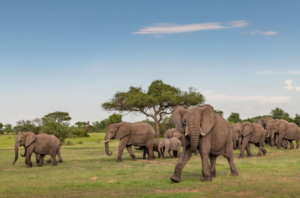
African elephants: Elephants are regularly seen moving through woodland and around water sources.
African wild dogs: Nyerere is regarded by TANAPA as an important East African stronghold for these endangered predators.
Lions: Lions occur throughout suitable habitats and can sometimes be observed around open plains and river areas.
Buffalo: Large groups can be found around productive grazing and water areas.
Hippos and crocodiles: The Rufiji ecosystem provides ideal habitat for both species.
Giraffes and antelopes: Giraffe, impala, waterbuck, sable and other herbivores contribute to excellent game viewing.
Nyerere also has more than 430 recorded bird species, including kingfishers, fish eagles, bee-eaters and wetland birds.
The Special Experience of a Rufiji River Boat Safari
One feature that helps distinguish a Nyerere National Park safari Ruaha holiday from many other Tanzania itineraries is the chance to experience wildlife from the water.
Boat safaris operate around the Rufiji River system, providing an entirely different perspective from a safari vehicle.
From the boat, guests may watch hippos surfacing, crocodiles resting near the banks, elephants approaching the water and fish eagles flying overhead.
Sunset boat trips can also be especially beautiful as the light changes across the river.
Visitors should always use authorized operators, wear provided lifejackets and follow guide instructions during river activities.
Exploring Ruaha National Park
After the waterways and floodplains of Nyerere, Ruaha introduces travelers to another side of Tanzania.
Ruaha National Park covers approximately 20,226 square kilometers, making it Tanzania’s second-largest national park according to TANAPA. Its landscape includes baobab-studded savannah, rocky formations, broad miombo woodland and river systems including the Great Ruaha, Mwagusi, Mdonya and Jongomero.
The park’s remote location contributes to its wilderness atmosphere.
Wildlife in Ruaha
Ruaha is particularly interesting because East African and southern African species occur within the wider ecosystem.
Wildlife travelers may search for:
- Elephants
- Lions
- Leopards
- Cheetahs
- African wild dogs
- Buffalo
- Greater kudu
- Sable antelope
- Roan antelope
- Hippos
- Crocodiles
- Giraffes
- Numerous smaller mammals
TANAPA highlights Ruaha’s large lion populations as well as leopard, cheetah, spotted hyena and wild dogs.
Greater kudu are another signature species of the park.
The Great Ruaha River
The Great Ruaha River is one of the park’s major ecological features.
During the drier months, permanent pools and river systems become increasingly important for wildlife. Elephants, buffalo, antelope and predators may concentrate around available water, creating excellent opportunities for safari viewing and photography.
The river environment also supports crocodiles, hippos and abundant birdlife.
Watching elephants approach a riverbed while lions rest nearby and giraffes move through distant woodland captures the wilderness atmosphere that makes Ruaha special.
Birdwatching in Nyerere and Ruaha
A Nyerere National Park safari Ruaha holiday is not only about big mammals.
Both parks are outstanding birding destinations.
Nyerere has more than 430 recorded bird species associated with woodland, wetland and river habitats.
Ruaha is even more diverse, with TANAPA reporting more than 570 recorded species.
Travelers may encounter:
- Kingfishers
- Bee-eaters
- Fish eagles
- Hornbills
- Rollers
- Raptors
- Herons
- Egrets
- Storks
- Seasonal migrant species
Even travelers who arrive with little interest in birdwatching often become fascinated by the variety seen during a southern Tanzania safari.
Nyerere vs Ruaha: What Is the Difference?
Although both belong to Tanzania’s southern safari region, their experiences are noticeably different.
| Nyerere National Park | Ruaha National Park |
|---|---|
| Famous for the Rufiji River | Famous for the Great Ruaha River |
| Boat safaris available | Strong focus on land-based wilderness safaris |
| Floodplains and wetlands | Baobabs, dry savannah and miombo |
| Excellent hippo and crocodile viewing | Excellent dry-season wildlife concentrations |
| Stronghold for African wild dogs | Famous predator country |
| Game drives and walking safaris | Game drives and guided walking activities |
| Rich river birdlife | 570+ recorded bird species |
Combining both parks therefore provides much greater variety than spending an entire holiday in one ecosystem.
Suggested Nyerere and Ruaha Safari Itinerary
A combined trip normally works best when travelers allow approximately 7–10 days, depending on flights, accommodation and the number of safari activities desired.
Day 1: Arrive in Tanzania
Arrive in Dar es Salaam and relax before starting your southern Tanzania adventure.
Day 2: Travel to Nyerere National Park
Fly or travel overland toward Nyerere.
After arriving, settle into your lodge or tented camp. Depending on timing, an afternoon activity may be possible.
Day 3: Nyerere Game Drive
Spend the day exploring woodland, plains and wildlife areas by safari vehicle.
Look for elephants, giraffes, buffalo, lions, antelope and African wild dogs.
Day 4: Boat Safari and Game Viewing
Combine another game drive with a Rufiji River boat experience.
Watch for hippos, crocodiles and birds while enjoying a different perspective on the park.
Day 5: Nyerere to Ruaha
Travel onward to Ruaha, often most conveniently by scheduled or charter flight depending on the itinerary.
Day 6: Full-Day Ruaha Safari
Explore the Great Ruaha River region and surrounding wildlife areas.
Search for elephants, lions, buffalo, kudu and other wildlife.
Day 7: Explore Ruaha
Enjoy another game drive, photography safari or pre-arranged guided walking experience.
Day 8: Departure
Fly onward toward Dar es Salaam, Zanzibar or your next Tanzania destination.
Travelers with additional time can add extra nights in both parks, especially when wildlife photography is a priority.
Best Time for a Nyerere National Park Safari Ruaha Holiday
Both destinations can be visited during different periods of the year, but conditions change seasonally.
June to October
This period is popular because conditions are generally drier.
As natural water sources decrease, wildlife frequently gathers around rivers and remaining pools. In Ruaha, dry-season concentrations around river systems can be particularly impressive.
These months are excellent for:
- Predator viewing
- Elephant sightings
- Game drives
- Photography
- Comfortable safari travel
Peak safari months can also mean greater demand for good camps, so advance booking is recommended.
November to March
Landscapes become greener with seasonal rains.
This period can appeal to birdwatchers and photographers who prefer lush surroundings and dramatic skies.
Wettest Periods
Heavy rain can affect some roads and accessibility. TANAPA recommends 4×4 vehicles for both destinations, particularly when traveling during rainy conditions.
How to Get to Nyerere National Park
Nyerere can be accessed by both road and air.
Road access is possible from Dar es Salaam through routes including Kibiti and Utete, depending on the chosen park gate.
Scheduled and charter flights also serve airstrips including Mtemere and Kiba.
Flying is particularly attractive for travelers with limited holiday time because it allows more of the itinerary to be spent on actual safari activities.
How to Reach Ruaha National Park
Ruaha lies west of Iringa in south-central Tanzania.
By road, TANAPA indicates that journeys from Iringa typically take approximately 2–3½ hours, although road conditions and seasonal weather can affect travel times.
Scheduled and charter flights operate to airstrips such as Msembe and Jongomero.
For a combined Nyerere and Ruaha holiday, flying between destinations can greatly reduce travel time.
Accommodation Options
Southern Tanzania offers everything from relatively simple safari camps to high-end wilderness lodges.
Tented Safari Camps
These provide a classic safari atmosphere while usually offering beds, private bathrooms and dining facilities depending on the property.
Safari Lodges
Lodges may provide additional facilities and more permanent structures while retaining excellent access to wildlife areas.
Camping
Public and special campsites are available in both destinations for travelers looking for a more adventurous safari experience.
Accommodation should be chosen according to budget, location, season and preferred safari style rather than price alone.
What to Pack
For a comfortable Nyerere National Park safari Ruaha holiday, consider bringing:
- Lightweight neutral-colored clothing
- Comfortable closed walking shoes
- Hat and sunglasses
- Sunscreen
- Insect repellent
- Light jacket for early mornings
- Camera and spare batteries
- Binoculars
- Reusable water bottle
- Small day bag
- Personal medication
- Power bank
For guided walking safaris, sturdy shoes and neutral clothing are particularly useful.
Who Should Choose This Safari?
A Nyerere and Ruaha combination is especially suitable for travelers who appreciate nature, photography and wilderness.
Couples and Honeymooners
River sunsets, small safari camps and quiet wilderness settings can create a romantic safari atmosphere.
Wildlife Photographers
Longer sightings with fewer vehicles can provide excellent photographic opportunities.
Repeat Safari Travelers
Visitors who have already explored Serengeti, Ngorongoro or Tarangire may enjoy discovering a very different side of Tanzania.
Birdwatchers
With hundreds of species across both ecosystems, the combination offers exceptional birding opportunities.
Adventure Travelers
Walking safaris, boat experiences and remote camps make the southern circuit particularly appealing to travelers wanting more than vehicle-based game drives.
Responsible Safari Travel
Visitors play an important role in protecting Tanzania’s wildlife.
Always follow park regulations and instructions from professional guides and rangers. Maintain appropriate distances from animals, never feed wildlife and avoid disturbing animals simply to obtain photographs.
Stay on approved tracks and only leave vehicles in designated areas or during authorized walking activities.
Choosing responsible operators and accommodation providers also supports long-term conservation and local employment.
Plan Your Nyerere National Park Safari Ruaha Holiday
A Nyerere National Park safari Ruaha holiday combines two of Tanzania’s most impressive wilderness destinations into one journey. Nyerere delivers the waterways of the Rufiji, boat safaris, wild dogs and diverse river habitats, while Ruaha brings huge landscapes, baobabs, powerful predator viewing and the Great Ruaha River.
For travelers wanting to move beyond the busiest safari routes and experience a quieter, more varied side of Tanzania, this combination deserves serious consideration.
Kilipath African Safaris can arrange a personalized southern Tanzania itinerary with private transportation, domestic flights, professional safari guides, carefully selected accommodation and extensions to Zanzibar, Dar es Salaam or other Tanzania destinations.
Contact Kilipath African Safaris today and start planning your Nyerere and Ruaha safari adventure.