

Lake Manyara vs. Nyerere Safari Prices | Tanzania Guide
A Lake Manyara safari can cost USD 150–220 per person for a shared day trip from Arusha. A published example of a…
Read articleArusha City - Tanzania
Safari & Travel Tips
August 26, 2026 · 16 min read
A Nyerere National Park safari Southern Circuit experience offers something remarkably different from Tanzania’s busier northern safari routes. Instead of following crowded safari vehicles between well-known sightings, travelers can explore vast wilderness areas, enjoy peaceful boat safaris on the Rufiji River, and encounter wildlife in an environment that still feels remote and untouched.
Formerly part of the Selous Game Reserve, Nyerere National Park is one of Tanzania’s largest and most impressive protected areas. Its landscapes include open grasslands, miombo woodlands, wetlands, lakes, river channels, and palm-lined riverbanks. These varied habitats support elephants, lions, giraffes, buffaloes, hippos, crocodiles, wild dogs, and hundreds of bird species.
Whether you are planning a short fly-in safari from Zanzibar, combining Nyerere with Ruaha National Park, or arranging a longer Southern Circuit adventure, this guide explains what to expect, when to travel, where to stay, and how to create a rewarding itinerary.
| Safari detail | Information |
|---|---|
| Location | Southern Tanzania |
| Main gateway | Dar es Salaam |
| Popular access | Road transfer or scheduled flight |
| Best-known feature | Rufiji River and boat safaris |
| Recommended stay | 2–4 nights |
| Best time for wildlife | June to October |
| Green season | November to May |
| Safari activities | Game drives, boat safaris and walking safaris |
| Suitable for | Couples, families, photographers and repeat safari travelers |
| Popular combinations | Mikumi, Ruaha, Udzungwa, Mafia Island and Zanzibar |
The greatest attraction of a Nyerere National Park safari Southern Circuit experience is its diversity. Visitors are not limited to conventional game drives. Depending on the camp, itinerary, season, and park regulations, a safari may include:
This variety gives travelers several ways to understand the ecosystem. During a game drive, you may follow lions across an open plain. On the river, you can observe hippos, crocodiles, waterbirds, and elephants coming to drink. A guided walking safari introduces smaller details such as tracks, plants, insects, and animal behavior.
Nyerere is especially suitable for travelers who value wilderness, privacy, varied activities, and a slower safari atmosphere.
Nyerere National Park is situated in southern Tanzania. It forms an important part of the country’s Southern Safari Circuit and is commonly accessed from Dar es Salaam.
The park was established from the northern section of the former Selous Game Reserve and was named after Julius Nyerere, Tanzania’s first president. The wider Selous ecosystem remains enormous, with landscapes stretching across a substantial portion of southern Tanzania.
The Rufiji River is the park’s dominant geographical feature. It creates channels, sandbanks, lagoons, and lakes that provide water throughout much of the year. These permanent water sources attract large numbers of animals, especially during the dry season.
Travelers often combine Nyerere with:
This makes it possible to create a complete holiday combining wildlife, landscapes, hiking, cultural experiences, and beach relaxation.
Nyerere supports an impressive collection of African wildlife. Although sightings can never be guaranteed in a natural wilderness area, the park provides opportunities to see both familiar safari animals and less commonly encountered species.
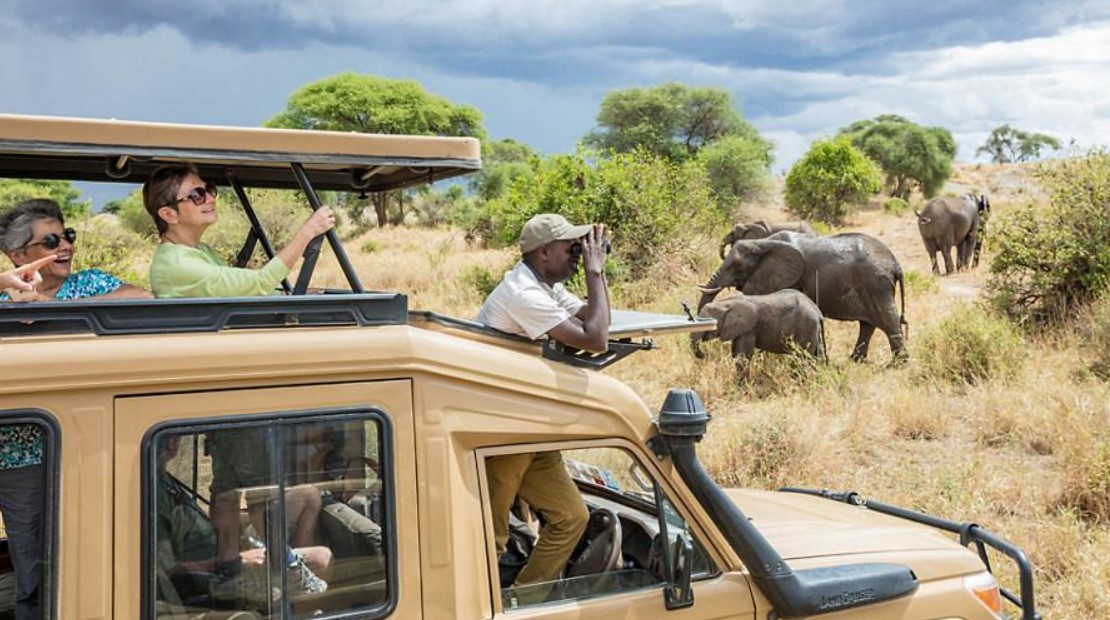
Elephants are among the most memorable animals in Nyerere. They may be seen moving through woodland, feeding beside the road, or approaching lakes and the Rufiji River to drink.
Watching a herd interact is one of the highlights of a Southern Circuit safari. Young calves remain close to their mothers, while older elephants use their trunks to collect grass, leaves, branches, and water.
Nyerere has a healthy lion population. Prides may be encountered near water, resting beneath trees, crossing open areas, or watching herds of herbivores.
Morning and late-afternoon game drives are particularly rewarding because lions are usually more active during the cooler parts of the day.
The African wild dog is one of the continent’s most endangered large carnivores. Nyerere and the wider Selous ecosystem are important strongholds for this rare species.
Seeing wild dogs is never guaranteed because packs travel over large territories. However, the possibility of encountering them is one reason wildlife enthusiasts choose the Southern Circuit.
African buffaloes are frequently found near water and in areas with good grazing. Herds can range from small groups to large gatherings, particularly during the dry season.
Old solitary bulls may remain in muddy or shaded areas and should always be observed carefully from a safe distance.
The park’s grasslands and woodland support giraffes, zebras, wildebeest, impalas, waterbucks, greater kudus, elands and other antelope species.
Giraffes are especially beautiful against Nyerere’s varied landscape. Waterbucks are commonly associated with riverine environments, while greater kudus prefer thicker woodland.
The Rufiji River provides excellent habitat for hippos and Nile crocodiles. Boat safaris allow visitors to observe these animals from a different perspective.
Hippos spend much of the day in water to remain cool and usually leave the river at night to feed. Crocodiles can often be seen resting on sandbanks or floating almost invisibly near the river’s edge.
Leopards inhabit Nyerere, but their secretive behavior makes them difficult to find. They may be seen in trees, woodland, or areas close to riverine vegetation.
Cheetah sightings are less common and depend greatly on the location and conditions. Travelers should view any sighting of these elusive predators as a special bonus rather than an expectation.
A boat safari is one of the defining features of a Nyerere National Park safari Southern Circuit experience.
Instead of viewing the ecosystem only from a vehicle, visitors travel along the Rufiji River and its connected lakes. The journey offers excellent opportunities to see:
Boat safaris are often scheduled during the late afternoon, when temperatures become more comfortable and the light is ideal for photography. The sunset across the water can be spectacular.
The experience is peaceful but exciting. Hippos surface around the boat, crocodiles rest on the banks, and fish eagles call from tall trees. The guide explains the river ecosystem, animal behavior, and the importance of water to the park’s wildlife.
The exact route, duration, and departure point depend on water levels, weather, accommodation location, and operating regulations.
Game drives remain the main activity for discovering the park’s larger animals. Safari vehicles explore plains, woodlands, riverbanks, lakes, and seasonal water channels.
A typical game-drive day may begin early in the morning. Early departures provide cooler weather and a better chance of observing predators before they settle into the shade.
Travelers may return to camp for lunch or enjoy a picnic meal inside the park. Afternoon drives usually continue until sunset or until the required park exit time.
Nyerere generally receives fewer safari vehicles than famous northern parks such as Serengeti. Sightings can therefore feel more relaxed and exclusive.
Because the park is enormous, animals may be distributed across a wide area. Successful wildlife viewing depends on seasonal movements, water availability, local knowledge, and communication between professional guides.
A good guide does more than locate animals. The guide interprets tracks, explains behavior, identifies birds, and positions the vehicle safely for observation and photography.
A guided walking safari introduces travelers to the smaller details that are easy to miss from a vehicle.
Depending on the program and accommodation, walks are normally led by a trained guide and accompanied by an authorized armed ranger. Safety instructions are provided before departure.
During the walk, participants may learn about:
A walking safari is not primarily about approaching large animals. Its purpose is to experience the environment carefully and understand how guides read the bush.
Travelers should wear comfortable closed shoes and neutral-colored clothing. Bright colors and strong fragrances are best avoided.
Walking activities may have age or health restrictions, so arrangements should be confirmed before booking.
Nyerere is an outstanding birdwatching destination, with hundreds of recorded species occupying its rivers, wetlands, woodland, and grasslands.
Visitors may encounter:
The green season is particularly attractive to birdwatchers because migratory species arrive and many resident birds display breeding plumage.
Boat safaris offer excellent opportunities for photographing waterbirds, while woodland game drives reveal hornbills, rollers, eagles, and smaller species.
Bring binoculars and a camera with a suitable zoom lens if bird photography is an important part of your trip.
Nyerere can be visited during different parts of the year, but each season creates a distinct experience.
The dry season is generally considered the best period for conventional wildlife viewing.
As surface water becomes limited, animals gather around the Rufiji River, lakes, and other reliable water sources. Vegetation becomes thinner, making animals easier to spot.
Advantages include:
This is also a popular travel period, so early reservations are recommended.
Short rains usually begin around November, transforming the landscape. Vegetation becomes greener, birds become active, and many animals give birth.
Advantages include:
Rain normally occurs in showers rather than continuously, although weather patterns are never completely predictable.
The long-rain season can bring heavy rainfall, difficult road conditions, and temporary closure of some camps.
Travel during this period requires careful planning. Availability of activities, accommodations, and flights should be confirmed before making arrangements.
The ideal duration depends on the traveler’s schedule and interests.
A two-day itinerary can work for travelers with limited time, particularly when flights are used. However, the experience may feel rushed because arrival and departure logistics reduce the available wildlife-viewing time.
Three days and two nights provide a balanced introduction. The itinerary can normally include game drives and a boat safari, subject to arrival times and lodge arrangements.
Four days and three nights allow more relaxed exploration. Travelers have additional time for different wildlife areas and may be able to add a walking safari.
A longer stay is suitable for wildlife photographers, birdwatchers, families seeking a slower pace, and travelers who want to combine several safari activities.
For a broader Southern Circuit experience, Nyerere can be paired with Ruaha or Mikumi rather than spending every night in one destination.
Depart from Dar es Salaam by road or scheduled flight. Upon arrival, meet your guide and continue to the selected camp or lodge.
After lunch and time to relax, enjoy an afternoon boat safari on the Rufiji River. Look for hippos, crocodiles, elephants, and waterbirds before watching the sunset.
Dinner and overnight near or inside the park.
After an early breakfast, depart for a full-day game drive with a picnic lunch.
Explore different habitats in search of lions, elephants, giraffes, buffaloes, wild dogs, zebras, antelopes, and birds. Your guide will choose the route according to recent sightings and seasonal wildlife movements.
Return to the accommodation in the late afternoon for dinner and overnight.
Depending on your departure schedule, enjoy a short morning game drive, a guided walk, or a relaxed breakfast.
Transfer to the airstrip for a flight to Dar es Salaam or Zanzibar, or begin the road journey to your next destination.
The final program depends on flight times, park regulations, and accommodation location.
Combining Nyerere with Ruaha creates one of Tanzania’s best Southern Circuit itineraries.
Nyerere is known for the Rufiji River, boat safaris, lakes, and diverse activities. Ruaha is famous for rugged landscapes, large elephant populations, predators, baobab trees, and an intense wilderness atmosphere.
A combined itinerary usually requires at least six or seven days, particularly when road transfers are involved. Scheduled bush flights reduce travel time and allow visitors to spend more hours on safari.
A typical program might include:
This option suits experienced safari travelers and visitors who prefer remote parks over heavily traveled routes.
A Nyerere safari from Zanzibar is a popular option for travelers who want to combine a beach holiday with wildlife.
Scheduled flights may connect Zanzibar with airstrips serving the Nyerere area. Flight schedules vary according to season, airline operations, and passenger demand.
A fly-in safari can be arranged for two, three, or four days. The package may include:
Travelers should confirm luggage restrictions before departure because light aircraft usually have stricter weight limits than international airlines. Soft-sided travel bags are often recommended.
Flight times should also be checked carefully because they determine which activities are possible on arrival and departure days.
Traveling by road is usually more affordable than flying, but it requires more time. Road conditions and journey duration vary with traffic, weather, route, and the exact location of the lodge.
The road journey offers a view of rural Tanzania and can be incorporated into a longer overland Southern Circuit itinerary.
A private vehicle provides flexibility for stops and departure timing. However, travelers should be prepared for a long drive and occasional rough sections, particularly during or after rainfall.
For a very short safari, flying may provide better value because it preserves more time for wildlife activities.
Nyerere offers accommodation at different comfort levels. The exact choice significantly influences the total safari price and daily experience.
Budget accommodations provide essential facilities and are suitable for adventurous travelers. Bathrooms may be private or shared, depending on the property.
Travelers should confirm whether the camp is inside the park, near an entrance, or farther away.
Mid-range camps normally offer furnished safari tents, proper beds, private bathrooms, meals, and personalized service.
These camps provide a comfortable connection to nature without reaching the price of luxury properties.
Luxury camps may feature spacious suites, elevated decks, premium dining, private plunge pools, exclusive activities, and highly personalized service.
Some are situated in remote areas with excellent access to wildlife and water-based activities.
Both options can work well, but there are important differences.
Accommodation inside the park may offer:
Accommodation outside the park may offer:
The best choice depends on the budget, itinerary, activities, and park-entry arrangements. Travelers should compare the complete package rather than judging only the nightly room rate.
The cost of a Nyerere safari varies considerably. Major factors include:
A private safari becomes more cost-effective when vehicle expenses are divided between several travelers. Solo travelers normally pay more because they carry a larger share of transport and room costs.
Fly-in packages are convenient but usually cost more than road safaris. Luxury camps can also increase the budget substantially.
When comparing quotations, check whether the price includes:
A low advertised price may exclude important charges that appear later.
Nyerere can be a wonderful family safari destination. Boat trips, animal tracking, and varied activities can make the experience engaging for children.
Families should nevertheless consider:
Children must always follow the instructions of guides and camp staff. Wild animals can move freely near many safari accommodations, so guests should not walk alone after dark.
A private safari is usually the most comfortable arrangement for families because the schedule can be adapted to the children’s energy and interests.
Pack lightly and choose practical clothing suitable for warm days, cooler mornings, boat trips, and dusty roads.
Recommended items include:
Avoid military-style camouflage clothing. Soft-sided luggage is preferable, especially when traveling on small aircraft.
Consult a qualified medical professional before traveling for current health recommendations. Depending on your itinerary and travel history, you may need advice about malaria prevention, vaccinations, sun protection, and travel insurance.
During the safari:
Comprehensive travel insurance should cover medical emergencies, evacuation, cancellation, and disruption.
Responsible tourism protects wildlife and benefits communities connected to conservation areas.
Travelers can contribute by:
Animal welfare should always take priority over photographs. Guides should never pressure, surround, or disturb wildlife simply to obtain a closer sighting.
Both parks offer rewarding safaris, but the experiences are different.
| Feature | Nyerere National Park | Serengeti National Park |
|---|---|---|
| Safari circuit | Southern Circuit | Northern Circuit |
| Signature feature | Rufiji River | Great Migration |
| Boat safaris | Major attraction | Generally not a standard activity |
| Visitor numbers | Usually lower | Higher in popular areas |
| Landscape | Rivers, lakes, woodland and plains | Open plains, kopjes and woodland |
| Wild dogs | Important habitat | Possible but less central to most itineraries |
| Popular access | Dar es Salaam or Zanzibar | Arusha, Kilimanjaro or regional airstrips |
| Best for | Variety, privacy and river experiences | Migration, big cats and classic plains |
Travelers do not necessarily need to choose one permanently. Those with enough time may visit the Northern Circuit on one trip and explore the Southern Circuit on another.
Nyerere provides excellent photographic variety. Boat safaris create opportunities for low-angle images of hippos, crocodiles, elephants, and birds. Game drives offer larger mammals and environmental portraits.
Useful advice includes:
Morning and late-afternoon light is generally softer and warmer than midday light.
A Nyerere National Park safari Southern Circuit experience combines traditional game drives with river exploration, guided walks, birdwatching, and peaceful wilderness.
The Rufiji River gives Nyerere a character unlike most other Tanzanian safari destinations. Hippos gather in the water, crocodiles rest on sandbanks, elephants visit the riverbanks, and fish eagles call from the trees. Away from the river, game drives reveal lions, buffaloes, giraffes, antelopes, and—with good fortune—African wild dogs.
For the best experience, allow at least three days, select accommodation according to its location as well as its comfort, and confirm all included activities before booking. Nyerere can be visited independently, reached on a short flight from Zanzibar, or combined with Ruaha for a complete Southern Circuit adventure.
A Lake Manyara safari can cost USD 150–220 per person for a shared day trip from Arusha. A published example of a…
Read articleA Nyerere Tanzania wildlife safari can take you from a woodland game drive in the morning to a boat on the Rufiji…
Read articlePlanning a Tanzania safari that combines Lake Manyara National Park and Nyerere National Park is an excellent way to experience the country's…
Read articleDiscover Tanzania’s untamed wilderness without exceeding your travel budget. A budget Ruaha safari adventure offers incredible wildlife encounters, spectacular landscapes, authentic African…
Read article

