Skip to content

Photography Lake Manyara Safari Adventure
A Photography Lake Manyara Safari Adventure offers photographers an opportunity to experience one of northern Tanzania’s most visually diverse safari destinations. Lake Manyara National Park combines lush groundwater forest, acacia woodland, open floodplains, wetlands, an alkaline lake and the impressive wall of the Great Rift Valley within a relatively compact area.
For photographers, this changing landscape is especially valuable. Instead of photographing wildlife against the same background throughout the day, you can capture elephants disappearing between green forest vegetation, giraffes standing against the escarpment, baboons moving through woodland, hippos surrounded by waterbirds and sweeping landscape photographs overlooking the lake.
Lake Manyara is also recognized for its elephants, rich birdlife and famous tree-climbing lions. Tanzania National Parks describes the park as having more than 400 recorded bird species and habitats ranging from groundwater forest to wetlands, woodland and floodplains.
At Kilipath African Safaris, a photography-focused safari can be planned differently from a standard sightseeing safari. More time can be spent patiently observing interesting subjects, positioning the safari vehicle for better light and allowing photographers enough time to wait for behavior rather than immediately driving to the next sighting.
Why Choose Lake Manyara for Wildlife Photography?
Lake Manyara may be smaller than destinations such as Serengeti National Park, but its variety makes it particularly rewarding for photography.
Within one safari drive you may move from shaded tropical-looking forest to open grassland and then toward wetlands overlooking the lake. Each habitat produces different photographic opportunities.
1. Excellent Elephant Photography
Elephants are among the most exciting animals to photograph in Lake Manyara.
You may encounter individuals, family groups or elephants feeding among woodland and forest vegetation. The greenery can create beautiful natural backgrounds, especially compared with the more open landscapes found elsewhere on Tanzania’s northern safari circuit.
Photographers can concentrate on details including:
- Elephant eyes and facial textures
- Tusks
- Mothers protecting calves
- Dust bathing
- Feeding behavior
- Trunks reaching for vegetation
- Family interaction
- Elephants walking through forest
- Wide-angle environmental portraits
Rather than simply trying to photograph the entire animal, experienced wildlife photographers often search for small behavioral details. An elephant’s trunk curling around a branch, a calf standing beneath its mother or an animal emerging through vegetation can sometimes create a stronger photograph than a straightforward portrait.
2. Search for Lake Manyara’s Tree-Climbing Lions
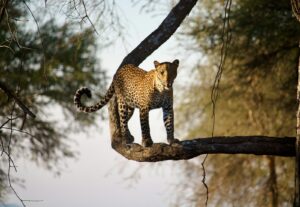
Lake Manyara is famous for its tree-climbing lions, which are one of the park’s signature attractions. TANAPA specifically promotes the park for this unusual lion behavior.
Finding them is never guaranteed because wildlife moves naturally, but encountering a lion resting along an acacia branch can create one of the most distinctive photographs from a Tanzania safari.
Photography possibilities can include:
Wide environmental compositions showing the entire tree and surrounding landscape.
Telephoto portraits concentrating on the lion’s face.
Behavioral images showing lions climbing, resting or interacting.
Low-angle compositions where road position permits a dramatic perspective.
Tree-climbing lions require patience. On a dedicated photography safari, there is less pressure to leave immediately after taking one photograph. When conditions allow, photographers can wait for the animal to change position, look toward the camera, yawn or descend.
3. Extraordinary Bird Photography
Lake Manyara is one of northern Tanzania’s outstanding birding locations.
TANAPA reports more than 400 bird species associated with the park and highlights flamingos, pelicans, fish eagles, spoonbills, storks, herons, bee-eaters and many other species.
This creates opportunities for both serious bird photographers and travelers who simply enjoy colorful wildlife.
Possible subjects include:
- Flamingos
- Pelicans
- African fish eagles
- Grey crowned cranes
- Storks
- Herons
- Hornbills
- Kingfishers
- Bee-eaters
- Cormorants
- Raptors
- Waterfowl
- Forest birds
The combination of wetlands, forest and woodland means photographic opportunities can change rapidly.
A long telephoto lens is particularly useful for smaller birds, while a medium telephoto lens can capture birds within their surrounding environment.
Photographing Flamingos at Lake Manyara
Flamingos are strongly associated with Lake Manyara, but their numbers are seasonal and variable rather than guaranteed every day of the year. TANAPA describes seasonal gatherings of lesser and greater flamingos on the alkaline lake.
This distinction is important when planning a photographic safari.
When large concentrations are present, photographers may create:
- Wide photographs showing pink bands across the lake
- Reflections on calm water
- Groups taking flight
- Feeding behavior
- Birds against the Rift Valley escarpment
- Minimalist landscape compositions
Even when flamingo numbers are lower, Lake Manyara remains productive for numerous other waterbirds.
The Landscapes of Lake Manyara
Wildlife is only part of the attraction.
Lake Manyara’s setting beneath the Great Rift Valley escarpment offers excellent landscape photography, particularly when atmospheric conditions are good.
The park contains several distinct ecosystems, including an alkaline lake, groundwater forest, wetlands, open floodplain, acacia woodland, hot springs and escarpment scenery.
This allows photographers to build a much broader visual story.
Groundwater Forest
Shortly after entering the park, visitors encounter thick groundwater forest fed by underground springs.
The tall trees, shadows, twisting branches and dense foliage are excellent for photographing:
- Baboons
- Blue monkeys
- Forest birds
- Elephants
- Bushbuck
- Atmospheric woodland scenes
Photography here can be challenging because light levels are lower than on open plains.
Increasing ISO slightly and using a wider aperture can help maintain sufficient shutter speed for moving wildlife.
Great Rift Valley Escarpment Photography
The western side of the park is dominated by the towering Rift Valley escarpment.
It provides a dramatic geographical background and helps distinguish Lake Manyara photographs from images captured elsewhere in northern Tanzania.
Possible compositions include giraffes beneath the escarpment, herds moving across the floodplain and wide panoramas combining lake, wildlife and cliffs.
When wildlife moves into the right position, photographers can deliberately use a shorter focal length to show the environment instead of filling the frame with the animal.
This approach tells a stronger story of where the photograph was taken.
Photographing Baboons and Monkeys
Lake Manyara’s primates are another major photographic subject.
Large troops of baboons can often provide fascinating opportunities because they display complex social behavior.
Rather than photographing only individual animals, watch for:
- Mothers carrying babies
- Grooming
- Youngsters playing
- Family interaction
- Dominance displays
- Baboons climbing trees
- Groups crossing the track
Blue monkeys may also be encountered within the forest.
The forest background can make their photographs especially attractive, although photographers may need higher ISO settings due to reduced light beneath the canopy.
Hippo Photography at Lake Manyara
Hippos and wetland areas provide additional opportunities.
TANAPA lists hippo pools and wetlands among Lake Manyara’s major attractions.
Hippos spend considerable time in water during daylight hours, so patience is valuable.
Instead of photographing only their heads above the water, wait for moments such as:
- Yawning
- Interaction between individuals
- Water splashing
- Birds resting near hippos
- Hippos entering or leaving water
- Reflections
- Groups resting together
Combining hippos with waterbirds can produce excellent environmental photographs.
Giraffes, Zebras, Buffalo and Other Wildlife
Lake Manyara supports much more than elephants and lions.
Wildlife commonly associated with the park includes giraffes, buffaloes, zebras, wildebeest and other species inhabiting woodland and floodplain environments.
Giraffes can be particularly photogenic when positioned against the Rift Valley wall.
Zebras provide opportunities for graphic photography because their patterns can create strong black-and-white compositions.
Buffalo can produce powerful portraits, especially when photographed with a long lens that emphasizes the horns, eyes and textured skin.
Wildlife sightings vary naturally, which is exactly what makes safari photography exciting.
Photography Safari Versus a Normal Safari
A standard safari is generally designed to show travelers as many attractions and animals as possible.
A Lake Manyara photography safari can be operated with a different priority.
The objective is not simply:
“We saw an elephant. Now let’s go.”
Instead, the approach is to consider:
Where is the light coming from?
Can we move slightly for a cleaner background?
Is the animal likely to approach?
Could interesting behavior happen?
Would waiting another fifteen minutes produce a better image?
Is another vehicle blocking the background?
Professional wildlife photography often involves waiting.
Five minutes at an excellent sighting may produce an ordinary photograph. Thirty minutes of patience might produce an unforgettable moment.
Safari Vehicle for Photography
Your safari vehicle plays an important role in wildlife photography.
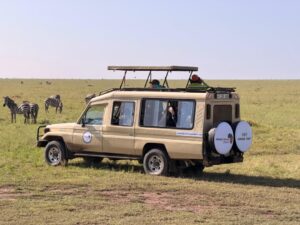
A private 4×4 safari Land Cruiser with a pop-up roof provides elevated viewing and allows photographers to shoot while remaining inside the vehicle where required.
For a dedicated photographic trip, fewer passengers per vehicle can make the experience significantly easier.
Photographers need space for:
- Camera bodies
- Telephoto lenses
- Camera bags
- Beanbags
- Batteries
- Memory cards
- Binoculars
Having additional room also makes it easier to move between different sides of the vehicle when wildlife changes position.
For serious photographers, a private safari is generally preferable to a large shared group because positioning and waiting time can be adjusted around photographic needs.
Recommended Camera Equipment
You do not need professional equipment to enjoy a Photography Lake Manyara Safari Adventure.
Modern smartphones and compact cameras can produce excellent landscape and close-range wildlife photographs.
However, interchangeable-lens cameras offer greater flexibility.
Useful Lens Setup
16–35mm or 24–70mm
Excellent for landscapes, safari vehicles, lodges and animals within their surroundings.
70–200mm
A very versatile safari lens for elephants, giraffes, larger mammals and environmental portraits.
100–400mm
One of the most practical focal ranges for Tanzania wildlife photography.
200–600mm or similar
Especially valuable for birds, distant animals and close wildlife portraits.
You do not necessarily need all of these.
For many travelers, a camera with a 100–400mm lens plus a smartphone for landscapes is already an excellent combination.
Bring Two Camera Bodies If Possible
Serious photographers may benefit from carrying two camera bodies.
For example:
Camera 1: 100–400mm lens
Camera 2: 24–70mm lens
Why?
Wildlife can approach unexpectedly.
If an elephant suddenly walks close to the vehicle while a 600mm lens is attached, you may not have enough time to change lenses.
Two bodies also reduce lens changes in dusty environments.
Camera Settings for Lake Manyara Wildlife
Settings depend on available light and subject movement, but several general principles can help.
Moving Wildlife
Consider approximately:
- Shutter speed: 1/1000 sec or faster
- Continuous autofocus
- Burst/continuous shooting
- Auto ISO where appropriate
Resting Wildlife
When an animal remains still, you may reduce shutter speed and ISO to obtain cleaner files.
Birds in Flight
Bird photography generally requires faster shutter speeds.
Around 1/1600–1/2500 sec can be a useful starting range depending on species, light and movement.
Elephant Portraits
Experiment with aperture.
A wider aperture can separate the animal from the background, while a smaller aperture can preserve more environmental detail.
Don’t Forget the Eyes
For wildlife portraits, sharp eyes often make the photograph.
When using modern autofocus systems, animal eye detection can be extremely useful.
When eye autofocus is unavailable, position the focus point around the eye or head rather than automatically focusing on the nearest part of the body.
This becomes particularly important when using telephoto lenses and shallow depth of field.
Best Light for Lake Manyara Photography
Wildlife photographers usually favor softer light.
Morning
Early morning can provide:
- Softer shadows
- Cooler atmospheric conditions
- Active animals
- Beautiful warm light
- Cleaner landscape contrast
Late Afternoon
Late afternoon often creates warm side lighting that can make elephants, giraffes and woodland scenes especially attractive.
Midday
Do not put the camera away simply because the sun is high.
Cloud cover can soften midday light, while shaded forest environments may remain productive throughout the day.
Strong light can also be deliberately used for high-contrast or backlit photography.
Backlighting Wildlife
Backlighting can transform ordinary sightings.
When an animal stands between the camera and low sunlight, edges of fur, dust or vegetation may glow.
Potential subjects include:
- Giraffes
- Baboons
- Elephants in dust
- Birds
- Zebra manes
Correct exposure is important because cameras can sometimes underexpose the animal when pointing toward bright backgrounds.
Best Time for a Photography Lake Manyara Safari Adventure
Lake Manyara can be visited year-round, and TANAPA describes the park as open throughout the year.
Different seasons offer different photographic advantages.
June to October – Drier Months
This period generally provides easier wildlife viewing as vegetation becomes less dense in many areas.
Photographers may appreciate:
- Better visibility
- Dry landscapes
- Easier animal spotting
- Pleasant safari conditions
It can also be a popular travel period.
November to May – Greener Landscapes
The wetter part of the year can provide striking photographic conditions.
Vegetation becomes greener and backgrounds become richer.
Bird photography can also be excellent.
Advantages can include:
- Lush scenery
- Dramatic clouds
- Rich landscape colors
- Excellent birdlife
- Attractive photography backgrounds
Rain should not automatically be considered negative for photographers.
Wet vegetation, dark skies and soft cloud-filtered light can produce highly atmospheric images.
Photography in the Rain
Many photographers initially worry about rainy conditions, but rain can create unusual safari photographs.
After rainfall:
- Vegetation looks saturated
- Dust disappears
- Clouds become dramatic
- Wildlife colors appear stronger
- Reflections may become more interesting
Always carry protective covers for camera bodies and telephoto lenses.
A simple waterproof camera cover can protect expensive equipment while allowing photography to continue.
Lake Manyara Canopy Walkway Photography
Lake Manyara also offers a canopy walkway near its groundwater forest.
TANAPA describes the walkway as approximately 370 meters long and reaching heights of around 18 meters, with viewing decks providing elevated views through the forest.
It offers a completely different perspective from photographing inside a safari vehicle.
Possible subjects include:
- Forest canopy
- Blue monkeys
- Baboons
- Butterflies
- Hornbills
- Visitors crossing suspended bridges
- Wide environmental photographs
Because the bridge can move as people walk, photographers should maintain sufficiently fast shutter speeds where possible.
Combine Lake Manyara With Other Photography Destinations
Lake Manyara works particularly well within a longer Tanzania photography safari.
TANAPA notes that the park lies on the northern safari circuit and is commonly combined with destinations such as Ngorongoro and Serengeti.
A strong itinerary might include:
Lake Manyara National Park
Forest, elephants, birds, primates and Rift Valley scenery.
Tarangire National Park
Elephants, baobab trees, predators and classic dry-season landscapes.
Serengeti National Park
Big cats, endless plains, migration photography and predator-prey behavior.
Ngorongoro Crater
Dense wildlife viewing within one of Africa’s most dramatic volcanic landscapes.
Each destination contributes different photographs, giving travelers a varied final portfolio instead of hundreds of images from identical environments.
Example 1-Day Lake Manyara Photography Safari
Early Morning – Depart Arusha
Your guide collects you from your hotel and begins the journey toward Lake Manyara.
Lake Manyara is approximately 125 km from Arusha, with driving commonly taking around two to two-and-a-half hours depending on conditions.
Photographers should have their primary camera ready before entering the park.
Wildlife encounters can begin quickly.
Morning – Groundwater Forest Photography
After entering Lake Manyara, explore the lush forest environment.
Watch for:
- Blue monkeys
- Baboons
- Elephants
- Bushbuck
- Forest birds
Morning light filtering through the trees can create particularly attractive photographs.
Late Morning – Woodland and Wildlife
Continue through acacia woodland toward more open habitats.
Look for giraffes, elephants, buffalo, zebra and possible predators.
If an exceptional photographic opportunity develops, your guide can allow more time rather than rushing onward.
Lunch
Stop at an authorized picnic area and enjoy lunch.
Keep cameras accessible because birds and scenery may still offer opportunities during breaks.
TANAPA advises visitors never to feed wildlife and to secure food from primates at picnic locations.
Afternoon – Lake and Wetlands
Continue toward wetland and lakeshore habitats.
Depending on water conditions and wildlife movement, possible subjects include:
- Hippos
- Flamingos
- Pelicans
- Storks
- Herons
- Buffalo
- Zebra
- Giraffes
Wide-angle compositions can include the lake and Rift Valley wall.
Late Afternoon – Final Photography and Return
Use the softer afternoon light for final wildlife and landscape photography before leaving the park and returning toward your accommodation.
2-Day Photography Lake Manyara Safari Adventure
For photographers who dislike rushing, two days can be preferable.
Day 1: Arusha – Lake Manyara
Enjoy an extensive game drive focusing on wildlife, landscapes, elephants, primates and bird photography.
Stay around Mto wa Mbu, Lake Manyara or Karatu.
Day 2: Lake Manyara Photography – Arusha
Return for another photographic session.
The advantage of a second day is significant: wildlife positions, weather and light change constantly.
An area that appeared quiet yesterday may contain elephants or lions the following morning.
Photography benefits tremendously from repetition and patience.
Ideal Travelers for This Safari
A Photography Lake Manyara Safari Adventure is particularly suitable for:
Professional photographers needing additional time at sightings.
Enthusiast photographers building an African wildlife portfolio.
Bird photographers interested in diverse species and wetland habitats.
Content creators producing travel photography and video.
Couples wanting a private scenic wildlife safari.
First-time safari travelers who want to learn wildlife photography.
Returning Tanzania visitors looking for a slower, photography-focused experience.
You don’t need to be an expert photographer.
Your safari can be adapted to your experience level.
Ethical Wildlife Photography
Getting the photograph should never come before wildlife welfare.
Lake Manyara National Park regulations require visitors to remain on designated roads and maintain responsible distances around animals and sensitive areas.
Responsible photography means:
- Never forcing wildlife to move for a photograph
- Never feeding animals
- Avoiding excessive noise
- Respecting bird nesting or roosting areas
- Keeping safe distance from elephants and hippos
- Following ranger and guide instructions
- Remaining on authorized tracks
- Never approaching lions on foot
- Avoiding unnecessary pressure from vehicles
A relaxed animal usually produces more natural photographs anyway.
What to Pack for Your Lake Manyara Photography Safari
For a comfortable photography safari, consider bringing:
- Camera body
- Backup camera if available
- Telephoto lens
- Wide-angle or standard zoom lens
- Spare batteries
- Multiple memory cards
- Lens cloth
- Dust blower
- Camera rain cover
- Beanbag
- Battery charger
- Power bank
- Sunglasses
- Hat
- Sunscreen
- Light jacket
- Comfortable neutral clothing
- Binoculars
- Refillable water bottle
TANAPA also recommends essentials such as drinking water, sun protection and insect repellent.
Why Private Safari Is Recommended for Photographers
If photography is your main objective, a private safari offers major benefits.
More Time at Sightings
If you find an exceptional lion, elephant or bird, you can wait instead of moving because another traveler wants to leave.
Better Vehicle Positioning
Your guide can consider light direction and photographic angles when safe and permitted.
More Equipment Space
Long lenses and camera bags require room.
Flexible Pace
Some photographers prefer fewer sightings but more quality time with each subject.
Easier Communication
You can tell the guide exactly what you are trying to photograph.
For example:
“I would like to wait until the elephant crosses into the open.”
or
“Could we position where the sun is behind us if possible?”
This cooperation between photographer and guide often makes an enormous difference.
Photograph the Story, Not Only the Animal
One common mistake on a first African safari is filling every frame with wildlife.
Close portraits are beautiful, but don’t forget environmental photographs.
A small elephant beneath the Rift Valley cliffs can sometimes say more about Lake Manyara than an extreme close-up of an elephant’s face.
Try creating a complete collection containing:
- Wide landscapes
- Environmental wildlife
- Animal portraits
- Behavioral moments
- Bird photographs
- Details
- Safari vehicle photographs
- Guide portraits
- Lodge photography
- Sunrise or sunset
- Human travel moments
Together, these photographs tell the story of the entire journey.
Why Book Your Photography Lake Manyara Safari Adventure With Kilipath African Safaris?
A successful wildlife photography safari requires more than transportation between wildlife sightings.
It requires patience, local knowledge, flexible planning and an understanding that photographers sometimes need to remain at one location longer than ordinary safari guests.
With Kilipath African Safaris, your Lake Manyara adventure can be designed around photography from the beginning.
You can request:
- Private 4×4 safari vehicle
- Experienced safari guide
- Flexible photography stops
- Longer wildlife viewing time
- Airport or hotel transfers
- Accommodation arrangements
- Hot lunch or packed safari meal depending on itinerary
- Drinking water
- Combination itineraries
- Serengeti extensions
- Ngorongoro Crater extensions
- Tarangire extensions
- Cultural experiences around Mto wa Mbu
- Custom itineraries for photographers
Whether you use a smartphone, mirrorless camera or professional telephoto setup, the objective remains the same: giving you enough opportunity to observe, wait and create meaningful images.
Book Your Photography Lake Manyara Safari Adventure
A Photography Lake Manyara Safari Adventure is much more than a game drive.
It is an opportunity to slow down and observe.
Wait for the elephant calf to emerge from behind its mother.
Watch a baboon family interact beneath the forest canopy.
Follow a fish eagle flying over the wetlands.
Search the branches for Lake Manyara’s legendary tree-climbing lions.
Photograph giraffes with the Great Rift Valley rising behind them.
Capture flamingos when seasonal conditions bring them to the lake.
And sometimes, simply put the camera down for a moment and enjoy being surrounded by one of Tanzania’s most distinctive landscapes.
Whether Lake Manyara is your only safari destination or part of a longer journey through Tarangire, Ngorongoro and Serengeti, a dedicated photography safari gives you the time and flexibility needed to return home with photographs that genuinely represent your experience.
Contact Kilipath African Safaris today to customize your Photography Lake Manyara Safari Adventure. Tell us your travel dates, number of travelers, preferred accommodation level and photography interests, and we can design a private Tanzania safari around the subjects you most want to capture.