If you are searching for a professional photography Ruaha safari company, Kilipath African Safaris can help you experience one of Tanzania’s most rewarding wildlife destinations with enough time, flexibility, and expert guiding to capture remarkable images.
Ruaha National Park is famous for dramatic landscapes, large elephant populations, predators, baobab trees, river systems, and uncrowded wilderness. For photographers, the biggest advantage of a Ruaha safari is often the sense of space. Instead of constantly competing with many safari vehicles around a wildlife sighting, you can enjoy a quieter environment where there is often more opportunity to position the vehicle carefully and wait for the right photographic moment.
Whether you are a professional wildlife photographer, an enthusiastic amateur, a couple traveling with cameras, or simply someone who wants beautiful photographs from Tanzania, we can organize a Ruaha photography safari according to your travel dates, budget, accommodation preferences, and photography goals.
Why Choose Ruaha for a Photography Safari?
Ruaha National Park offers a very different photography experience from Tanzania’s busier northern safari destinations.
The park combines open plains, rocky hills, seasonal rivers, woodland, enormous baobab trees, and remote wilderness. These environments provide photographers with a wide variety of backgrounds and lighting conditions.
During a Ruaha safari, photography opportunities may include:
- African elephants walking beneath baobab trees
- Lions resting near riverbeds
- Leopards moving through woodland
- Buffalo herds
- Greater kudu
- Giraffes
- Zebras
- Impalas
- Hippos
- Crocodiles
- Birds of prey
- Colorful smaller bird species
- Sunrise landscapes
- Sunset silhouettes
- Dusty wildlife scenes
- Predator behavior
- Wildlife interactions around water sources
Every safari is different because wildlife movements cannot be guaranteed. However, traveling with an experienced safari guide gives photographers a much better opportunity to understand animal behavior, choose productive wildlife areas, and spend sufficient time at promising sightings.
Kilipath African Safaris – Your Photography Ruaha Safari Company
A successful photographic safari requires more than simply driving through the national park.
Photography guests often need patience.
Sometimes the best photograph happens after waiting 20 or 30 minutes for an animal to move into better light. Sometimes photographers want to remain with a lion pride instead of immediately continuing toward another sighting.
Our private photography safaris can therefore be arranged with flexibility in mind.
With a private safari vehicle, you can discuss your photographic priorities directly with your guide.
You may want to spend additional time photographing elephants.
Another traveler may be interested primarily in predators.
Bird photographers may prefer slower driving while scanning trees, rivers, and woodland habitats.
Landscape photographers may prioritize sunrise and sunset locations.
Our goal is to organize the safari around your interests whenever park regulations and operating conditions allow.
Why Private Safaris Are Recommended for Photographers
For serious photography, we normally recommend a private safari rather than a shared safari.
A private safari gives you greater control over:
- Departure times
- Length of wildlife sightings
- Photography positioning
- Daily game-drive pace
- Rest stops
- Wildlife priorities
- Camera equipment space
- Window access
- Vehicle movement
On a shared safari, different guests may have different priorities.
One traveler might want to move quickly between attractions, while a photographer may prefer spending an hour watching a single leopard.
A private photographic safari removes much of that conflict.
Your safari becomes focused on your own experience.
Photography-Friendly Safari Vehicle
Your Ruaha photographic safari can be conducted in a 4×4 safari Land Cruiser with a pop-up roof designed for wildlife viewing.
The vehicle provides elevated viewing opportunities and allows photographers to shoot from different angles.
Depending on your group size and vehicle configuration, photographers can use windows and the open roof to capture wildlife images.
For dedicated photography trips, keeping the number of passengers low is highly recommended because camera equipment can require significant space.
A typical wildlife photography setup may include:
- Camera body
- Backup camera body
- Telephoto lens
- Wide-angle lens
- Batteries
- Memory cards
- Bean bag
- Camera backpack
- Laptop
- Charging equipment
Having fewer guests inside the vehicle gives everyone more freedom to move and respond quickly when wildlife changes position.
What Makes Ruaha Special for Wildlife Photography?
Large Wilderness Atmosphere
Ruaha offers photographers the feeling of being deep inside wild Africa.
The landscapes are expansive and beautifully rugged.
Baobab trees, rocky areas, rivers, grasslands, and woodland can all become important visual elements in your images.
This means you are not limited to tight wildlife portraits.
You can also produce environmental photographs showing animals within their natural habitat.
For example, instead of photographing only an elephant’s face, you may capture an elephant walking beneath an enormous baobab tree with dramatic clouds behind it.
These wider compositions help communicate the scale and atmosphere of Ruaha.
Elephant Photography
Ruaha is particularly well known for elephants.
Photographers may encounter individuals, breeding herds, and elephants moving toward water sources.
Elephants are excellent photographic subjects because their behavior changes constantly.
You may capture:
- Calves interacting with adults
- Elephants drinking
- Dust bathing
- Mud bathing
- Herds crossing roads
- Close-up portraits
- Silhouettes
- Elephants beneath baobabs
- Herds moving across open landscapes
A patient guide can help position the safari vehicle at an appropriate distance while respecting the animals.
Predator Photography
Predators are another major reason photographers visit Ruaha.
Lions are among the most sought-after subjects.
Depending on wildlife movements, you may encounter lions resting, walking, interacting with cubs, hunting, or gathering near water sources.
Leopard sightings are also possible.
Successful predator photography often requires patience.
Instead of immediately driving away when a predator appears inactive, photographers may choose to wait.
A sleeping lion can suddenly stand.
A leopard may begin walking.
A predator may interact with another animal.
Photography safaris allow more time for these moments.
Best Time for a Ruaha Photography Safari
Ruaha can offer interesting photography during different periods of the year, although conditions change significantly between wetter and drier months.
Dry Season Photography
The dry season is particularly popular for wildlife-focused photography.
As water becomes more limited, animals may concentrate around remaining water sources and river systems.
Vegetation can also become less dense in some areas, making wildlife easier to observe.
Photographers may encounter dramatic scenes involving dust, dry landscapes, large mammals, and predators.
Early mornings can offer beautiful soft light.
Late afternoons often provide warm golden light that works extremely well for wildlife portraits.
Green Season Photography
The greener months provide a completely different visual experience.
Landscapes become more colorful and vegetation becomes lush.
Cloud formations can produce dramatic skies.
Birdlife can also be rewarding.
Photographers interested in landscapes, birds, dramatic weather, and vibrant environmental images may enjoy this period.
Wildlife can sometimes be more dispersed, but the scenery may be spectacular.
Sunrise Photography in Ruaha
Early morning is one of the most productive periods for wildlife photography.
Temperatures are cooler, animals are often more active, and the light is softer.
Depending on your lodge, camp location, and park operating rules, your guide will organize departure times to maximize the available morning game-drive experience.
Morning photography may provide opportunities for:
- Predators moving after nighttime activity
- Elephants traveling toward water
- Backlit wildlife
- Silhouettes
- Birds becoming active
- Golden light across grasslands
- Atmospheric landscape images
Wildlife photographers should prepare their camera equipment before leaving the accommodation.
Check your batteries, memory cards, lens settings, and camera straps before starting the game drive.
When an unexpected wildlife moment happens, there may be very little time to prepare.
Golden-Hour Photography
The hour around sunrise and sunset can transform an ordinary wildlife scene into something exceptional.
Low-angle sunlight creates warmer colors, longer shadows, and softer contrast.
Your guide may try to position the vehicle with the light in mind whenever possible.
You can experiment with:
- Front lighting
- Side lighting
- Backlighting
- Silhouettes
- Dust illuminated by sunlight
Backlit elephants or giraffes can produce memorable photographs, especially when dust is suspended in the air.
Suggested 4-Day Ruaha Photography Safari
Day 1: Arrival and Transfer Toward Ruaha
Your Ruaha photography safari begins with pickup according to your agreed travel arrangements.
Depending on your starting point and selected package, transportation may involve driving or domestic flights.
After arrival in the Ruaha area, you will check into your accommodation and prepare for the safari experience.
If your timing allows, an afternoon game drive may be organized.
This first drive gives you an introduction to Ruaha’s landscapes and wildlife.
Keep your camera ready because sightings can begin immediately.
Dinner and overnight at your selected lodge, camp, or tented accommodation.
Day 2: Full-Day Ruaha Photography Safari
After breakfast or an early morning departure, begin a full photography-focused game drive.
Your guide will search for wildlife while considering lighting conditions and animal behavior.
Instead of rushing from one sighting to another, the day can be paced specifically for photography.
You may spend extra time around elephants, lions, giraffes, antelopes, birds, or other wildlife.
Lunch arrangements depend on the selected itinerary.
A packed lunch may allow you to remain inside the park for maximum photography time.
Continue photographing during the afternoon before returning to your accommodation for dinner and overnight.
Day 3: Full-Day Wildlife Photography
Today provides another full opportunity to explore Ruaha.
Photography improves significantly when travelers spend several days inside one ecosystem.
On the first day, you become familiar with the environment.
During following days, your guide may return to productive locations or search for animals seen previously.
Wildlife movements change constantly.
A riverbed that was quiet yesterday could contain elephants today.
A lion pride may move into a completely different area overnight.
You will continue exploring different habitats while searching for new photographic opportunities.
Dinner and overnight at your Ruaha accommodation.
Day 4: Final Game Drive and Departure
Enjoy a final morning photography experience depending on your departure schedule.
Morning light may offer one last opportunity for wildlife portraits and landscapes.
After the game drive, return for breakfast or continue toward your departure point according to the itinerary.
Your Kilipath African Safaris team can coordinate onward travel arrangements toward destinations such as Dar es Salaam, Zanzibar, Arusha, or another safari destination depending on your complete Tanzania itinerary.
Longer Ruaha Photography Safaris
Serious photographers may prefer five, six, or even seven days.
More time provides several advantages.
Wildlife photography depends heavily on patience and probability.
One day may produce excellent elephant sightings but few predators.
Another day may produce extraordinary lions.
Weather conditions also change.
Longer stays give photographers more chances to experience:
- Different lighting
- Predator activity
- Elephant interactions
- Wildlife near rivers
- Bird photography
- Sunrise opportunities
- Sunset opportunities
- Landscape photography
For professional photographers or travelers working on a specific wildlife portfolio, longer private itineraries are normally more productive.
Combining Ruaha With Other Southern Tanzania Parks
Ruaha can also be combined with other destinations to create a longer southern Tanzania safari.
Possible combinations may include Nyerere National Park and Mikumi National Park depending on your travel dates and logistics.
A multi-park photography safari gives you access to different ecosystems, scenery, and wildlife behavior.
For example, your itinerary could combine:
Ruaha + Nyerere
This combination provides contrasting landscapes and safari experiences.
Ruaha + Mikumi
This can be incorporated into some road-based southern Tanzania itineraries.
Ruaha + Zanzibar
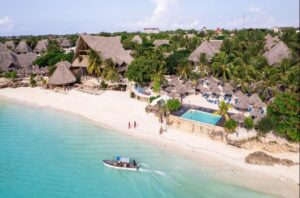
After several days of wildlife photography, you can continue to Zanzibar for beach relaxation, cultural experiences, and coastal photography.
Tell us how many days you have available and we can recommend the most practical route.
Ruaha Safari From Zanzibar
Many travelers visiting Tanzania combine Zanzibar with a safari.
A Ruaha photography safari can be incorporated into a Zanzibar holiday using domestic flights and ground transfers depending on available schedules.
A fly-in itinerary can significantly reduce long driving distances.
This is especially useful for photographers carrying expensive camera equipment and travelers with limited vacation time.
We can organize a complete package including:
- Domestic flight coordination
- Airport transfers
- Safari vehicle
- Professional guide
- Accommodation
- Meals according to itinerary
- National park fees
- Game drives
Your exact package will depend on travel dates, airline schedules, accommodation category, and number of travelers.
Ruaha Safari From Dar es Salaam
Dar es Salaam is another common starting point for southern Tanzania safaris.
Travelers can reach the Ruaha region using available domestic connections or a customized road itinerary.
For photographers, flying is often attractive because it saves time that can instead be spent inside the national park.
When requesting your quotation, provide your arrival and departure details so we can recommend the best route.
Ruaha Photography Safari Accommodation
Accommodation plays an important role in your safari experience.
Options may range from simpler safari camps to comfortable tented camps and higher-end properties.
Your choice depends on your budget and preferred comfort level.
Budget Safari
Budget-focused travelers can request simple accommodation options where available.
This allows more of the budget to be dedicated to game-drive time.
Mid-Range Safari
Mid-range tented camps and lodges provide a comfortable balance between safari atmosphere, privacy, meals, and cost.
This category is popular with couples and photography enthusiasts.
Luxury Photography Safari
Luxury properties can provide premium locations, personalized service, spacious rooms, and an enhanced wilderness experience.
They can be excellent for honeymooners, professional photographers, and travelers looking for additional comfort.
We can customize your package according to your preferred accommodation style.
What Camera Equipment Should You Bring?
You do not need professional equipment to enjoy photography in Ruaha.
Modern smartphones and compact cameras can capture excellent landscape and close wildlife photographs when animals are near the vehicle.
However, photographers using interchangeable-lens cameras may want to bring multiple focal lengths.
A useful photography kit might include:
- Camera body
- Backup body if available
- 100–400 mm telephoto lens
- 200–500 mm or similar wildlife lens
- 24–70 mm lens
- Wide-angle lens
- Extra batteries
- Multiple memory cards
- Lens-cleaning equipment
- Bean bag
- Camera backpack
- Laptop or storage drive
Very long lenses can be helpful for birds and distant wildlife.
Medium telephoto lenses are excellent for elephants, giraffes, lions, and animals approaching the vehicle.
Wide-angle lenses help capture landscapes, dramatic skies, and animals within their environment.
Protecting Your Camera Equipment
Safari conditions can become dusty.
Bring suitable protection for your cameras and lenses.
Useful items include:
- Dust-resistant camera bag
- Lens cloth
- Air blower
- Protective camera cover
- Zip bags or waterproof covers
- Extra lens caps
- Battery protection
- Memory-card case
Avoid unnecessary lens changes when the vehicle is moving through dusty areas.
If you use multiple camera bodies, keeping different lenses attached can reduce the need to change lenses frequently.
Charging Camera Batteries
Photography requires significant battery power.
Charging availability depends on your selected accommodation.
Many safari camps provide electricity or charging stations during specific periods.
We recommend bringing:
- Multiple camera batteries
- International travel adapter
- Power bank
- USB charging cable
- Portable storage device
Let us know in advance if charging equipment is especially important to your photography work so we can consider this when selecting accommodation.
Photography Tips for Ruaha
Use Fast Shutter Speeds for Moving Wildlife
Wildlife often moves unexpectedly.
A faster shutter speed helps freeze walking animals, birds, and predator action.
Watch the Background
A great wildlife photograph is not only about the animal.
Trees, vehicles, branches, and bright sky can distract from your subject.
Ask your guide to adjust the vehicle slightly when possible.
Changing position by only a few meters can dramatically improve a photograph.
Photograph Animal Behavior
Portraits are beautiful, but behavior creates storytelling images.
Look for:
- Elephants touching trunks
- Mothers with young
- Predators interacting
- Birds feeding
- Animals drinking
- Territorial displays
- Herd movement
These moments often become the most memorable images of the safari.
Be Patient
Patience is one of the most important wildlife-photography skills.
Animals operate according to their own schedules.
Sometimes waiting quietly produces better results than driving continuously searching for something new.
Keep Your Camera Ready
Wildlife encounters can happen suddenly.
Keep your camera within easy reach.
Avoid storing it deep inside your backpack during game drives.
Bird Photography in Ruaha
Ruaha is also rewarding for bird enthusiasts.
Photographers can search for birds around rivers, trees, woodland, grassland, and rocky environments.
Bird photography requires patience and usually longer lenses.
Tell your guide if birds are an important part of your trip.
Instead of driving past smaller species while searching only for mammals, your guide can dedicate additional attention to bird sightings.
This makes a significant difference for specialized bird photographers.
Landscape Photography
Ruaha should not be viewed only as a wildlife destination.
The landscape itself is extremely photogenic.
Baobab trees are among the park’s most recognizable subjects.
Photographers can create powerful compositions combining:
- Baobabs
- Wildlife
- Mountains
- Rivers
- Clouds
- Grasslands
- Sunrise
- Sunset
Environmental portraits often tell a stronger story than close wildlife portraits because they show where the animal lives.
Why Experienced Guiding Matters for Photographers
An experienced safari guide does much more than drive.
Good guides understand animal behavior.
They look at footprints, sounds, previous sightings, water availability, weather conditions, and other signs when searching for wildlife.
For photographers, positioning is equally important.
A guide needs to understand why you might prefer:
- Sun behind the vehicle
- A lower-angle view
- Clean background
- More distance from the animal
- More waiting time
- Slight repositioning
Before the safari begins, explain your photographic priorities to your guide.
Communication helps create a better safari.
Responsible Wildlife Photography
Wildlife always comes first.
We encourage photographers to respect animals and national park regulations.
A photograph is never worth unnecessarily disturbing wildlife.
Avoid asking drivers to approach animals too closely or behave in ways that interfere with natural behavior.
Responsible photography produces authentic images while helping protect Tanzania’s wildlife.
Who Should Book a Ruaha Photography Safari?
This safari is suitable for:
- Professional photographers
- Amateur wildlife photographers
- Content creators
- Travel bloggers
- Documentary photographers
- Bird photographers
- Wildlife enthusiasts
- Couples
- Solo travelers
- Honeymooners
- Small private groups
- Families interested in photography
You do not need advanced photography skills.
Your safari can simply focus on having enough time and space to take better pictures.
What Is Included in a Ruaha Photography Safari?
Exact inclusions depend on the selected package, but a typical Kilipath African Safaris package may include:
- Private 4×4 safari vehicle
- Professional English-speaking safari guide
- National park entry fees
- Game drives
- Accommodation according to itinerary
- Meals according to selected package
- Drinking water during safari
- Airport or agreed transfer services
- Government taxes and relevant safari fees specified in your quotation
Your final quotation will clearly explain all inclusions.
What Is Usually Not Included?
Unless specifically stated in your quotation, exclusions may include:
- International flights
- Tanzania visa
- Travel insurance
- Personal camera equipment
- Alcoholic drinks
- Personal shopping
- Laundry
- Tips
- Optional activities
- Additional nights outside the agreed itinerary
Always check your final itinerary and invoice for exact details.
How Much Does a Ruaha Photography Safari Cost?
The price of a Ruaha photography safari depends on several factors.
These include:
- Number of travelers
- Number of safari days
- Travel season
- Accommodation category
- Domestic flights
- Starting location
- Ending location
- Private or shared safari
- Additional destinations
Private safari prices become more economical per person when vehicle costs are divided between several travelers.
For an accurate quotation, send us:
- Travel dates
- Number of travelers
- Number of safari days
- Starting location
- Ending location
- Preferred accommodation level
- Whether you want domestic flights
- Your approximate budget
We can then prepare a customized package.
Photography Ruaha Safari for Couples
Ruaha is an excellent destination for couples who prefer quiet wilderness.
A private safari allows both travelers to have good viewing positions while still enjoying the journey together.
Couples can combine wildlife photography with comfortable accommodation, beautiful sunsets, private meals, and relaxing evenings at camp.
It can also be an excellent addition to a Tanzania honeymoon.
Ruaha Photography Safari for Solo Travelers
Solo photographers often benefit greatly from private safaris because they have full control over the vehicle.
You can choose exactly how long to remain at each sighting.
Although a private safari may cost more for one traveler, the flexibility can be extremely valuable for serious photography.
Contact us with your approximate budget and travel dates, and we can recommend the most suitable arrangement.
Ruaha Photography Safari for Small Groups
Photography groups should generally remain relatively small.
Too many photographers in one vehicle can create challenges when everyone wants the same shooting angle.
For dedicated photographic tours, we can organize vehicle arrangements according to group size.
Professional photography groups can also request customized itineraries with additional game-drive days.
How Many Days Do You Need in Ruaha?
We recommend spending at least three full safari days when possible.
Four to five days is even better for photographers.
Wildlife cannot be scheduled.
More days increase your chances of experiencing different animals, weather conditions, lighting situations, and behavior.
If photography is the main purpose of your Tanzania trip, avoid rushing through Ruaha in only one day.
Slow travel usually produces better images.
Is Ruaha Good for First-Time Safari Travelers?
Yes.
Although Ruaha is especially attractive to experienced safari travelers and photographers, first-time visitors can also enjoy it.
The park offers classic African wildlife, dramatic scenery, and a strong wilderness atmosphere.
Your guide will explain wildlife behavior, ecosystems, and safari procedures throughout the trip.
Can Beginners Join a Photography Safari?
Absolutely.
You do not need to be a professional.
A photography-focused safari simply means we design the experience with photographers in mind.
You can use:
- DSLR
- Mirrorless camera
- Compact camera
- Smartphone
The most important element is enjoying enough time at wildlife sightings instead of rushing.
Can We Customize the Itinerary?
Yes.
Customization is one of the main advantages of booking a private Ruaha safari.
You can request changes involving:
- Number of days
- Accommodation
- Domestic flights
- Starting point
- Ending point
- Other national parks
- Zanzibar extension
- Photography priorities
- Honeymoon arrangements
- Private vehicle requirements
Send us your ideas and we can build the itinerary around them.
Book With a Photography Ruaha Safari Company
Ruaha is a destination where patience is rewarded.
An elephant herd walking through dusty evening light, a lion appearing beside a dry riverbed, a giraffe framed between baobab trees, or an eagle taking flight can become the defining image of your Tanzania journey.
Choosing the right photography Ruaha safari company gives you the flexibility to experience these moments without unnecessarily rushing between locations.
At Kilipath African Safaris, we can arrange a personalized Ruaha photography safari including private transport, accommodation, national park fees, professional guiding, game drives, and additional Tanzania travel arrangements.
Whether you are planning a short Ruaha safari, an extended professional photography expedition, or a combined Ruaha, Nyerere, and Zanzibar holiday, we can create an itinerary according to your goals.
Start Planning Your Ruaha Photography Safari
Send us:
Travel date:
Number of travelers:
Number of safari days:
Starting location:
Accommodation preference: Budget / Mid-range / Luxury
Photography interests: Wildlife / Birds / Predators / Landscapes / All
Approximate budget:
Our team will prepare a personalized Ruaha safari proposal for you.
Come and photograph the wild side of Tanzania with Kilipath African Safaris.