Skip to content

A photography Serengeti safari itinerary is designed for travelers who want more than a traditional wildlife tour. Instead of moving quickly from one attraction to another, a photography safari provides sufficient time to study animal behavior, wait for the right light, and capture memorable images from carefully selected locations.
The Serengeti National Park is one of Africa’s finest wildlife photography destinations. Its vast plains, dramatic skies, abundant predators, seasonal wildebeest migration, and varied landscapes create exceptional opportunities for professional photographers, content creators, and enthusiastic beginners.
At Kilipath African Safaris, we organize private Serengeti photography safaris with flexible game-drive schedules, experienced guides, photography-friendly vehicles, and accommodation selected according to the season and your preferred subjects.
Whether you want to photograph lions hunting at sunrise, elephants crossing the plains, cheetahs resting on kopjes, or thousands of wildebeest moving through the ecosystem, we can customize your itinerary around your photography goals.
Why Choose a Photography Safari in the Serengeti?
A normal safari usually follows a structured daily schedule. Guests may spend a short time at each wildlife sighting before continuing to another part of the park. A photography safari works differently.
Photographers often need time to observe a scene, adjust camera settings, anticipate animal movement, and wait for the best composition. Your guide must understand that the first photograph is not always the best one.
A dedicated photography safari offers:
- More time at important wildlife sightings
- Early departures for soft morning light
- Flexible game-drive schedules
- Carefully selected sunset locations
- Better positioning of the safari vehicle
- A private vehicle with fewer passengers
- Space for cameras, lenses, bean bags, and other equipment
- An itinerary based on wildlife movements and seasonal conditions
- An experienced guide who understands photographers’ needs
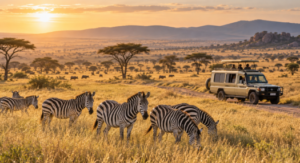
The Serengeti is particularly suitable for photography because of its open landscapes. Animals can often be seen against uncluttered backgrounds, while the skies and distant horizons add scale and atmosphere to photographs.
Recommended Photography Serengeti Safari Itinerary
This eight-day private itinerary combines Tarangire National Park, the Central Serengeti, a seasonally appropriate migration area, and the Ngorongoro Crater. It can be adjusted depending on the month of travel, available time, accommodation preference, and photography interests.
Day 1: Arrival at Kilimanjaro International Airport
Upon arrival at Kilimanjaro International Airport, you will be welcomed by our representative and transferred to your accommodation in Arusha.
The drive gives you an introduction to northern Tanzania, with views of local settlements, farms, and—when the weather is clear—Mount Kilimanjaro or Mount Meru.
After checking in, you can rest after your flight and prepare your equipment for the safari. Your guide may meet you for a short briefing to discuss:
- Your preferred wildlife subjects
- Your level of photography experience
- Camera equipment and storage requirements
- Preferred game-drive times
- The expected weather conditions
- The seasonal location of wildlife
- Any special mobility or dietary requirements
This briefing helps the guide understand whether your priority is predators, birds, landscapes, the Great Migration, animal behavior, or a mixture of subjects.
Accommodation: Arusha hotel or lodge
Meal plan: Depending on arrival time
Day 2: Arusha to Tarangire National Park
After breakfast, your private photography safari begins with a drive to Tarangire National Park.
Tarangire is known for its ancient baobab trees, large elephant populations, seasonal wetlands, and beautiful landscapes. The combination of wildlife and distinctive vegetation makes it an excellent introduction to safari photography.
Your guide will move slowly through productive wildlife areas, looking for elephants, giraffes, zebras, wildebeest, impalas, lions, leopards, and many species of birds.
Elephants are among Tarangire’s most rewarding photographic subjects. Family groups may be seen feeding beneath baobab trees, drinking along the river, bathing in muddy pools, or walking across dusty tracks.
Rather than rushing between sightings, you will have time to photograph behavior and interactions. Your guide will position the vehicle according to the direction of the light while maintaining a respectful distance from the animals.
During the dry season, the Tarangire River attracts wildlife from across the surrounding ecosystem. Dusty conditions can create dramatic photographs, especially when elephants or buffalo move across the plains during the late afternoon.
Photography highlights:
- Elephants beneath baobab trees
- Wildlife gathering near the Tarangire River
- Giraffes among acacia woodlands
- Colorful birds and birds of prey
- Sunset landscapes
- Silhouettes against the evening sky
Accommodation: Lodge or tented camp near Tarangire or Karatu
Meal plan: Breakfast, lunch, and dinner
Day 3: Tarangire or Karatu to Central Serengeti
After an early breakfast, you will travel toward the Serengeti National Park. The journey passes through the Ngorongoro Conservation Area and offers beautiful views of the crater highlands.
Depending on road conditions and the chosen route, you may stop at scenic viewpoints before continuing across the plains toward the Serengeti.
As you enter the national park, the landscape gradually opens into the famous savannah. Wildlife photography begins immediately, and your guide will watch for animals along the route to your camp.
The Central Serengeti, commonly known as the Seronera region, is one of the most productive wildlife areas in the park. Permanent water sources support animals throughout the year, making this region particularly reliable for predator photography.
Lions are regularly encountered around kopjes, river valleys, and open grasslands. Leopards may be found resting in acacia trees, while cheetahs favor more open areas where they can scan the plains.
You will continue photographing until the light begins to fade before driving to your lodge or tented camp.
Photography highlights:
- First views of the Serengeti plains
- Wildlife along the Seronera River
- Lions resting on granite kopjes
- Giraffes against open horizons
- Late-afternoon landscapes
- Dramatic Serengeti skies
Accommodation: Central Serengeti lodge or tented camp
Meal plan: Breakfast, lunch, and dinner
Day 4: Full-Day Photography Safari in Central Serengeti
Your day begins before sunrise. Departing early provides an opportunity to photograph the landscape in soft golden light and to find predators while they are still active.
Morning temperatures are cooler, and lions, leopards, cheetahs, hyenas, and jackals may be returning from nighttime activities. Your guide will use fresh tracks, alarm calls, previous sightings, and information shared by other guides to locate wildlife.
Once an interesting subject is found, you can remain at the sighting without pressure to leave. Patience is an important part of wildlife photography. A sleeping lion may eventually stand, a leopard may descend from a tree, or a cheetah may begin moving toward potential prey.
The Central Serengeti offers a wide variety of subjects, including:
- Lions and their cubs
- Leopards in riverine trees
- Cheetahs on open plains
- Spotted hyenas
- Hippos
- Crocodiles
- Elephants
- Giraffes
- Topis
- Gazelles
- Birds of prey
You may return to camp during the middle of the day or continue with a full-day game drive and picnic lunch. The schedule remains flexible and can be adjusted according to wildlife activity and lighting conditions.
The afternoon session focuses on locations where animals may become active before sunset. Your guide will consider the position of the sun and try to place the vehicle where you can photograph subjects with front lighting, side lighting, or backlighting.
Accommodation: Central Serengeti lodge or tented camp
Meal plan: Breakfast, lunch, and dinner
Day 5: Central Serengeti to the Seasonal Migration Area
After an early photography session in the Central Serengeti, you will travel toward the area where the Great Migration is most likely to be found.
The destination depends on the season.
From approximately December through March, the southern Serengeti and Ndutu region are important areas for wildebeest herds and calving. From around April to June, the herds generally move through the central and western parts of the ecosystem. From July through October, many herds may be found in the northern Serengeti and surrounding areas.
These movements are natural and influenced by rainfall, grazing conditions, and water availability. Therefore, no operator can guarantee the exact location of the herds or a river crossing.
Your guide will use current local information to plan the most productive route. The drive itself offers numerous photography opportunities, including large herds, predators, scavengers, and wide environmental scenes.
Possible photography subjects:
- Large wildebeest and zebra herds
- Cheetahs using termite mounds
- Lions following migrating animals
- Vultures and other scavengers
- Dusty herd movements
- Animals crossing open plains
- Environmental portraits showing wildlife within the landscape
Accommodation: Mobile or permanent tented camp in the relevant migration region
Meal plan: Breakfast, lunch, and dinner
Day 6: Full-Day Great Migration Photography
Today is dedicated to photographing the Great Migration and the wildlife surrounding it.
The specific experience depends on the travel season. During the calving season, photographers may witness newborn wildebeest, large nursery herds, predator activity, and dramatic afternoon skies over the short-grass plains.
In the western or northern regions, the focus may be on moving herds, river systems, crocodiles, and potential crossings. River crossings are unpredictable and require patience. The herds may gather near a river for hours or even days before deciding to cross.
A professional guide will never force or disturb animals to create a photograph. Responsible positioning is essential, particularly near migration routes and riverbanks.
Not every memorable image needs to show dramatic action. Some of the most powerful migration photographs capture:
- The scale of the herds
- Patterns created by animals across the landscape
- Mothers and calves
- Dust clouds illuminated by sunlight
- Wildebeest silhouettes
- Zebra interactions
- Predators watching from a distance
- Animals moving beneath storm clouds
You will spend the full day exploring the region, with a picnic lunch or a midday break depending on wildlife activity.
Accommodation: Migration-area tented camp
Meal plan: Breakfast, lunch, and dinner
Day 7: Serengeti to Ngorongoro Conservation Area
Begin with another early game drive, using the morning light to photograph wildlife around your camp.
After breakfast or a packed meal, you will gradually travel toward the Ngorongoro Conservation Area. The journey remains part of the safari, and you can stop for wildlife and landscape photography along the way.
Depending on the chosen route, you may pass open grasslands, kopjes, valleys, woodlands, and Maasai pastoral areas. This transition provides opportunities to photograph the wider environment rather than focusing only on close wildlife portraits.
You will arrive at your accommodation near the Ngorongoro Crater in the afternoon or early evening. If visibility is good, the crater rim provides impressive panoramic photography opportunities.
Temperatures around Ngorongoro can be considerably cooler than in the Serengeti, especially early in the morning and at night. A warm jacket is recommended.
Photography highlights:
- Sunrise wildlife in the Serengeti
- Animals among granite kopjes
- Expansive savannah landscapes
- Maasai highland scenery
- Ngorongoro Crater viewpoints
- Mist and clouds around the crater rim
Accommodation: Lodge or tented camp near Ngorongoro
Meal plan: Breakfast, lunch, and dinner
Day 8: Ngorongoro Crater Photography and Return to Arusha
After an early breakfast, you will descend into the Ngorongoro Crater for a final photography game drive.
The crater contains several habitats within a relatively compact area, including grasslands, marshes, forests, and freshwater pools. This concentration of habitats supports a remarkable variety of wildlife.
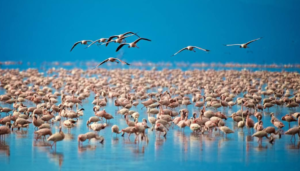
Possible subjects include lions, elephants, buffalo, zebras, wildebeest, hippos, hyenas, jackals, flamingos, and many other bird species. The crater is also one of the places where travelers may have an opportunity to see the endangered black rhinoceros, although sightings are never guaranteed.
Early morning light can be especially beautiful as it enters the crater, illuminating the grasslands while parts of the rim remain covered in mist.
Your guide will help position the vehicle without blocking animal paths or interfering with other visitors. Because vehicles are required to remain on authorized tracks, a long lens is particularly helpful inside the crater.
After the game drive and picnic lunch, you will ascend the crater wall and return to Arusha. Depending on your departure arrangements, you can be transferred to your hotel, Arusha Airport, or Kilimanjaro International Airport.
Meal plan: Breakfast and lunch
Best Time for a Serengeti Photography Safari
The Serengeti offers rewarding photography throughout the year. The best time depends on the subjects and atmosphere you want to capture.
January to March: Calving and Predator Activity
The southern Serengeti and Ndutu plains are often the main focus during this period. Large numbers of wildebeest gather on the nutrient-rich short-grass plains, and many calves are born.
This season is ideal for:
- Wildebeest calves
- Predator-prey interactions
- Cheetahs on open plains
- Large herds
- Green landscapes
- Storm clouds and dramatic skies
February is especially popular with wildlife photographers, so early accommodation reservations are strongly recommended.
April and May: Green Season Photography
The rainy season transforms the Serengeti into a lush, colorful landscape. Visitor numbers may be lower in some areas, allowing photographers to enjoy quieter sightings.
Advantages include:
- Green backgrounds
- Dramatic clouds
- Excellent birdlife
- Fewer safari vehicles in some locations
- Soft light during cloudy weather
- Newborn animals
Road conditions can sometimes be challenging, but rain often arrives in short periods rather than continuing throughout the entire day.
June: Western Corridor Movement
As the plains begin to dry, migrating herds generally move toward the western areas of the ecosystem. Photographers may find large concentrations of wildebeest and zebras around the Grumeti region.
Possible opportunities include:
- Moving herds
- River environments
- Crocodiles
- Predator activity
- Dusty landscapes
- Golden grass
July to October: Northern Serengeti and River Crossings
Many travelers visit the northern Serengeti during this period hoping to witness wildebeest crossing the Mara River.
Crossings are completely natural and cannot be scheduled or guaranteed. Successful photography requires time, patience, and several nights in the region.
This period is suitable for:
- Wildebeest herds
- Potential river crossings
- Crocodiles
- Lions and leopards
- Dry-season landscapes
- Dust and backlit subjects
For serious migration photography, spending at least three nights in the northern region is recommended.
November and December: Returning Herds and Changing Landscapes
Short rains usually begin to refresh the plains, encouraging herds to move southward. The exact location varies, but this can be an excellent transitional season.
Photographers may enjoy:
- Fresh green landscapes
- Migrating herds
- Resident predators
- New bird arrivals
- Dramatic weather
- Reduced visitor numbers in some areas
Private Versus Shared Photography Safari
A private safari is strongly recommended for serious photography.
On a shared group safari, travelers may have different interests. One guest may want to remain with a leopard for an hour, while another may prefer to continue searching for elephants. Camera equipment and seating arrangements can also make a crowded vehicle less comfortable.
A private safari provides:
- A dedicated vehicle
- Flexible departure and return times
- More room for equipment
- Control over how long you remain at sightings
- Better coordination with your guide
- The ability to request specific subjects
- Freedom to adjust the daily program
A private safari is also valuable for couples or small groups who want to photograph from different sides of the vehicle.
Photography-Friendly Safari Vehicle
The quality of the safari vehicle can significantly affect your experience. Our photography itineraries use a 4×4 Land Cruiser with a pop-up roof, charging facilities, and sufficient space for camera equipment.
Depending on the group size and requested configuration, photographers may have access to an entire seat row. This makes it easier to move between windows, change lenses, and photograph subjects from different angles.
Useful vehicle features may include:
- Pop-up roof
- Large viewing windows
- Charging sockets or USB ports
- Cooler or refrigerator
- Radio communication
- First-aid equipment
- Seatbelts
- Space for camera bags
- Bean bags when arranged in advance
Tell us about your camera equipment before the safari so that we can recommend an appropriate vehicle and seating arrangement.
Recommended Camera Equipment
You do not need professional equipment to enjoy a Serengeti photography safari. Modern cameras and even smartphones can produce excellent images in good conditions. However, interchangeable lenses offer greater flexibility.
A practical equipment list may include:
- Camera body
- Backup camera body
- Telephoto zoom lens
- Medium-range zoom lens
- Wide-angle lens
- Lens cloth and cleaning kit
- Extra batteries
- Battery charger
- Multiple memory cards
- Portable storage device
- Camera bean bag
- Rain cover
- Dust protection
- Lens hood
- Polarizing filter for landscapes
- Comfortable camera strap
A telephoto zoom such as a 100–400mm or 200–500mm range is useful for wildlife. A 70–200mm lens can work well for larger animals and environmental portraits, while a wider lens is valuable for landscapes, camps, vehicles, and large herds.
Avoid changing lenses unnecessarily in dusty conditions. Carrying two camera bodies with different lenses can help protect the camera sensor and allow faster reactions.
Photography Tips for the Serengeti
Focus on the Eyes
For close wildlife portraits, the animal’s eyes should usually be sharp. Use continuous autofocus when the subject is moving.
Use a Fast Shutter Speed
Animals can move unexpectedly. A fast shutter speed helps freeze running, flying, fighting, or hunting behavior. Higher ISO settings may be necessary during early morning and late afternoon.
Photograph the Environment
Do not concentrate only on close portraits. Include grasslands, trees, kopjes, clouds, and distant herds to communicate the scale of the Serengeti.
Wait for Behavior
Images become more interesting when animals interact. Watch for eye contact, grooming, feeding, hunting, playing, drinking, or movement.
Observe the Background
A small change in vehicle position can remove distracting branches, other vehicles, or bright areas from the background.
Use Backlighting
Early morning and late-afternoon light can illuminate dust, fur, manes, and grass. Backlighting is especially effective with elephants, lions, and moving herds.
Keep Your Camera Ready
Wildlife action can happen quickly. Check your settings before reaching a sighting and keep the camera accessible inside the vehicle.
Respect the Animals
Never ask a guide to drive off authorized tracks, block an animal, pressure a predator, or disturb a river crossing. Ethical photography protects wildlife and creates more natural images.
Accommodation for a Photography Safari
Accommodation can be arranged at budget, mid-range, luxury, or high-end levels.
Tented camps inside the Serengeti are popular because they place you close to wildlife areas and reduce daily driving distances. Some mobile camps move seasonally to remain near the migration.
When choosing accommodation, location is often more important than luxury. A beautiful lodge located far from the main photography area can result in long transfers and missed morning light.
We consider:
- Seasonal wildlife location
- Distance from productive game-drive areas
- Travel time
- Private bathroom requirements
- Charging facilities
- Meal schedules
- Wi-Fi availability
- Equipment security
- Your preferred comfort level
Most mid-range and luxury tented camps provide private bathrooms, comfortable beds, meals, and charging facilities. Availability varies, especially during the calving and river-crossing seasons.
What Is Included?
A typical private photography Serengeti safari package may include:
- Private 4×4 safari vehicle
- Professional English-speaking safari guide
- Airport pickup and drop-off
- Accommodation according to the itinerary
- National park entry fees
- Ngorongoro conservation and crater fees
- Meals during the safari
- Drinking water
- Game drives
- Government taxes and applicable tourism charges
- Picnic lunches when required
- Vehicle charging facilities
Optional services can include:
- Domestic flights
- Hot-air balloon safari
- Professional photography guide
- Additional camera-support equipment
- Private language guide
- Extra nights in the Serengeti
- Zanzibar beach extension
- Cultural visits
- Laundry services
- Travel insurance
Exact inclusions will be clearly listed in your personalized quotation.
How Many Days Do Photographers Need in the Serengeti?
A minimum of three nights in the Serengeti is recommended for a photography-focused safari. This provides enough time to experience changing light, locate different species, and revisit productive areas.
For the Great Migration or river crossings, four or more nights in the relevant region may significantly improve your opportunities.
A seven- to ten-day itinerary is ideal when combining the Serengeti with Tarangire and Ngorongoro. Travelers with limited time can choose a fly-in safari and land at Seronera, Kogatende, Ndutu, or another seasonal airstrip.
Can Beginners Join a Photography Safari?
Yes. A photography safari is suitable for every experience level.
Beginners benefit from having more time to practice settings and composition without feeling rushed. Your guide can help you understand animal behavior and anticipate movement, although safari guides are not always professional camera instructors.
If you want detailed technical guidance, we can arrange a specialist photography guide or build the itinerary around a photography workshop.
Is a Fly-In Photography Safari Better?
A fly-in safari can save time and reduce long road transfers. It is particularly useful for northern Serengeti photography, where driving from Arusha may require considerable time.
However, small aircraft usually have strict luggage limits. Large camera systems must be discussed before booking. Soft-sided bags are normally preferred, and extra luggage arrangements may be required.
A drive-in and fly-out itinerary offers a good balance. You can photograph Tarangire and Ngorongoro on the way to the Serengeti, then fly back to Arusha or continue to Zanzibar.
Why Book with Kilipath African Safaris?
A successful photography safari depends on thoughtful planning, a patient guide, an appropriate vehicle, and choosing the right Serengeti region for the season.
Kilipath African Safaris provides:
- Customized private itineraries
- Experienced local safari guides
- Flexible wildlife-viewing schedules
- Photography-friendly safari vehicles
- Carefully selected accommodation
- Seasonal migration planning
- Airport and hotel transfers
- Mid-range and luxury options
- Safari and Zanzibar combinations
- Personal support before and during the journey
We take time to understand what you want to photograph and create an itinerary that gives you realistic opportunities without rushing through the parks.
Book Your Photography Serengeti Safari Itinerary
The Serengeti offers endless photographic possibilities—from a lion illuminated by the first light of morning to thousands of wildebeest disappearing across the horizon.
Contact Kilipath African Safaris to receive a personalized photography Serengeti safari itinerary. Tell us your travel dates, number of travelers, accommodation preference, photography experience, and preferred wildlife subjects.
We will recommend the most suitable route, number of nights, accommodation locations, and safari vehicle arrangement for your adventure.