Skip to content

A photography safari in Tanzania is more than a traditional wildlife holiday. Instead of simply seeing lions, elephants, giraffes, cheetahs, wildebeest, and other animals, photographers need enough time, space, positioning, and flexibility to capture memorable moments.
Understanding the photography Tanzania safari cost is therefore important before choosing an itinerary. A safari designed for photographers may cost more than a standard group safari because photographers often prefer a private vehicle, longer game drives, fewer passengers, experienced guides, and accommodations positioned close to productive wildlife areas.
For 2026, general Tanzania safari prices can range from roughly USD 250 per person per day for economical trips to USD 1,500 or more per person per day for high-end experiences. Mid-range safaris commonly fall somewhere around USD 350–750 per person per day depending on group size, season, accommodation, and itinerary.
Photography-oriented private safaris may sit toward the upper end of the corresponding accommodation category because vehicle flexibility is especially valuable.
How Much Does a Photography Safari in Tanzania Cost?
There is no single price for a Tanzania photography safari. The final amount depends primarily on safari length, accommodation style, number of travelers, parks visited, season, transportation, and whether the vehicle is private.
A useful 2026 planning estimate is:
| Safari Style | Approximate Cost Per Person/Day | Typical Experience |
|---|---|---|
| Budget / camping | $250–$350 | Camping, basic facilities, shared or economical arrangements |
| Mid-range | $350–$750 | Comfortable lodges/tented camps, professional guide |
| Luxury | $800–$1,500+ | Premium camps, excellent locations and personalized service |
| Specialist photography safari | $450–$1,500+ | Private vehicle, photography-focused schedule and greater flexibility |
These figures should be treated as planning ranges rather than fixed quotations. Accommodation, vehicle occupancy and season can change the price substantially. Recent 2026 market guides show particularly wide variations between camping, mid-range, luxury and ultra-luxury safaris.
For photographers, choosing the lowest possible price is not always the best value. An inexpensive seven-seat vehicle filled with travelers may make it difficult to move quickly from one side of the vehicle to another when a leopard changes position or a cheetah begins hunting.
A well-designed private photography safari gives you considerably more control.
Why Photography Safaris Can Cost More
A normal safari group may be happy to photograph an animal for several minutes before moving to the next sighting. A serious photographer might remain at the same location much longer waiting for better light, interaction, movement or behavior.
This flexibility affects cost.
A private vehicle means the vehicle and guide costs are divided among fewer people. However, it allows your guide to concentrate completely on your photography priorities.
For example, if a lion is resting in poor light, a standard group may continue searching for other animals. A photographer may prefer to wait until the lion stands, walks, hunts, interacts with cubs or moves into a cleaner background.
That waiting time can produce the photograph of the entire trip.
What Is Usually Included in Tanzania Photography Safari Prices?
A properly organized safari quotation normally combines several expenses into one package.
Common inclusions are:
- Private or shared 4×4 safari vehicle with a pop-up roof
- Professional English-speaking safari guide
- National park and conservation fees
- Accommodation during the safari
- Meals according to the itinerary
- Drinking water
- Game drives
- Airport or hotel transfers when specified
- Government taxes and applicable tourism fees
- Camping equipment and chef when booking a camping safari
Always check your quotation carefully. Domestic flights, international airfare, travel insurance, visas, alcoholic drinks, tips, balloon safaris and specialist camera equipment are commonly priced separately unless clearly stated otherwise.
Park Fees and Why They Affect Safari Cost
Government conservation fees are a major component of Tanzania safari pricing.
Travelers visiting Serengeti, Ngorongoro and other protected areas pay entrance and conservation charges. Some areas also have vehicle or activity-related fees.
Ngorongoro is an important example. The Ngorongoro Conservation Area Authority currently publishes a USD 354 crater service fee per vehicle per trip, separate from other applicable entrance and vehicle charges.
The authority also requires visitors to follow designated roads, remain in vehicles except at permitted locations and avoid disturbing wildlife. Off-road driving in Ngorongoro is prohibited unless specifically authorized.
These regulations are important for photographers. Your guide cannot position the vehicle anywhere simply because a particular photographic angle looks better. Ethical photography always comes after park regulations and animal welfare.
Best Tanzania Parks for Wildlife Photography
Serengeti National Park
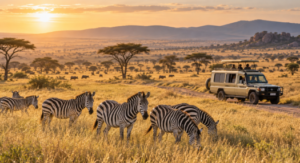
For many photographers, Serengeti is the centerpiece of a Tanzania photography safari.
Its enormous plains provide opportunities to photograph lions, cheetahs, leopards, elephants, giraffes, hyenas, wildebeest and countless other species.
The open landscape is particularly attractive for photography because it allows photographers to create both close wildlife portraits and wider environmental compositions.
Different areas of Serengeti offer different opportunities throughout the year.
Central Serengeti is excellent for year-round wildlife. Northern Serengeti becomes especially popular during the migration season, while the southern Serengeti and Ndutu ecosystem are famous for the calving period.
Photographers should consider spending at least two or three nights in Serengeti rather than rushing through the park.
Ngorongoro Crater
Ngorongoro Crater offers a completely different photographic environment.
The crater floor supports an extraordinary concentration of wildlife within a relatively compact area. Photographers may encounter lions, buffaloes, zebras, wildebeest, elephants, hippos and many species of birds during one game drive.
Early morning is particularly rewarding because the light can be softer and wildlife activity may be greater.
The crater also creates beautiful landscape opportunities. Instead of concentrating exclusively on close animal portraits, include the surrounding crater walls to show the environment.
Tarangire National Park
Tarangire is particularly appealing to photographers interested in elephants.
Large baobab trees, elephants and seasonal river landscapes create some of northern Tanzania’s most recognizable safari scenes.
During the dry season, animals concentrate around water sources, increasing photographic opportunities.
Tarangire can also be excellent for giraffes, lions, zebras, antelopes and bird photography.
The combination of wildlife and dramatic baobab trees makes it an excellent destination for photographers who enjoy environmental images.
Lake Manyara
Lake Manyara can provide beautiful scenery, birdlife, forests and wildlife.
However, photographers with limited safari time frequently prioritize Serengeti, Ngorongoro and Tarangire because these destinations usually provide a broader range of classic northern Tanzania wildlife opportunities.
Manyara can still be worthwhile when incorporated into a longer itinerary.
Photography Tanzania Safari Cost by Safari Length
The number of days has a major effect on both price and photographic quality.
| Duration | Suggested Planning Budget* | Photography Potential |
|---|---|---|
| 3–4 days | $1,200–$2,500+ pp | Short introduction |
| 5–6 days | $2,000–$4,500+ pp | Strong northern circuit coverage |
| 7–8 days | $3,000–$6,500+ pp | Excellent photography pace |
| 9–12 days | $4,500–$10,000+ pp | Serious photography expedition |
| Luxury specialist trip | $7,000–$15,000+ pp | Premium camps and maximum flexibility |
*Illustrative planning ranges only. Actual pricing depends heavily on accommodation category, number of travelers, season, flights and vehicle arrangements.
A photographer will normally benefit more from seven relaxed safari days than from trying to cover five parks in five days.
Photography requires patience.
Private Safari vs Shared Safari for Photographers
A shared safari offers excellent value and can work perfectly for casual photographers.
However, a private Tanzania safari is normally the stronger choice for serious wildlife photography.
In a private vehicle, photographers can communicate directly with the guide about sun direction, backgrounds, subjects and positioning.
If you want another 30 minutes with a leopard, you can wait.
If you want to leave camp around sunrise, the program can often be adjusted within park and accommodation rules.
If you prefer birds rather than big cats, your guide can focus accordingly.
With Kilipath African Safaris, private safaris use dedicated 4×4 Land Cruisers with pop-up roofs, allowing travelers more flexibility during game drives. Shared safaris are more economical, but photographers should consider the advantages of having greater control over their vehicle and schedule.
Does Group Size Change the Price?
Yes, considerably.
Safari vehicles, guides and some conservation-related charges are shared among passengers. Consequently, two photographers traveling privately usually pay more per person than four travelers sharing the same vehicle.
Recent Tanzania pricing data illustrates this clearly: as group size increases, private-safari per-person prices often decrease because fixed vehicle and guide costs are divided among more participants.
For wildlife photographers, however, filling every seat may not be ideal.
Two to four photographers per vehicle can provide an excellent balance between price and shooting space.
Best Time for a Tanzania Photography Safari
Tanzania can be photographed throughout the year, but different seasons produce different visual conditions.
June to October
The dry season is one of the most popular periods.
Vegetation becomes thinner in many areas, animals gather near water sources and wildlife can be easier to locate.
July through October is also associated with Great Migration activity in northern Serengeti.
Demand is high, however, so safari camps and lodges can become expensive.
December to March
This is an excellent period for photographers interested in the southern Serengeti and Ndutu ecosystem.
The migration moves into these grasslands, and January through February is particularly associated with wildebeest calving.
Young animals also attract predators, creating excellent opportunities for action photography.
April and May
The green season attracts fewer visitors and can offer lower accommodation prices.
Landscapes become green and dramatic clouds can create wonderful photographic backgrounds.
Rain can affect road conditions and some camps may close temporarily, but photographers willing to accept variable weather can enjoy exceptional scenery and fewer vehicles.
How Season Changes Photography Safari Costs
Accommodation demand is often the biggest seasonal variable.
Peak periods such as July, August and parts of December can be substantially more expensive than the green season.
Some 2026 pricing analyses indicate accommodation and package reductions of roughly 20–40% during lower-demand months compared with peak periods, although actual discounts vary widely by camp.
Park fees generally do not disappear simply because you travel in low season, so savings come primarily from accommodation and sometimes package pricing.
Camera Equipment for Tanzania Safari Photography
You do not need the most expensive camera in the world to enjoy Tanzania.
A modern mirrorless or DSLR camera paired with a telephoto lens can produce excellent results.
For general wildlife photography, a zoom reaching approximately 300–500mm provides useful flexibility. A second camera with a wider lens can be valuable for elephants nearby, safari landscapes, lodge photographs and environmental wildlife portraits.
Extra batteries are essential.
So are memory cards.
Dust protection is particularly important during the dry season. Keep equipment covered when traveling between sightings and avoid unnecessary lens changes in dusty conditions.
A bean bag can also provide excellent support when shooting from the vehicle window.
Why Your Safari Guide Matters as Much as Your Camera
An expensive camera cannot replace a knowledgeable guide.
Experienced safari guides read animal behavior.
They recognize when a lion may move.
They notice when antelopes suddenly become alert.
They understand where light will fall.
They can anticipate where an animal might cross the road and safely position the vehicle while respecting park regulations.
For photographers, communication with the guide is extremely important.
Tell your guide what you want to achieve before beginning the safari.
If your priority is bird photography, say so. If you want predators, explain that. If you prefer spending two hours photographing one elephant family rather than seeing 20 different species quickly, your guide should understand.
How to Save Money Without Ruining Your Photography Safari
Traveling with two or three other photographers is one of the best ways to reduce your photography Tanzania safari cost while maintaining considerable flexibility.
Choosing comfortable mid-range tented camps instead of luxury properties can also save a significant amount.
Traveling during shoulder or green seasons may further reduce accommodation costs.
Most importantly, spend your money where it affects photography.
A private vehicle and experienced guide may provide more photographic value than upgrading from an excellent mid-range camp to an ultra-luxury lodge.
After all, most of your best photographs will be taken outside the room.
Sample 7-Day Tanzania Photography Safari
A highly effective northern Tanzania photography itinerary could begin with Tarangire National Park, followed by several nights in Serengeti, before concluding at Ngorongoro Crater.
Day one could focus on Tarangire’s elephants and baobab landscapes.
Days two through five could concentrate on Serengeti, providing several sunrise and afternoon wildlife sessions without rushing between destinations.
Day six could involve traveling toward Ngorongoro while continuing to photograph wildlife along the route.
Day seven could begin with an early Ngorongoro Crater descent before returning toward Arusha.
The key advantage of this type of itinerary is time. Instead of continuously changing accommodation, photographers receive multiple opportunities to work with changing light and animal behavior.
Ethical Wildlife Photography in Tanzania
Great wildlife photography should never come at the expense of wildlife.
Animals should not be chased, surrounded or intentionally disturbed simply to create a photograph.
Ngorongoro’s official visitor guidelines, for example, state that visitors must not harass animals, should keep to designated tracks, and should maintain appropriate distance from wildlife.
A professional safari guide will prioritize regulations and animal welfare even when doing so means losing a potential photograph.
Responsible behavior protects Tanzania’s wildlife and preserves natural encounters for future travelers.
Is a Tanzania Photography Safari Worth the Cost?
For wildlife photographers, Tanzania provides extraordinary photographic diversity.
Within one journey you can photograph elephants beneath giant baobabs in Tarangire, cheetahs crossing Serengeti plains, wildebeest migration herds, lions in golden morning light and wildlife surrounded by the walls of Ngorongoro Crater.
The key is not necessarily purchasing the most expensive safari.
It is choosing the right balance of time, vehicle space, guide experience, accommodation location and season.
A well-planned mid-range private safari can provide better photographic opportunities than a much more expensive itinerary that moves too quickly.
Plan Your Tanzania Photography Safari
A successful photography Tanzania safari cost travel guide should help you look beyond the cheapest package and ask a more important question: Will this itinerary give me enough time and freedom to photograph Tanzania properly?
At Kilipath African Safaris, photography-focused itineraries can be planned around Serengeti, Ngorongoro, Tarangire and other Tanzanian wildlife destinations, with private 4×4 options for travelers who want additional flexibility.
Whether your dream photograph is a cheetah sprinting across the Serengeti, an elephant framed beneath a baobab tree, a lion at sunrise or thousands of wildebeest moving across the plains, Tanzania offers exceptional opportunities.
Contact Kilipath African Safaris for a personalized Tanzania photography safari itinerary and quotation based on your travel dates, group size, accommodation preference and photography goals.