Skip to content
A photography Tanzania wildlife safari itinerary is designed for travelers who want more than a traditional game drive. Instead of quickly moving from one animal sighting to another, a photography safari allows you to slow down, observe animal behavior and wait for the perfect combination of light, landscape and wildlife.
Tanzania is one of Africa’s most rewarding wildlife photography destinations. Its national parks contain open savannahs, volcanic craters, ancient baobab trees, seasonal wetlands and some of the largest concentrations of wildlife on the continent. Photographers can capture lions resting on rocky outcrops, elephants walking beneath baobab trees, cheetahs hunting across the plains and thousands of wildebeest moving through the Serengeti.
A successful photographic safari, however, requires careful planning. The route, season, vehicle, guide, accommodation and amount of time spent in each park can all influence the quality of your photographs.
This complete guide explains how to plan a Tanzania wildlife photography safari itinerary, including the best destinations, recommended number of days, seasonal conditions, equipment suggestions and practical photography advice.
Why Choose Tanzania for a Wildlife Photography Safari?
Tanzania combines exceptional wildlife populations with diverse landscapes and relatively large protected areas. Each destination offers a different photographic environment.
In the Serengeti, photographers can work with wide horizons and dramatic skies. Tarangire provides beautiful elephant and baobab compositions. Ngorongoro Crater offers reliable wildlife viewing within a spectacular volcanic landscape, while Lake Manyara is known for birds, forests and escarpment scenery.
Tanzania is especially suitable for photographers because it offers:
- Large populations of lions, elephants, giraffes, zebras and wildebeest
- Excellent opportunities to photograph predators
- The Great Wildebeest Migration
- Diverse habitats and landscapes
- Beautiful golden-hour light
- Year-round wildlife viewing
- Private safari options with flexible schedules
- Specialized guides familiar with wildlife behavior
- Opportunities for both wide-angle and close-up photography
The country also offers routes for different budgets. Travelers can choose camping, mid-range tented camps, luxury lodges or exclusive mobile camps positioned near seasonal wildlife movements.
What Makes a Photography Safari Different?
A standard safari usually concentrates on seeing as many animals and destinations as possible. A photography safari has a different pace.
Photographers may spend a long time at one sighting, waiting for an animal to move into better light or display interesting behavior. The guide must understand vehicle positioning, backgrounds and the direction of sunlight. There should also be sufficient space inside the vehicle for cameras, lenses and photography bags.
A well-planned photography safari normally includes:
- A private 4×4 safari vehicle
- A pop-up roof and opening windows
- A guaranteed window position for every photographer
- Flexible game-drive schedules
- Additional time in high-value wildlife areas
- Fewer rushed transfers between parks
- Early morning and late afternoon game drives
- A guide who understands photography
- Charging facilities for batteries
- Adequate luggage space for equipment
Private safaris are usually the best choice for serious photographers. On a shared safari, other travelers may have different interests and may not want to wait at one sighting for an extended period.
Best Tanzania Destinations for Wildlife Photography
Serengeti National Park
Serengeti National Park is the centerpiece of most Tanzania wildlife photography itineraries. Its extensive grasslands provide clean backgrounds, open views and excellent opportunities to photograph predators.
The Central Serengeti, particularly the Seronera region, is productive throughout the year. Permanent water attracts resident wildlife, including lions, leopards, elephants, giraffes and many species of antelope. The rocky kopjes are excellent places to look for lions and occasionally cheetahs or leopards.
Photography opportunities in the Serengeti include:
- Lions on granite kopjes
- Cheetahs in open grasslands
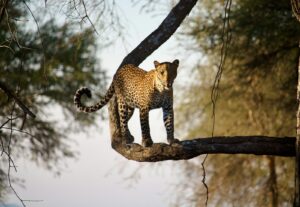
- Leopards resting in acacia trees
- Wildebeest and zebra herds
- Elephants crossing the plains
- Hippos in pools
- Sunrise and sunset silhouettes
- Birds of prey
- Dramatic storm clouds
- Great Migration action
Spending at least two or three nights in the Serengeti is recommended. Photographers interested in migration river crossings may need three or four nights in Northern Serengeti because the timing and location of crossings cannot be guaranteed.
Ngorongoro Crater
Ngorongoro Crater offers a very different photographic experience. Wildlife is concentrated within a relatively small area surrounded by steep crater walls.
The crater floor supports lions, elephants, buffaloes, hippos, hyenas, zebras and wildebeest. It is also one of Tanzania’s better places to look for the endangered black rhinoceros, although sightings are never guaranteed.
Early morning is especially valuable in Ngorongoro. Cooler temperatures encourage animal activity, and the softer light creates better photographic conditions. Entering the crater soon after the gates open can also help photographers avoid the busiest part of the day.
Possible subjects include:
- Lions walking through the grass
- Spotted hyenas interacting with predators
- Black rhinos in the distance
- Flamingos and waterbirds
- Elephants near the Lerai Forest
- Hippos in freshwater pools
- Wildlife framed against the crater walls
One night close to the crater is generally sufficient, followed by an early morning descent and a four- to six-hour game drive.
Tarangire National Park
Tarangire is one of the best places in Tanzania for elephant photography. During the dry season, large elephant herds gather near the Tarangire River, creating opportunities to photograph social behavior, family interactions and animals drinking or bathing.
The park’s ancient baobab trees make its landscapes immediately recognizable. These trees can be used as dominant background elements, particularly during sunrise and sunset.
Tarangire is also home to lions, leopards, giraffes, zebras, wildebeest, buffaloes and numerous bird species.
Excellent photographic subjects include:
- Elephants beneath baobab trees
- Elephant calves playing
- Lions resting in trees or grass
- Giraffes crossing open landscapes
- Birds in woodland habitats
- Wildlife near the Tarangire River
- Silhouettes against the evening sky
Tarangire is most productive during the dry season, generally from June to October, but its landscapes are greener and more colorful during the rainy months.
Lake Manyara National Park
Lake Manyara is a compact but visually diverse national park. The route passes through groundwater forest, woodland, floodplains and areas overlooking the lake.
The park is especially interesting for bird photographers. Depending on water levels and seasonal conditions, visitors may encounter pelicans, flamingos, hornbills, kingfishers, storks and birds of prey.
Other possible subjects include elephants, giraffes, buffaloes, baboons, monkeys and hippos. Tree-climbing lions are associated with Lake Manyara, but they can be difficult to locate and should not be considered guaranteed.
Lake Manyara works well as an introductory or final destination in a Northern Tanzania itinerary.
Ndutu and the Southern Serengeti
From approximately December to April, large migration herds gather around Ndutu and the Southern Serengeti. The peak calving period normally occurs between January and February, although nature follows rainfall rather than fixed schedules.
This period can produce remarkable photographs of newborn wildebeest, enormous herds and predator activity. Cheetahs, lions, hyenas and jackals are frequently seen across the short-grass plains.
Ndutu is ideal for photographers interested in:
- Wildebeest calving
- Predator and prey interactions
- Cheetah hunting behavior
- Large herds in green landscapes
- Newborn animals
- Dramatic rainy-season skies
A minimum of two or three nights is recommended during the calving season.
Northern Serengeti
Northern Serengeti becomes particularly important from July to October, when migration herds may reach the Mara River area.
River crossings can be dramatic, but they are unpredictable. A herd may gather near the river and move away without crossing, or a crossing may happen suddenly. Photographers should allow sufficient time rather than planning only one game drive in the region.
A private safari is strongly recommended for Northern Serengeti because reaching this remote area requires additional time and flexibility.
Recommended Eight-Day Photography Tanzania Wildlife Safari Itinerary
The following route combines Tanzania’s most productive Northern Circuit destinations while allowing more photography time than a rushed standard itinerary.
Day 1: Arrival in Arusha
Arrive at Kilimanjaro International Airport, where your driver will meet you and transfer you to your accommodation in Arusha.
Use the evening to rest and prepare your equipment. Charge all batteries, format memory cards and organize cameras so that essential items are easily accessible.
Your guide can provide a briefing covering the route, wildlife expectations, vehicle setup and photography priorities.
Accommodation: Arusha hotel or lodge
Main focus: Rest, equipment preparation and safari briefing
Day 2: Arusha to Tarangire National Park
After breakfast, travel to Tarangire National Park. The journey normally takes approximately two to three hours, depending on traffic and the location of your accommodation.
Begin photographing as soon as you enter the park. Tarangire’s elephants, baobab trees and varied landscapes provide strong environmental compositions.
Rather than chasing every sighting, concentrate on subjects with good light and uncluttered backgrounds. In the afternoon, look for elephants approaching the river or giraffes moving between acacia trees.
Photography focus:
- Elephants and baobab trees
- Animal behavior near water
- Giraffes in woodland
- Landscape photography
- Sunset silhouettes
Accommodation: Lodge or tented camp near Tarangire
Day 3: Tarangire to Central Serengeti
Start with an early morning game drive when animals are active and the light is soft. Afterward, continue toward Serengeti National Park through the Ngorongoro Conservation Area.
The drive is long, but the changing scenery offers opportunities for landscape and cultural photography. Stop at designated viewpoints before descending toward the Serengeti plains.
Enter the Serengeti and enjoy an afternoon game drive while traveling toward your camp. The open landscape becomes particularly beautiful as the sun lowers.
Photography focus:
- Tarangire morning activity
- Rift Valley and highland scenery
- Serengeti landscapes
- Wildlife in golden afternoon light
Accommodation: Central Serengeti tented camp or lodge
Day 4: Full-Day Central Serengeti Photography Safari
Leave camp early with a packed breakfast or return later for breakfast, depending on wildlife activity and camp arrangements.
The Seronera region is known for big cats. Your guide will search for lions, cheetahs and leopards while positioning the vehicle with attention to sunlight and background.
Spend time observing behavior instead of immediately leaving after taking a few pictures. Lions may begin walking, cubs may play and a leopard may change its resting position. Patience often creates the best images.
During the middle of the day, you may return to camp or continue with a packed lunch. Midday light can be harsh, but it is still useful for documenting action or experimenting with high-contrast and black-and-white images.
Photography focus:
- Lions and cubs
- Leopards in trees
- Cheetahs on the plains
- Animal portraits
- Wildlife behavior
- Golden-hour landscapes
Accommodation: Central Serengeti tented camp or lodge
Day 5: Another Full Day in Serengeti
A second complete day greatly improves the quality of a photography safari. Wildlife sightings vary daily, and returning to an area may produce completely different behavior.
Concentrate on subjects or images you did not capture on the previous day. You may dedicate more time to birds, elephants, kopjes or large herbivore herds.
Discuss your photography goals with your guide. If you want low-angle images, backlit subjects, silhouettes or environmental portraits, the guide can look for suitable positioning whenever regulations and terrain permit.
Photography focus:
- Predator behavior
- Birds in flight
- Backlit wildlife
- Silhouettes
- Wider environmental compositions
- Sunrise and sunset scenes
Accommodation: Central Serengeti tented camp or lodge
Day 6: Serengeti to Ngorongoro Conservation Area
Enjoy a final morning game drive in the Serengeti before traveling toward Ngorongoro.
Morning light provides one more opportunity to photograph predators before they rest. The route toward the conservation area may also reveal giraffes, elephants, zebras and gazelles.
Depending on the chosen route and travel time, you may visit a Maasai community or Olduvai Gorge. Cultural visits should always be approached respectfully, especially when taking portraits. Ask permission before photographing people.
Arrive at your accommodation near Ngorongoro in the late afternoon.
Photography focus:
- Final Serengeti sunrise
- Wildlife along the transfer route
- Highland landscapes
- Optional cultural photography
Accommodation: Lodge near Ngorongoro Crater or in Karatu
Day 7: Ngorongoro Crater Photography Safari
Leave early and descend into Ngorongoro Crater. Morning mist around the crater rim can create atmospheric landscape photographs.
On the crater floor, search for lions, hyenas, elephants, buffaloes and rhinos. The dense concentration of animals makes Ngorongoro productive, but photographers should remain patient and avoid focusing only on rare species.
Have a picnic lunch at a designated location before continuing the game drive. Later, ascend from the crater and return to your lodge.
Photography focus:
- Wildlife against the crater walls
- Lions and hyenas
- Elephants near Lerai Forest
- Hippos and waterbirds
- Black rhinos when visible
- Crater landscapes
Accommodation: Lodge in Karatu or near Ngorongoro
Day 8: Lake Manyara and Return to Arusha
After breakfast, travel to Lake Manyara National Park for a final game drive.
Use this day to photograph forest wildlife, baboons, monkeys, elephants and birds. The park’s dense vegetation creates a different visual style from the open Serengeti.
After lunch, return to Arusha. Depending on your flight schedule, you can stay overnight or transfer to Kilimanjaro International Airport.
Photography focus:
- Birds
- Baboons and monkeys
- Elephants in the forest
- Lake and escarpment landscapes
- Final safari details and environmental images
Alternative Ten-Day Migration Photography Itinerary
Travelers focused on the Great Migration should consider a longer itinerary.
A suggested ten-day route is:
- Arrival in Arusha
- Tarangire National Park
- Tarangire to Central Serengeti
- Full day in Central Serengeti
- Central Serengeti to Northern Serengeti or Ndutu
- Full-day migration photography
- Full-day migration photography
- Travel toward Ngorongoro
- Ngorongoro Crater
- Return to Arusha
From July to October, the additional days can be spent in Northern Serengeti. From December to March, they can be spent around Ndutu and the Southern Serengeti.
Migration routes are influenced by rainfall, grass and water availability. No responsible safari operator can guarantee a specific river crossing or wildlife event.
Best Time for a Tanzania Photography Safari
Tanzania offers photography throughout the year, but every season creates different conditions.
June to October: Dry Season
The dry season generally provides reliable wildlife viewing. Vegetation becomes thinner, and animals gather around permanent water sources.
Advantages include:
- Easier wildlife visibility
- Large elephant gatherings in Tarangire
- Northern Serengeti migration possibilities
- Lower rainfall
- Clearer roads in most areas
Challenges include dust, busy wildlife sightings and strong midday light.
November to December: Short Rains
The short rains refresh the landscape. Grass becomes greener, skies become more dramatic and visitor numbers may be lower than during peak season.
Rain showers are often brief, although weather cannot be predicted precisely.
January to March: Calving Season
This is an outstanding period for wildlife photographers in Ndutu and the Southern Serengeti.
Thousands of wildebeest calves may be born during the peak period, attracting predators and creating opportunities to document animal behavior.
The landscapes are normally green, and storm clouds can add drama to images.
April and May: Green Season
These are traditionally the wetter months. Some camps close, and certain roads can become difficult. However, photographers benefit from fewer vehicles, rich colors, dramatic skies and potentially attractive accommodation rates.
Rain does not necessarily continue all day. Photographers willing to manage uncertain conditions can produce distinctive images.
Recommended Camera Equipment
You do not need the most expensive equipment to enjoy a Tanzania safari, but appropriate lenses and backup systems are important.
Camera Bodies
Two camera bodies are highly recommended. Changing lenses in a dusty environment can expose the sensor, and wildlife action may happen too quickly to switch equipment.
A practical setup is:
- One camera with a long telephoto lens
- One camera with a medium zoom or wide-angle lens
Telephoto Lenses
A 100–400mm, 200–500mm or similar zoom lens is highly versatile. It allows photographers to capture animals at different distances without frequently changing lenses.
Long prime lenses can produce excellent image quality but are heavier and less flexible when animals approach the vehicle.
Medium and Wide-Angle Lenses
A 24–70mm or 24–105mm lens is useful for landscapes, elephants close to the vehicle, safari scenes and environmental portraits.
An ultra-wide lens may be helpful for lodge interiors, night skies and dramatic landscapes, but it is not essential for most wildlife encounters.
Accessories
Pack the following:
- Several camera batteries
- Multiple high-capacity memory cards
- Battery charger
- Portable power bank
- Lens-cleaning cloths
- Air blower
- Beanbag or vehicle camera support
- Protective dust covers
- Rain cover
- Comfortable camera strap
- Laptop or backup storage device
- Plug adaptor
- Binoculars
Avoid depending on a single memory card or storage device. Keep at least two copies of important photographs whenever possible.
Wildlife Photography Tips for Tanzania
Use the Available Light
Early morning and late afternoon offer softer, warmer light. Midday light is usually stronger and produces deeper shadows.
Begin game drives early and remain in the park during the late afternoon whenever park regulations and accommodation locations allow.
Watch the Background
A strong wildlife image depends on more than the animal. Before taking the photograph, check for distracting branches, vehicles or bright areas behind the subject.
Small changes in vehicle position can improve the composition significantly.
Photograph Behavior
Portraits are beautiful, but behavior tells a stronger story. Watch for:
- Animals interacting
- Predators scanning the plains
- Mothers caring for young
- Elephants using their trunks
- Birds taking off or landing
- Territorial displays
- Hunting preparation
- Herds reacting to danger
Your guide’s understanding of animal behavior can help anticipate these moments.
Leave Space Around the Subject
Avoid filling the frame in every photograph. Wider images showing an animal within its environment communicate scale and location.
For example, a small elephant walking beneath an enormous baobab tree may be more powerful than a tight elephant portrait.
Be Ready Before the Sighting
Set a practical shutter speed, aperture and ISO before reaching an animal. Wildlife can move without warning.
For moving animals, photographers often use faster shutter speeds. For resting animals, lower shutter speeds may be possible if the camera is properly supported.
Respect Wildlife
Never pressure the guide to drive off-road where it is prohibited, block an animal’s path or move dangerously close to wildlife.
Avoid shouting, making animal sounds or asking the guide to disturb an animal simply to create a photograph. Ethical behavior protects both wildlife and the quality of the safari experience.
Choosing the Right Safari Vehicle
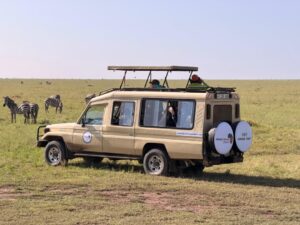
A private 4×4 Land Cruiser with a pop-up roof is ideal for a Tanzania photography safari.
The vehicle should provide:
- A window position for each photographer
- An opening roof
- Space for camera equipment
- Charging sockets or USB ports
- A cooler or refrigerator
- Seatbelts
- Radio communication
- Binoculars
- A first-aid kit
For two photographers, a private vehicle provides generous working space. Larger photography groups may need more than one vehicle to prevent equipment congestion.
Ask whether seats can be removed or adjusted to create additional room. Also confirm the number of passengers before booking.
Accommodation for Photography Safaris
Accommodation location is more important than luxury level. A beautifully appointed lodge located far outside the park may require long morning transfers and reduce time in good light.
Whenever possible, choose a camp inside or close to the primary wildlife area. This can make early departures and late returns easier.
Accommodation categories include:
Camping Safaris
Public camping is the most affordable option. Tents, sleeping equipment, meals and a safari chef are normally included. Bathroom facilities are shared.
Camping provides an adventurous experience but may be less convenient for photographers with large amounts of equipment.
Mid-Range Tented Camps
Mid-range camps generally offer private tents with beds, toilets and showers. Many provide charging facilities and limited Wi-Fi.
They offer a good balance between comfort, location and cost.
Luxury Lodges and Camps
Luxury properties may include spacious rooms, premium dining, private decks and excellent locations. Some offer laundry, battery charging and personalized service.
Luxury does not automatically guarantee better photography, so location and game-drive flexibility should remain the main priorities.
How Much Does a Tanzania Photography Safari Cost?
The cost depends on:
- Number of travelers
- Private or shared vehicle
- Number of safari days
- Accommodation category
- Travel season
- Parks included
- Domestic flights
- Migration location
- Optional activities
A private photography safari costs more than a shared departure because the vehicle and guide are reserved exclusively for you. However, the additional flexibility can be extremely valuable for serious photographers.
A typical package may include:
- Private 4×4 safari vehicle
- Professional English-speaking guide
- Park entrance fees
- Ngorongoro Crater service fee
- Accommodation
- Meals during the safari
- Drinking water
- Airport or hotel transfers as specified
- Government taxes
- Game drives
Items commonly excluded include international flights, visas, travel insurance, tips, alcoholic drinks and optional activities.
Request a detailed quotation based on your dates, group size and accommodation preference.
Should You Book a Private or Group Photography Safari?
A shared safari may work for casual photographers who want an affordable experience and do not require control over the schedule.
A private safari is better for travelers who want to:
- Remain longer at sightings
- Select their preferred vehicle position
- Depart early
- Concentrate on specific species
- Carry multiple cameras and lenses
- Photograph sunrise or sunset
- Avoid disagreements about when to leave a sighting
- Work closely with the guide
For professional photographers, videographers and dedicated enthusiasts, a private vehicle is normally worth the additional cost.
Optional Photography Experiences
Hot-Air Balloon Safari
A balloon flight over the Serengeti provides an aerial perspective of the plains. Flights normally begin around sunrise and last approximately one hour, depending on weather and landing conditions.
Although photographing through a balloon basket requires care, the experience may produce unique landscape and wildlife images.
Cultural Photography
Visits to Maasai communities or local villages can add a human dimension to the safari story. Always ask permission before photographing individuals and follow the community’s rules.
Night-Sky Photography
Remote camps often have dark skies. With permission and proper safety arrangements, photographers may capture stars, tents and landscape silhouettes.
Never walk away from camp alone at night because wild animals may be present.
Common Photography Safari Planning Mistakes
Trying to Visit Too Many Parks
A rushed itinerary creates long transfers and limited photography time. It is usually better to explore fewer destinations properly.
Booking Too Few Nights in Serengeti
One night offers only limited time. Two or three nights provide better chances of locating big cats and photographing different behavior.
Ignoring Accommodation Location
Long transfers from distant lodges may cause you to miss the best morning light.
Carrying Too Much Equipment
Heavy equipment can become difficult to manage. Bring versatile lenses and essential backups rather than every item you own.
Depending on One Camera or Memory Card
Equipment can fail. Carry backup storage, spare batteries and, when possible, a second camera body.
Expecting Guaranteed Wildlife Events
Wild animals move freely. A guide can use experience to improve your chances, but no sighting, hunt, birth or river crossing can be guaranteed.
Plan Your Tanzania Wildlife Photography Safari
Kilipath African Safaris can create a personalized photography itinerary based on your travel dates, preferred wildlife, accommodation level and photography experience.
Whether you are interested in Serengeti predators, Tarangire elephants, the Ndutu calving season or Northern Serengeti river crossings, your route can be designed to provide sufficient time, flexible game drives and comfortable space for your camera equipment.
Contact us with your preferred travel dates, number of travelers and desired safari duration to begin planning your Tanzania wildlife photography adventure.