

Budget Ngorongoro Crater Safari Holiday
Planning a budget Ngorongoro Crater safari holiday from Arusha? Compare a crater day trip, a two-day Tarangire and Ngorongoro safari, or a…
Read articleArusha City - Tanzania
Safari & Travel Tips
September 5, 2026 · 17 min read
A photography Tarangire safari offers something that many wildlife photographers dream about: enormous elephant families walking beneath ancient baobab trees, lions resting beside seasonal rivers, colorful birds filling acacia woodlands, dramatic African skies and golden evening light stretching across the savannah.
Located on Tanzania's famous Northern Safari Circuit, Tarangire National Park is particularly attractive for photographers because wildlife and landscape photography come together naturally here.
The park is famous for its elephants, baobab trees and the Tarangire River, which becomes especially important for wildlife during the dry months. Tanzania National Parks describes Tarangire as covering approximately 2,850 square kilometers and notes that animals often concentrate around the river and permanent wetlands during the dry season.
For travelers carrying anything from a smartphone to professional telephoto lenses, Tarangire can therefore produce extraordinary photographic opportunities.
This Photography Tarangire Safari Travel Guide explains when to travel, where photographers should concentrate their time, what camera equipment to bring, how many days to spend in the park and how to plan a photography-oriented safari with Kilipath African Safaris.
Tarangire is sometimes visited as the first stop before Serengeti and Ngorongoro, but photographers should avoid treating it simply as a transit park.
It deserves time.
The combination of large animals, beautiful trees, wetlands, open plains and river environments gives photographers several completely different visual environments during one safari.
Instead of photographing animals against similar grassland backgrounds throughout the day, you may photograph elephants beside enormous baobabs in the morning, birds near Silale Swamp later in the day and giraffes silhouetted against the sunset during the evening.
TANAPA highlights elephant herds, baobab landscapes, Silale Swamp, river loops, birdlife, predators, seasonal migration corridors and sunset viewpoints among the park's principal attractions.
This variety is one of Tarangire's greatest strengths for serious photography.
Elephants are the stars of Tarangire.
Large family groups frequently move between woodland, river areas and water sources.
For photographers, elephants are particularly rewarding subjects because their behavior tells stories.
Instead of concentrating exclusively on portrait photographs, watch interactions.
A young elephant may walk beneath its mother.
Two juveniles might play together.
A matriarch may lead the family toward water.
Several elephants may gather beneath a baobab tree.
Dust rising behind a herd can transform an ordinary photograph into a dramatic image.
Tarangire is officially promoted by Tanzania National Parks as one of Tanzania's outstanding elephant destinations.
Patience is particularly important when photographing elephant families.
Sometimes remaining quietly beside a waterhole for thirty minutes produces better photographs than constantly driving from one sighting to another.
Wildlife photography is not only about getting close to animals.
Environment matters.
Tarangire's enormous baobab trees provide some of Tanzania's most recognizable safari landscapes.
A giraffe walking between baobabs, an elephant underneath a huge tree or a lion resting beside dry grass can create a photograph that immediately communicates where the image was taken.
Wide-angle photography becomes particularly valuable here.
If every photograph is taken using a 400mm or 600mm telephoto lens, much of Tarangire's character can disappear.
Consider occasionally using lenses around 24–70mm or 70–200mm to photograph wildlife within the landscape.
The objective becomes storytelling rather than simply filling the frame with an animal.
Tarangire can be photographed throughout the year, but each season creates a different visual experience.
Your ideal month depends on whether you prioritize wildlife concentrations, green landscapes, birds, dramatic skies or fewer safari vehicles.
For many wildlife photographers, June through October is the most attractive period.
Water becomes increasingly limited across the ecosystem, encouraging wildlife to gather around the Tarangire River, swamps and other permanent water sources.
TANAPA identifies June through October as the main dry season and explains that wildlife concentrates around the Tarangire River as surrounding areas become drier.
This can create excellent opportunities for photographing elephants, zebras, wildebeest, giraffes, buffalo and predators.
The vegetation is also generally less dense than during the green season, making animals easier to see.
August, September and October can be especially productive for wildlife photography.
However, this is also a popular safari period.
Photographers who want quieter sightings should consider staying inside or very close to the park and starting their game drives early.
The short rains generally occur around November and December.
The landscape begins changing from dusty brown into vibrant green.
Photographers may encounter dramatic clouds, softer landscapes, wildflowers and excellent bird activity.
Occasional rain can also create interesting photographic conditions.
After rainfall, dust disappears from the atmosphere and colors can become extremely rich.
Clouds can provide more texture than a completely clear sky.
A photograph of an elephant beneath a dark rainstorm can sometimes be much more visually powerful than the same scene beneath flat midday sunlight.
TANAPA notes that the short rains generally occur around November and December.
January and February can also provide excellent conditions.
The landscape may remain green following the short rains while the weather can become relatively dry again.
Bird photography is particularly rewarding, while wildlife remains present throughout the park.
Travelers visiting Tanzania for the southern Serengeti or Ndutu calving season can easily combine Tarangire with Ngorongoro and Serengeti.
This creates an extremely varied Tanzania photography safari.
The longer rains generally occur between March and May.
Many travelers automatically avoid these months, but photographers may see advantages.
Landscapes become lush and intensely green.
There may be fewer safari vehicles.
Cloud formations can be spectacular.
Birdlife can be excellent.
Accommodation can sometimes offer better seasonal value.
However, photographers should also expect rain, occasionally muddy roads and changing accessibility in some areas.
TANAPA recommends four-wheel-drive vehicles during wetter months because some sections can become muddy.
For photographers comfortable working around changing weather, green-season Tarangire can be remarkably beautiful.
Wildlife is constantly moving, so no particular location can guarantee a specific animal.
However, certain parts of Tarangire regularly provide excellent photographic opportunities.
The Tarangire River is the central ecological feature of the park.
During dry periods, animals move toward remaining water sources along the river.
Photographers may encounter elephants, impalas, zebras, wildebeest, giraffes, baboons and occasionally predators.
Rather than immediately leaving after photographing the first animal you see, consider waiting.
A river location can become increasingly active.
One elephant may arrive.
Then another family.
Zebras might appear behind them.
Eventually predators may investigate the activity.
Wildlife photography rewards anticipation.
Silale Swamp is another particularly rewarding photography area.
Tanzania National Parks identifies it as a dry-season lifeline where elephants, buffalo and birds commonly concentrate.
The open surroundings can also make photography easier because animals are often visible from a distance.
Bird photographers should especially consider spending time here.
Long lenses allow you to photograph both large animals and smaller species without approaching too closely.
Some of the most beautiful images from Tarangire are environmental portraits.
Instead of photographing an elephant tightly with a telephoto lens, wait until the elephant walks underneath a baobab.
Then zoom out.
The resulting photograph communicates scale.
The enormous landscape becomes part of the story.
Vertical compositions can work particularly well when including towering baobab trees.
Woodland areas offer completely different photographic opportunities.
Leopards may occasionally be encountered, although sightings are never guaranteed.
Baboons, monkeys, elephants, giraffes and numerous birds can also appear.
Light can be more difficult beneath trees, so photographers should be comfortable increasing ISO when necessary.
A sharp photograph at ISO 1600 is usually better than a blurred photograph at ISO 200.
Tarangire has an impressive diversity of wildlife.
Elephants are obviously the signature animals, but photographers may also encounter lions, giraffes, zebras, wildebeest, buffalo, warthogs, impalas, waterbuck, dik-dik, mongoose, monkeys, baboons and many other species.
Predators can include lions, leopards and spotted hyenas.
Cheetah may occasionally be encountered in appropriate open areas.
TANAPA also highlights lions, leopards and hyenas among the predators found in the park.
Every safari is different.
Wildlife should never be treated as though it follows an itinerary.
The advantage of traveling with an experienced safari guide is having someone who understands animal movement, habitats, tracks, alarm calls and current conditions.
Bird photographers can easily spend an entire safari in Tarangire.
Tanzania National Parks reports more than 550 bird species associated with the park and identifies Tarangire as one of East Africa's outstanding birding destinations.
Possible photographic subjects include ostriches, hornbills, bee-eaters, rollers, eagles, vultures, secretary birds, lovebirds, storks and many other species.
Bird photography requires different techniques from large-mammal photography.
Fast shutter speeds become especially important.
For perched birds, around 1/1000 second may work in many situations.
For birds in flight, photographers may prefer approximately 1/2000 or faster depending on light and movement.
Continuous autofocus and burst shooting can dramatically increase your chances of capturing the exact wing position you want.
You do not need professional equipment to enjoy photography in Tarangire.
Modern smartphones and compact cameras can produce impressive images, especially when animals approach reasonably close.
However, interchangeable-lens cameras provide much more flexibility.
A practical Tarangire photography kit might include:
A tripod is normally less useful inside a safari vehicle than many first-time photographers expect.
Space is limited and animals move quickly.
A bean bag can be more practical because it can rest on the window frame, roof opening or vehicle edge when appropriate.
A long lens can be extremely valuable for birds and distant wildlife.
However, bigger is not always better.
Elephants sometimes approach safari vehicles surprisingly closely.
A fixed 600mm lens may suddenly become too long.
This is why zoom lenses such as a 100–400mm or 200–600mm can be particularly convenient.
Professional photographers carrying prime lenses often use two camera bodies.
One body may carry a long lens while the other carries something like a 70–200mm.
This prevents missing a close encounter while changing equipment.
Camera settings depend on available light, the animal and the desired artistic effect.
There is therefore no single perfect setting.
However, several principles work well.
Use shutter priority, aperture priority or manual mode with Auto ISO depending on your experience.
For walking animals, approximately 1/1000 second is a useful starting point.
For running animals or birds in flight, 1/1600–1/3200 may be preferable.
For completely stationary animals, slower speeds may be possible.
Use continuous autofocus when animals are moving.
Shoot in RAW format whenever possible.
RAW files preserve considerably more information than JPEG files and give photographers greater flexibility when adjusting exposure, shadows, highlights and white balance later.
The first and final hours of daylight can transform Tarangire.
Morning and evening light is warmer, softer and more directional than midday sunlight.
Textures become more visible.
Dust can glow behind elephants.
Baobab trees produce long shadows.
Giraffes can become silhouettes.
Photographers should therefore prioritize early starts.
Sleeping late and beginning a game drive after breakfast may mean missing some of the most beautiful light of the entire safari.
When possible, have breakfast early or carry breakfast with you depending on lodge arrangements.
Being positioned inside the park during beautiful light can make an enormous difference to your portfolio.
When photographing elephants, avoid focusing exclusively on faces.
Think about behavior.
Watch the trunk.
Watch the ears.
Look for interaction between adults and calves.
Observe how elephant families move together.
Try photographing dust.
Try photographing reflections where water is available.
Use both horizontal and vertical compositions.
Sometimes include the entire landscape.
Sometimes photograph details such as an eye, trunk or textured skin.
Most importantly, give the animals space.
TANAPA advises visitors not to block elephant paths to water and to maintain appropriate distances while following guide instructions.
Responsible photography always comes before getting a photograph.
Your vehicle can influence your photography almost as much as your camera.
Kilipath African Safaris operates safari programs using 4x4 Land Cruisers with pop-up roofs, allowing travelers to stand and photograph wildlife while maintaining a broad field of view.
For dedicated private photography safaris, having additional space in the vehicle is extremely useful.
A private safari also means the guide can respond to photographic priorities.
If you want to spend forty minutes photographing a lion instead of immediately continuing to another sighting, you have much greater flexibility.
Photographers often benefit from having an entire window position and enough room to move between opposite sides of the vehicle.
This is particularly important when carrying large telephoto lenses.
Both safari styles can work, but photographers usually benefit more from a private safari.
A shared safari is more economical and remains an excellent choice for casual photographers.
However, several travelers share the same vehicle and itinerary.
One traveler may want to continue while another wants to spend twenty minutes photographing a bird.
A private safari gives photographers substantially more control over timing.
You can communicate priorities directly with your guide.
For example, you might prefer fewer sightings but longer observation at each location.
This is often how stronger photographs are created.
One of the biggest mistakes first-time safari photographers make is constantly searching for the next animal.
A good guide may locate elephants and the guests immediately photograph them.
Five minutes later, someone asks to continue.
But wildlife behavior frequently develops slowly.
Wait another fifteen minutes and a calf may begin playing.
Wait another twenty minutes and the herd may approach water.
Then lions may appear in the distance.
The strongest wildlife images usually contain behavior, emotion or environmental context.
Those moments require time.
On a dedicated photography safari, tell your guide that you value patience.
Wildlife should never be stressed for photography.
Do not encourage guides to drive illegally off designated routes.
Do not make loud noises to force animals to look toward the camera.
Never ask a driver to block an animal's route.
Never feed wildlife.
Follow the instructions of your guide and park authorities.
TANAPA requires visitors to stay on designated tracks, avoid harassing wildlife and remain inside vehicles except at approved locations.
Ethical photographs are better photographs.
They represent genuine wildlife behavior instead of artificially created situations.
Do not assume that bringing a drone means you can automatically fly it inside Tarangire National Park.
Protected areas have strict regulations.
TANAPA states that drones require prior written permission.
Travelers interested in aerial photography should therefore arrange authorization through the appropriate authorities long before traveling.
Never arrive at the park expecting to launch a drone without permission.
Safari clothing should be comfortable and practical.
Neutral colors such as khaki, beige, olive and light brown generally work well.
Layers are useful because early mornings may feel cool while afternoons can become hot.
Tarangire also has areas where tsetse flies occur.
TANAPA recommends neutral-colored clothing and appropriate insect protection in tsetse areas.
Bring a lightweight long-sleeved shirt, comfortable trousers, hat, sunglasses, sunscreen and insect repellent.
Avoid carrying unnecessary equipment during game drives.
The simpler your setup, the faster you can react when wildlife appears.
Dust is part of safari photography.
Changing lenses repeatedly inside an open safari vehicle can allow dust onto the camera sensor.
If possible, travel with two camera bodies.
Keep equipment inside closed bags when not being used.
Use a blower rather than constantly wiping lenses.
Do not leave cameras exposed during long dusty drives unless you are actively photographing.
Bring multiple microfiber cloths.
A simple protective camera cover can also help during sudden rain showers.
A one-day visit can provide excellent photographs, especially if Tarangire is part of a longer Northern Circuit itinerary.
However, serious photographers should consider two or three days.
Multiple days give you different weather, different light and different wildlife behavior.
Perhaps your first morning is cloudy.
The second may provide perfect sunrise conditions.
Perhaps elephants are far from the road one afternoon but surround a waterhole the following morning.
Photography improves when you are not rushing.
A dedicated three-day safari allows travelers to experience the park at a more relaxed photographic pace.
Leave Arusha early in the morning and drive toward Tarangire.
TANAPA estimates the road journey from Arusha at approximately 2.5 to 3 hours depending on conditions and access.
After completing park formalities, begin your photography game drive.
Spend the afternoon exploring baobab landscapes and river areas.
Rather than trying to cover the entire park, concentrate on promising wildlife activity.
Stay overnight at a lodge, tented camp or campsite depending on your preferred safari style and budget.
Begin before or around sunrise according to park and lodge arrangements.
Look for elephants moving through the landscape while the light is still soft.
Continue toward river loops, woodland and potentially Silale Swamp depending on wildlife information and road conditions.
Carry lunch or return to camp depending on your itinerary.
The afternoon can focus on animal behavior and evening landscapes.
During the final hour of good light, look for silhouettes involving giraffes, elephants or baobab trees.
Begin with another early photography session.
Concentrate on subjects you may have missed during previous days.
Bird photographers may dedicate more time to wetlands and woodland.
After lunch or an appropriate final game drive, leave Tarangire and return toward Arusha.
The exact schedule can be adapted according to your onward safari arrangements.
Tarangire works exceptionally well as part of a longer photography safari.
A classic Northern Circuit photography itinerary may include Tarangire, Serengeti and Ngorongoro Crater.
Each destination produces very different photographs.
Tarangire offers elephants and baobabs.
Serengeti offers expansive plains, predators and seasonal wildlife movements.
Ngorongoro provides dramatic crater scenery and concentrated wildlife.
The Tanzania Tourism Board also promotes Tarangire, Ngorongoro and Serengeti together as signature destinations on Tanzania's Northern Safari Circuit.
Photographers with seven or more safari days can therefore build an extremely diverse portfolio without traveling to completely different regions of Tanzania.
Your accommodation location matters.
A lodge far outside the park may be less expensive, but photographers must consider travel time to and from the gate.
Staying inside or close to Tarangire can make early starts easier and may allow better use of morning and evening light.
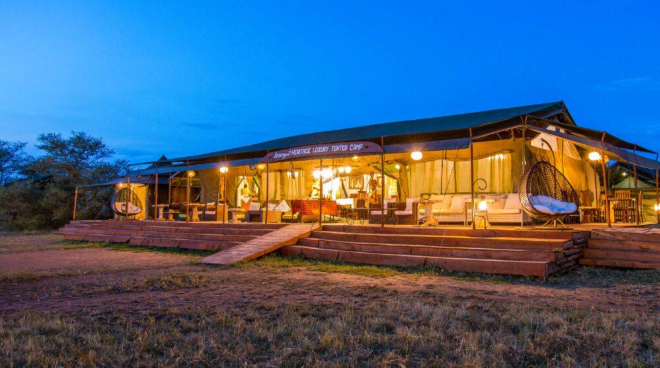
Options range from public campsites to tented camps and safari lodges.
TANAPA confirms that accommodation possibilities include campsites, lodges and tented camps located both within and around the park.
Kilipath African Safaris can arrange budget camping, mid-range lodge and luxury photography safari options depending on your preferred comfort level.
Professional photography does not necessarily require luxury accommodation.
A budget camping safari can provide the same national park wildlife.
The primary differences are accommodation style and comfort.
Travelers can spend the day photographing wildlife before returning to a public campsite for dinner and overnight.
For photographers who prefer spending money on additional safari days rather than expensive lodging, camping can offer excellent value.
Mid-range lodges and tented camps provide additional comfort while keeping the safari relatively affordable.
After spending many hours holding cameras and telephoto lenses, having a private bathroom, comfortable bed and hot shower can be very welcome.
Mid-range safari packages are particularly popular with couples and photographers staying several nights.
Luxury travelers can choose premium camps offering excellent locations, comfortable rooms, high-quality dining and personalized service.
For photographers, one of the greatest advantages may simply be location.
Certain properties allow travelers to remain close to productive wildlife areas, reducing transfer times.
Luxury does not necessarily produce better wildlife sightings, but strategic accommodation can improve the overall photography schedule.
Sunrise and sunset are not simply pretty backgrounds.
The direction of light can completely change an animal photograph.
Side lighting reveals texture.
Backlighting illuminates dust and fur.
Front lighting produces clear detail.
Try intentionally changing your vehicle position when possible and when doing so does not disturb wildlife.
Ask your guide to consider the sun.
Experienced photography guides understand that an ordinary sighting can become extraordinary when the vehicle is positioned according to light direction.
Low angles usually create more powerful wildlife portraits.
However, visitors must remain safely inside safari vehicles except where exit is specifically permitted.
You should therefore never leave the vehicle simply to achieve a lower photograph.
Instead, use available windows or lower shooting positions safely within the vehicle when possible.
Even moving your camera from the roof opening to the side window can dramatically change perspective.
Do not underestimate smartphones.
When elephants approach reasonably close, modern phones can capture outstanding environmental photographs and video.
Use your main camera rather than excessive digital zoom whenever possible.
Clean the lens frequently because dust and fingerprints quickly reduce image quality.
Use burst mode for movement.
Tap on the animal to control focus and exposure.
Record short videos as well as photographs.
Vertical video can be useful for Instagram Reels and TikTok, while horizontal video works better for YouTube and television.
A photography safari requires more than simply visiting a national park.
Timing, vehicle positioning, guide communication and patience can all affect your results.
Kilipath African Safaris can customize Tarangire itineraries for photographers, couples, solo travelers, families and small groups.
Private safaris provide particularly strong flexibility for photography.
Your guide can spend longer at productive sightings, start early when practical and build the game drive around wildlife movement rather than rushing through a fixed checklist.
We can also combine Tarangire with Serengeti, Ngorongoro Crater, Lake Manyara and other Tanzania destinations.
Whether you are traveling with a smartphone, mirrorless camera or professional wildlife photography setup, Kilipath African Safaris can help create a Tarangire safari around your interests.
Choose from budget camping, mid-range lodges or luxury accommodation and combine Tarangire with Serengeti and Ngorongoro for a complete Northern Tanzania photography adventure.
Contact Kilipath African Safaris to start planning your customized Photography Tarangire Safari and experience Tanzania through your own lens.
Planning a budget Ngorongoro Crater safari holiday from Arusha? Compare a crater day trip, a two-day Tarangire and Ngorongoro safari, or a…
Read articleA Lake Manyara safari can cost USD 150–220 per person for a shared day trip from Arusha. A published example of a…
Read articleA Tanzania safari from Zanzibar can mean a short mainland trip during your beach holiday or a complete package with flights, game…
Read articleLooking for a group Tanzania safari price from Kilipath African Safaris? A published example for our four-day shared camping safari through Tarangire,…
Read article

