
Budget Ngorongoro Crater Safari Holiday
Planning a budget Ngorongoro Crater safari holiday from Arusha? Compare a crater day trip, a two-day Tarangire and Ngorongoro safari, or a…
Read articleArusha City - Tanzania
Safari & Travel Tips
September 1, 2026 · 14 min read
A premium Ngorongoro Crater safari offers one of the most remarkable wildlife experiences in Tanzania. Imagine standing on the crater rim in the early morning while mist moves across the forested slopes and the enormous caldera slowly appears below you. Within hours, you could be watching lions resting on the grass, elephants walking beside fever trees, hippos cooling themselves in freshwater pools and flamingos feeding along the lake.
This premium safari combines outstanding wildlife viewing with a private 4x4 vehicle, an experienced safari guide, carefully selected accommodation and a flexible itinerary designed around your interests.
Ngorongoro Crater is the centerpiece of the wider Ngorongoro Conservation Area, a UNESCO World Heritage property known for its wildlife, volcanic landscapes and cultural significance. The conservation area covers highland plains, savanna, forests and archaeological sites while supporting both wildlife and Maasai pastoral communities. UNESCO describes Ngorongoro as a mixed natural and cultural heritage destination of exceptional global importance.
Whether you are planning a honeymoon, family holiday, photographic safari or private luxury journey, Ngorongoro can be included in a customized Northern Tanzania itinerary.
A premium safari provides more than comfortable accommodation. It gives you privacy, flexibility and personalized service throughout your journey.
Unlike a shared tour, a private premium safari allows you to travel at your preferred pace. Your guide can spend additional time at interesting sightings, adjust departure times where park regulations permit and focus on the animals or landscapes that interest you most.
The main advantages include:
This experience is suitable for couples, families, small groups, solo travelers and photographers who value comfort without losing the adventurous spirit of an African safari.
Ngorongoro Crater was formed after a massive volcano collapsed millions of years ago. The crater is approximately 20 kilometers across, around 600 meters deep and covers a floor area of roughly 260 square kilometers, according to the Ngorongoro Conservation Area Authority.
Its walls surround a remarkably varied ecosystem of open grasslands, marshes, forests, springs and Lake Magadi. These habitats support a high concentration of resident wildlife.
The descent from the crater rim is an experience in itself. Your safari vehicle follows a winding road through thick vegetation before reaching the open crater floor. The dramatic change in elevation, scenery and temperature creates the feeling of entering a separate natural world.
Because water and grazing are available in the crater throughout much of the year, many animals remain inside or close to the caldera. This creates rewarding wildlife-viewing opportunities during both wet and dry seasons.
The crater is famous for its dense population of large mammals and predators. Although wildlife sightings can never be guaranteed, visitors may encounter an extraordinary variety of species in a single game drive.
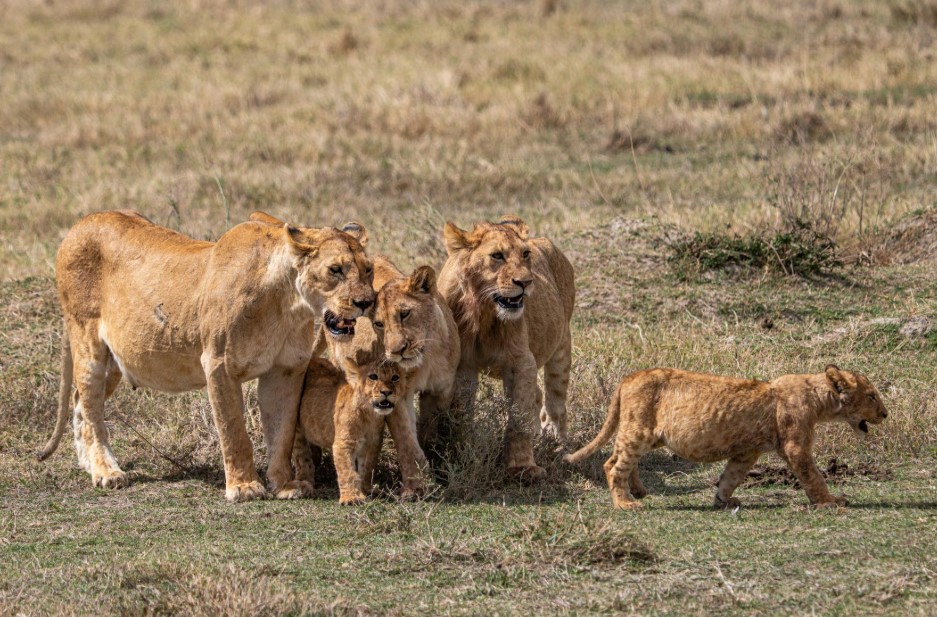
Ngorongoro is known for its resident lion population. Lions may be seen resting in the grass, following herds or gathering near water. Early mornings can be especially rewarding because the animals are often more active before the temperature rises.
The endangered black rhinoceros is one of Ngorongoro’s most sought-after sightings. Rhinos are sometimes visible in the open grasslands, although they may be far from the road. Binoculars and a knowledgeable guide can make a significant difference when searching for them.
Large bull elephants are regularly observed in and around the crater. The Lerai Forest is one of the areas where elephants may appear among acacia and fever trees. Breeding herds are more commonly encountered in other parts of the wider conservation landscape.
Buffaloes are common within the crater and may be seen in large herds. They often graze on the open plains or rest in muddy areas, sometimes accompanied by oxpecker birds.
Leopards live within the wider Ngorongoro ecosystem but are more difficult to find than lions. They prefer areas that provide cover, including forests and wooded slopes. A leopard sighting is therefore an especially memorable part of a crater safari.
The crater supports a notable population of spotted hyenas. These intelligent predators are active hunters as well as scavengers. Guests may observe them moving across the plains, resting near dens or interacting with lions.
Hippos are commonly seen in pools and wetlands on the crater floor. A designated picnic area near a hippo pool provides travelers with an opportunity to enjoy lunch while observing the surrounding landscape.
Large numbers of herbivores live in the crater. Wildebeest, zebras, Thomson’s gazelles and Grant’s gazelles form an essential part of the ecosystem and provide prey for resident predators.
Other possible sightings include:
Giraffes are generally absent from the crater floor, partly because the steep descent routes and habitat conditions are not ideal for them. However, they can be seen elsewhere within the Ngorongoro Conservation Area and along nearby safari routes.
The following itinerary can be arranged as a private two-day safari from Arusha. It can also be extended to include Tarangire, Lake Manyara, Serengeti or the Ngorongoro Highlands.
After breakfast, your private safari guide will collect you from your hotel in Arusha. Following a short briefing, you will begin the journey toward the Ngorongoro Highlands in a private 4x4 Land Cruiser.
The route passes through rural communities, farmland and the landscapes of the Great Rift Valley. Depending on your preferred program, you can stop at a viewpoint, local market, cultural center or coffee estate.
After arriving at your lodge, enjoy lunch and time to relax. Premium properties around Ngorongoro may offer forest views, crater-rim scenery, beautiful gardens, swimming pools, fireplaces, spa treatments or private terraces.
In the afternoon, choose one of the following optional experiences:
Return to your lodge for dinner and an overnight stay. Temperatures around the crater rim can become cold during the evening, so warm clothing is recommended.
After an early breakfast, travel toward the crater entrance and begin your descent into the caldera. Entering early usually provides cooler conditions, softer photographic light and a chance to observe predators while they are still active.
Your guide will search for lions, elephants, buffaloes, rhinos, hyenas, hippos and plains animals while explaining the crater’s ecology and animal behavior.
The game drive normally explores several distinct habitats. You may pass through open grasslands, wetlands, springs, woodland and the shores of Lake Magadi. A picnic lunch will be served at an authorized site, commonly near a hippo pool.
After lunch, continue exploring before ascending the crater wall. You will then travel back to Arusha or continue to your next safari destination.
Arrival in Arusha is generally during the late afternoon or early evening, depending on traffic, road conditions and the final safari schedule.
Travelers who prefer a slower experience can choose a three-day itinerary.
Depart Arusha and travel through the Great Rift Valley. Enjoy an afternoon game drive in Lake Manyara National Park or visit Mto wa Mbu for a cultural and local-food experience. Overnight at a premium lodge in Karatu or near the conservation area.
Descend into Ngorongoro Crater for an extended game drive. Search for the Big Five and enjoy a picnic lunch on the crater floor. Return to your lodge in the late afternoon for dinner and relaxation.
Enjoy a relaxed breakfast followed by a coffee tour, forest walk or cultural visit. Return to Arusha, where you can be dropped at your hotel, Arusha Airport or another agreed location.
This option combines two very different ecosystems.
Meet our representative at Kilimanjaro International Airport or Arusha Airport and transfer to your hotel.
Drive to Tarangire for a private game drive. The park is known for elephants, ancient baobab trees, seasonal wetlands and the Tarangire River. Overnight at a premium lodge.
Enjoy a morning game drive before traveling to the Ngorongoro Highlands. Relax at your lodge or participate in an optional cultural activity.
Descend into the crater for a game drive and picnic lunch. Return to Arusha in the late afternoon.
For a more complete Northern Circuit experience, combine Ngorongoro with Serengeti National Park.
A typical itinerary includes:
Additional nights can be added in Serengeti for travelers interested in photography, predators or the Great Migration.
Accommodation is an important part of a premium Ngorongoro safari. Travelers can stay directly on the crater rim, inside the wider conservation area or in the fertile highlands near Karatu.
Crater-rim accommodation provides convenient access to the descent roads and, at selected properties, impressive views over the caldera.
Advantages include:
These lodges are often among the most expensive options and may have limited availability during peak travel periods.
Karatu is located outside the main conservation area and offers a wide selection of beautiful lodges, coffee-estate properties and boutique accommodations.
Advantages include:
The drive from Karatu to the crater descent adds travel time, but many guests appreciate the area’s atmosphere and accommodation choices.
A premium tented camp combines closeness to nature with comfortable facilities. Tented suites commonly include proper beds, private bathrooms, hot showers and furnished verandas.
Despite the word “tent,” these camps can provide a high level of comfort and personalized service.
Ngorongoro is a year-round safari destination. The best period depends on your interests, preferred scenery and tolerance for seasonal visitor numbers.
The dry season generally offers clear conditions and easier wildlife viewing. Animals gather around reliable water sources, vegetation becomes shorter and roads are usually more manageable.
This is also a popular travel period, so crater-rim lodges and premium accommodations should be booked early.
Short rains can transform the landscape into fresh green grasslands. The rain is often intermittent rather than continuous, although weather patterns can vary.
This period may provide:
The wider Ngorongoro and southern Serengeti ecosystem is especially interesting during the calving season. Large herds gather around Ndutu and the surrounding plains, while predators follow the concentration of young animals.
The main migration is not normally inside Ngorongoro Crater, but a crater visit can be combined with a private Ndutu safari.
These months are usually wetter, producing lush landscapes and dramatic cloud formations. Some properties may offer seasonal rates, although muddy roads and heavy rain can affect travel.
For travelers who enjoy quieter surroundings and rich green scenery, this can still be a rewarding period.
A typical private package includes:
Always read your final quotation carefully because exact inclusions depend on the itinerary and accommodation category selected.
Unless clearly stated in the package, the following items are normally excluded:
Domestic flights can be added if you are combining the safari with Zanzibar, Dar es Salaam or another destination.
Your private vehicle plays a major role in the quality of your safari. A suitable Ngorongoro safari vehicle should be a properly maintained 4x4 designed for Tanzania’s park roads.
Our private safari vehicles can include:
Your professional guide manages the journey, locates wildlife and explains animal behavior, vegetation, geology and local culture.
A private guide also allows the experience to be adapted to special interests such as birdwatching, wildlife photography, family travel or honeymoon privacy.
Ngorongoro is an excellent honeymoon destination because it combines adventure, privacy and romantic accommodation.
Special arrangements can include:
A Ngorongoro honeymoon is particularly attractive when combined with Serengeti and Zanzibar.
Families can enjoy Ngorongoro with an itinerary designed to limit long drives and include regular rest stops. Private vehicles are particularly helpful because parents can adjust the schedule according to their children’s energy levels.
Family-friendly planning may include:
Parents should check minimum-age policies for walking safaris and certain premium lodges before confirming the trip.
The crater provides excellent opportunities for landscape, wildlife and bird photography. Early departure is recommended for softer light and increased animal activity.
A photography-focused private safari can provide:
Visitors must remain on authorized roads and follow all conservation regulations. Drones generally require special authorization and should never be assumed to be permitted.
Conditions can change considerably between the warm crater floor and the cool highlands.
Recommended items include:
Avoid packing only summer clothing. Early mornings and evenings on the crater rim can feel surprisingly cold.
Ngorongoro is not only a wildlife destination. It is a living cultural landscape where conservation, tourism and Maasai pastoral life exist within the same wider area.
The conservation area was established in 1959 as a multiple-use landscape, and its cultural values were added to its World Heritage recognition in 2010. UNESCO records the area’s significance for both wildlife protection and traditional pastoral communities.
Responsible visitors should:
Official regulations state that entry gates generally operate between 06:00 and 18:00, although schedules and access conditions should always be confirmed for the specific travel date. Ngorongoro Conservation Area regulations apply to all visitors and operators.
Most safaris begin in Arusha, the main gateway to Tanzania’s Northern Safari Circuit.
The road from Arusha to the Loduare entrance is approximately 160 kilometers. The official conservation authority estimates the drive at around two hours under suitable conditions, although total travel time to a lodge or crater descent point can be longer. Official Ngorongoro visitor information recommends using a 4x4 when traveling beyond the primary roads.
Travelers normally arrive through:
Domestic flights connect Zanzibar and other Tanzanian destinations with Arusha or Kilimanjaro, allowing Ngorongoro to be combined with a beach holiday.
Your safari can be customized according to:
Popular combinations include:
A premium Ngorongoro safari brings together remarkable wildlife, volcanic scenery, personalized service and carefully selected accommodation. From your first view over the crater rim to an encounter with lions, elephants or a distant black rhinoceros, every part of the journey is designed to be meaningful and comfortable.
Kilipath African Safaris can customize the experience around your travel dates, group size, accommodation preference and onward plans. We can also combine Ngorongoro with Serengeti, Tarangire, Lake Manyara, Ndutu, Mount Kilimanjaro or Zanzibar.
To receive a personalized quotation, send us:
Start planning your private premium Ngorongoro Crater safari today and experience one of Tanzania’s greatest natural wonders with a professional local team.
Safari & Travel Tips

Safari & Travel Tips Nov 24, 20263 min read
Planning a budget Ngorongoro Crater safari holiday from Arusha? Compare a crater day trip, a two-day Tarangire and Ngorongoro safari, or a…
Read article
Safari & Travel Tips Nov 24, 20264 min read
A Lake Manyara safari can cost USD 150–220 per person for a shared day trip from Arusha. A published example of a…
Read article
Safari & Travel Tips Nov 24, 20265 min read
A Tanzania safari from Zanzibar can mean a short mainland trip during your beach holiday or a complete package with flights, game…
Read article
Safari & Travel Tips Nov 24, 20262 min read
Looking for a group Tanzania safari price from Kilipath African Safaris? A published example for our four-day shared camping safari through Tarangire,…
Read article