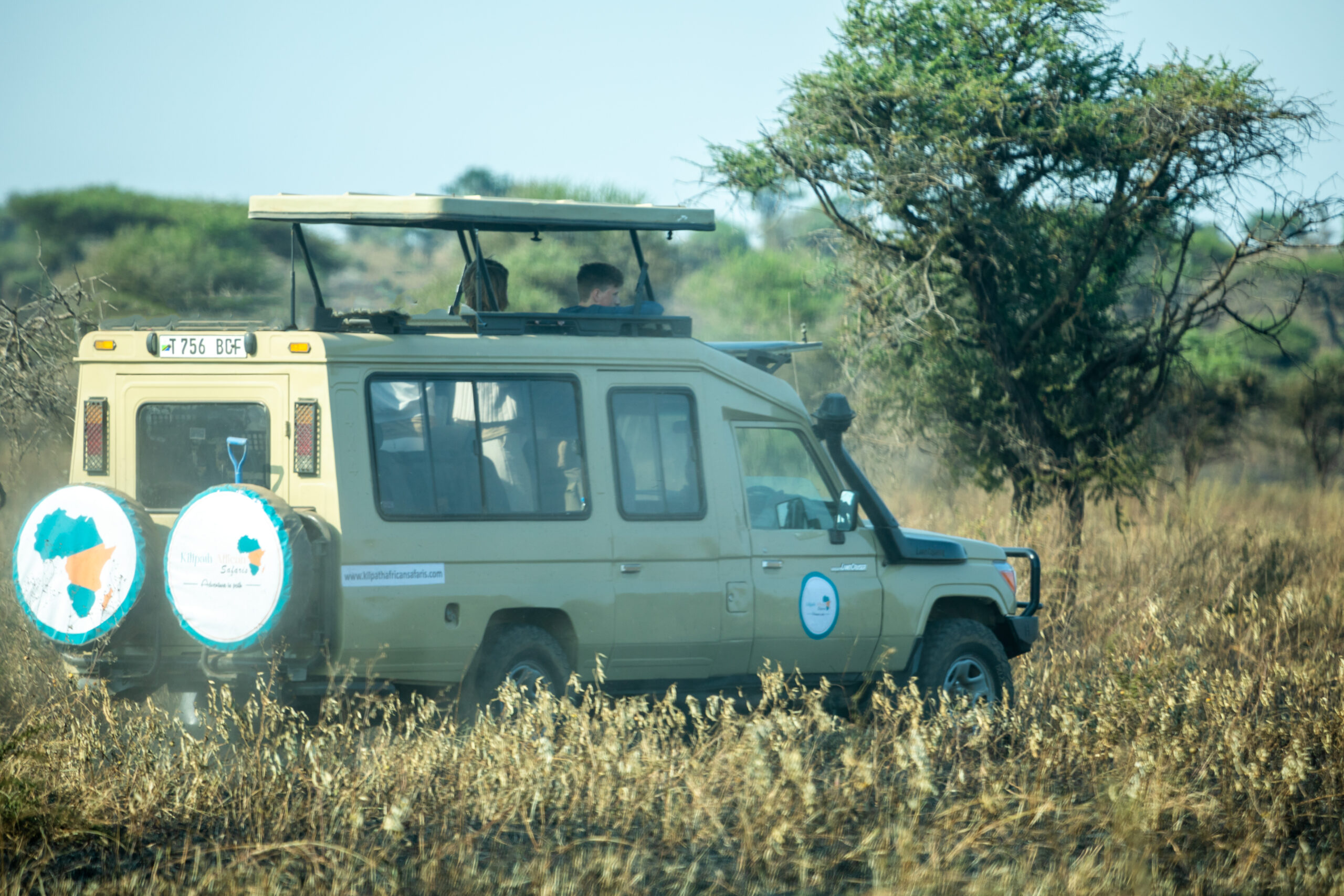
A memorable Tanzania safari begins with a route that suits your interests. You might want to watch elephants beneath Tarangire’s baobab trees, explore the Serengeti’s open plains, or spend an unhurried morning looking for wildlife in Ngorongoro Crater.
This premium Tanzania wildlife safari travel guide explains how to choose your destinations, travel dates, accommodation, and safari style. The aim is to help you build a trip that combines rewarding wildlife viewing with comfort and enough time to enjoy each place.
What Makes a Tanzania Safari Premium?
A premium safari brings together thoughtful planning, knowledgeable guiding, comfortable accommodation, and reliable service.
The details matter: where your camp sits in relation to wildlife, how much time you spend driving between destinations, and whether your itinerary allows you to pause at an interesting sighting.
When comparing safari proposals, look for:
- An experienced guide: Someone who understands animal behavior and can explain the landscape around you.
- A suitable vehicle: Comfortable seating, good visibility, and space for your luggage and photography equipment.
- Well-positioned accommodation: Camps and lodges chosen for access to the areas you want to explore.
- A realistic pace: Enough nights in each destination to make the journey worthwhile.
- Clear inclusions: Written details covering accommodation, meals, transfers, park fees, and activities.
A private safari is especially useful if you value control over your daily pace. Activities and driving hours still follow park regulations, but you can discuss your interests directly with your guide.
Where to Go on a Premium Tanzania Wildlife Safari
Serengeti National Park
The Serengeti is a natural centerpiece for a wildlife-focused itinerary. Its landscapes support year-round wildlife viewing, while the Great Migration adds a seasonal reason to choose one area over another.
Location is crucial. A camp in Central Serengeti serves a different purpose from one in the far north or near the southern plains. Choose your accommodation around your travel dates and wildlife priorities, rather than selecting a lodge by appearance alone.
For a relaxed itinerary, consider spending at least three nights in the Serengeti. This gives you time to explore without making every game drive part of a transfer.
Ngorongoro Crater
Ngorongoro Crater combines a dramatic setting with a rich concentration of wildlife. The wider conservation area is internationally recognized for its biodiversity, including threatened species such as black rhinoceros. Sightings always depend on conditions and animal movements.
When choosing accommodation, compare a crater-rim stay with a lodge near Karatu. Consider the setting you prefer, the distance to your next destination, and the timing of your crater visit.
Tarangire National Park
Tarangire is known for elephants and its distinctive baobab landscapes. It adds a different setting to a northern Tanzania safari and pairs naturally with a route that continues toward Ngorongoro and the Serengeti.
An overnight stay can make the visit feel less hurried, particularly if you enjoy taking time over individual sightings.
Ndutu and the Southern Plains
Travelers interested in the migration’s calving season should consider the Ndutu area and southern Serengeti ecosystem. Calving generally occurs between January and March, although rainfall influences the herds’ movements and distribution.
Ask specifically where your accommodation is located. A general Serengeti itinerary may not include the southern plains.
Nyerere National Park
Nyerere offers a different safari setting, shaped by waterways, woodland, and floodplains. Boat safaris on the Rufiji River can add variety to a trip otherwise focused on vehicle-based wildlife viewing. Confirm activity availability when planning your stay.
When Is the Best Time to Visit Tanzania?
The best time depends on your priorities. General wildlife viewing, migration tracking, birdwatching, and quieter travel can favor different dates.
| Travel period |
What to consider |
| January–March |
Consider the southern plains and Ndutu for calving-season interests. |
| April–May |
Heavier rains can affect roads, wildlife viewing, and access to some camps. |
| June–October |
Dry-season conditions make this a popular period for safari travel. |
| July–September |
Often chosen for a chance of migration river crossings in the northern Serengeti. |
| November–December |
Green landscapes and birdwatching can be rewarding; plan for variable rainfall. |
These are planning patterns rather than fixed schedules. Tanzania’s tourism guidance highlights dry-season travel, green-season birdwatching, and the effect of heavy rains in April and May. Migration timing follows conditions, so no itinerary can guarantee a river crossing.
Choosing Your Accommodation
Look beyond photographs when comparing luxury lodges and tented camps. Ask how each property supports the safari you want.
Luxury tented camps suit travelers who enjoy a close connection to the surrounding landscape. Confirm bathroom arrangements, electricity availability, and any accessibility requirements before booking.
Safari lodges may appeal if you prefer solid-walled rooms and particular facilities. Check the amenities of the actual room category being quoted.
Seasonal camps can be useful for migration-focused travel. Confirm their operating dates and exact location for your stay.
A well-located camp can be more valuable to your itinerary than extra facilities that you have little time to use.
A Suggested Eight-Day Premium Safari
This northern-circuit example allows time for both wildlife viewing and transfers:
| Day |
Suggested plan |
| 1 |
Arrive and overnight in Arusha |
| 2 |
Travel to Tarangire for wildlife viewing and an overnight stay |
| 3 |
Enjoy further exploration before continuing toward Karatu |
| 4 |
Visit Ngorongoro Crater and overnight nearby |
| 5 |
Transfer to the Serengeti, with wildlife viewing as routing allows |
| 6 |
Explore the Serengeti |
| 7 |
Spend another day in the Serengeti |
| 8 |
Depart by a suitable flight or begin the road return |
Adapt the Serengeti section to the season. A northern migration itinerary may need additional nights or flights, while a calving-season trip should be designed around the southern plains.
Check onward flight timing carefully, especially when returning by road.
How Much Does a Premium Safari Cost?
A useful quotation needs your dates, group size, preferred accommodation, and route. The word “premium” alone does not define a consistent price or service level.
The main cost factors include:
- Season and accommodation category.
- Number of travelers sharing the vehicle.
- Number of safari nights.
- Private guiding and vehicle arrangements.
- Domestic flights and transfers.
- Park and conservation charges.
- Optional experiences, such as balloon safaris.
Request an itemized proposal and compare equivalent services. Confirm whether drinks, laundry, tips, flights, and optional activities are included before assessing value.
What to Pack
Pack for time outdoors, changing temperatures, and limited luggage space.
Useful essentials include comfortable clothing, a warm layer, sun protection, closed shoes, binoculars, camera batteries, and a reusable water bottle. Carry personal medication in your hand luggage.
Ask your operator about laundry and luggage storage. If your itinerary includes light-aircraft flights, check the airline’s baggage rules before choosing your suitcase.
Responsible Wildlife Viewing
Your guide’s judgment is part of the experience. Give animals space, keep noise low, and follow instructions around sightings and camp.
Avoid pressuring a guide to approach too closely or interrupt animal behavior for a photograph. For cultural visits, choose experiences arranged with community participation and ask before photographing people.
Plan Your Tanzania Safari with Kilipath African Safaris
A well-planned safari starts with your interests: the wildlife you hope to see, your preferred travel pace, and the accommodation that makes you comfortable.
Share your travel dates, number of travelers, and approximate budget with Kilipath African Safaris to discuss a personalized itinerary through Tanzania’s wildlife destinations.