

Budget Ngorongoro Crater Safari Holiday
Planning a budget Ngorongoro Crater safari holiday from Arusha? Compare a crater day trip, a two-day Tarangire and Ngorongoro safari, or a…
Read articleArusha City - Tanzania
Safari & Travel Tips
September 3, 2026 · 14 min read
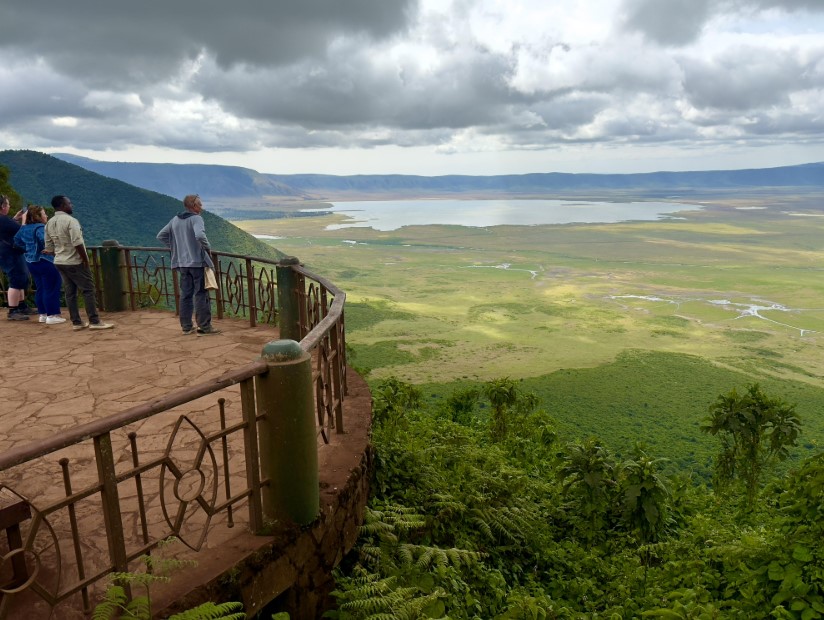
Imagine descending through a cool, mist-covered forest before the enormous Ngorongoro Crater opens beneath you. On the grasslands below, zebras graze beside wildebeest, elephants move slowly through the woodland, and lions rest near the safari tracks.
A private Ngorongoro Crater safari experience gives you the freedom to explore this remarkable landscape in your own safari vehicle, accompanied by a professional guide. Instead of following a fixed group schedule, you can spend more time watching the animals you love, stop for photographs whenever you wish, and organize the day around your interests.
Ngorongoro is one of Tanzania’s most celebrated wildlife destinations. Its dramatic scenery, abundant resident animals and relatively compact game-viewing area make it ideal for couples, honeymooners, photographers, families and first-time safari travelers.
This guide explains everything you need to know before booking your private Ngorongoro safari, including wildlife, itineraries, accommodation, costs, transportation and practical preparation.
A private safari means that the safari vehicle and professional guide are reserved exclusively for you and your travel companions. You will not share the vehicle with travelers outside your booking.
Your private safari normally includes:
Private tours offer considerably more flexibility than shared group safaris. Your guide will still follow park regulations and permit times, but the pace of the game drive can be adjusted according to your preferences.
If you are interested in lions, your guide can dedicate more time to searching for predators. Birdwatchers can stop near wetlands and forest edges, while photographers can wait for better light or a more favorable animal position.
Your vehicle is occupied only by your party and guide. This creates a relaxed environment where you can ask questions, discuss sightings and enjoy the scenery without worrying about the preferences of unrelated travelers.
Private safaris are particularly suitable for honeymooners, families, older travelers and guests celebrating a special occasion.
During a shared tour, the group must collectively decide when to leave a sighting. On a private safari, you control the pace.
You may choose to remain with a pride of lions, watch elephants moving through the Lerai Forest or wait beside a hippo pool. Although wildlife sightings can never be guaranteed, having a private vehicle allows your guide to respond more effectively to current animal movements.
Photographers benefit enormously from private arrangements. You can ask the guide to position the vehicle for the best available light, background and viewing angle, provided this can be done safely and within park rules.
You can also remain at a sighting longer without feeling pressured to accommodate other passengers.
Most visitors benefit from descending into the crater early in the morning. However, your broader schedule can be adapted according to your accommodation, travel route and personal preferences.
An early descent usually offers:
Families traveling with children can plan rest stops more easily. Parents can bring snacks, jackets, cameras and other necessities without having to coordinate limited space with a larger group.
A private guide can also explain wildlife in a way that matches the children’s ages and interests.
The Ngorongoro Crater is a vast volcanic caldera within the Ngorongoro Conservation Area in northern Tanzania. It was formed after a massive ancient volcano collapsed, leaving a natural basin surrounded by steep walls.
The crater floor covers approximately 260 square kilometers and includes grasslands, seasonal wetlands, woodland, freshwater pools and Lake Magadi, a shallow alkaline lake.
The surrounding rim rises to roughly 2,200–2,400 meters above sea level in many places. Because of this elevation, the rim can be surprisingly cold, especially before sunrise, at night and during the rainy months.
The crater floor supports a high concentration of resident wildlife because it contains grazing areas, water sources and several different habitats. Animals can move in and out of the crater, but many remain in the basin for long periods.
Ngorongoro is not a traditional national park. It is a multiple-use conservation area where wildlife protection, tourism and pastoral communities coexist. Maasai families live in permitted parts of the wider conservation area and continue cultural traditions connected to livestock.
The crater’s wildlife density is one of the main reasons it is considered a highlight of Tanzania’s Northern Safari Circuit.
Ngorongoro is well known for its lions. Visitors may encounter individuals resting beside safari tracks, prides moving across the grasslands or lions watching herds of wildebeest and zebra.
Early morning is often an excellent time to search for predators, although sightings remain dependent on nature.
The endangered black rhinoceros is one of Ngorongoro’s most sought-after animals. The crater is among Tanzania’s important protected areas for the species.
Rhinos are frequently seen at a distance on open grasslands, so binoculars and a camera with a zoom lens are useful. A sighting cannot be promised, even with an experienced guide.
Large bull elephants are often observed around the Lerai Forest and other wooded areas. The combination of towering elephants, yellow-barked acacia trees and the crater wall creates beautiful photographic scenes.
Elephant family groups are less commonly seen on the crater floor than solitary males, though wildlife patterns can change.
Large numbers of wildebeest and zebra graze across the open plains. Unlike the herds undertaking the famous Serengeti migration, many animals in the crater are resident throughout the year.
Their presence also attracts predators such as lions, hyenas and jackals.
Ngorongoro supports a significant population of spotted hyenas. They are active hunters as well as scavengers and may be observed patrolling the plains, resting near water or competing with lions.
African buffalo are common in the crater. They may be found on open grasslands, near marshes or around the forest. Older males sometimes gather in small bachelor groups.
Hippos live in the crater’s pools and wetlands. The hippo pool is a popular place to stop for wildlife observation and, where permitted, enjoy a picnic in a designated area.
Depending on the day and season, you could also encounter:
Giraffes are generally not found on the crater floor, although they live elsewhere in the Ngorongoro Conservation Area. The steep descent routes and available habitat are believed to limit their regular presence inside the caldera.
Leopards are present in the wider conservation area but are difficult to see during a typical crater game drive.
The crater is also rewarding for birdwatchers. Its mixture of lakes, marshes, grasslands and woodland supports numerous species.
Possible sightings include:
Flamingo numbers on Lake Magadi vary according to water conditions and food availability. They should be considered a possible highlight rather than a guaranteed sighting.
Your day normally begins very early, particularly if you stay in Karatu or near the crater rim.
After breakfast, you travel toward the Ngorongoro entrance or descent road. Guests staying in Karatu must first drive to the conservation area gate and continue toward the crater.
The rim is often misty and cold in the morning, so keep a jacket accessible rather than packed deep inside your luggage.
Your guide completes the necessary formalities before descending into the caldera. The drive down passes through highland forest, where baboons, elephants and forest birds may occasionally be seen.
As you reach the floor, the habitat opens into grassland and the day’s main wildlife viewing begins.
Your guide searches for fresh animal tracks, watches the behavior of herbivore herds and communicates with other professional guides about recent sightings.
Because you are on a private safari, you can tell the guide which animals interest you most. Remember that guides can improve your chances of finding wildlife, but they cannot control animal movements.
Lunch is normally served at an authorized picnic area. A packed lunch may include sandwiches, fruit, snacks, juice and other items, while some safari programs provide hot meals.
Always follow your guide’s instructions around picnic sites. Wild animals may be nearby, and some birds have learned to take food from visitors.
After lunch, you continue exploring before beginning the ascent out of the crater. The exact schedule depends on your permit, road conditions and onward itinerary.
You may return to your lodge, continue to Arusha or travel toward another safari destination.
A single crater game drive is sufficient for most itineraries because wildlife is concentrated within a relatively compact area.
However, the overall length of your safari depends on the destinations you combine with Ngorongoro.
A two-day private tour can combine:
This works well for travelers with limited time.
A three-day itinerary creates a more comfortable pace and can include Tarangire, Lake Manyara and Ngorongoro.
Another possibility is a short Serengeti and Ngorongoro combination, although road travel will occupy a considerable portion of the itinerary.
Four or five days are recommended when combining Ngorongoro with Serengeti National Park. This provides more meaningful wildlife-viewing time and avoids turning the safari into a rushed road trip.
A popular five-day route is:
Additional days may be added for northern Serengeti, Lake Natron, Ndutu, cultural visits or a more leisurely itinerary.
Your private guide collects you from your hotel in Arusha after breakfast. You travel to Tarangire National Park, a landscape known for ancient baobab trees, elephants and the Tarangire River.
Enjoy a game drive and picnic lunch before continuing to Karatu or the Ngorongoro highlands for dinner and overnight accommodation.
After an early breakfast, drive to the Ngorongoro Conservation Area and descend into the crater.
Explore the grasslands, Lerai Forest, wetlands and Lake Magadi area while searching for lions, elephants, buffalo, hippos, hyenas and black rhinos.
After lunch and further game viewing, ascend from the crater and return to Arusha. Arrival is generally during the late afternoon or early evening, depending on traffic, road conditions and departure time.
Ngorongoro is a year-round safari destination. Resident wildlife means you do not need to plan your visit around a long-distance migration.
The dry season generally offers clear conditions and dependable wildlife viewing. Vegetation becomes less dense, and animals are often easier to spot.
This is also a popular travel period, so the crater may be busy. Booking early is advisable, particularly for July, August and September.
Short rains can bring greener scenery and dramatic skies. Rainfall is often intermittent rather than continuous, although weather cannot be predicted precisely.
This period can be attractive for photography because of the fresh landscape.
These months often provide good weather and excellent wildlife viewing. They are especially popular when travelers combine Ngorongoro with the southern Serengeti or Ndutu calving season.
Demand for vehicles and accommodation can be high.
This period usually receives the year’s heaviest rainfall. The crater and surrounding highlands become beautifully green, and there may be fewer tourists.
Roads can be muddy, and cloud or rain may affect visibility. A proper 4×4 vehicle and experienced guide are particularly important.
Your choice of accommodation affects your travel time, comfort and overall safari price.
Some lodges are positioned on or close to the rim, with views into the caldera. Their main advantage is proximity to the descent routes.
Benefits may include:
These properties are generally among the more expensive options.
Several properties are located within the wider Ngorongoro Conservation Area but do not directly overlook the crater. They can provide excellent service and convenient access at varying price levels.
Karatu is a popular base outside the conservation area. It offers budget, mid-range and luxury accommodation, including lodges, guesthouses and tented properties.
Staying in Karatu can reduce accommodation costs, but you will need additional driving time to reach the crater floor.
Budget travelers may stay at designated campsites. Camping safaris commonly provide tents, mattresses, sleeping bags, meals prepared by a safari cook and shared bathroom facilities.
The crater rim can become very cold at night, so warm clothing is essential.
A good safari vehicle is central to the experience. Most private Ngorongoro tours use a specially adapted 4×4 Land Cruiser.
Typical features include:
Vehicle specifications can vary, so ask your operator exactly what is provided.
Pack frequently used items in a small day bag. Large suitcases are inconvenient during game drives and may need to remain at your hotel or the operator’s office.
The cost depends on several factors:
Private safaris often become better value per person as the number of travelers increases because the vehicle cost is shared across the party.
A solo traveler covers most fixed vehicle and guide expenses alone, while a couple or family divides those costs among more people.
When comparing quotations, check whether the price includes:
Also confirm whether tips, visas, insurance, alcoholic drinks and optional activities are excluded. Fees and supplier prices can change, so request a current, itemized quotation for your exact travel dates.
| Feature | Private safari | Shared safari |
|---|---|---|
| Vehicle | Reserved for your party | Shared with other guests |
| Schedule | More flexible | Fixed group schedule |
| Sightings | Stay according to your interests | Group decides together |
| Photography | Easier positioning and patience | Limited by group preferences |
| Price | Higher overall | Usually more affordable |
| Privacy | Excellent | Limited |
| Family suitability | Highly suitable | Depends on group rules |
| Route changes | Sometimes possible | Usually restricted |
A shared tour is a practical choice for solo travelers and guests prioritizing price. A private tour is preferable when flexibility, privacy and a personalized experience are more important.
Ngorongoro’s weather can change quickly between the crater rim and floor.
Recommended items include:
Wear layers. The rim may be cold before sunrise, while the crater floor can become warm around midday.
Avoid relying only on a mobile phone for distant wildlife photography. A camera with a zoom lens is far more effective for rhinos, birds and predators away from the road.
A responsible private safari protects wildlife while respecting local communities and other visitors.
During your game drive:
Choose an operator that employs qualified guides, maintains its vehicles properly and treats staff and local partners fairly.
Ngorongoro and Serengeti form one of Africa’s strongest safari combinations. Serengeti offers immense open landscapes and extended predator viewing, while Ngorongoro provides concentrated wildlife inside a dramatic caldera.
Allow at least four or five days for a comfortable road itinerary.
Tarangire is famous for elephants, baobab trees and beautiful river landscapes. It is an excellent addition to a two- or three-day Ngorongoro safari.
Lake Manyara offers groundwater forest, birdlife and Rift Valley scenery. Wildlife conditions vary, but the park can add ecological variety to a Northern Circuit itinerary.
From approximately December through March, many travelers combine Ngorongoro with Ndutu to experience the wildebeest calving season. Exact migration movements depend on rainfall.
A carefully organized cultural experience can provide insight into Maasai traditions and daily life. Choose respectful, community-led visits rather than performances designed only for quick photographs.
Yes. A private Ngorongoro safari is an excellent honeymoon experience because it combines privacy, scenery and memorable wildlife viewing.
Couples can select a romantic lodge, arrange a private vehicle and include special touches such as:
Inform your safari consultant that you are traveling for your honeymoon before accommodation is booked.
Planning a budget Ngorongoro Crater safari holiday from Arusha? Compare a crater day trip, a two-day Tarangire and Ngorongoro safari, or a…
Read articleA Lake Manyara safari can cost USD 150–220 per person for a shared day trip from Arusha. A published example of a…
Read articleA Tanzania safari from Zanzibar can mean a short mainland trip during your beach holiday or a complete package with flights, game…
Read articleLooking for a group Tanzania safari price from Kilipath African Safaris? A published example for our four-day shared camping safari through Tarangire,…
Read article

