Skip to content

A private Nyerere National Park safari is one of the best choices for travelers searching for an authentic Tanzania wilderness experience away from some of the country’s busier safari routes.
Located in southern Tanzania, Nyerere National Park combines immense miombo woodland, open grasslands, riverine forests, wetlands, lakes and the spectacular Rufiji River. The park covers more than 30,000 square kilometers and is home to lions, elephants, buffaloes, giraffes, hippos, crocodiles, African wild dogs and more than 430 recorded bird species.
What makes Nyerere particularly interesting is the variety of safari experiences available. Travelers are not restricted to traditional vehicle game drives. Depending on the itinerary and permits, a safari can include Rufiji River boat trips, walking safaris, photographic game drives and even night game drives.
For couples, families, honeymooners, photographers and travelers who value flexibility, a private safari is especially attractive. Instead of sharing a vehicle with travelers following different schedules, your safari vehicle and guide are dedicated to your group.
This Private Nyerere National Park Safari Travel Guide explains how to plan the trip, when to visit, how many days to spend, how to reach the park and what wildlife and activities you can expect.
Why Choose a Private Nyerere National Park Safari?
A private safari provides something particularly valuable in a destination as large as Nyerere: time and flexibility.
During a shared safari, the guide normally needs to balance the interests of several travelers. On a private trip, the safari can be adapted much more closely to you.
Wildlife photographers can spend longer observing an animal rather than moving immediately to the next sighting. Families can take breaks when children need them. Honeymooners can choose a more relaxed program. Serious wildlife enthusiasts can arrange earlier departures and dedicate additional time to searching for particular species.
Nyerere is also well suited to travelers who prefer wilderness and variety rather than simply moving between famous wildlife viewpoints.
The Rufiji River adds an entirely different dimension to the experience.
Instead of watching wildlife only from a safari vehicle, you may find yourself traveling slowly along the river while hippos surface nearby, crocodiles rest on sandbanks and elephants approach the water to drink.
TANAPA identifies boat safaris, guided walking safaris and game drives among Nyerere’s signature visitor experiences.
Where Is Nyerere National Park?
Nyerere National Park lies in southern Tanzania and was created from part of the historic Selous landscape.
The Rufiji River flows through the northern portion of the park, producing channels, wetlands, sandbanks and oxbow lakes that attract wildlife, especially as conditions become drier. Away from the river, extensive miombo woodland and savannah create another type of ecosystem entirely.
This southern location makes Nyerere particularly convenient for travelers visiting:
Dar es Salaam → Nyerere → Zanzibar
or
Zanzibar → Nyerere → Zanzibar
It can also form part of a longer southern Tanzania safari combining Nyerere with destinations such as Mikumi or Ruaha.
Nyerere National Park or Selous Game Reserve?
Travelers frequently search online for both Selous safari and Nyerere National Park safari, which can cause confusion.
Nyerere National Park was formed from the northern section of the wider Selous landscape. TANAPA itself describes Nyerere as having been carved from the legendary Selous landscape.
Therefore, you may still encounter older accommodation descriptions, maps, safari packages and traveler reviews using the name Selous.
When booking, always confirm whether the itinerary actually enters Nyerere National Park and which lodge, camp, gate or airstrip is being used.
What Makes Nyerere National Park Special?
The biggest advantage of Nyerere is diversity.
A traveler can enjoy a morning wildlife drive, return to camp for lunch and later experience the Rufiji River by boat. Another day could begin with a guided walking safari before continuing by vehicle.
The scenery constantly changes between woodland, river channels, floodplains, palm-fringed lakes and open grassland.
Nyerere also has an important reputation for African wild dogs. TANAPA describes the park as one of East Africa’s strongholds for the species, alongside lion and leopard populations.
The river system supports large numbers of hippos and crocodiles, while elephants, buffaloes, giraffes, antelope and other wildlife occur across different habitats.
Wildlife in Nyerere National Park
Wildlife viewing is naturally unpredictable, which is part of what makes a genuine safari exciting.
Nyerere supports a broad collection of predators and herbivores.
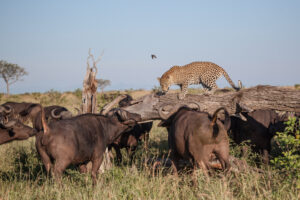
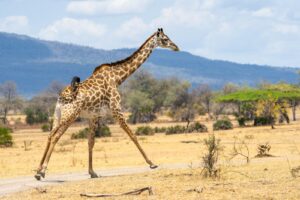
Visitors commonly travel in search of lions, African wild dogs, elephants, buffaloes, giraffes, zebras, impalas, waterbuck, hartebeest, hippos, crocodiles, hyenas and leopards.
The mixture of river habitat and woodland means that different species may be encountered in very different settings.
Along the Rufiji River and associated lakes, attention often turns toward hippos, crocodiles, elephants and water-associated birds.
Deeper into woodland and open areas, travelers may search for lions, giraffes, buffaloes, wild dogs and antelope.
TANAPA highlights sable, Lichtenstein’s hartebeest, waterbuck and other plains game among the park’s wildlife.
Can You See African Wild Dogs in Nyerere?
Yes. They are one of the animals for which Nyerere is particularly well known.
African wild dogs travel over large territories, however, so no responsible safari company can guarantee a sighting.
Searching for wild dogs is one reason a private safari can be advantageous. If tracks or recent sightings are reported, your guide has more flexibility to concentrate on that particular area without needing to follow the priorities of unrelated passengers.
TANAPA describes Nyerere as one of East Africa’s important strongholds for African wild dogs.
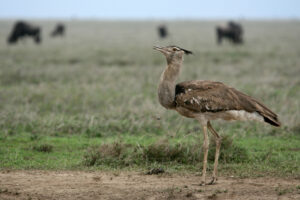
Birdwatching in Nyerere National Park
Bird lovers should not overlook Nyerere.
TANAPA reports more than 430 bird species, while its main park overview lists more than 440 recorded species.
The combination of woodland and wetlands creates opportunities to observe both terrestrial and water-associated birds.
Fish eagles, kingfishers, bee-eaters, skimmers and wetland birds are among the groups highlighted by the park authorities.
Private safaris are particularly useful for bird photographers because the guide can stop more frequently and dedicate additional time to species that a conventional big-game safari might pass quickly.
Rufiji River Boat Safari
The Rufiji River boat safari is one of Nyerere National Park’s defining experiences.
During a boat trip, visitors may encounter hippos in the channels, crocodiles near riverbanks and elephants or buffaloes approaching the water.
The change in perspective is significant.
On a game drive, wildlife is usually observed horizontally across plains or woodland. From a boat, wildlife can appear above you along the riverbank, directly ahead in the channel or reflected in the water.
Birdwatching is another major attraction.
TANAPA specifically highlights hippos, crocodiles, elephant crossings and river birdlife as features of Rufiji boat safaris.
For first-time visitors, including at least one boat safari in a multi-day Nyerere itinerary is highly recommended.
Game Drives in Nyerere National Park
Game drives remain the foundation of most Nyerere safaris.
A professional guide drives through different wildlife areas while searching for animals, tracks and signs of predator activity.
Early morning and late afternoon are often productive periods because temperatures are lower and wildlife can be more active.
TANAPA also notes that dawn and dusk provide excellent light and wildlife-viewing conditions, making these periods particularly attractive to photographers.
On a private safari, you can generally discuss your interests with the guide.
A photographer might request extra time with lions.
A birdwatcher might concentrate on wetlands.
A first-time visitor may prefer a broader search covering many different species.
That flexibility is one of the main reasons travelers choose a private vehicle.
Walking Safaris in Nyerere National Park
A walking safari allows visitors to explore the wilderness at a completely different scale.
From a vehicle, attention naturally goes toward large mammals. On foot, smaller details become important: tracks, dung, insects, trees, animal behavior, bird calls and ecological relationships.
Walking activities must follow park rules and require authorized guides or rangers. TANAPA notes that walking safaris require appropriate guides, permits and advance arrangements.
A walking safari should therefore never be treated as an independent hike.
It is a professionally guided wildlife activity.
Night Game Drives
Nyerere also offers opportunities for night game viewing under applicable park regulations.
This gives visitors an opportunity to look for wildlife that may be difficult to encounter during the day.
TANAPA’s tourism information specifically lists night game drives among the park’s activities and notes the possibility of encountering nocturnal wildlife.
Because regulations, availability and fees can change, night drives should be confirmed when designing your private itinerary rather than assumed to be automatically included.
Best Time for a Private Nyerere National Park Safari
For classic wildlife viewing, June through October is one of the most popular periods.
TANAPA describes the dry season as generally beginning around June and continuing into November.
As conditions become drier, wildlife increasingly concentrates around reliable water sources, making areas around the Rufiji particularly interesting.
July, August, September and October are excellent months for travelers prioritizing traditional wildlife viewing.
However, the green months have their own advantages.
Vegetation becomes lush, landscapes can be highly photogenic and birding can be excellent.
December through February can provide beautiful green scenery while parts of the park remain accessible.
Conditions become more challenging during the heavier rainy period, and accessibility or camp operations can vary.
Nyerere National Park by Season
| Period | General Conditions | Best For |
|---|---|---|
| June–October | Dry conditions and concentrated wildlife | Classic game viewing, photography |
| November | Transition period | Wildlife and changing landscapes |
| December–February | Greener scenery | Photography, birdlife, fewer visitors |
| March–May | Main rains | Green landscapes but access can be more difficult |
Exact rainfall is never guaranteed, so seasonal descriptions should be treated as general planning guidance rather than fixed weather predictions.
How Many Days Do You Need in Nyerere?
For most travelers, three to four days offers a comfortable introduction.
A two-day safari is possible, especially when flying from Dar es Salaam or Zanzibar, but your experience will naturally be more compressed.
Three days allow more time for both game drives and a Rufiji River activity.
Four days provide greater flexibility for wildlife viewing, photography and walking or boating activities.
Five days or longer are appropriate for travelers who prefer slower travel, honeymooners, photographers or guests combining several different safari activities.
Suggested 3-Day Private Nyerere Safari
A well-designed three-day safari can provide an excellent introduction to the park.
| Day | Suggested Experience |
|---|---|
| Day 1 | Fly or drive to Nyerere, lunch, afternoon game drive or Rufiji River boat safari |
| Day 2 | Full-day private game drive exploring different wildlife areas |
| Day 3 | Morning safari activity, transfer to airstrip or begin drive back to Dar es Salaam |
A fly-in itinerary provides considerably more safari time than a road itinerary because the transfer from Dar es Salaam by road takes approximately five hours under normal conditions, while flights can take roughly 45–60 minutes depending on the airstrip and routing.
Suggested 4-Day Private Nyerere National Park Safari
For many visitors, four days is an excellent balance.
Day 1 – Arrival and Rufiji River Experience
Arrive from Dar es Salaam or Zanzibar and meet your private safari guide.
Depending on your arrival time, continue with an afternoon game drive or boat safari.
A sunset boat trip provides a relaxed introduction to the ecosystem and can produce excellent photographic opportunities.
Day 2 – Full-Day Nyerere Game Drive
Depart after breakfast for an extended game drive.
Your guide searches woodland, riverine areas and open plains for elephants, lions, giraffes, buffaloes, wild dogs and other wildlife.
Lunch may be enjoyed at an appropriate picnic location before continuing the safari.
Day 3 – Walking Safari and Game Viewing
Begin the day with an authorized walking experience where available.
After breakfast or lunch, continue exploring by safari vehicle.
This combination provides two very different perspectives on the ecosystem.
Day 4 – Final Safari and Departure
Enjoy an early activity before transferring to your airstrip or starting the road journey back toward Dar es Salaam.
Travelers continuing to Zanzibar can arrange the itinerary around available domestic flights.
How to Get to Nyerere National Park
There are two principal approaches: fly or drive.
For travelers with limited time, flying is particularly convenient.
TANAPA lists air access from Dar es Salaam to park airstrips including Mtemere, Siwandu and Beho Beho.
Scheduled light-aircraft services can take approximately 45 minutes to one hour from Dar es Salaam, although some flights make multiple airstrip stops.
Travel by road is also possible.
SafariBookings estimates the approximately 230-kilometer journey from Dar es Salaam to Mtemere Gate at around five hours, although actual driving time can vary according to road conditions, weather and stops.
Zanzibar to Nyerere National Park Safari
Nyerere is particularly attractive for travelers staying in Zanzibar because it offers one of the easiest ways to combine a beach holiday with a mainland wildlife safari.
Scheduled light-aircraft services connect Zanzibar and Nyerere, with travel times commonly around an hour depending on routing and airstrip stops.
That means visitors do not necessarily need to travel all the way to Arusha before seeing Tanzania’s large wildlife.
A typical combination can look like:
Zanzibar → Nyerere safari → Zanzibar
or
Dar es Salaam → Nyerere safari → Zanzibar beach holiday
For travelers with only two or three safari nights available, this arrangement can save considerable travel time.
Private Nyerere Safari From Dar es Salaam
Dar es Salaam is another excellent starting point.
Travelers can choose between a private road safari and a fly-in safari.
Driving usually appeals to guests seeking better value or who enjoy overland travel.
Flying appeals to travelers who want to maximize time inside the park.
If you have only three days available, flying can be especially worthwhile because several hours otherwise spent traveling by road can instead be used for wildlife activities.
Where to Stay in Nyerere National Park
Accommodation ranges from relatively simple safari camps to high-end luxury properties.
The best option depends on your budget, preferred level of comfort, location and activities.
When comparing accommodation, do not evaluate the room alone.
Location can dramatically affect the safari.
A beautiful lodge that requires long transfers from the main wildlife areas may not necessarily be the best choice for a short trip.
For a private safari, we recommend balancing four factors:
comfort + wildlife location + activity options + transfer logistics.
If a Rufiji River safari is important to you, select accommodation that provides convenient access to the river or associated lakes.
Budget, Mid-Range or Luxury Private Safari?
A private safari does not automatically mean luxury accommodation.
It describes the vehicle and safari arrangement, not necessarily the hotel category.
Travelers can therefore combine a private vehicle with relatively simple accommodation.
Mid-range safaris generally offer comfortable rooms or permanent tents, private bathrooms and attractive locations without the highest luxury rates.
Luxury safaris may include premium tented suites, more personalized camp service, exceptional locations, private dining and additional activities.
For honeymooners or special occasions, a private vehicle combined with an intimate tented camp can create a particularly memorable experience.
How Much Does a Private Nyerere Safari Cost?
There is no single fixed Nyerere safari price because several variables affect the final quote.
The most important factors are the number of travelers, number of safari days, accommodation category, fly-in versus road transport, season, private vehicle costs and optional activities.
For example, two people traveling privately normally pay more per person than four people because the vehicle and guide costs are divided between fewer guests.
Fly-in itineraries also generally cost more than road itineraries because domestic flights are added.
Park fees are another component. TANAPA currently publishes an international adult Nyerere entry fee of USD 70 and international child fee of USD 20, but travelers should always obtain a current quotation because government tariffs and taxes may change.
For an accurate price, request a quote based on your exact travel dates and number of guests rather than relying on an old online package price.
Private Safari vs Shared Safari in Nyerere
A shared safari may cost less, but a private safari provides significantly more control over your day.
If you see lions hunting, you can choose to remain at the sighting longer.
If you enjoy bird photography, your guide can dedicate additional stops to birds.
If you prefer an earlier breakfast and departure, the program can often be adapted accordingly.
For couples, families and photographers, this flexibility can justify the additional cost.
It also means your safari vehicle becomes part of your personal experience rather than simply transportation between attractions.
Is Nyerere Suitable for Families?
Yes.
A private safari is particularly useful for families because the program can be adapted around children.
Parents can request shorter game-drive sessions, additional rest time and accommodation with suitable family-room arrangements.
However, minimum-age restrictions can apply to activities such as walking safaris.
Families should therefore provide children’s ages when requesting the safari so that the itinerary can be designed correctly from the beginning.
Is Nyerere Good for Honeymoons?
Nyerere can be an excellent honeymoon destination.
The combination of wilderness, tented camps, sunset boat safaris and relatively remote surroundings creates a romantic atmosphere very different from conventional resort travel.
A popular honeymoon combination is:
Nyerere National Park + Zanzibar
The safari provides adventure and wildlife while Zanzibar adds beaches, ocean activities and relaxation.
Flying between the coast and Nyerere makes this combination especially convenient.
Is Nyerere Good for Photography?
Yes, particularly for photographers who enjoy varied environments.
Wildlife can be photographed against woodland, open plains, riverbanks and wetlands rather than a single landscape type.
Boat safaris also create opportunities for low-angle photographs of hippos, crocodiles, elephants and birds.
TANAPA recommends dawn and late-afternoon game viewing for strong light and sightings.
A private vehicle is highly recommended for serious photographers because it gives you more control over positioning and how long you remain at a sighting.
What Should You Pack?
Safari clothing should be practical, lightweight and generally neutral in color.
Comfortable walking shoes, sun protection, insect repellent, binoculars, a camera, spare batteries, personal medication and a light jacket are useful.
TANAPA specifically recommends binoculars, lightweight neutral clothing, sun protection and a light jacket for boat activities.
Guests using light aircraft should also confirm the airline’s current baggage restrictions before packing because bush-plane allowances are often more restrictive than international-flight allowances.
Is Nyerere National Park Worth Visiting?
For the right traveler, absolutely.
Nyerere is especially suitable for someone who wants more than a standard vehicle safari.
The ability to combine game drives, river safaris and walking experiences makes it one of Tanzania’s most varied safari destinations.
Travelers focused exclusively on famous northern Tanzania landmarks may still prefer Serengeti and Ngorongoro.
However, visitors looking for an expansive southern wilderness, unusual safari activities and easy access from Dar es Salaam or Zanzibar should seriously consider Nyerere.
Nyerere or Serengeti: Which Is Better?
Neither is universally better.
They provide different experiences.
The Serengeti is globally famous for its open plains, huge wildlife populations and Great Migration.
Nyerere stands out for the Rufiji River, boat safaris, extensive woodland and strong African wild dog habitat.
Travelers wanting the Great Migration should choose the Serengeti.
Travelers wanting a combination of vehicle, river and walking experiences may prefer Nyerere.
Those with enough time can visit both, although domestic-flight logistics should be carefully planned.
Nyerere or Mikumi National Park?
Mikumi can be convenient for shorter road safaris from Dar es Salaam and features classic open savannah scenery.
Nyerere is significantly larger and offers the added attraction of Rufiji River boat safaris.
If you have only a short time and want a straightforward game-drive experience, Mikumi may work well.
If you have three or four days and want a more immersive wilderness safari with different activities, Nyerere is often the stronger choice.
Nyerere or Ruaha National Park?
Both are outstanding southern Tanzania destinations.
Ruaha is particularly famous for its wild landscapes, elephants and predator experiences.
Nyerere adds the important dimension of the Rufiji River and boating.
Rather than choosing between them, travelers with sufficient time can create a Southern Tanzania Circuit Safari combining Nyerere and Ruaha via light aircraft.
This works particularly well for experienced safari travelers returning to Tanzania after already visiting Serengeti and Ngorongoro.
Plan Your Private Nyerere National Park Safari
A private Nyerere National Park safari offers much more than driving from one wildlife sighting to another.
It allows you to explore Tanzania’s southern wilderness at your own pace, following the Rufiji River, searching for African wild dogs and lions, watching elephants around wetlands and experiencing the bush from both vehicle and boat.
Whether you are planning a honeymoon, family safari, photography trip or short safari from Zanzibar, the itinerary should be built around your travel dates, available time and preferred level of accommodation.
For the strongest first-time experience, consider spending 3–4 days in Nyerere National Park and including both a private game drive and Rufiji River boat safari.
Book Your Private Nyerere Safari With Kilipath African Safaris
Kilipath African Safaris can arrange a customized private safari from Dar es Salaam, Zanzibar or other Tanzania destinations, including private transportation, professional safari guides, selected accommodation, park activities and domestic-flight arrangements where required.
Send us your travel date, number of travelers and preferred safari length, and we can create a personalized Nyerere National Park itinerary for you.