Skip to content

Choosing the right Ruaha safari Lake Manyara operator can make a major difference to your Tanzania safari experience. Ruaha National Park and Lake Manyara National Park offer two very different sides of Tanzania: Ruaha provides immense wilderness, dramatic landscapes, large elephant populations and an authentic Southern Circuit atmosphere, while Lake Manyara offers lush forests, Rift Valley scenery, birdlife, elephants and the possibility of seeing its famous tree-climbing lions.
Travelers who combine these destinations can experience considerably more variety than on a safari focused on a single region.
However, Ruaha and Lake Manyara are not neighboring parks. Ruaha lies in Tanzania’s Southern Circuit, whereas Lake Manyara is part of the famous Northern Safari Circuit near Arusha, Tarangire and Ngorongoro. Because of this, combining them requires thoughtful planning.
A knowledgeable safari operator can organize domestic flights, road transfers, accommodation, park fees, professional guides and game drives so that you spend more time enjoying Tanzania and less time dealing with logistics.
This guide explains everything you should consider when selecting a Ruaha safari Lake Manyara operator, including wildlife, itinerary planning, accommodation, transportation, the best travel season, safari costs and practical planning advice.
Why Combine Ruaha and Lake Manyara?
Combining Ruaha National Park with Lake Manyara creates an unusually diverse Tanzania safari.
Ruaha is about space, wilderness and big-game encounters.
Lake Manyara is about scenery, forests, birdlife and ecosystem diversity.
Together they provide travelers with two contrasting safari environments.
Ruaha National Park covers a vast wilderness of more than 20,000 square kilometers according to Tanzania National Parks. Wildlife includes elephants, buffalo, lions, leopards, hippos, crocodiles and numerous bird species.
Lake Manyara, meanwhile, sits below the dramatic Great Rift Valley escarpment. Its habitats include groundwater forest, acacia woodland, wetlands, floodplains and an alkaline lake.
This difference is precisely what makes the combination appealing.
A well-planned itinerary might allow you to experience:
- Huge elephant herds in Ruaha
- Lion and leopard territory
- The Great Ruaha River ecosystem
- Remote Southern Tanzania wilderness
- Rift Valley landscapes
- Lake Manyara’s groundwater forest
- Hippos and elephants around Manyara
- Excellent birdwatching
- Tree-climbing lions when fortunate
- Flamingos and other waterbirds depending on seasonal conditions
Rather than repeating similar landscapes every day, your safari continually changes.
Ruaha National Park: Tanzania’s Great Wilderness
For travelers looking for a less crowded African safari, Ruaha National Park is one of Tanzania’s most attractive destinations.
The park forms an important component of Tanzania’s southern safari circuit and is particularly popular among travelers who prefer wilderness over heavily traveled safari routes.
Its landscapes can include dry savannah, rocky hills, baobab country, river systems and woodland.
One of its defining geographical features is the Great Ruaha River, which provides an important wildlife concentration area, especially as surrounding landscapes become progressively drier.
Wildlife in Ruaha National Park
Ruaha offers excellent opportunities for observing large African mammals.
Animals frequently associated with the park include:
Elephants
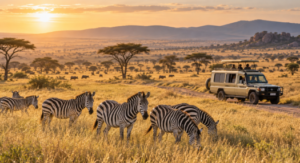
Ruaha is famous for elephant encounters. Herds may be observed moving between woodland and water sources, particularly during dry conditions.
Lions
Ruaha supports important lion populations, making predator sightings one of the major attractions of safaris here.
Leopards
Although naturally more elusive, leopards occur throughout the ecosystem.
African buffalo
Large buffalo herds can sometimes be encountered across Ruaha’s plains. TANAPA specifically highlights the park’s substantial buffalo populations.
Hippos and crocodiles
The Great Ruaha River and associated water systems provide habitat for both.
Other wildlife may include giraffes, zebras, greater kudu, impalas, jackals and numerous smaller mammals.
Birdwatching in Ruaha
Ruaha is also an outstanding destination for bird enthusiasts.
Tanzania National Parks reports more than 570 recorded bird species in the park.
The wet season can be especially rewarding for birdwatching because vegetation becomes greener and seasonal bird activity increases.
Visitors may encounter raptors, hornbills, kingfishers, storks, bee-eaters and numerous woodland species.
A professional Ruaha safari Lake Manyara operator can arrange slower game drives specifically designed for photographers and birdwatchers rather than following only the traditional big-game safari schedule.
What Makes a Ruaha Safari Different?
Ruaha’s biggest advantage is not simply the wildlife.
It is the atmosphere.
In parts of Northern Tanzania, several safari vehicles may gather around an exceptional lion or cheetah sighting.
Ruaha often feels considerably more remote.
Game drives may involve long periods exploring wilderness landscapes where wildlife encounters feel private and natural.
For honeymooners, photographers, safari enthusiasts and returning African travelers, this sense of isolation can be extremely attractive.
Lake Manyara National Park
After Ruaha’s dry wilderness, arriving at Lake Manyara National Park can feel like entering a completely different Tanzania.
The park is located approximately 125 km from Arusha, with road journeys typically taking around 2–2.5 hours depending on traffic and conditions.
Its position at the base of the Great Rift Valley escarpment gives the park a dramatic geographical setting.
Lake Manyara contains several different ecosystems within a relatively compact area.
These include:
- Groundwater forest
- Acacia woodland
- Open floodplains
- Alkaline lake
- Wetlands
- Hot springs
- Rift Valley escarpment landscapes
This ecosystem diversity supports an impressive variety of wildlife and birdlife.
Tree-Climbing Lions of Lake Manyara
One of Lake Manyara’s best-known attractions is its reputation for tree-climbing lions.
Visitors may occasionally find lions resting on broad branches.
However, travelers should understand that wildlife is never guaranteed.
A responsible safari operator will never promise that you will definitely see a tree-climbing lion.
Safari should always be approached as an exploration of a natural ecosystem rather than a controlled wildlife exhibition.
Seeing these lions is therefore an exciting possibility rather than a certainty.
Elephants at Lake Manyara
Manyara is also well known for elephants.
The combination of forests, woodland and water sources creates excellent elephant habitat.
Visitors may encounter individuals or family groups moving through vegetation, feeding alongside safari roads or appearing near woodland clearings.
These encounters can be particularly impressive because Manyara’s green forest backgrounds produce very different photographs from the dry landscapes commonly associated with East African safaris.
Lake Manyara Birdlife
Birdwatching is one of Manyara’s greatest strengths.
TANAPA records hundreds of species across its wetlands, woodland and forest environments.
Depending on water levels and season, visitors may see:
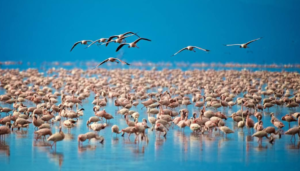
- Flamingos
- Pelicans
- Storks
- Herons
- African fish eagles
- Spoonbills
- Bee-eaters
- Hornbills
- Waterfowl
- Migratory birds
Flamingo concentrations can vary because water conditions and food availability change.
For photographers and birdwatchers, a full or carefully paced game drive can therefore be more satisfying than rushing through Manyara simply as a transfer stop.
Why You Need an Experienced Ruaha Safari Lake Manyara Operator
Combining these parks is more complicated than combining Serengeti, Ngorongoro and Tarangire.
The main reason is geography.
Ruaha belongs to Tanzania’s Southern Safari Circuit, while Lake Manyara belongs to the Northern Circuit.
That means your safari operator may need to coordinate:
- Domestic flights
- Airport transfers
- Different safari vehicles
- Accommodation reservations
- Park entry arrangements
- Guide schedules
- Luggage limits
- Connecting nights
- Ground transportation
A poorly designed itinerary can waste entire days traveling.
A carefully designed itinerary minimizes those transfers.
This makes choosing the right operator particularly important.
What Makes a Good Safari Operator?
When searching for the best Ruaha safari Lake Manyara operator, consider several factors.
1. Local Tanzania Knowledge
Choose a company that understands Tanzania rather than simply reselling safari packages internationally.
Local operators are usually better positioned to manage:
- Last-minute itinerary changes
- Flight delays
- Lodge availability
- Park logistics
- Road conditions
- Domestic flight connections
- Local guides
Local knowledge becomes especially important when combining two safari circuits.
2. Experienced Safari Guides
A safari vehicle is important, but your guide can influence your experience even more.
A knowledgeable guide should understand:
- Animal behavior
- Bird identification
- Tracks
- Predator movements
- Safari etiquette
- Photography positioning
- Park geography
- Conservation
Excellent guides also understand when to wait.
Sometimes the best safari moment comes from spending 30 minutes watching a lion pride instead of immediately driving to search for another animal.
3. Reliable 4×4 Safari Vehicles
Safari vehicles should be properly prepared for national park roads.
Look for a safari operator offering well-maintained 4×4 Land Cruisers, ideally with pop-up roofs for wildlife viewing.
Useful features can include:
- Window seats
- Charging ports
- Cooler or refrigerator
- Drinking water
- First-aid equipment
- Communication radio
- Comfortable seats
- Binoculars
Long game drives become significantly more enjoyable with a comfortable and reliable vehicle.
Private Safari or Group Safari?
For an itinerary combining Ruaha and Lake Manyara, a private safari is normally the most practical option.
Private Safari Advantages
You control:
- Departure times
- Game-drive duration
- Photography stops
- Wildlife priorities
- Meal timing
- Accommodation category
- Pace of travel
Private safaris are particularly useful for:
- Couples
- Families
- Honeymooners
- Wildlife photographers
- Birdwatchers
- Travelers with children
- Travelers with limited time
Group safaris may cost less, but combining different circuits makes scheduled group departures much harder to coordinate.
How to Travel Between Ruaha and Lake Manyara
This is one of the most important planning questions.
Because the parks are far apart, travelers generally should not treat the trip as a simple road transfer between two nearby attractions.
There are several possibilities depending on budget and available time.
Option 1: Domestic Flight + Road Transfer
This is usually the most comfortable option.
Visitors can fly between southern Tanzania and an airport that allows connections toward Arusha/Northern Tanzania, depending on available schedules.
The operator then arranges the appropriate safari vehicle and onward road transportation.
This method saves valuable safari time.
Option 2: Combination Through Dar es Salaam
Some flight schedules may require routing via Dar es Salaam.
Your safari planner should examine available flight times before confirming accommodation.
Option 3: Longer Overland Safari
Traveling extensively by road can work for travelers who have considerably more time and enjoy seeing rural Tanzania.
However, for most international visitors on a 7–10 day safari, flying selected sectors will usually create a much better itinerary.
Suggested Ruaha and Lake Manyara Safari Itinerary
Here is an example structure.
Day 1: Arrival in Tanzania
Arrive and meet your safari representative.
Depending on flight schedule, overnight in:
- Arusha
- Dar es Salaam
- Iringa
Your operator will determine the most efficient starting city based on international flight connections.
Day 2: Travel to Ruaha National Park
Fly or transfer toward Ruaha.
After arrival, meet your safari guide and begin exploring the park.
Enjoy an afternoon game drive before continuing to your lodge or tented camp.
Wildlife may include elephants, giraffes, buffalo and predators.
Day 3: Full-Day Ruaha Safari
Spend the whole day exploring Ruaha.
An early start often provides excellent wildlife conditions because temperatures are cooler and predators may still be active.
Explore river areas, plains and woodland.
Return to your accommodation in the evening.
Day 4: Another Full Day in Ruaha
Two full days make an enormous difference in a destination this large.
Rather than constantly driving long distances, you can spend time observing wildlife behavior.
Photography travelers particularly benefit from slower itineraries.
Day 5: Ruaha to Northern Tanzania
Enjoy your final morning in Ruaha before taking the appropriate flight connection toward northern Tanzania.
Transfer to Arusha, Karatu or the Lake Manyara area depending on your route.
Overnight at your selected lodge.
Day 6: Lake Manyara National Park
After breakfast, enter Lake Manyara National Park.
Explore the groundwater forest, woodland, floodplain and lakeshore areas.
Look for:
- Elephants
- Baboons
- Giraffes
- Buffalo
- Hippos
- Lions
- Waterbirds
Enjoy lunch before continuing your game drive.
Overnight around Manyara or Karatu.
Extending the Safari
Once you are already in Northern Tanzania, adding other famous destinations becomes relatively easy.
Lake Manyara + Ngorongoro Crater
Ngorongoro is a natural next destination.
A crater safari can provide opportunities for lions, elephants, buffalo, hippos and—if fortunate—black rhino sightings.
Lake Manyara + Tarangire
Tarangire is another excellent choice, particularly for travelers interested in elephants and baobab landscapes.
Lake Manyara + Serengeti
If your schedule allows, continue onward toward Serengeti National Park.
This turns the itinerary into an exceptionally comprehensive Tanzania safari combining both southern and northern wilderness.
Best Time for a Ruaha and Lake Manyara Safari
There is no single perfect month.
Your ideal season depends on what you want to see.
June to October
This period generally offers very strong wildlife viewing in Ruaha as dry conditions concentrate animals around reliable water sources.
It is also one of Tanzania’s busiest safari seasons.
Advantages include:
- Excellent wildlife visibility
- Drier roads
- Comfortable game drives
- Strong predator opportunities
It is particularly suitable for first-time safari travelers.
January to February
These months can also offer good safari conditions.
Landscapes may be greener in some areas, and birding can be excellent.
Northern Tanzania can be especially attractive at this time.
Wet Season
The greener months should not automatically be dismissed.
Ruaha’s wet season can provide lush landscapes, wildflowers and excellent birding. Tanzania’s official tourism information specifically identifies January through April as rewarding for birdwatching and green scenery in Ruaha.
Potential advantages include:
- Green landscapes
- Excellent photography
- Birdlife
- Fewer visitors in some areas
- Possible seasonal accommodation offers
The trade-off is that road and weather conditions can be more unpredictable.
Accommodation Options
A professional Ruaha safari Lake Manyara operator should provide accommodation options according to your budget rather than forcing every traveler into the same category.
Budget Accommodation
Budget safaris may use:
- Simple lodges
- Guesthouses
- Public campsites
- Basic tented accommodation
This is suitable for adventurous travelers who prioritize wildlife over luxury.
Mid-Range Accommodation
Mid-range safari lodges and tented camps usually offer a strong balance between comfort and cost.
Typical facilities may include:
- Private bathroom
- Comfortable bed
- Restaurant
- Hot shower
- Electricity
- Lounge area
This category works well for most couples and families.
Luxury Safari Camps
Luxury accommodations may offer:
- Large tented suites
- Premium dining
- Private decks
- Exceptional locations
- Swimming pools
- Personalized service
- Bush dining experiences
Ruaha is particularly attractive for luxury travelers because remote camps can create a genuine wilderness atmosphere.
How Much Does a Ruaha and Lake Manyara Safari Cost?
There is no single fixed price because many variables influence safari cost.
Your total depends on:
- Number of travelers
- Safari duration
- Accommodation level
- Domestic flights
- Season
- Private vs shared safari
- Number of parks
- Airport transfers
- Additional activities
In many cases, adding Ruaha increases transportation costs because domestic flights may be necessary.
However, travelers should compare what is included rather than focusing exclusively on the cheapest headline price.
What Should Be Included in Your Safari Price?
Before paying a deposit, request a detailed inclusion list.
A comprehensive safari package commonly covers:
- National park fees
- Safari vehicle
- Professional driver-guide
- Accommodation
- Meals during safari
- Drinking water
- Game drives
- Airport or airstrip transfers as specified
- Government taxes
Depending on the package, domestic flights may also be included.
What May Be Excluded?
Common exclusions include:
- International airfare
- Tanzania visa
- Travel insurance
- Alcohol
- Guide gratuities
- Personal purchases
- Optional activities
- Extra accommodation before or after safari
Never assume something is included simply because another company includes it.
Ask for everything in writing.
Budget Safari vs Luxury Safari
The same national parks can be experienced at very different price levels.
Budget Safari
Best for travelers focused primarily on wildlife.
Expect simpler accommodation but similar access to national park wildlife.
Mid-Range Safari
The most popular compromise.
It combines comfortable accommodation with high-quality wildlife experiences.
Luxury Safari
Designed around both wildlife and accommodation experience.
For many travelers, luxury is less about marble bathrooms and more about location, privacy, guiding and atmosphere.
Safari Photography Tips
Ruaha and Lake Manyara are superb photography destinations.
A few simple preparations can improve your results considerably.
Bring:
- Camera with telephoto lens
- Spare batteries
- Extra memory cards
- Lens-cleaning cloth
- Dust protection
- Small bean bag where practical
Ask your guide to position the vehicle with light direction in mind.
Professional guides understand that photographers sometimes need several minutes to wait for an animal to turn, move or interact.
Why Ruaha Is Excellent for Photographers
Ruaha’s open landscapes, baobabs and relative lack of vehicle congestion can be particularly valuable for photography.
Instead of competing with numerous vehicles for positioning, photographers may have more freedom to observe scenes naturally.
Elephants moving through dusty landscapes near sunset can create especially dramatic images.
Why Lake Manyara Is Excellent for Photography
Manyara provides completely different backgrounds.
Instead of only dry savannah, photographers can work with:
- Dense green forest
- Escarpment backgrounds
- Lake reflections
- Wetlands
- Flamingos
- Elephants among vegetation
Combining the two parks therefore expands the visual variety of your Tanzania safari significantly.
Family Safaris
Both destinations can work for families when the itinerary is planned correctly.
Children often enjoy:
- Elephants
- Giraffes
- Monkeys
- Hippos
- Lions
- Birdlife
However, long transfer days should be avoided where possible.
For families, domestic flights can be worth the extra cost because they reduce hours spent driving between regions.
A private vehicle is also useful because children can take breaks when necessary.
Honeymoon Safaris
Ruaha is an exceptional honeymoon destination because of its remote atmosphere.
Couples can combine secluded wilderness camps with a scenic stay around Lake Manyara or Ngorongoro.
An operator may also arrange special experiences such as:
- Private bush meals
- Romantic room setup
- Sundowners
- Luxury tented accommodation
- Private game drives
You can then add Zanzibar for a safari-and-beach honeymoon.
Ruaha, Lake Manyara and Zanzibar
One of the strongest Tanzania itineraries combines:
Ruaha + Lake Manyara + Zanzibar
This delivers three completely different experiences.
Ruaha: Remote wilderness.
Lake Manyara: Rift Valley scenery and northern wildlife.
Zanzibar: Beaches and Indian Ocean relaxation.
A typical trip may involve around 7–10 days of safari followed by 4–7 days on Zanzibar.
Questions to Ask Your Safari Operator
Before booking, ask:
- Is the safari private or shared?
- What safari vehicle will we use?
- Are park fees included?
- Are domestic flights included?
- Which accommodations are confirmed?
- Are meals included?
- What airport transfers are included?
- Will we have the same guide throughout?
- What happens if a domestic flight schedule changes?
- What cancellation terms apply?
- What luggage limits apply?
- Are taxes included?
A reliable operator should answer these questions clearly.
Red Flags When Choosing a Safari Company
Be cautious if an operator:
- Refuses to provide a detailed itinerary
- Gives unclear accommodation names
- Cannot explain transportation between Ruaha and Manyara
- Promises guaranteed wildlife sightings
- Provides dramatically lower prices without explaining why
- Avoids providing written inclusions
- Pressures you into immediate full payment
Price matters, but transparency matters more.
Final Thoughts
Choosing the right Ruaha safari Lake Manyara operator gives you the opportunity to experience two very different versions of Tanzania.
Ruaha delivers expansive wilderness, elephants, buffalo, predators, baobab landscapes and an authentic Southern Circuit atmosphere.
Lake Manyara introduces lush groundwater forests, the Great Rift Valley escarpment, elephants, hippos, prolific birdlife and the possibility of encountering tree-climbing lions.
The challenge is distance.
Because these parks belong to different safari circuits, itinerary design is critical. Domestic flights, accommodation timing and transfers should all work together efficiently.
For travelers with enough time, however, the reward is an exceptionally varied Tanzania safari.
Rather than seeing only one ecosystem, you move from the remote wilderness of southern Tanzania to the fertile landscapes of the Great Rift Valley.
And if you have additional days, Serengeti, Ngorongoro, Tarangire and Zanzibar can transform the journey into a complete Tanzania adventure.