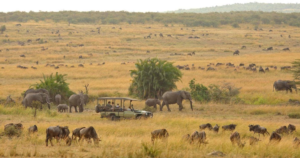
A Ruaha safari Northern Circuit itinerary offers travelers an opportunity to experience two very different sides of Tanzania. Ruaha National Park belongs to Tanzania’s Southern Safari Circuit, while Serengeti, Ngorongoro Crater, Tarangire, and Lake Manyara form the famous Northern Circuit. Combining these destinations creates an extraordinary safari filled with remote wilderness, abundant predators, spectacular scenery, and some of Africa’s most celebrated wildlife areas.
Because Ruaha is far from the Northern Circuit, the most practical combined itinerary uses scheduled domestic flights. Although this increases the overall cost, it eliminates long road transfers and gives travelers more time for game viewing.
This guide explains how to combine Ruaha with Tanzania’s northern parks, how many days you need, when to travel, and what to expect during the journey.
Is Ruaha Part of Tanzania’s Northern Circuit?
No. Ruaha National Park is part of Tanzania’s Southern Circuit. It is commonly combined with Nyerere National Park, Mikumi National Park, or the Udzungwa Mountains.
Tanzania’s Northern Circuit normally includes:
- Arusha National Park
- Tarangire National Park
- Lake Manyara National Park
- Ngorongoro Conservation Area
- Serengeti National Park
However, travelers are not limited to one circuit. Domestic flights make it possible to enjoy the open plains of Serengeti and the remote wilderness of Ruaha during the same vacation.
A combined itinerary is particularly suitable for experienced safari travelers, photographers, honeymooners, wildlife enthusiasts, and visitors who want to explore beyond Tanzania’s most popular routes.
Why Combine Ruaha with the Northern Circuit?
The Northern Circuit contains some of Tanzania’s most famous attractions. Serengeti is known for its vast plains and the Great Wildebeest Migration, while Ngorongoro Crater provides excellent opportunities to see a high concentration of wildlife within a relatively small area.
Ruaha offers a contrasting experience. It is wild, remote, and generally less crowded. Its varied landscape includes baobab trees, rocky hills, open grasslands, seasonal rivers, and woodlands.
Combining the two circuits provides several advantages.
Greater Wildlife Diversity
Ruaha sits within a transition zone where wildlife associated with eastern and southern Africa can be found. The park supports elephants, lions, leopards, buffaloes, giraffes, greater kudu, lesser kudu, sable antelope, roan antelope, and African wild dogs.
The Northern Circuit adds species and experiences such as migrating wildebeest, large zebra herds, black rhinos in Ngorongoro, tree-climbing lions around Lake Manyara, and enormous elephant herds in Tarangire.
Fewer Crowds in Ruaha
Serengeti and Ngorongoro are internationally famous and can become busy during peak travel seasons. Ruaha receives fewer visitors, creating a more private and peaceful atmosphere.
It is an excellent destination for travelers who appreciate quiet wildlife encounters and extended sightings without many other safari vehicles nearby.
Contrasting Landscapes
A combined safari may include the baobab-covered plains of Tarangire, the dramatic walls of Ngorongoro Crater, the endless grasslands of Serengeti, and Ruaha’s rugged river valleys.
The changing scenery makes every section of the journey feel different.
Excellent Predator Viewing
Both Serengeti and Ruaha are outstanding predator destinations. Serengeti is famous for lions, cheetahs, leopards, and hyenas, while Ruaha is particularly well known for its large lion population.
African wild dogs may also be seen in Ruaha, although sightings can never be guaranteed.
Recommended 10-Day Ruaha and Northern Circuit Itinerary
Ten days is a practical minimum for travelers who want to combine Ruaha with the most important Northern Circuit attractions without making the journey feel rushed.
Day 1: Arrival in Arusha
Arrive at Kilimanjaro International Airport or Arusha Airport, where your representative will meet you and transfer you to your accommodation in Arusha.
Depending on your arrival time, you can relax at the hotel or take a short tour of Arusha. Your safari consultant or guide may also conduct a briefing about the route, luggage requirements, domestic flights, and expected weather.
Overnight in Arusha.
Day 2: Arusha to Tarangire National Park
After breakfast, depart Arusha for Tarangire National Park. The drive usually takes approximately two to three hours, depending on traffic and the location of your accommodation.
Tarangire is famous for its ancient baobab trees and large elephant herds. During the dry season, the Tarangire River attracts animals from the surrounding ecosystem, producing excellent wildlife sightings.
You may encounter giraffes, zebras, wildebeest, impalas, buffaloes, warthogs, lions, leopards, and many bird species.
Enjoy a game drive and lunch inside the park before continuing to your lodge or tented camp.
Day 3: Tarangire to Ngorongoro Highlands
Begin the day with another game drive in Tarangire or depart after breakfast for the Ngorongoro Highlands.
The journey passes through rural communities and the lively town of Mto wa Mbu. Depending on your schedule, you may stop at a local market, visit a traditional village, or enjoy views over the Great Rift Valley.
Continue toward Karatu or the Ngorongoro Crater rim for dinner and an overnight stay.
Accommodation near Karatu is generally more affordable, while properties on the crater rim provide dramatic views and convenient access for the next morning’s descent.
Day 4: Ngorongoro Crater Safari
After an early breakfast, descend into Ngorongoro Crater for a game drive.
The crater is one of Africa’s most remarkable wildlife destinations. Its grasslands, forests, swamps, and permanent water sources support lions, spotted hyenas, elephants, buffaloes, zebras, wildebeest, hippos, and many gazelles.
Ngorongoro is also one of Tanzania’s best places to search for the endangered black rhino. However, rhino sightings depend on location, weather, and visibility.
Enjoy a picnic lunch before ascending from the crater and continuing toward your accommodation near Ngorongoro or southern Serengeti.
Day 5: Ngorongoro to Serengeti National Park
Travel through the Ngorongoro Conservation Area toward Serengeti National Park. The drive is part of the safari experience, with opportunities to see wildlife and enjoy expansive views.
An optional visit to Olduvai Gorge can be arranged for travelers interested in archaeology and early human history.
Enter Serengeti and continue with a game drive toward your camp. Central Serengeti, also known as the Seronera area, offers productive wildlife viewing throughout the year.
The region’s rivers and rocky kopjes attract lions, leopards, elephants, giraffes, and many other animals.
Day 6: Full-Day Serengeti Safari
Spend a full day exploring Serengeti National Park.
Your guide will select the game-viewing area according to recent wildlife movements, road conditions, and the season. Game drives may begin early in the morning when predators are active and temperatures are cooler.
The Great Wildebeest Migration changes location throughout the year. From approximately December to March, many herds gather around Ndutu and southern Serengeti for the calving season. Between June and October, the herds generally move through western and northern Serengeti, although their exact location depends on rainfall.
Migration sightings cannot be guaranteed, but Serengeti offers excellent resident wildlife throughout the year.
An optional hot-air balloon safari can be added in advance. Balloon flights normally begin before sunrise and provide aerial views of the plains, followed by breakfast in the bush.
Day 7: Serengeti to Ruaha National Park
After breakfast, transfer to a Serengeti airstrip for your scheduled flight toward Ruaha National Park.
Flight routes vary by season and airline. Some services may require a connection or aircraft change. Your safari operator should confirm the final schedule when booking.
Flying is strongly recommended because traveling between Serengeti and Ruaha entirely by road would require a considerable amount of time.
Upon landing at an airstrip in Ruaha, meet your guide and begin your first Southern Circuit game drive. Even the transfer to camp can produce sightings of elephants, giraffes, antelopes, and predators.
Arrive at your lodge or tented camp for dinner and an overnight stay.
Day 8: Full-Day Ruaha Safari
Spend the day exploring Ruaha National Park.
The Great Ruaha River and its seasonal tributaries serve as important wildlife corridors. During the dry season, animals gather near the remaining water sources, making them easier to locate.
Ruaha is especially rewarding for travelers interested in elephants and big cats. Lions are frequently observed, and the park’s varied vegetation provides suitable habitats for leopards and other predators.
Your day may include morning and afternoon game drives or one extended game drive with a picnic lunch. Some accommodations also organize guided walking safaris, subject to park regulations and availability.
Day 9: Second Full Day in Ruaha
A second full day allows you to explore another part of the park without rushing.
You might follow the river, visit open plains, search around rocky hills, or spend time photographing animals near water sources. Ruaha’s lower visitor numbers often allow guides to remain at promising sightings for longer periods.
Birdwatchers can look for hornbills, kingfishers, raptors, bee-eaters, and many other species. Ruaha supports hundreds of recorded bird species, making it rewarding during both the dry and green seasons.
Return to camp for your final evening in the wilderness.
Day 10: Ruaha to Dar es Salaam
Enjoy breakfast and, depending on the flight schedule, a final short game drive before transferring to the airstrip.
Fly from Ruaha to Dar es Salaam. From Dar es Salaam, you can connect with an international flight, continue to Zanzibar, or spend an additional night before traveling onward.
Travelers finishing with a beach holiday can fly from Dar es Salaam to Zanzibar and relax after the safari.
Best Time for a Ruaha and Northern Circuit Safari
The best travel period depends on your priorities.
June to October
The dry season is excellent for Ruaha, Tarangire, and most Northern Circuit parks. Animals gather near water, vegetation becomes thinner, and roads are generally easier to navigate.
July through October is also a popular period for visiting northern Serengeti, where travelers may have an opportunity to witness migration river crossings. Crossings are natural events and cannot be scheduled or guaranteed.
This period offers productive wildlife viewing but usually has higher accommodation prices.
December to March
This is an excellent period for visiting southern Serengeti and the Ndutu area during the wildebeest calving season.
Ruaha is greener at this time, with beautiful landscapes, abundant birdlife, and fewer visitors. Some roads can become challenging after heavy rain, and wildlife may be more dispersed because water is widely available.
April and May
These months normally receive heavier rainfall. Some seasonal camps close, and domestic flight schedules may be reduced.
However, travelers who do not mind occasional rain can enjoy green scenery, fewer vehicles, and attractive seasonal rates at participating accommodations.
How Many Days Do You Need?
A combined Ruaha and Northern Circuit itinerary generally requires at least nine or ten days.
A 12- to 14-day itinerary is more comfortable and allows travelers to add:
- Lake Manyara National Park
- Northern Serengeti
- An extra day in Ruaha
- A walking safari
- Nyerere National Park
- Zanzibar
- Cultural activities near Mto wa Mbu or Lake Eyasi
Attempting to visit too many parks within seven or eight days may result in frequent transfers and limited time for wildlife viewing.
Accommodation Options
Both circuits provide accommodation for different budgets, although a combined fly-in safari is normally best suited to mid-range or luxury travelers.
Tented Camps
Tented camps create a close connection to nature while providing comfortable beds, private bathrooms, meals, and staff service. Many are unfenced, so guests must follow camp safety instructions and may be escorted after dark.
Safari Lodges
Lodges often have permanent rooms, swimming pools, restaurants, lounges, and extensive common areas. They are suitable for families, couples, and travelers who prefer more conventional accommodation.
Mobile Camps
Mobile or seasonal camps operate near important wildlife areas, particularly along the migration route. They provide convenient access to wildlife while maintaining the atmosphere of a traditional tented safari.
What Is Usually Included?
A professionally arranged safari package commonly includes:
- Private or shared safari transportation as specified
- Professional English-speaking safari guide
- Park and conservation fees
- Accommodation stated in the itinerary
- Meals during the safari
- Drinking water in the safari vehicle
- Domestic flights stated in the package
- Airport or airstrip transfers
- Game drives and scheduled activities
Travelers should confirm whether the price includes international flights, visas, travel insurance, alcoholic drinks, optional activities, tips, and personal expenses.
Is This Itinerary Suitable for Families?
Yes, but families should consider children’s ages, domestic flight baggage restrictions, driving distances, and accommodation policies.
A private safari vehicle offers greater flexibility for families because stops and game-drive schedules can be adjusted. Some camps have minimum-age restrictions for walking safaris or do not accept very young children.
Parents should request family rooms or interconnected tents early, particularly during peak travel periods.
Packing Tips
Pack light, comfortable clothing in neutral colors such as beige, khaki, olive, and brown.
Useful items include:
- Lightweight shirts and trousers
- Warm jacket or fleece
- Comfortable closed shoes
- Sun hat and sunglasses
- Sunscreen
- Insect repellent
- Camera and spare batteries
- Binoculars
- Personal medication
- Small day bag
- Reusable water bottle
Mornings in Serengeti and Ngorongoro can be cold, while daytime temperatures in Ruaha may become hot. Dressing in layers is practical.
Soft-sided luggage is normally recommended for domestic safari flights because aircraft have limited storage space. Confirm the current baggage allowance with your safari operator before departure.
Planning Your Ruaha Safari Northern Circuit Itinerary
A Ruaha safari Northern Circuit itinerary is one of Tanzania’s most rewarding combinations. It brings together internationally celebrated destinations and a remote national park that still feels wild and uncrowded.
Serengeti offers expansive plains, predators, and seasonal migration experiences. Ngorongoro provides remarkable wildlife density inside a dramatic volcanic landscape. Tarangire contributes elephants and baobab scenery, while Ruaha completes the journey with remote valleys, diverse antelopes, impressive predators, and a peaceful atmosphere.
For the best experience, allow at least ten days, use domestic flights between circuits, and work with a Tanzania-based safari company that can coordinate vehicles, accommodations, air transfers, park fees, and seasonal wildlife movements.
With thoughtful planning, this itinerary delivers far more than a checklist of parks. It presents two distinct safari regions in one unforgettable Tanzanian adventure.