Budget Ruaha Safari Adventure
Explore Ruaha National Park’s baobab country on a guided safari built around your dates, group size and budget. Spend your game drives…
Read articleArusha City - Tanzania
Safari & Travel Tips
September 3, 2026 · 12 min read
Planning a Ruaha safari is one of the best choices for travelers seeking a quieter, wilder and more exclusive Tanzania safari experience. Far from the busier safari routes of northern Tanzania, Ruaha National Park offers enormous landscapes, impressive elephant and buffalo herds, excellent predator sightings, ancient baobab trees and the beautiful Great Ruaha River.
Ruaha National Park covers approximately 20,226 square kilometers, making it Tanzania's second-largest national park. It lies in south-central Tanzania and forms part of an enormous wilderness ecosystem.
Unlike parks where several vehicles may gather around a single lion sighting, Ruaha's remoteness can provide a much less crowded safari atmosphere. That makes careful Ruaha safari Ruaha planning particularly rewarding for honeymooners, photographers, families, repeat safari travelers and anyone searching for a more authentic African wilderness experience.
With the right itinerary, travelers can combine Ruaha with Nyerere National Park, Mikumi National Park, Udzungwa Mountains, Dar es Salaam or Zanzibar, creating an outstanding southern Tanzania safari.
Ruaha is ideal for travelers who want wildlife, dramatic landscapes and a strong sense of wilderness rather than simply ticking famous destinations off a list.
Its scenery changes between open plains, rocky kopjes, wooded hills, miombo woodland, river systems and extensive areas filled with iconic baobab trees. The Great Ruaha River and seasonal waterways play an important role in concentrating animals, particularly as the dry season progresses.
A Ruaha safari can offer:
Ruaha is particularly fascinating because wildlife associated with eastern and southern Africa overlaps in this region. Travelers therefore have opportunities to encounter species such as sable, roan, greater kudu and lesser kudu alongside familiar East African safari animals.
Wildlife is the biggest reason most visitors start researching Ruaha safari planning.
Ruaha is famous for its predators, particularly lions.
Large prides roam the river valleys, open plains and surrounding woodland. Early morning and late afternoon game drives usually provide excellent opportunities to search for lions while they are active.
The park's combination of large prey populations and huge wilderness areas makes predator encounters one of the highlights of a Ruaha safari.
Elephants are another signature species.
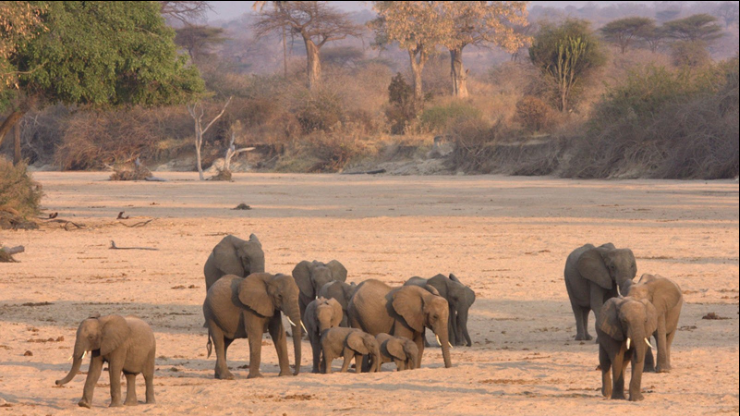
During the dry season, elephants frequently move toward river systems and remaining water sources. Watching a family group drinking, bathing or digging for water beside the Great Ruaha River can become one of the most memorable experiences of the entire safari.
TANAPA highlights the impressive dry-season gatherings of elephants and buffalo along the Great Ruaha River and seasonal sand rivers.
Leopards are present throughout Ruaha but naturally require patience to find.
Your guide may search riverine woodland, rocky areas and trees close to productive wildlife corridors.
Early mornings are particularly useful because tracks and information from other guides can help locate animals that were active overnight.
African wild dogs are among Africa's most exciting predators.
Ruaha is one of the Tanzanian destinations where travelers may have a chance of encountering packs moving through remote parts of the park. Sightings cannot be guaranteed because wild dogs cover enormous territories.
That unpredictability makes encountering them especially rewarding.
Kudu are closely associated with Ruaha.
TANAPA specifically identifies Ruaha as a destination where both greater and lesser kudu can occur.
Their elegant spiral horns make adult males particularly impressive photographic subjects.
For experienced safari travelers who have already visited places such as Serengeti or Ngorongoro, Ruaha provides opportunities to search for less frequently encountered species.
Sable and roan antelope inhabit Ruaha's woodland environments and are among the park's special sightings.
The Great Ruaha River is one of the defining features of the national park.
Although river conditions change seasonally, permanent pools and sand-river water sources provide crucial drinking areas for wildlife as conditions become progressively drier.
Elephants, buffalo, antelope, hippos, crocodiles and predators can all be associated with the river environment.
For safari photography, river locations can be particularly productive because animals often approach water repeatedly throughout the day.
During golden-hour game drives, the combination of wildlife, baobabs, riverbanks and warm light produces classic African safari scenery.
Understanding the seasons is an essential part of Ruaha safari Ruaha planning.
Ruaha can be visited throughout the year, although your experience changes substantially between dry and green seasons.
For travelers whose biggest priority is wildlife viewing, June through October is usually one of the strongest periods.
The landscape becomes increasingly dry and animals concentrate around dependable water sources.
Advantages include:
TANAPA identifies June through October as Ruaha's dry season and notes that wildlife gathers around remaining water sources.
Because June–October is also a popular safari period, booking preferred camps early is recommended. TANAPA's visitor guidance specifically recommends advance reservations during peak months.
These months can provide cooler conditions and beautiful landscapes.
Morning drives may feel chilly, so travelers should bring a warm jacket or fleece.
These are excellent months for serious wildlife viewing.
Vegetation becomes progressively thinner and animals rely more heavily on rivers and other reliable water points.
October can be extremely productive for wildlife, although temperatures rise significantly before the rains arrive.
The rainy or green season normally runs approximately from November to May.
The landscape transforms dramatically.
Dry golden plains become greener, seasonal rivers begin to flow and birdlife becomes particularly impressive.
Advantages of green-season Ruaha travel can include:
Heavy rainfall can occasionally make some tracks difficult, and a 4×4 safari vehicle is strongly recommended.
For bird enthusiasts, this period can be especially appealing.
Ruaha is one of Tanzania's most rewarding birding destinations.
TANAPA reports more than 570 recorded bird species, reflecting the park's varied habitats and location between ecological zones.
Birdwatchers can search for:
A specialized private safari is particularly useful for serious birders because your guide can spend more time at sightings without needing to follow the interests of other passengers.
For most travelers, we recommend at least three safari days.
Because Ruaha is large and relatively remote, staying several nights allows you to explore different habitats rather than rushing through the park.
Ideal for travelers with limited time.
A typical plan could be:
Day 1: Travel to Ruaha and afternoon game drive
Day 2: Full-day Ruaha game drive
Day 3: Morning game drive and departure
This works particularly well when flying.
One of the best options for first-time visitors.
Fly or drive into the park and enjoy an introductory afternoon game drive.
Explore river systems, baobab plains and predator areas.
Travel into another section of Ruaha or arrange a walking safari where available.
Enjoy a final game drive before continuing to another southern Tanzania destination.
Excellent for wildlife photographers and travelers who prefer relaxed travel.
Five days provides much more time to wait patiently around promising wildlife areas and explore quieter sectors of the park.
After breakfast, begin your journey toward Ruaha National Park.
Travelers arriving by air can fly to one of Ruaha's airstrips, while overland safaris generally approach the park through Iringa.
After arrival, enjoy lunch followed by an afternoon game drive.
Watch for elephants, giraffes, impalas, kudu and predators before reaching your accommodation.
Dinner and overnight: Ruaha lodge or tented camp.
Start early after breakfast.
Morning is an excellent time to search for lions, leopards, hyenas and other predators before temperatures increase.
Explore the Great Ruaha River, seasonal river systems, woodland and baobab plains.
Enjoy a picnic lunch inside the wilderness before continuing your game drive.
During the afternoon, watch water sources where elephants, buffalo and antelope may gather.
Return to camp around sunset.
Today can be designed around your interests.
Choose another game drive or, where regulations, location and availability permit, join an authorized guided walking safari.
Walking safaris provide an entirely different perspective.
Rather than concentrating only on large wildlife, you begin noticing:
Walking activities must be conducted under authorized guiding arrangements and in permitted areas.
Enjoy breakfast before another game drive.
Take your final photographs beneath Ruaha's dramatic baobabs before continuing toward Iringa, Dar es Salaam, Nyerere or your scheduled flight.
Access is one of the most important considerations when planning a Ruaha safari.
Flying is the fastest and most comfortable method.
Scheduled and charter flights operate to airstrips including Msembe and Jongomero, with transfers arranged through safari camps or tour operators.
Flying is particularly useful when combining:
Dar es Salaam → Ruaha → Nyerere → Zanzibar
or
Arusha → Ruaha → Zanzibar
A fly-in safari reduces driving time and allows travelers to spend more of their holiday on actual game drives.
Ruaha can also be reached by road.
TANAPA's current visitor guidance describes Ruaha as west of Iringa and indicates approximately 2–3½ hours of driving from Iringa, depending on conditions and route. A four-wheel-drive vehicle is strongly recommended, particularly during the rainy season.
An overland safari works particularly well when Ruaha forms part of a longer southern Tanzania itinerary.
Your accommodation choice strongly influences the price and style of your safari.
Ruaha offers options ranging from public camping to comfortable tented camps and luxury safari properties.
TANAPA lists public and special campsites, park accommodation and privately operated camps and lodges around areas including Mwagusi, Mdonya and Jongomero.
Best for adventurous travelers who want to prioritize wildlife and reduce accommodation costs.
A camping safari can include:
Camping provides a wonderfully immersive feeling because you remain close to nature.
Mid-range safari camps provide greater comfort while maintaining the atmosphere of sleeping in the wilderness.
Rooms typically offer proper beds and private bathroom facilities, depending on the property.
This category works particularly well for couples, families and first-time African safari travelers.
Luxury camps combine excellent locations with personalized service.
Depending on property, facilities can include:
They are excellent for honeymoons and special occasions.
There is no single price for a Ruaha safari.
Your final price depends on:
Ruaha park charges vary according to visitor category, age, vehicle and activities, and TANAPA recommends checking the current fee schedule before traveling.
Camping and road travel can keep the total cost relatively low.
Comfortable tented camps provide an excellent balance between wilderness and comfort.
Fly-in transportation, premium camps and private safari arrangements significantly increase the overall package price.
For an accurate quotation, travelers should provide:
Travel dates + number of travelers + accommodation level + number of safari days + arrival/departure city.
A private Ruaha safari is highly recommended for travelers seeking maximum flexibility.
You have your own:
A private safari is particularly valuable for photographers because you can remain at a lion, leopard or elephant sighting for considerably longer when conditions are good.
Families also benefit because driving times, meal stops and game drives can be adjusted around children.
Ruaha is outstanding for wildlife photography.
The combination of low visitor density, elephants, large predators, baobabs and river landscapes creates excellent photographic opportunities.
Consider planning at least four to five days if photography is a major priority.
Morning and afternoon game drives offer softer light, while full-day excursions allow photographers to follow wildlife behavior for extended periods.
A private vehicle is strongly recommended.
Walking through the African bush provides a completely different experience from watching wildlife from a vehicle.
Guided walking safaris help guests understand tracks, plants, birds, insects and animal behavior.
However, they operate only with appropriate authorization and guiding arrangements. TANAPA requires visitors to follow ranger instructions and specifies that walking safaris are guided activities.
Always book walking activities in advance.
One of the strongest southern Tanzania itineraries combines:
This combination provides contrasting safari environments.
Ruaha is famous for rugged wilderness, baobabs and predators, while Nyerere adds vast river and wetland habitats.
A suggested itinerary could be:
Day 1: Fly Dar es Salaam → Nyerere
Day 2: Nyerere safari
Day 3: Boat safari / game drive
Day 4: Fly Nyerere → Ruaha
Day 5: Ruaha full-day safari
Day 6: Ruaha safari
Day 7: Ruaha → Dar es Salaam or Zanzibar
This works beautifully for couples and honeymoon travelers.
Combining Ruaha and Zanzibar creates an ideal wildlife-and-beach holiday.
A typical program might include:
4 Days Ruaha Safari + 5 Days Zanzibar
Spend your first few days enjoying lion, elephant and leopard sightings before flying to Zanzibar for beaches, swimming and relaxation.
Alternatively:
Zanzibar → Ruaha Safari → Zanzibar
Domestic flights can make this combination possible without long road transfers.
Both destinations offer outstanding safari experiences, but they feel very different.
| Ruaha | Serengeti |
|---|---|
| Remote wilderness | Famous classic safari destination |
| Fewer safari vehicles | More visitors in peak regions |
| Excellent predators | Excellent predators |
| Huge elephant populations | Famous Great Migration |
| Baobab scenery | Vast open plains |
| Southern Tanzania | Northern Tanzania |
| Great for repeat visitors | Excellent first Tanzania safari |
Choose Serengeti if witnessing the Great Migration is your biggest dream.
Choose Ruaha if solitude, predators, elephants and a remote wilderness atmosphere matter more.
Many experienced travelers eventually choose both.
Pack light and practical clothing.
Recommended items include:
Early mornings during the cooler dry-season months can feel cold, while afternoons may become hot.
TANAPA also recommends sun protection, binoculars and neutral clothing.
Yes. Ruaha is visited by international safari travelers throughout the year.
However, wildlife is genuinely wild.
Visitors should never approach animals on foot without authorized guides and should never leave their safari vehicle unless the location and guide permit it.
Always follow your safari guide's instructions.
TANAPA recommends maintaining safe distances from wildlife and only leaving vehicles at designated locations.
A Ruaha safari is especially suitable for:
The wilderness atmosphere and intimate camps create an excellent romantic safari.
Combine luxury Ruaha accommodation with Zanzibar beaches.
Low traffic and excellent predator populations provide strong photography opportunities.
Ruaha offers something significantly different from Tanzania's Northern Circuit.
Private safaris allow flexible timing and vehicle use.
More than 570 recorded bird species make Ruaha particularly attractive for bird enthusiasts.
The strongest Ruaha safaris are planned around both wildlife and logistics.
Book early for June–October. Preferred camps can fill during the dry-season safari period.
Stay at least three nights whenever possible. Ruaha is too large to appreciate properly during a rushed visit.
Use a private 4×4 for photography. Flexibility greatly improves your safari.
Consider flying when time is limited. Domestic flights can save significant travel time.
Combine Ruaha with Nyerere or Zanzibar. This creates one of Tanzania's most diverse holidays.
Tell your safari consultant your priorities. Wildlife photography, birding, luxury, honeymoon travel and family safaris require different itinerary designs.
Explore Ruaha National Park’s baobab country on a guided safari built around your dates, group size and budget. Spend your game drives…
Read articleDiscover Tanzania’s untamed wilderness without exceeding your travel budget. A budget Ruaha safari adventure offers incredible wildlife encounters, spectacular landscapes, authentic African…
Read articleA Nyerere Tanzania wildlife safari offers an extraordinary opportunity to discover one of Africa's most spectacular wilderness destinations. From magnificent elephants and…
Read articleTarangire National Park sits on Tanzania’s Northern Circuit and is usually visited from Arusha. Ruaha, Nyerere and Mikumi are Southern Circuit destinations.…
Read article