

Budget Ngorongoro Crater Safari Holiday
Planning a budget Ngorongoro Crater safari holiday from Arusha? Compare a crater day trip, a two-day Tarangire and Ngorongoro safari, or a…
Read articleArusha City - Tanzania
Safari & Travel Tips
August 19, 2026 · 12 min read
Choosing a professional Serengeti safari company is one of the most important decisions when planning a Tanzania safari. The Serengeti is an enormous wilderness with different wildlife areas, seasonal migration routes, accommodation options, and park regulations. An experienced local company will help you select the right itinerary, travel season, accommodation, vehicle, and route.
A reliable safari company does much more than reserve hotels. It coordinates airport transfers, park permits, transportation, meals, professional guides, domestic flights, and emergency support. This allows you to concentrate on enjoying Tanzania’s wildlife and landscapes without worrying about the complicated logistics behind the journey.
Kilipath African Safaris organizes private and shared Serengeti adventures for solo travelers, couples, families, photographers, honeymooners, and groups. Packages can be customized according to your available time, budget, accommodation preference, and wildlife interests.
Serengeti National Park is one of Africa’s most celebrated wildlife destinations. Its open plains, rocky kopjes, rivers, woodlands, and seasonal wetlands support an extraordinary variety of animals.
During a Serengeti safari, travelers may encounter:
Wildlife sightings are never guaranteed because the animals move freely, but an experienced guide understands animal behavior, habitats, recent movements, and the best areas to explore.
A professional Serengeti safari company manages the major elements of your trip from arrival until departure.
The planning process should begin with a proper discussion about your travel dates, number of travelers, preferred comfort level, budget, and places you want to visit. The company can then recommend an itinerary suited to your expectations.
A good itinerary should clearly show:
The route should be realistic. Trying to include too many parks within a short holiday can result in long transfers and limited wildlife-viewing time.
Your operator arranges national park entry fees, conservation fees, crater service charges when applicable, and accommodation reservations. These arrangements are particularly important during Tanzania’s high travel seasons.
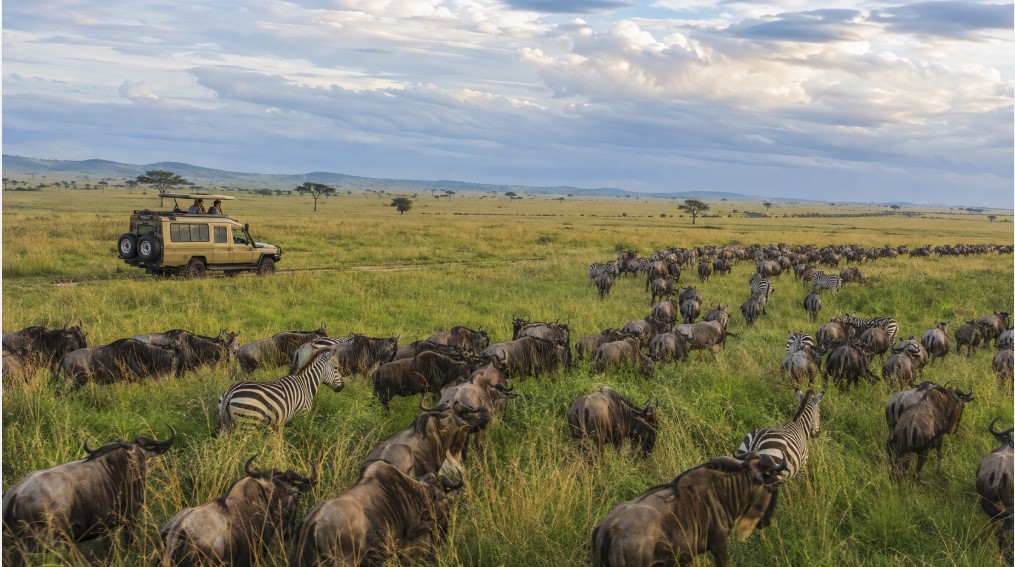
Most Serengeti road safaris use a specially prepared 4x4 Land Cruiser. A suitable safari vehicle normally includes a pop-up roof for wildlife viewing, charging facilities, seatbelts, a first-aid kit, and space for luggage.
The guide is one of the most important parts of the experience. A skilled guide should be knowledgeable about wildlife, patient during sightings, familiar with the route, and committed to responsible park practices.
A Serengeti safari company can reserve public campsites, tented camps, comfortable lodges, or luxury properties. Your accommodation choice has a significant influence on the final package cost.
Safari packages usually include meals during the journey and sufficient drinking water in the vehicle. Travelers with vegetarian, vegan, gluten-free, halal, or other dietary requirements should communicate them before arrival.
Depending on the selected package, the company may organize transportation from Kilimanjaro International Airport, Arusha Airport, or your hotel. It should also remain available if schedules, flights, or accommodation arrangements change.
A private safari provides a dedicated vehicle and guide for your party. It offers greater flexibility in departure times, stops, photography, and daily pacing.
A private safari is particularly suitable for:
Private safaris are generally more expensive for solo travelers but can become good value when the vehicle cost is shared among several people.
A shared safari allows travelers to join others in the same vehicle. This option can reduce the per-person cost and is popular among solo visitors and budget-conscious travelers.
Group safaris follow a fixed schedule, so there may be less flexibility regarding departure times, accommodation, and time spent at individual sightings. Travelers should confirm the maximum number of passengers and whether everyone receives a window seat.
A camping safari is one of the most adventurous and affordable ways to experience the Serengeti. Guests normally sleep at public campsites inside or near the conservation areas.
Camping packages may include:
Camping offers an immersive wilderness atmosphere, although it provides fewer private facilities than lodge accommodation.
Mid-range safaris combine comfort with a strong connection to nature. Accommodation generally includes proper beds, private bathrooms, hot showers, and restaurant service.
Tented camps are not the same as basic camping. Many have spacious furnished tents, ensuite bathrooms, electricity, dining areas, and beautiful wilderness locations.
A luxury safari may include premium lodges, exclusive tented camps, private vehicles, personalized service, scenic locations, and domestic flights.
Luxury does not only mean an elegant room. It may also mean fewer long drives, quieter accommodation, exceptional service, and more time in strategically selected wildlife areas.
A fly-in Serengeti safari uses a domestic flight to reach an airstrip inside or near the park. This saves road-transfer time and is useful for travelers coming from Zanzibar, Dar es Salaam, or other distant destinations.
After landing, guests are met by their driver-guide and begin the game drive. Fly-in packages are usually more expensive but work well for short holidays and premium itineraries.
The Serengeti is too large to experience fully during a short trip. Choosing the correct area depends on the season and your wildlife interests.
The Seronera region is a popular year-round wildlife area. Its combination of river valleys, open grasslands, and rocky kopjes supports many resident animals.
Central Serengeti is particularly known for predators and is a practical choice for first-time visitors. It can also be combined with Ngorongoro Crater and other northern Tanzania parks.
The southern plains and Ndutu area are especially important during the green season. Large wildebeest herds commonly gather in the broader ecosystem during the calving period.
This season can offer predator activity, newborn animals, green landscapes, and dramatic skies. Movement depends on rainfall, so exact herd locations vary.
The Western Corridor includes river systems and woodland habitats. Migration herds may pass through the region during parts of the year as they continue their circular movement through the ecosystem.
Northern Serengeti is renowned for remote landscapes and seasonal migration activity near the Mara River. It is a valuable destination during the northern migration period, but it requires careful planning because of the distance from central Serengeti and Arusha.
The Great Migration is a continuous movement of wildebeest, zebras, and other grazing animals through the Serengeti–Mara ecosystem. Their location depends mainly on rainfall, fresh grass, and water.
The migration should not be understood as a single event on a fixed date. It is a natural cycle, and conditions change from year to year.
General seasonal patterns include:
These periods are guidelines rather than guarantees. A knowledgeable Serengeti safari company will recommend the most suitable area based on your travel month.
Serengeti can be visited throughout the year. The best time depends on what you want to experience.
This period is associated with the southern plains, green scenery, and the broader calving season. It is attractive for travelers interested in young animals and predator interactions.
These months can bring heavier rainfall. Landscapes become green and beautiful, and some areas may feel quieter. Road conditions can be challenging, so experienced guides and reliable vehicles are especially important.
These are generally drier months. Wildlife often gathers near reliable water sources, vegetation may be thinner, and conditions are favorable for game viewing. It is also a popular travel period, so early reservations are advisable.
Short rains can refresh the plains and encourage seasonal wildlife movement. Visitors may enjoy greener scenery, dramatic clouds, and active birdlife.
This compact itinerary can suit travelers with limited time. However, it includes substantial driving when starting and finishing in Arusha.
A typical route may include:
This is a popular northern circuit itinerary because it combines three distinctive wildlife destinations.
An additional day creates a more relaxed experience and can provide more time in Serengeti.
A longer itinerary allows travelers to explore more than one Serengeti region or combine Serengeti with Tarangire, Lake Manyara, Ngorongoro Crater, and cultural activities.
Many travelers combine a wildlife safari with a beach holiday. The itinerary can begin with safari and finish in Zanzibar, or the beach stay can come first.
Domestic flights make the combination convenient, but baggage allowances, airstrip locations, and connection times should be checked carefully.
The cost of a Serengeti safari depends on several factors:
Budget camping is normally the least expensive arrangement. Mid-range lodges and tented camps provide additional comfort, while luxury accommodation and fly-in packages cost considerably more.
Traveling with several people can reduce the per-person cost of a private safari because vehicle and guide expenses are shared.
When comparing quotations, look beyond the final amount. A cheaper proposal may exclude transfers, drinks, certain park fees, accommodation upgrades, or domestic flights.
A standard Serengeti safari package may include:
Possible exclusions include:
Always request a written inclusions-and-exclusions section before paying a deposit.
Ask for the operator’s legal company name, registration information, tourism licence, and physical business location.
Look for reviews that describe the guide, vehicle, communication, accommodation, problem-solving, and overall organization. Do not judge a company using only a numerical rating.
Professional communication should be clear, timely, and consistent. The consultant should answer questions directly and explain anything that is not included.
The proposal should identify the itinerary, accommodations, meals, transportation, fees, and payment schedule.
Ask about the vehicle type, number of passengers, window-seat arrangements, charging facilities, and luggage limitations.
Confirm the deposit percentage, balance deadline, accepted payment methods, transaction charges, cancellation policy, and refund conditions.
A responsible company should have office support and a procedure for handling vehicle problems, medical situations, delayed flights, or accommodation changes.
Before selecting a Serengeti safari company, ask:
A comfortable vehicle is essential because Serengeti journeys involve unpaved roads and long distances. The vehicle should be professionally maintained and suitable for challenging safari conditions.
The guide should:
Photographers should request a private vehicle or a small group. This creates more space for equipment and allows additional time at important sightings.
Best for adventurous and budget-conscious travelers. Facilities are shared, and the experience is close to nature.
These provide a balance of comfort and wilderness atmosphere. Many include private bathrooms, beds, and restaurant service.
Lodges normally provide permanent buildings, ensuite rooms, lounges, restaurants, and additional facilities.
These properties may offer premium locations, spacious suites, private decks, excellent dining, and personalized service.
Accommodation inside the park reduces some transfer time, while properties outside park boundaries may offer different prices and facilities. The best option depends on the itinerary.
Pack light and prioritize practical clothing. Recommended items include:
Morning and evening temperatures can be cool, especially around Ngorongoro. Layers are more practical than one heavy outfit.
Soft-sided luggage is often easier to carry in safari vehicles and small aircraft. Travelers using domestic flights should check baggage limits before departure.
Responsible tourism helps protect wildlife and supports local communities. Visitors and operators should:
A good wildlife sighting should never come at the expense of animal welfare or visitor safety.
A local company offers direct destination knowledge and can coordinate closely with guides, lodges, park authorities, and transport providers.
Advantages may include:
The best operator is not necessarily the cheapest. Look for transparency, realistic planning, professional guides, reliable transportation, and consistent support.
Kilipath African Safaris creates carefully planned Tanzania safari experiences based on each traveler’s interests, schedule, and budget.
Travelers can request:
Our safaris use 4x4 Land Cruisers with pop-up roofs, and itineraries can be adjusted according to your preferred parks, accommodation level, and travel season.
A Serengeti safari is more than a wildlife tour—it is an opportunity to experience one of the world’s greatest natural ecosystems. The quality of your trip depends heavily on the company managing the route, vehicle, guide, accommodation, and daily logistics.
Contact Kilipath African Safaris with your travel dates, group size, preferred accommodation level, and approximate budget. Our team will prepare a personalized Serengeti safari itinerary designed around your interests.
Call to Action: Request your customized Serengeti safari quotation today and begin planning an unforgettable Tanzania wildlife adventure.
Planning a budget Ngorongoro Crater safari holiday from Arusha? Compare a crater day trip, a two-day Tarangire and Ngorongoro safari, or a…
Read articleA Tanzania safari from Zanzibar can mean a short mainland trip during your beach holiday or a complete package with flights, game…
Read articleLooking for a group Tanzania safari price from Kilipath African Safaris? A published example for our four-day shared camping safari through Tarangire,…
Read articlePair game drives on Tanzania’s mainland with a few days on Zanzibar’s coast. With Kilipath African Safaris, you can start in Arusha…
Read article

