A Serengeti safari Ruaha adventure is one of the most rewarding ways to experience two completely different sides of Tanzania.
In the north, Serengeti National Park delivers enormous open plains, exceptional predator sightings and the world-famous wildebeest migration. In southern Tanzania, Ruaha National Park offers something completely different: rugged wilderness, huge baobab trees, the Great Ruaha River, impressive elephant populations and a much quieter safari atmosphere.
Combining the two parks creates an excellent itinerary for travelers who do not simply want to visit Tanzania’s most famous destination, but also want to experience a remote and less crowded African wilderness.
This safari can be arranged as a private mid-range, luxury or customized fly-in safari, depending on your travel dates, budget and preferred accommodation.
Why Combine Serengeti and Ruaha?
Most first-time visitors concentrate entirely on Tanzania’s Northern Circuit. Serengeti certainly deserves its reputation, but Ruaha adds another dimension to the experience.
The two parks complement each other extremely well.
Serengeti gives you:
- Vast open savannah
- Large concentrations of wildlife
- Excellent lion, leopard and cheetah viewing
- Wildebeest and zebra herds
- Seasonal Great Migration experiences
- Beautiful sunrise and sunset photography
- Classic African safari landscapes
Ruaha gives you:
- Remote wilderness
- Fewer safari vehicles
- Large elephant and buffalo herds
- Excellent predator populations
- Greater and lesser kudu
- Baobab-covered landscapes
- The Great Ruaha River ecosystem
- Excellent birdwatching
- Opportunities for guided walking safaris
TANAPA describes Ruaha as one of Tanzania’s outstanding wilderness areas, covering approximately 20,226 square kilometres. The park is particularly well known for elephants, buffalo, lions, leopards, crocodiles and hippos. More than 570 bird species have also been recorded there.
Suggested 8-Day Serengeti Safari Ruaha Itinerary
Because Serengeti and Ruaha are located in different parts of Tanzania, combining flights with game drives generally gives travelers a much better safari experience than attempting long overland transfers.
Day 1: Arrival in Arusha
Arrive at Kilimanjaro International Airport or Arusha Airport, where our representative will welcome you and transfer you to your accommodation in Arusha.
Depending on your arrival time, spend the afternoon relaxing after your international flight.
Your safari guide will brief you about the journey ahead, including expected wildlife, weather conditions, luggage recommendations and flight arrangements.
Overnight:
Arusha lodge or hotel.
Day 2: Arusha to Serengeti National Park
After breakfast, begin your journey toward one of Africa’s most celebrated wildlife destinations.
Depending on the package selected, you may either:
- drive through the Ngorongoro highlands toward Serengeti, or
- take a scheduled domestic flight directly into Serengeti.
Once inside the park, your first game drive begins.
The scenery quickly opens into vast grasslands where wildebeest, zebra, giraffe, gazelle and other herbivores roam.
Predators are never far away.
Keep watch for:
- Lions
- Leopards
- Cheetahs
- Hyenas
- Jackals
- Elephants
- Buffalo
- Giraffes
- Hippos
Arrive at your lodge or tented camp in time for dinner.
Overnight:
Serengeti lodge or tented camp.
Day 3: Full-Day Serengeti Safari
Today is completely dedicated to wildlife viewing.
An early start is highly recommended because predators are often active during the cooler hours of the morning.
After sunrise, continue across the Serengeti plains searching for wildlife.
The exact direction of the game drive depends on the season.
Your guide may concentrate on river valleys, kopjes, woodland areas or migration zones depending on current wildlife movements.
A picnic lunch can be enjoyed inside the park before continuing the afternoon safari.
One of the great advantages of a private Serengeti safari Ruaha package is flexibility. Instead of rushing from one attraction to another, you can spend more time watching interesting animal behavior.
If lions are hunting or cheetahs are resting near the vehicle, your guide can remain in the area whenever park conditions allow.
Overnight:
Serengeti.
Day 4: Another Serengeti Wildlife Experience
A second full day gives you more opportunity to explore areas you may not have reached previously.
Serengeti wildlife movements are constantly changing.
One morning might begin with elephants moving between acacia trees, while another may produce a pride of lions resting beside the road.
Depending on your travel month, you may also encounter large concentrations of migratory wildebeest.
An optional hot-air balloon safari can sometimes be included at additional cost.
Flying above the plains around sunrise provides a completely different view of the ecosystem.
Return to camp afterward and continue the day’s game drive.
Overnight:
Serengeti lodge/tented camp.
Day 5: Serengeti to Ruaha National Park
After breakfast, enjoy your final Serengeti wildlife viewing before transferring to the appropriate airstrip.
Board your scheduled or charter flight toward southern Tanzania.
Because routing varies by airline and travel season, some flights may involve connections before reaching Ruaha.
Flying is generally the most practical way to combine these geographically separated destinations.
Ruaha has airstrips including Msembe and Jongomero, and scheduled or charter flights are commonly used to access the park.
Upon arrival, meet your safari guide and continue toward your lodge.
Your transfer itself may become a game drive.
Ruaha immediately feels different from Serengeti.
Instead of endless open grassland, you’ll encounter dramatic baobabs, dry riverbeds, woodland and the Great Ruaha River.
Overnight:
Ruaha National Park.
Day 6: Full-Day Ruaha Safari
Wake up in one of Tanzania’s most spectacular wilderness areas.
After breakfast, depart for a full-day game drive.
Ruaha is particularly rewarding for travelers interested in elephants and predators.
TANAPA highlights populations of buffalo, elephant, lion, leopard, crocodile and hippo within the park.
The Great Ruaha River plays an important role in wildlife viewing, particularly as conditions become drier.
Animals frequently gather close to remaining water sources, creating excellent opportunities for observation and photography.
Watch for:
- Elephant families
- Lion prides
- Leopard
- African wild dog where encountered
- Buffalo
- Greater kudu
- Lesser kudu
- Giraffe
- Zebra
- Impala
- Hippo
- Crocodile
Ruaha is particularly famous for kudu. TANAPA notes that both greater and lesser kudu can be observed in the park.
Return to your lodge during the evening.
Overnight:
Ruaha.
Day 7: Ruaha Game Drive or Walking Safari
Enjoy another day exploring Ruaha.
You can choose a traditional game drive or, where available and prearranged, include a guided walking safari.
Walking safaris provide a completely different perspective.
Instead of concentrating entirely on large animals, your ranger may explain:
- Animal tracks
- Plants
- Insects
- Bird calls
- Droppings
- Ecosystem relationships
- Smaller wildlife often overlooked from vehicles
TANAPA specifically lists guided walking safaris among the experiences available in Ruaha. They must be conducted under proper guidance and arrangements.
Later, enjoy your final sunset over the Ruaha wilderness.
Overnight:
Ruaha.
Day 8: Ruaha – Dar es Salaam / Zanzibar / International Connection
Enjoy breakfast at your camp and, flight timing permitting, a short final game drive.
Transfer to the airstrip for your scheduled flight.
Depending on your holiday plans, we can arrange onward connections toward:
- Dar es Salaam
- Zanzibar
- Arusha
- Kilimanjaro
- Other Tanzanian destinations
You can also combine your safari with several relaxing nights on Zanzibar.
Best Time for a Serengeti Safari Ruaha
There is no single perfect month because each park offers different experiences throughout the year.
June to October
This is one of the strongest periods for combining the parks.
Ruaha becomes progressively drier, causing wildlife to concentrate around rivers and water sources.
These months are also excellent for exploring different areas of Serengeti.
Travelers visiting northern Serengeti around July through October may have opportunities to follow migration herds toward the Mara River region, although migration timing can never be guaranteed.
Ruaha’s peak travel period generally falls around the dry-season months, and TANAPA recommends early accommodation reservations for June–October.
December to March
This can be excellent for travelers interested in the southern Serengeti ecosystem.
Around the wider Ndutu and southern Serengeti region, migratory herds may gather during the green/calving season.
Ruaha becomes greener during this part of the year, creating attractive scenery and excellent birding opportunities.
Some roads can become more challenging during heavier rains, so itinerary design and accommodation choice become important.
April and May
These months form part of Tanzania’s greener period.
Visitor numbers may be lower, landscapes can look dramatic and photography can be excellent.
However, rain may influence road conditions and some seasonal camps may temporarily close.
We therefore confirm accommodation and flight schedules before recommending a specific Ruaha itinerary during these months.
Wildlife in Serengeti National Park
Serengeti is one of Africa’s most wildlife-rich ecosystems.
A typical game drive can produce encounters with numerous species within a relatively short period.
Lions
Serengeti is one of Tanzania’s strongest destinations for lion viewing.
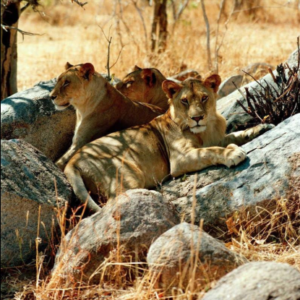
They may be found resting beneath acacias, lying on rocky kopjes or following concentrations of prey.
Cheetahs
Open plains provide suitable habitat for cheetahs.
They are often seen scanning the grasslands from termite mounds or low ridges.
Leopards
Leopards prefer more concealed environments around river valleys and woodland.
Your guide will carefully inspect large trees because leopards sometimes rest or feed above ground.
Wildebeest
Huge wildebeest numbers move around the Serengeti ecosystem throughout the year.
Their location depends heavily on rainfall and grass availability.
Zebra
Zebras frequently travel alongside wildebeest and can appear in enormous concentrations during migration periods.
Elephants
Elephants are commonly encountered in woodland areas and around permanent water sources.
Wildlife in Ruaha National Park
Ruaha delivers a more rugged wildlife experience.
The park is geographically important because wildlife species associated with both eastern and southern Africa can occur within the broader ecosystem.
Elephants
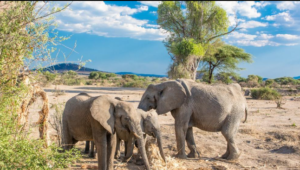
Elephants are one of Ruaha’s signature attractions.
Families can often be seen feeding among woodland or approaching river areas.
Lions
Ruaha provides particularly exciting predator encounters.
Large lion prides inhabit the ecosystem and frequently follow buffalo, antelope and other prey.
Greater Kudu
Greater kudu are among the most beautiful antelope species in Africa.
Their distinctive spiral horns and large ears make sightings especially memorable.
Buffalo
Large buffalo herds occur throughout Ruaha’s wilderness.
Predator activity can sometimes be associated with these herds.
Leopards
Woodland and riverine habitat offers excellent leopard territory.
Sightings require patience, making experienced guiding especially valuable.
Birds
Ruaha is outstanding for bird lovers.
TANAPA reports more than 570 recorded bird species, making the park an excellent destination for serious birding as well as traditional big-game safaris.
Serengeti vs Ruaha: What Is the Difference?
| Serengeti | Ruaha |
|---|---|
| Famous worldwide | More remote |
| Great Migration | Huge wilderness |
| Large open plains | Baobabs and woodland |
| Excellent cheetahs | Excellent elephants |
| Very strong predator viewing | Very strong predator viewing |
| More safari vehicles in famous areas | Generally fewer vehicles |
| Northern Tanzania | South-central Tanzania |
| Excellent first safari | Excellent repeat or wilderness safari |
Choosing both means you do not have to decide between Tanzania’s iconic safari destination and its quieter wilderness.
You experience both.
Accommodation Options
Your Serengeti safari Ruaha can be arranged according to your preferred comfort level.
Budget Safari
Budget accommodation may include simpler camps, public camping where suitable and basic lodges outside certain park areas.
However, because flights between Serengeti and Ruaha are usually required, this combination tends to cost more than a conventional Northern Circuit camping safari.
Mid-Range Safari
This is one of the most popular options.
Expect comfortable tented camps or lodges offering:
- Private bathrooms
- Proper beds
- Hot showers
- Restaurant meals
- Comfortable communal areas
- Excellent locations close to wildlife zones
Luxury Safari
Luxury packages can include premium tented camps, boutique lodges and fly-in arrangements.
Expect features such as:
- Large luxury tents or suites
- En-suite bathrooms
- Premium meals
- Private verandas
- Exceptional locations
- Personalized service
- Selected private activities
- Scenic flights between destinations
What Is Included?
A typical private Serengeti and Ruaha safari package can include:
- Professional English-speaking safari guide
- Private 4×4 safari vehicle during road-based sections
- Park entrance fees
- Game drives
- Airport transfers stated in your itinerary
- Accommodation
- Breakfast, lunch and dinner while on safari
- Drinking water
- Domestic flights listed in the package
- Government taxes and applicable tourism charges
- Emergency support during your safari
What Is Usually Not Included?
Unless specifically stated, the following may be excluded:
- International flights
- Tanzania visa
- Travel insurance
- Alcoholic drinks
- Personal expenses
- Laundry
- Optional balloon safari
- Optional walking safari where separately charged
- Tips for guides and lodge staff
- Additional accommodation before or after the booked itinerary
Always check the final quotation because inclusions depend on your selected package.
Why Choose a Private Serengeti and Ruaha Safari?
A private safari gives you significantly more flexibility than group travel.
You have your own vehicle and guide during the game-drive sections, allowing the safari to move according to your interests.
This is particularly valuable for:
Photographers
Your guide can spend longer at interesting sightings rather than moving because other travelers have different priorities.
Couples
A private safari provides more privacy and makes an excellent honeymoon experience.
Families
Departure times and rest stops can be adjusted more easily.
Wildlife enthusiasts
You can prioritize predators, birds, photography or specific species.
Is Serengeti and Ruaha Suitable for Honeymooners?
Absolutely.
In fact, this is one of Tanzania’s best combinations for couples who want something more exclusive than a standard Northern Circuit itinerary.
Imagine beginning your honeymoon watching lions and migration herds across Serengeti before flying south into Ruaha’s quiet wilderness.
Luxury tented camps can make the experience particularly romantic.
We can also combine the safari with Zanzibar, creating a complete Tanzania bush-and-beach honeymoon.
Serengeti, Ruaha and Zanzibar Combination
A popular extension could look like:
Days 1–4: Serengeti
Days 5–7: Ruaha
Days 8–12: Zanzibar
After several days of wildlife viewing, fly to Zanzibar and enjoy:
- White-sand beaches
- Indian Ocean swimming
- Stone Town
- Spice tours
- Snorkeling
- Diving
- Romantic beach resorts
This combination works especially well for honeymooners and travelers visiting Tanzania for around 10–14 days.
What Should You Pack?
For your Serengeti safari Ruaha tour, bring light and practical safari clothing.
Recommended items include:
- Neutral-colored shirts
- Lightweight trousers
- Comfortable closed shoes
- Sun hat
- Sunglasses
- Sunscreen
- Insect repellent
- Light jacket or fleece
- Camera
- Spare batteries
- Binoculars
- Personal medication
- Small backpack
- Reusable water bottle if preferred
Soft-sided luggage is particularly useful if your package includes smaller domestic aircraft because luggage restrictions may apply.
Check your specific flight allowance before departure.
Photography on a Serengeti and Ruaha Safari
These parks provide excellent but very different photographic environments.
Serengeti photography
Think:
- Golden plains
- Sunrise silhouettes
- Predator action
- Wildebeest herds
- Zebra patterns
- Dramatic skies
Ruaha photography
Think:
- Baobab trees
- Elephant families
- Lions in dry riverbeds
- Rugged landscapes
- River wildlife
- Dusty dry-season scenes
Travelers serious about photography should request a private vehicle.
This gives greater control over positioning and the amount of time spent at sightings.
How Do You Travel Between Serengeti and Ruaha?
Domestic flying is normally the practical choice.
Attempting to connect the two parks completely by road would consume substantial safari time.
Light aircraft make it possible to enjoy wildlife in the morning and transfer efficiently toward your next destination.
Ruaha is served by airstrips including Msembe and Jongomero, with scheduled and charter flight options.
Exact routing depends on the airline, day of travel and season.
How Many Days Do You Need?
We recommend approximately 7–10 days for a comfortable Serengeti and Ruaha combination.
A shorter itinerary is possible, but travelers risk spending too much of the holiday transferring instead of enjoying wildlife.
A strong itinerary normally includes:
- 3–4 nights Serengeti
- 2–4 nights Ruaha
Adding Zanzibar works particularly well for travelers with 10–14 days.
Can This Safari Include Ngorongoro Crater?
Yes.
A longer itinerary could include:
Arusha → Tarangire → Ngorongoro Crater → Serengeti → Ruaha → Zanzibar
This provides one of the most complete Tanzania safari experiences.
We usually recommend approximately 9–12 safari days when combining several major parks.
Can Families Book This Safari?
Yes.
The combination works well for families, particularly when using a private vehicle.
We can adjust:
- Accommodation
- Meal requirements
- Room configuration
- Game-drive duration
- Flight schedule
- Rest periods
Families traveling with younger children should also check individual camp age policies, especially for walking safaris.
Can Solo Travelers Book?
Yes.
Solo travelers can book a private Serengeti Ruaha safari.
However, private safari and domestic flight costs can make the per-person price higher than traveling as a couple or small group.
We can recommend the best combination based on your budget.
Why Book Serengeti Safari Ruaha With Kilipath African Safaris?
Your safari should be more than a list of national parks.
It should be carefully planned around wildlife seasons, realistic transfer times, comfortable accommodation and the type of experience you want.
With Kilipath African Safaris, we can customize your trip according to:
- Your dates
- Your budget
- Preferred accommodation level
- Wildlife interests
- Photography priorities
- Honeymoon requirements
- Family requirements
- Zanzibar extensions
- Domestic flight connections
Our goal is to create a smooth itinerary from your arrival in Tanzania until your final airport transfer.
Book Your Serengeti Safari Ruaha Adventure
If you want to experience both Tanzania’s legendary Serengeti plains and the remote wilderness of Ruaha National Park, this safari offers an exceptional combination.
Whether you are planning a honeymoon, photography safari, family holiday, luxury adventure or private wildlife journey, we can customize the itinerary around your needs.
Send us the following details to receive your personalized quotation:
- Travel dates
- Number of adults and children
- Preferred number of safari days
- Budget, mid-range or luxury accommodation
- Whether you would like Zanzibar afterward
Kilipath African Safaris can then create your personalized Serengeti safari Ruaha itinerary and price.