
Budget Ngorongoro Crater Safari Holiday
Planning a budget Ngorongoro Crater safari holiday from Arusha? Compare a crater day trip, a two-day Tarangire and Ngorongoro safari, or a…
Read articleArusha City - Tanzania
Safari & Travel Tips
September 4, 2026 · 17 min read
A Serengeti safari combined with Tanzania’s Southern Circuit offers one of Africa’s most rewarding wildlife adventures. The journey brings together the famous open plains and Great Migration of Serengeti National Park with the remote wilderness of Nyerere National Park, Ruaha National Park, and Mikumi National Park.
It is important to understand that Serengeti National Park is geographically part of Tanzania’s Northern Safari Circuit. The term “Serengeti safari Southern Circuit” usually describes an itinerary that combines the Serengeti with destinations in southern Tanzania. It can also refer to exploring the southern section of the Serengeti ecosystem, including Ndutu and the short-grass plains.
Combining the two regions is ideal for travelers who want more than a traditional safari. The Serengeti provides iconic landscapes, large predator populations, and seasonal migration activity. Southern Tanzania delivers quieter game drives, boat safaris, walking experiences, and a strong sense of untouched wilderness.
This Serengeti safari Southern Circuit travel guide explains the best destinations, travel seasons, recommended itineraries, transportation, accommodations, wildlife, and practical planning considerations.
The Serengeti and Southern Circuit offer distinctly different safari experiences. Visiting both regions creates a more complete introduction to Tanzania’s wildlife and landscapes.
In the Serengeti, travelers can enjoy:
Southern Tanzania offers:
The combination is particularly attractive to photographers, honeymooners, returning safari travelers, wildlife enthusiasts, and visitors who prefer longer private itineraries.
Tanzania’s safari destinations are commonly divided into northern, southern and western circuits.
The Northern Circuit includes:
This is Tanzania’s most famous safari region. Its parks are commonly explored by road from Arusha, although scheduled flights are also available.
The Southern Circuit generally includes:
These destinations are more spread out than those in northern Tanzania. Flights are often the most comfortable way to combine them, especially when adding the Serengeti.
The southern Serengeti is not part of Tanzania’s Southern Circuit. It is the southern portion of the Serengeti ecosystem, extending toward the Ngorongoro Conservation Area and Ndutu region.
From approximately December through March, this region becomes particularly important because large herds of wildebeest gather on the nutrient-rich short-grass plains. The calving season usually reaches its peak between late January and February, although wildlife movement depends on rainfall.
Serengeti National Park is one of Africa’s most celebrated wildlife areas. Its name comes from a Maasai expression commonly interpreted as “endless plains,” an appropriate description of its enormous grassland landscapes.
The park is divided into several wildlife-viewing regions.
Central Serengeti, also known as Seronera, is an excellent year-round destination. Permanent water sources support resident wildlife even when migratory herds are in other areas.
Common sightings include:
Central Serengeti is an excellent choice for first-time visitors because it provides reliable wildlife viewing throughout the year.
The southern plains become particularly active during the green season. Wildebeest arrive to feed on fresh grass and give birth to their young. The abundance of vulnerable calves attracts lions, cheetahs, hyenas, and other predators.
This region is recommended from December to March, with February often considered an excellent period for observing the calving season.
The Western Corridor includes the Grumeti region. Migration herds often move through this area between approximately May and July.
Travelers may see wildebeest crossing rivers, although the timing varies every year. The region is also known for crocodiles, hippos, elephants, and resident predators.
Northern Serengeti is famous for the Mara River and seasonal wildebeest crossings. The area is generally most popular from July through October.
River crossings are natural events and cannot be guaranteed on a particular day. A stay of at least three nights gives travelers a better opportunity to explore different crossing points and follow the movement of the herds.
Nyerere National Park is one of Africa’s largest protected wildlife areas. It forms part of the wider Selous ecosystem and offers a very different experience from the Serengeti.
Its landscape includes:
The Rufiji River is central to the park’s ecosystem. It supports hippos, crocodiles, waterbirds, elephants, and many other animals.
Depending on the camp, season, and location, visitors can enjoy:
Boat safaris are one of Nyerere’s greatest attractions. Guests can observe animals from the water while enjoying a peaceful perspective unavailable in most northern parks.
Possible sightings include:
Nyerere is an excellent destination for travelers who value variety, privacy, and unusual safari activities.
Ruaha National Park is known for rugged wilderness, dramatic baobab trees, seasonal rivers, and excellent predator sightings. It is one of Tanzania’s finest destinations for experienced safari travelers.
Ruaha lies in a transition zone where eastern and southern African ecosystems meet. This creates impressive habitat diversity and a rich collection of wildlife.
Ruaha may offer sightings of:
The park is especially famous for its lions. Predator encounters can be excellent during the dry season when animals gather near remaining water sources.
Ruaha is less crowded than the Serengeti, allowing visitors to spend more time at sightings without being surrounded by many vehicles.
Mikumi National Park is one of the most accessible parks in southern Tanzania. Its open Mkata Floodplain is sometimes compared with the grasslands of northern Tanzania.
Wildlife may include:
Mikumi is suitable for travelers with limited time, those beginning or ending their journey in Dar es Salaam, and visitors combining wildlife with hiking in the Udzungwa Mountains.
Although it is smaller and generally busier than Ruaha or Nyerere, it provides convenient and rewarding game viewing.
Udzungwa offers a refreshing contrast to traditional vehicle-based safaris. The park is dominated by forested mountains, waterfalls, hiking trails, endemic plants, and primates.
A popular activity is hiking to Sanje Waterfall, where visitors can enjoy forest scenery and impressive views.
Udzungwa is particularly suitable for:
It is not a typical Big Five destination. Its value lies in hiking, biodiversity, scenery, and primate observation.
The Great Migration is a continuous movement of wildebeest, zebras, and gazelles through the Serengeti–Mara ecosystem. The animals follow rainfall and fresh grazing rather than a fixed calendar.
A general seasonal guide is:
| Period | Typical Area | Main Experience |
|---|---|---|
| December–March | Southern Serengeti and Ndutu | Calving, large herds and predators |
| April–May | Central and western areas | Herd movement and green scenery |
| May–July | Western Corridor | Grumeti region and possible crossings |
| July–October | Northern Serengeti | Mara River migration season |
| October–December | Northern and central areas | Herds moving southward |
These periods are approximate. Rainfall can cause the herds to arrive earlier, remain longer, or follow different routes.
The Serengeti and Ruaha are especially strong predator destinations. Lions are regularly observed, while cheetahs prefer more open environments. Leopards are elusive but can be found around river valleys, woodland, and rocky outcrops.
Nyerere and Ruaha are also important habitats for African wild dogs. However, wild dogs travel across large territories, so sightings can never be guaranteed.
Elephants are present in both northern and southern Tanzania. Ruaha is particularly well known for elephants moving through its river systems and baobab-dominated landscapes.
Nyerere also supports significant elephant populations, while Serengeti sightings are common in central, western, and northern woodland areas.
A combined safari provides outstanding bird diversity. Travelers may see:
The green season is particularly attractive for birding because migratory species arrive and many resident birds display breeding plumage.
There is no single perfect time for every traveler. The ideal period depends on wildlife interests, preferred landscapes, budget, and tolerance for heat or rain.
The dry season is one of the best periods for combining Serengeti with Ruaha or Nyerere.
Advantages include:
This is also a popular travel period, so lodges and flights should be reserved early.
The short rains bring fresh grass and dramatic skies. Wildlife remains active, migratory birds begin arriving, and some properties offer better-value rates.
Rain usually falls in temporary showers, although conditions vary from year to year.
This is an excellent time for the southern Serengeti and Ndutu region. The landscape is green, the wildebeest calving season attracts predators, and photographic conditions can be beautiful.
Southern Circuit parks may also be green and productive, but road conditions can become more challenging after heavy rain.
These months are generally the wettest. Advantages may include:
However, some remote southern camps close seasonally, roads can become difficult, and certain flights or activities may operate on reduced schedules.
Travelers planning a combined itinerary during these months should confirm that their preferred camps are open.
Because the two safari regions are separated by long distances, a combination of driving and flying is usually most practical.
Day 1: Arrival in Arusha
Arrive at Kilimanjaro International Airport and transfer to your hotel in Arusha.
Day 2: Fly to Serengeti
Fly from Arusha to Serengeti and enjoy an afternoon game drive.
Day 3: Full-Day Serengeti Safari
Explore the plains, river valleys, and wildlife-rich areas around your camp.
Day 4: Serengeti to Dar es Salaam or Zanzibar
Fly out of Serengeti. Depending on flight schedules, spend the night in Dar es Salaam or Zanzibar.
Day 5: Fly to Nyerere National Park
Arrive at the airstrip and begin your Southern Circuit experience.
Day 6: Nyerere Activities
Enjoy a game drive and, where available, a boat safari or guided walk.
Day 7: Departure
Take a final activity before flying to Dar es Salaam or Zanzibar.
This itinerary is possible but fast-paced. Travelers who want a more relaxed experience should add one or two nights.
Day 1: Arrival in Arusha
Days 2–4: Serengeti National Park
Day 5: Travel and overnight connection
Days 6–7: Nyerere National Park
Days 8–9: Ruaha National Park
Day 10: Fly to Dar es Salaam or Zanzibar
This itinerary provides a strong balance between famous wildlife regions and remote wilderness.
Day 1: Arrival in Arusha
Day 2: Tarangire National Park
Day 3: Ngorongoro Crater
Days 4–6: Serengeti National Park
Day 7: Flight or connection to southern Tanzania
Days 8–9: Nyerere National Park
Days 10–11: Ruaha National Park
Day 12: Departure
This option is ideal for travelers visiting Tanzania for the first time who want an extensive safari.
Days 1–2: Tarangire and Ngorongoro
Days 3–6: Serengeti
Days 7–9: Nyerere or Ruaha
Days 10–14: Zanzibar beach holiday
This itinerary combines game viewing with time to relax beside the Indian Ocean.
Road travel is practical within each individual circuit.
In northern Tanzania, Serengeti is commonly combined by road with Tarangire, Lake Manyara, and Ngorongoro. In southern Tanzania, Mikumi and Udzungwa can be combined overland, while some longer itineraries continue to Ruaha.
Driving directly from the Serengeti to southern parks is usually inefficient because of the long distances involved.
Scheduled or charter flights are generally the most convenient way to connect northern and southern Tanzania.
Possible flight connections depend on the season and operating schedule. Some routes require a connection through:
Domestic safari aircraft are small, and luggage allowances are usually more restrictive than those of international airlines. Soft-sided travel bags are strongly recommended.
Travelers should confirm:
A Serengeti and Southern Circuit safari can be combined with a Zanzibar holiday. Flights may connect Zanzibar with Serengeti, Nyerere, Ruaha, Arusha, or Dar es Salaam, depending on the operating schedule.
An itinerary might begin with Serengeti, continue to a Southern Circuit park, and finish in Zanzibar. Alternatively, travelers can enjoy Zanzibar first and fly directly to Nyerere before continuing elsewhere.
Budget safaris may use:
Camping is more common on road-based Northern Circuit safaris. In remote Southern Circuit parks, fly-in safaris usually use tented camps because public camping logistics are more complicated.
Mid-range properties generally provide:
This category offers a good balance between comfort and cost.
Luxury safari accommodation may include:
Some luxury camps operate seasonally and move according to wildlife patterns.
Mobile or seasonal camps are positioned near expected migration areas. They allow travelers to stay closer to the herds during particular months.
These camps are especially popular in:
Although described as tented camps, many provide comfortable beds, private bathrooms, hot showers, and full-service dining.
Game drives are the foundation of most Tanzania safaris. A private safari vehicle offers greater flexibility over departure times, duration, and time spent at sightings.
Travelers interested in photography or less common animals should consider a private safari because shared tours follow a more structured schedule.
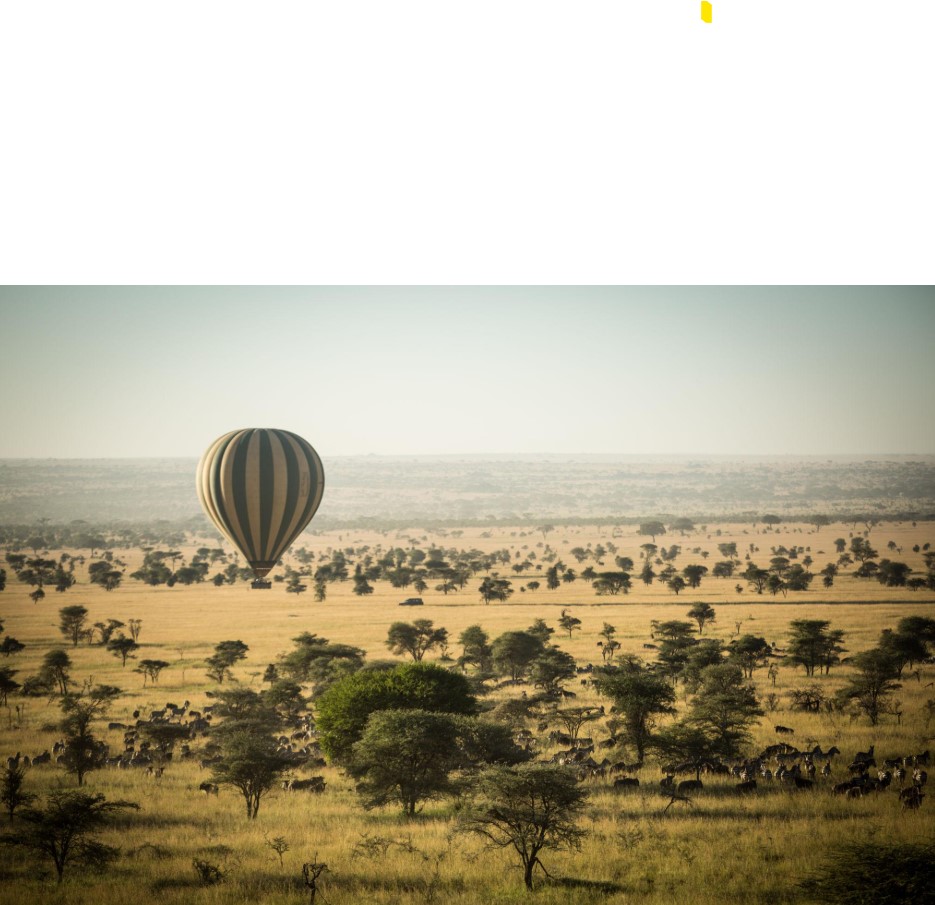
Balloon safaris provide an aerial view of the Serengeti landscape. They usually begin early in the morning and are followed by breakfast.
Availability is limited, so advance reservation is recommended, especially during peak season.
Boat safaris are a highlight of Nyerere National Park. They offer close views of hippos, crocodiles, waterbirds, and animals coming to drink.
Boat activities depend on local conditions, water levels, park rules, and the location of the selected camp.
Guided walking safaris introduce visitors to animal tracks, plants, insects, bird calls, and smaller details that are easily missed from a vehicle.
Walks are led by qualified guides and, where required, accompanied by an armed ranger. Age restrictions and operating rules may apply.
A cultural visit can add valuable human context to a wildlife itinerary. Depending on the route, travelers may visit local communities, markets, farms, or traditional villages.
Responsible visits should respect privacy, local customs, and community leadership.
The cost of a Serengeti and Southern Circuit safari depends on:
A combined itinerary is generally more expensive than visiting only the Northern Circuit because domestic flights may be required.
Budget travelers can reduce costs by:
The cheapest itinerary is not always the most efficient. Poor flight connections or distant accommodation can reduce time available for wildlife viewing. A carefully planned route often provides better overall value.
A private safari includes a dedicated vehicle and guide for your party.
It is recommended for:
Private arrangements are usually the most practical option for a complicated Serengeti and Southern Circuit itinerary.
Shared safaris can reduce costs but usually follow fixed routes and departure dates. They are more readily available on the Northern Circuit than in remote southern parks.
A shared Northern Circuit safari can sometimes be combined with a separate fly-in package to Nyerere or Ruaha. However, travelers should allow enough connection time between the two bookings.
Recommended safari items include:
Avoid packing only light summer clothing. Morning game drives can be cold, especially around Ngorongoro and during the dry season.
Soft-sided luggage is usually better for small safari aircraft. Hard-shell suitcases may be difficult to fit into limited luggage compartments.
Visitors should consult a qualified travel-health professional before departure. Recommendations may depend on the traveler’s medical history, countries visited before entering Tanzania, and the specific safari route.
General precautions include:
Travel insurance should ideally cover medical emergencies, evacuation, trip cancellation, lost luggage, and delays.
Responsible tourism helps protect wildlife and support surrounding communities.
Travelers can contribute by:
A good safari is not measured only by how close the vehicle gets to an animal. Patient and respectful viewing often produces better behavior, photography, and memories.
Both the Serengeti and Southern Circuit offer exceptional photography.
For better results:
A private vehicle is especially valuable for serious photographers because it allows more control over positioning and time.
Yes, but the itinerary should be designed carefully.
Families should consider:
A fast itinerary involving several flights may be tiring for young children. Staying longer in fewer destinations often creates a more enjoyable family experience.
A Serengeti and Southern Circuit safari is an excellent honeymoon option. The combination offers iconic wildlife, remote camps, private dining possibilities, beautiful sunsets, and opportunities to finish the trip in Zanzibar.
Honeymooners may consider:
The quiet atmosphere of Ruaha or Nyerere can be especially romantic.
Adding every famous destination can create an exhausting itinerary. It is usually better to explore a smaller number of parks properly.
Northern and southern Tanzania are separated by considerable distances. Flights, transfers, and connections must be included in the schedule.
A camp may be located far from the expected migration activity. Accommodation should be selected according to the month and desired wildlife experience.
Migration crossings cannot be scheduled. Staying several nights in the correct area increases the chance of seeing one but never guarantees it.
Small aircraft have limited storage. A soft bag is normally more convenient and may be required.
A cheaper camp located far from wildlife areas can lead to long daily drives and less time observing animals.
A combined circuit deserves at least seven days, while ten to fourteen days provides a more comfortable experience.
A Serengeti safari Southern Circuit itinerary combines Tanzania’s most famous wildlife landscapes with some of its quietest and most remote wilderness areas. The Serengeti offers open plains, predators, and the Great Migration, while Nyerere and Ruaha provide fewer vehicles, varied habitats, and activities such as boat and walking safaris.
The key to a successful journey is thoughtful planning. Travelers should choose the correct Serengeti region for their travel month, allow enough nights in each park, account for domestic flight schedules, and avoid trying to include too many destinations.
For most visitors, a journey of ten to fourteen days provides the best balance. It allows sufficient time for wildlife viewing while preserving a relaxed pace. Adding Zanzibar at the end creates a complete Tanzania holiday combining adventure, wilderness, culture, and beach relaxation.
Safari & Travel Tips

Safari & Travel Tips Nov 24, 20263 min read
Planning a budget Ngorongoro Crater safari holiday from Arusha? Compare a crater day trip, a two-day Tarangire and Ngorongoro safari, or a…
Read article
Safari & Travel Tips Nov 24, 20265 min read
A Tanzania safari from Zanzibar can mean a short mainland trip during your beach holiday or a complete package with flights, game…
Read article
Safari & Travel Tips Nov 24, 20262 min read
Looking for a group Tanzania safari price from Kilipath African Safaris? A published example for our four-day shared camping safari through Tarangire,…
Read article
Safari & Travel Tips Nov 24, 20263 min read
Pair game drives on Tanzania’s mainland with a few days on Zanzibar’s coast. With Kilipath African Safaris, you can start in Arusha…
Read article