Lake Manyara vs. Nyerere Safari Prices | Tanzania Guide
A Lake Manyara safari can cost USD 150–220 per person for a shared day trip from Arusha. A published example of a…
Read articleArusha City - Tanzania
Safari & Travel Tips
September 5, 2026 · 14 min read
Lake Manyara National Park may be smaller than Serengeti National Park or the Ngorongoro Conservation Area, but it offers one of Tanzania’s most varied safari experiences. Within a relatively compact area, travelers can encounter elephants, giraffes, hippos, baboons, zebras, buffaloes and hundreds of bird species.
Choosing an experienced Tanzania safari Lake Manyara operator makes it easier to combine these attractions into a comfortable and well-organized adventure. Kilipath African Safaris arranges private and shared safaris, accommodation, professional guides, airport transfers and customized itineraries covering Lake Manyara and Tanzania’s other Northern Circuit destinations.
Whether you want a one-day safari from Arusha, a family holiday, a photographic journey or a complete Serengeti and Ngorongoro itinerary, Lake Manyara can add remarkable variety to your Tanzania experience.
Lake Manyara National Park lies at the base of the Great Rift Valley escarpment in northern Tanzania. It is approximately two hours from Arusha and is conveniently positioned near Tarangire National Park, Ngorongoro Crater and the road leading toward Serengeti National Park.
The park is famous for its contrasting habitats. A single game drive may pass through groundwater forest, open floodplains, acacia woodland, marshes and areas overlooking the alkaline lake.
This diversity supports an impressive selection of wildlife.
Lake Manyara is especially suitable for travelers who want:
Although wildlife movement can change with water levels and seasonal conditions, the park’s scenery, forests and birdlife make it valuable throughout the year.
The right safari operator handles much more than transportation. A reliable operator coordinates park permits, accommodation, meals, transfers, vehicle preparation, guiding and the daily timing of your itinerary.
Kilipath African Safaris is based in Arusha, the main gateway to Tanzania’s Northern Safari Circuit. Our local position allows us to coordinate Lake Manyara safaris alongside Tarangire, Ngorongoro, Serengeti and other attractions.
When planning your safari with our team, you receive:
Every traveler has different priorities. Some guests want an affordable camping safari, while others prefer comfortable tented camps or luxury lodges. Families may require shorter driving periods, while photographers may want a private vehicle and extra time at wildlife sightings.
We adapt the itinerary to your preferred travel dates, group size, budget, accommodation category and interests.
A knowledgeable guide can transform a simple game drive into a meaningful wildlife experience. Our English-speaking guides understand animal behavior, park routes and the habitats found around Lake Manyara.
Private safari guides can adjust the pace of the day according to your interests and, when arranged in advance, guides speaking other languages may be available.
Safaris are conducted in customized 4×4 Land Cruisers with pop-up roofs. The elevated roof offers a broad view of the landscape and helps guests photograph animals comfortably.
Vehicles normally include charging facilities, drinking water, seatbelts, a first-aid kit and communication equipment. Window seats are arranged for guests on shared safaris.
Our team helps with airport transfers, recommended arrival times, luggage guidance, accommodation arrangements and optional activities. We remain available throughout the journey in case the itinerary requires operational assistance.
Lake Manyara’s mixture of forest, grassland and wetland attracts many different species. Sightings are never guaranteed because these are wild animals, but visitors may encounter the following:
Lake Manyara is well known for elephants. The groundwater forest and surrounding vegetation provide food and shelter, and guests may see individuals or family groups moving through the trees.
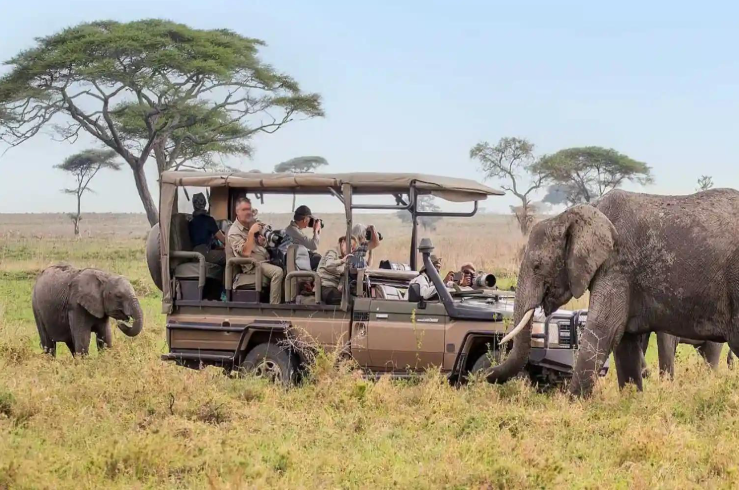
Elephants can sometimes pass close to safari vehicles, offering an opportunity to observe their feeding habits and social interactions. Your guide will maintain an appropriate distance and explain their behavior.
The park became famous for reports and photographs of lions resting in trees. Lions may climb to escape insects, enjoy a breeze, rest or gain a better view, although researchers continue to discuss the reasons for this behavior.
Tree-climbing lions are not guaranteed on every visit. Finding them depends on luck, timing and the location of the pride. Nevertheless, the possibility remains one of Lake Manyara’s best-known attractions.
The park’s forest supports large troops of olive baboons. Travelers may observe them grooming, feeding, playing or moving across the road.
Blue monkeys and vervet monkeys also inhabit the forest. These primates add movement and character to the shaded sections near the park entrance.
Hippos spend much of the day in water or mud to stay cool. The hippo pool area provides opportunities to watch them resting, surfacing and occasionally interacting.
Binoculars are helpful because hippos may be some distance from the official viewing area.
Giraffes can be seen feeding on acacia trees or walking across open areas. Plains zebras and wildebeest may gather on suitable grazing land, while African buffaloes are often found close to water and grass.
Other possible sightings include warthogs, impalas, waterbucks, bushbucks, dik-diks and several smaller mammals.
Leopards inhabit the park but are naturally secretive and difficult to find. Hyenas, jackals and other predators may also be present.
An experienced guide looks for tracks, alarm calls and changes in the behavior of prey animals, but no responsible operator should promise a specific predator sighting.
Lake Manyara is one of northern Tanzania’s most rewarding destinations for bird enthusiasts. More than 400 bird species have been recorded in and around its varied ecosystems.
Depending on the season and water conditions, visitors may see:
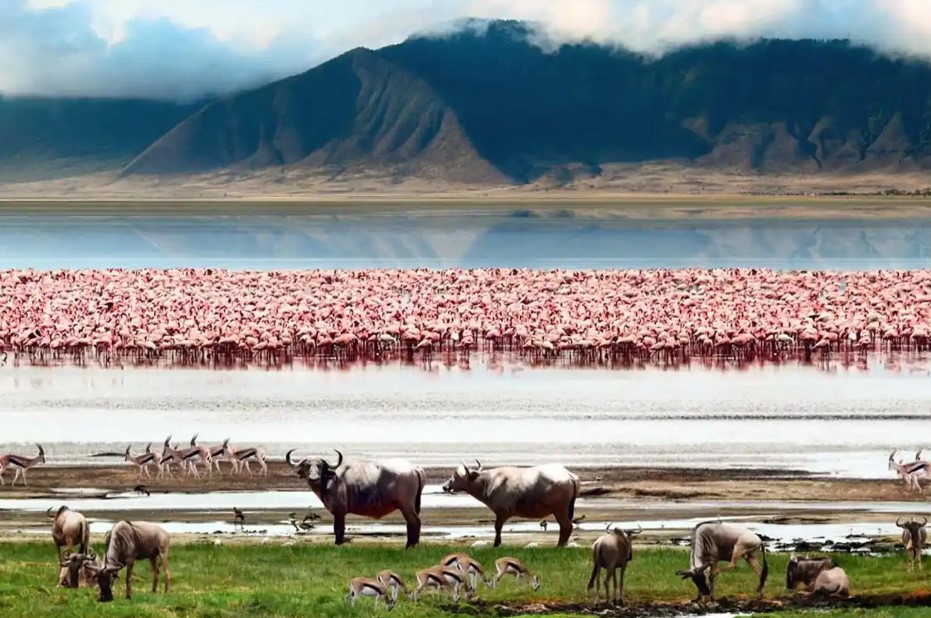
Flamingo numbers can vary considerably. Changes in water levels, salinity and food availability influence where these birds gather, so travelers should not expect the same concentrations throughout the year.
A private birdwatching safari allows more time to stop, identify species and photograph them without following a fixed group schedule.
As a Tanzania safari Lake Manyara operator, we can include the park in several types of itinerary.
A day trip is ideal for travelers with limited time in Arusha or nearby areas. The day normally begins with an early pickup, followed by the drive toward Mto wa Mbu and the park entrance.
After completing entry formalities, you explore the park with your guide and stop for lunch at an authorized picnic site. The safari concludes with the return journey to Arusha.
A typical day trip includes:
Exact inclusions should always be confirmed in the written quotation.
This short itinerary combines the forest and wetland habitats of Lake Manyara with the wildlife-rich floor of Ngorongoro Crater.
A common itinerary is:
Day 1: Arusha to Lake Manyara for a game drive, followed by accommodation in Mto wa Mbu or Karatu.
Day 2: Early descent into Ngorongoro Crater, game viewing and return to Arusha.
This combination is appropriate for travelers who want contrasting landscapes without spending several days on the road.
A three-day Northern Circuit safari may include:
Tarangire is known for elephants, seasonal wildlife concentrations and baobab trees. Lake Manyara contributes forest, wetland and birdlife, while Ngorongoro offers a concentrated game-viewing experience inside the crater.
Travelers with four or more days can combine Lake Manyara with Serengeti National Park and Ngorongoro Crater. This is one of the most rewarding options because it includes several distinct habitats.
Longer itineraries provide more time in Serengeti, where distances are greater and wildlife experiences vary between the central, northern, western and southern regions.
A private safari provides a dedicated vehicle and guide. It is particularly valuable for:
Private guests can usually spend more time at sightings, adjust departure times and discuss daily priorities directly with their guide.
A shared safari is a cost-effective alternative for solo travelers and couples. Guests join other travelers in the same vehicle, generally following a fixed program.
Kilipath African Safaris uses safari vehicles carrying a limited number of travelers so each guest can have a window seat. Shared safaris are normally conducted in English and offer less flexibility than private trips.
Here is an example of how Lake Manyara can fit into a complete Northern Circuit itinerary.
Depart Arusha after breakfast and drive to Tarangire. Spend the day exploring its river system, baobab landscape and wildlife habitats.
During the dry season, the Tarangire River becomes an important water source, attracting elephants and numerous other animals.
After the game drive, continue to your lodge, tented camp or campsite.
Travel to Lake Manyara after breakfast. Enter the park and explore the groundwater forest, woodland and open areas near the lake.
Look for elephants, baboons, giraffes, buffaloes, hippos and birds. Enjoy lunch during the safari before continuing to your accommodation.
Drive through the Ngorongoro highlands and continue toward Serengeti. The journey is scenic, passing Maasai landscapes before reaching the open plains.
Begin game viewing after entering the park and continue toward your accommodation in or near Central Serengeti.
Start early for a morning game drive in Serengeti. Predators and other wildlife are often active during the cooler hours.
Later, travel toward the Ngorongoro Conservation Area and spend the night near the crater rim, in Karatu or at another accommodation specified in your itinerary.
Descend into Ngorongoro Crater for a game drive. The crater supports lions, buffaloes, zebras, wildebeest, hippos, hyenas and many other species. Black rhinos may occasionally be observed at a distance.
After lunch, ascend from the crater and return to Arusha.
A Lake Manyara safari can cost USD 150–220 per person for a shared day trip from Arusha. A published example of a…
Read articlePlanning a Tanzania safari that combines Lake Manyara National Park and Nyerere National Park is an excellent way to experience the country's…
Read articlePlanning an unforgettable African wildlife adventure from Zanzibar? Understanding the Tanzania safari package Zanzibar price is an important first step toward choosing…
Read articlePlanning an African wildlife adventure? Understanding the group Tanzania safari price is an important step toward choosing an affordable and unforgettable safari…
Read article