

Budget Ngorongoro Crater Safari Holiday
Planning a budget Ngorongoro Crater safari holiday from Arusha? Compare a crater day trip, a two-day Tarangire and Ngorongoro safari, or a…
Read articleArusha City - Tanzania
Safari & Travel Tips
October 7, 2026 · 4 min read
A Tanzania safari in the Serengeti brings you into a landscape of open grasslands, rocky outcrops, and remarkable wildlife. Whether you are planning your first African safari, a honeymoon, or a photography holiday, choosing the right itinerary helps you make the most of your visit.
This FAQ guide answers common questions about Serengeti safaris, from deciding when to travel to choosing accommodation and arranging your trip with Kilipath African Safaris.
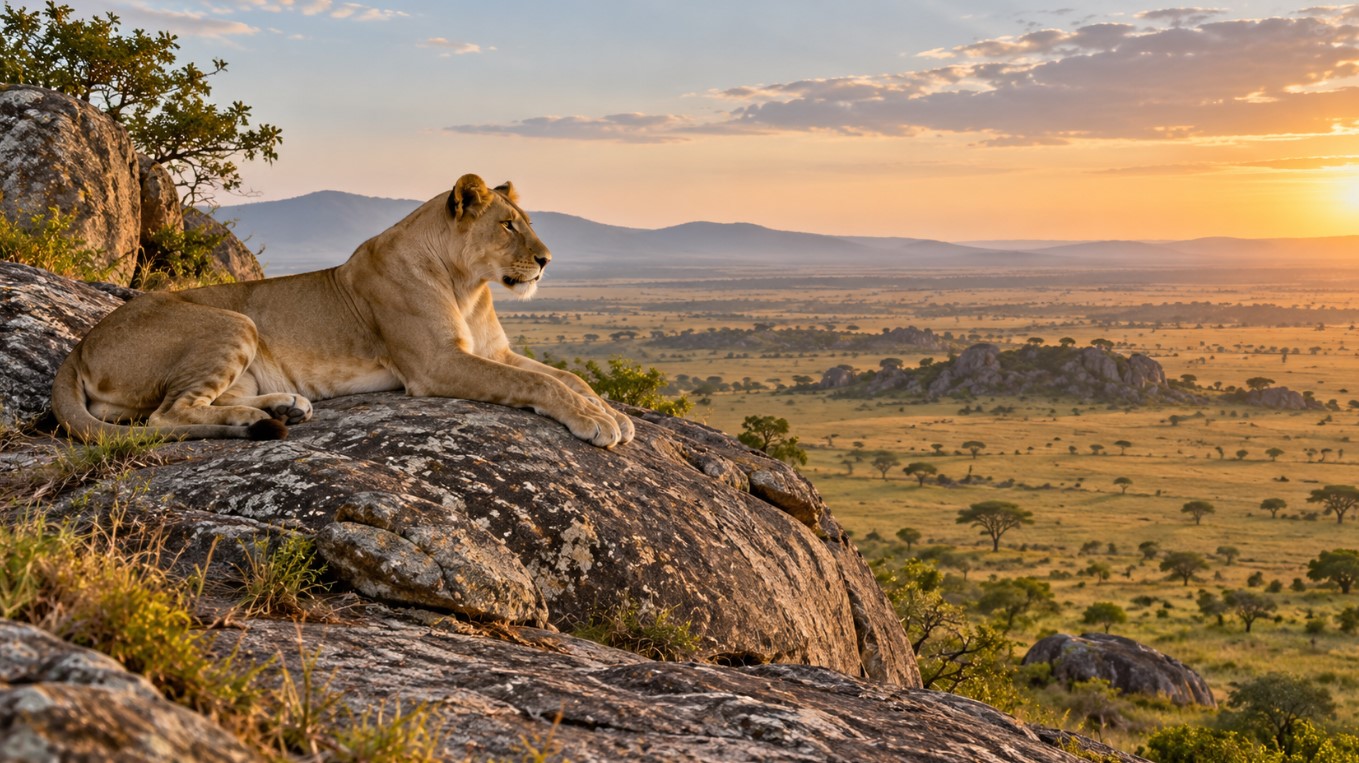
Serengeti National Park is famous for its vast plains and the Great Migration. It also supports lions, leopards, elephants, buffaloes, rhinos, and diverse birdlife. Game drives give travelers opportunities to explore these habitats with a guide, while sunrise balloon safaris offer a different perspective over the landscape. Wildlife sightings depend on natural conditions and cannot be guaranteed.
The experience extends beyond individual animal sightings. Watching herds move across the plains, listening to wildlife around camp, and spending time away from busy towns are memorable parts of a Serengeti holiday.
Your ideal travel dates depend on what you hope to experience. TANAPA highlights June to October for dry-season migration viewing and January to February for the calving season.
When planning a migration safari, choose accommodation according to the expected location of the herds. Their movements follow rainfall and grazing conditions, so a seasonal itinerary provides a useful starting point rather than a fixed wildlife schedule.
Share your dates and interests with your consultant before selecting a camp. A convenient location can be more valuable than choosing a property solely for its appearance.
You can plan a safari that focuses on the Great Migration, but seeing particular events requires suitable timing, location, and some luck.
Large herds, newborn calves, and river crossings represent different migration experiences. River crossings are especially unpredictable: animals may gather near a river without crossing while you are there.
Allowing several nights in the appropriate area gives your guide more opportunities to search for the herds. Avoid building your entire holiday around a guaranteed crossing, because no operator can promise one.
For a private safari, consider at least two or three nights in the Serengeti if your schedule allows. This gives you time for game drives between arrival and departure and reduces the pressure to cover everything quickly.
A shorter visit can suit travelers combining several destinations. A longer stay may suit photographers or travelers focusing on migration viewing.
Discuss actual game-drive time when comparing itineraries. A day that includes a long transfer offers a different experience from a full day exploring the park.
Accommodation choices include public camping, tented camps, and lodges.
Camping suits travelers comfortable with simpler facilities and shared bathrooms. Tented camps can provide a comfortable safari setting, with facilities varying between properties. Lodges may offer additional amenities such as swimming pools and larger communal areas.
Before booking, confirm the bathroom arrangement, room configuration, electricity availability, and location. Your accommodation should support the route and wildlife experience you want.
The price depends on your travel dates, number of guests, safari duration, accommodation, transport, and included activities.
Shared camping generally offers a lower-cost option, while private trips and higher-end accommodation increase the budget. Domestic flights and balloon safaris also affect the total.
Request an itemized quotation showing park charges, accommodation, meals, guide services, transfers, and optional extras. Comparing these details helps you understand what each package offers.
Yes. A proposed five-day private itinerary could include:
Accommodation and daily timing should be confirmed before booking. Zanzibar can also be added for a beach stay.
Bring comfortable clothing, a warm layer, closed shoes, sunscreen, a hat, a camera, and spare batteries. Binoculars are useful for distant wildlife. Confirm your luggage allowance if domestic flights are included.
Send your travel dates, number of travelers, preferred accommodation, arrival details, and approximate budget. Mention whether you prefer a shared or private safari and whether migration viewing is a priority.
Kilipath African Safaris can then prepare a proposed itinerary and quotation, helping you choose a Serengeti experience that fits your time, interests, and budget.
Planning a budget Ngorongoro Crater safari holiday from Arusha? Compare a crater day trip, a two-day Tarangire and Ngorongoro safari, or a…
Read articleA Tanzania safari from Zanzibar can mean a short mainland trip during your beach holiday or a complete package with flights, game…
Read articleLooking for a group Tanzania safari price from Kilipath African Safaris? A published example for our four-day shared camping safari through Tarangire,…
Read articlePair game drives on Tanzania’s mainland with a few days on Zanzibar’s coast. With Kilipath African Safaris, you can start in Arusha…
Read article

