

Budget Ngorongoro Crater Safari Holiday
Planning a budget Ngorongoro Crater safari holiday from Arusha? Compare a crater day trip, a two-day Tarangire and Ngorongoro safari, or a…
Read articleArusha City - Tanzania
Safari & Travel Tips
August 31, 2026 · 18 min read
A Tanzania safari tour Arusha holiday is one of the easiest and most rewarding ways to discover the spectacular wildlife of northern Tanzania. Arusha is widely regarded as the gateway to Tanzania's famous Northern Safari Circuit, making it an excellent starting point for trips to Tarangire National Park, Lake Manyara, Ngorongoro Crater and Serengeti National Park.
Whether you have only two or three days available or want a complete week-long wildlife adventure, starting your safari from Arusha gives you excellent flexibility.
From the moment your safari vehicle leaves Arusha, Tanzania's landscapes begin changing dramatically. Busy streets gradually disappear into farmland, villages and open countryside. As you continue toward the national parks, acacia woodland, baobab trees, volcanic highlands and sweeping savannah take over.
A well-planned Arusha safari holiday can include elephants walking beneath giant baobab trees in Tarangire, lions resting on the Serengeti plains, enormous herds of wildebeest, hippos submerged in pools and an unforgettable descent into the Ngorongoro Crater.
Arusha itself also provides access to Arusha National Park, located only about 32 km from town according to Tanzania National Parks. Its landscapes include Mount Meru, Momella Lakes and Ngurdoto Crater.
For travelers searching for wildlife, scenery, comfortable accommodation and authentic Tanzanian experiences in one journey, Arusha is an excellent place to begin.
Arusha has become Tanzania's principal northern safari hub because of its location between many of the country's best-known natural attractions.
Rather than spending an entire day reaching wildlife areas, travelers can comfortably begin exploring destinations such as Tarangire or Arusha National Park shortly after leaving the city.
Arusha also works well for longer itineraries extending toward Ngorongoro and Serengeti.
This makes a Tanzania safari tour from Arusha suitable for couples, families, solo travelers, groups, honeymooners and photographers.
Another major advantage is flexibility.
Your safari can be designed around:
Rather than treating Arusha simply as an overnight stop, travelers can also explore the surrounding region before beginning their main safari.
A Tanzania safari holiday starting in Arusha provides access to an exceptional combination of national parks and conservation areas.
Tarangire is approximately a two-hour drive from Arusha under normal conditions and is often the first wildlife destination on a northern Tanzania safari.
The park is particularly famous for its large elephant population, ancient baobab trees and beautiful river landscapes.
During the dry season, wildlife concentrates around the Tarangire River and remaining water sources, creating excellent viewing opportunities.
Animals commonly encountered include:
Leopards and cheetahs also occur, although sightings are never guaranteed.
Tarangire's scenery is completely different from the vast grasslands of Serengeti, which makes combining these destinations particularly rewarding.
Choose Tarangire if you enjoy elephants, baobab landscapes, birdlife and peaceful game drives.
For first-time visitors, including one full day here creates excellent variety before continuing toward Serengeti.
For many travelers, Serengeti is the highlight of a Tanzania safari.
The endless grasslands have become synonymous with African wildlife and support extraordinary populations of both predators and herbivores.
A Serengeti game drive may reveal:
The region is also associated with the Great Wildebeest Migration, although the animals continually move according to rainfall and grazing conditions.
This is important because there is no single permanent "migration location."
Different areas of Serengeti become important during different months.
Central Serengeti, particularly the Seronera region, offers excellent wildlife viewing throughout much of the year.
Its combination of grassland, rivers and rocky kopjes supports significant predator populations.
It is particularly suitable for travelers visiting Serengeti outside a specific migration period.
Northern Serengeti becomes especially attractive during the July-to-October migration period when large herds may move through the region.
River crossings can occur during this season, although wildlife movements and crossing times cannot be guaranteed.
Southern Serengeti and the wider Ndutu ecosystem become particularly important during the green season, especially from approximately December through March.
January and February are particularly popular because large herds gather around the southern plains during the calving season.
The Ngorongoro Crater provides one of Tanzania's most concentrated wildlife experiences.
Your safari normally begins high on the crater rim before descending toward the floor for a game drive.
The scenery alone is spectacular.
Forests surround portions of the crater wall while grasslands, wetlands and lakes cover the floor.
Wildlife can include:
Rhinos remain wild animals and therefore sightings cannot be guaranteed, but Ngorongoro is one of northern Tanzania's important areas for encountering them.
The crater combines particularly well with Serengeti.
Travelers often spend several days exploring Serengeti before staying near Ngorongoro and descending into the crater the following morning.
Lake Manyara offers a completely different ecosystem from Serengeti and Tarangire.
The park lies below the dramatic Great Rift Valley escarpment and includes groundwater forest, woodland, open areas and lake habitat.
Wildlife can include elephants, giraffes, buffalo, zebras, baboons and numerous bird species.
Lake Manyara is especially convenient when building shorter safari itineraries because of its location between Arusha and the Ngorongoro highlands.
However, travelers with limited time sometimes prioritize Tarangire, Serengeti and Ngorongoro instead.
Your final itinerary should therefore reflect your travel dates, wildlife priorities and available days rather than simply trying to include every park.
Arusha National Park is one of the easiest wildlife destinations to visit from Arusha.
TANAPA describes it as being around 32 km from Arusha town and approximately 40 km from Kilimanjaro International Airport.
Despite being smaller than Serengeti or Tarangire, the park offers remarkable ecological variety.
Highlights include:
Mount Meru dominates the landscape and rises to approximately 4,566 meters.
Its forested slopes form an impressive backdrop for game drives and walking activities.
The Momella Lakes attract waterbirds and provide beautiful views across the park.
TANAPA identifies canoeing and birdwatching at the lakes among the park's activities.
Ngurdoto is a volcanic crater surrounded by lush vegetation.
Viewpoints around the rim offer attractive landscapes and opportunities to observe animals on the crater floor.
Arusha National Park is one of Tanzania's notable places for observing black-and-white colobus monkeys.
TANAPA also records more than 450 bird species within the park.
Unlike many traditional game-drive experiences, guided walking activities can be arranged in designated areas of Arusha National Park.
Walking through the African landscape with an authorized ranger offers a completely different perspective from watching wildlife inside a vehicle.
A five-day itinerary provides an excellent introduction to northern Tanzania without feeling excessively rushed.
After breakfast, your professional safari guide collects you from your Arusha hotel.
You'll receive a safari briefing before driving toward Tarangire National Park.
Once inside the park, raise the pop-up roof of your safari vehicle and begin your first real African game drive.
Expect beautiful baobab landscapes and excellent opportunities to observe elephants, giraffes, zebras and antelope.
Predators such as lions may also be encountered.
Enjoy lunch during your safari before continuing your afternoon game drive.
Later, drive to your selected lodge or tented camp for dinner and overnight.
Main experience: Elephants, baobabs and your first Tanzania game drive.
After breakfast, travel through the Ngorongoro highlands toward Serengeti.
The journey itself is beautiful, with dramatic highland landscapes gradually opening toward the plains.
After entering Serengeti National Park, begin your game drive while traveling toward your camp.
Wildlife encounters may begin almost immediately.
Zebras and wildebeest frequently graze across the plains while lions, cheetahs, hyenas and other predators patrol the ecosystem.
Arrive at your camp in the evening for dinner.
Main experience: Entering the legendary Serengeti wilderness.
Wake early for one of the most exciting days of your Tanzania holiday.
Morning is often a productive wildlife-viewing period because temperatures are cooler and many animals remain active.
Your guide will select game-drive areas based on recent animal movements and local conditions.
Safari is unpredictable by nature.
Instead of following a fixed wildlife checklist, your guide reads tracks, listens to radio communications and uses local knowledge to locate interesting sightings.
You may spend time watching:
A picnic lunch may be enjoyed inside the park before continuing your afternoon exploration.
Return to your Serengeti accommodation before or around sunset, depending on park regulations and your itinerary.
Main experience: Full immersion in Serengeti wildlife.
Enjoy another morning game drive in Serengeti.
This additional wildlife time is valuable because no two game drives are identical.
After lunch, begin traveling toward Ngorongoro.
The scenery changes again as the open plains gradually transition into volcanic highlands.
Arrive at your lodge or camp in the late afternoon or evening.
If your accommodation sits near the crater rim, the views can be particularly dramatic.
Enjoy dinner and prepare for an early start.
Main experience: Final Serengeti game viewing and Ngorongoro highlands.
Wake early, enjoy breakfast and drive toward the crater entrance.
Descend into Ngorongoro Crater for a spectacular morning game drive.
The crater contains an extraordinary variety of wildlife within a relatively compact area.
Your guide searches for lions, elephants, buffalo, zebras, wildebeest, hippos and, with luck, rhinos.
After several hours exploring the crater, stop for lunch at an appropriate picnic area.
Later, ascend the crater wall and begin driving back toward Arusha.
Arrival is normally during the late afternoon or early evening depending on road conditions and your exact schedule.
Your Tanzania safari tour Arusha holiday concludes with drop-off at your hotel or another agreed location.
Different travelers need different safari lengths.
Ideal for travelers with limited time.
A popular combination is:
Day 1: Tarangire
Day 2: Ngorongoro Crater
This provides two dramatically different ecosystems in a short itinerary.
Possible combinations include:
Option One
Option Two
The second option involves longer driving but prioritizes Tanzania's most famous wildlife destinations.
A balanced option may include:
Day 1: Tarangire
Day 2: Serengeti
Day 3: Serengeti
Day 4: Ngorongoro Crater
This works especially well for travelers wanting Serengeti without committing to a longer itinerary.
Five days gives you additional breathing room.
A classic route includes:
Tarangire → Serengeti → Serengeti → Ngorongoro → Crater → Arusha.
This is one of the best options for first-time safari travelers.
Six or seven days allow slower travel, additional game drives and more comfortable pacing.
You might include:
Longer safari holidays can also be specifically designed around seasonal wildebeest migration movements.
A private safari from Arusha gives you your own 4x4 safari vehicle and professional guide.
This provides greater flexibility than most scheduled group departures.
You can control:
Private safaris are especially valuable for honeymooners, families and photographers.
For photographers, having fewer passengers also provides easier access to both sides of the vehicle when wildlife appears unexpectedly.
Families benefit because children can rest when needed without having to follow the preferences of unrelated travelers.
Couples enjoy more privacy and flexibility.
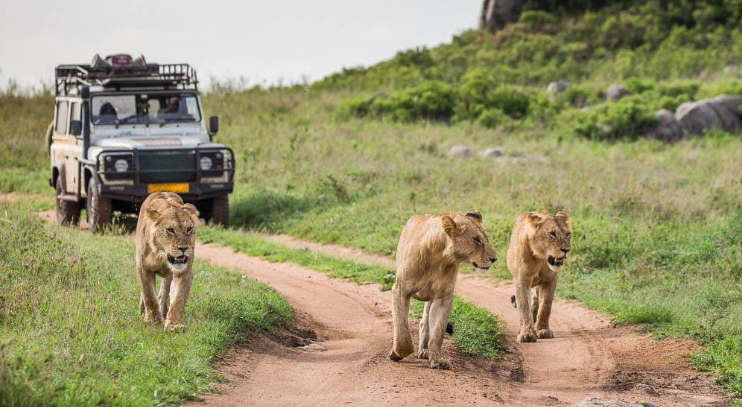
Most northern Tanzania safaris use specially modified 4x4 Land Cruisers.
A good safari vehicle typically includes:
The pop-up roof is especially important.
During game drives, passengers can stand safely inside the vehicle while observing and photographing wildlife.
When traveling between wildlife areas, the roof remains closed.
Your accommodation can significantly influence the overall cost and style of your Arusha safari holiday.
Budget camping offers the closest connection to the natural environment.
Public campsites normally provide shared toilets and showers.
Tents, sleeping mattresses and other camping equipment can be included depending on your safari package.
A safari chef may travel with camping groups to prepare meals.
This is particularly popular among adventurous travelers and backpackers.
Mid-range accommodation provides more comfort while maintaining an authentic safari atmosphere.
Rooms or safari tents generally offer:
Many tented camps are located directly inside or near wildlife areas.
Hearing lions, hyenas or other animals from the safety of your tent at night can become one of the most memorable parts of your trip.
Luxury safaris combine wildlife experiences with premium lodging.
Properties may feature:
Luxury options are particularly popular for honeymoons and anniversary trips.
Exact inclusions vary according to your package, but many Tanzania safari tours include:
Official Tanzania Tourism Board package information similarly lists items such as safari vehicles, guides, park fees, game drives, meals, accommodation and transfers among common package inclusions.
Unless your itinerary specifically states otherwise, exclusions may include:
Always review your final safari quotation carefully before confirming.
Tanzania offers wildlife viewing throughout the year.
However, different months provide different advantages.
This is Tanzania's main dry season.
Vegetation becomes thinner and animals frequently gather around permanent water sources.
The period is popular for:
July through September is particularly popular and accommodation should ideally be booked well in advance.
Short rains can create greener landscapes.
These months may provide attractive photography conditions while visitor numbers can be lower than the busiest high-season weeks.
Wildlife remains present throughout the northern circuit.
This is an excellent period for southern Serengeti and Ndutu.
Large wildebeest herds generally gather across the southern ecosystem during the calving season.
Predator activity can also be exciting because lions, cheetahs and hyenas follow concentrations of prey.
These are generally wetter months.
The landscape becomes beautifully green and there may be fewer safari vehicles.
Some remote camps close temporarily, while others remain open and offer attractive seasonal rates.
Road conditions may occasionally make particular routes slower.
Tanzania is home to the famous Big Five:
However, no ethical safari operator should guarantee wildlife sightings.
These are wild animals moving freely through enormous ecosystems.
Elephants and buffalo are commonly encountered in several northern Tanzania parks.
Lions are frequently observed in Serengeti and Ngorongoro.
Leopards are more elusive.
Rhinos are among the hardest to locate, although Ngorongoro offers an important opportunity.
A safari should be appreciated for the complete ecosystem rather than just five species.
Watching a cheetah hunt, giraffe drinking, elephant family interacting or thousands of wildebeest moving across the plains can be equally extraordinary.
The Great Migration involves enormous numbers of wildebeest accompanied by zebras and other grazers moving through the Serengeti-Mara ecosystem.
Approximate seasonal patterns include:
Southern Serengeti and Ndutu.
Herds gradually begin moving toward central and western regions.
Movement often progresses toward western and northern areas.
Northern Serengeti becomes especially important, with possible Mara River crossings.
Herds generally begin moving south again as seasonal rainfall patterns change.
These movements are natural and can shift from year to year.
For this reason, migration itineraries should be based on your exact travel dates.
One of Tanzania's greatest advantages is the ability to combine safari with an Indian Ocean beach holiday.
After several days exploring Serengeti, Tarangire and Ngorongoro, fly to Zanzibar for relaxation.
A popular itinerary might include:
Day 1: Arusha arrival
Day 2: Tarangire
Day 3: Serengeti
Day 4: Serengeti
Day 5: Ngorongoro
Day 6: Fly to Zanzibar
Days 7-10: Zanzibar beach holiday
This combination works particularly well for honeymoons.
You experience adventurous safari days first, followed by a relaxed beachfront ending.
Arusha is also conveniently positioned for travelers combining safari with a Mount Kilimanjaro trek.
You can schedule the safari:
Before Kilimanjaro – allowing you to relax and enjoy wildlife before your climb.
Or:
After Kilimanjaro – providing a rewarding celebration after completing the trek.
Travelers with additional time can then continue to Zanzibar.
A complete Tanzania holiday could therefore combine:
Kilimanjaro + Safari + Zanzibar
within one trip.
Avoid packing too heavily.
Useful items include:
Ngorongoro mornings can feel surprisingly cold because of the elevation, so a warm layer is highly recommended.
Temperatures generally rise significantly after sunrise.
Visa requirements depend on nationality.
Tanzania Immigration currently states that tourists who require an Ordinary Visa generally pay USD 50, while U.S. passport holders traveling for tourism are directed to the Multiple Visa category at USD 100. Travelers should verify the current requirement for their nationality directly with Tanzania Immigration before travel because rules can change.
The official eVisa terms also state that applicants should hold passports with at least six months of validity and an unused visa page.
Do not rely exclusively on older travel blogs for visa information.
International travelers typically use Kilimanjaro International Airport (JRO).
From there, private transfers can take you to Arusha.
Arusha Airport (ARK) primarily serves domestic and regional flights, including connections used by travelers going between northern Tanzania and Zanzibar.
When planning your itinerary, provide your tour operator with:
This helps coordinate your airport transfer correctly.
For most international visitors, arriving at least one day before safari is wise.
International flights can be delayed.
Baggage can occasionally arrive late.
Travelers may also feel exhausted after long flights.
Spending one night in Arusha allows you to:
Trying to connect directly from an international flight into a multi-day safari can make the first day unnecessarily stressful.
Yes.
A private Tanzania safari can be an excellent family holiday.
Children often enjoy identifying animals from the safari vehicle and learning from experienced guides.
Private safari arrangements are particularly useful because families can control the pace.
You can include:
For younger children, avoid excessively long driving days whenever possible.
A slower itinerary usually produces a better family experience.
Few destinations combine adventure and romance like Tanzania.
Imagine waking in a luxury tent to distant lion calls, watching sunrise over Serengeti, enjoying dinner beneath the stars and then ending your holiday on Zanzibar's beaches.
Honeymoon safaris can include:
A private safari also gives couples more flexibility to stay longer at sightings or return to camp earlier when they prefer.
A balloon flight over Serengeti is one of the most memorable optional upgrades available on selected itineraries.
Flights generally take place around sunrise.
Seeing rivers, grasslands and wildlife from above provides a completely different perspective from vehicle game drives.
Balloon experiences must normally be booked in advance because capacity is limited.
They are optional and usually not included in the standard safari price.
Your holiday does not need to consist entirely of wildlife.
Depending on your itinerary, additional experiences can include:
These activities can provide context about everyday Tanzanian life and complement the national-park experience.
Safari prices vary significantly.
The primary factors include:
Private vehicle costs are divided among passengers.
As a result, two travelers usually pay more per person than four or six travelers traveling together.
Budget camping costs considerably less than luxury tented camps.
Longer trips require additional:
Serengeti and Ngorongoro itineraries often cost more than shorter Tarangire or Manyara trips because of distance and additional fees.
July-October and late December can be particularly expensive because accommodation demand is high.
A shared safari divides operational expenses among unrelated travelers.
A private safari costs more but provides significantly greater flexibility.
For the most accurate figure, request a personalized quote based on your dates, group size and preferred accommodation level.
The national parks themselves do not "sell out," but the best accommodation does.
This becomes especially important during:
Popular camps in Serengeti may become unavailable months before travel.
Booking earlier gives you:
Last-minute safaris are still possible, but you may need more flexibility regarding accommodation.
Working with an experienced Tanzania-based safari operator can simplify logistics significantly.
Local operators understand:
Your safari should not simply look good on paper.
It must also work logistically.
For example, booking a beautiful lodge far away from the next day's destination can create unnecessary driving and reduce wildlife viewing time.
Good itinerary planning balances comfort with geography.
A Tanzania safari tour Arusha holiday offers far more than simply seeing animals.
It is waking before sunrise while the African bush slowly comes alive.
It is watching elephants quietly cross beneath ancient baobab trees.
It is seeing a lion emerge through golden Serengeti grass.
It is descending hundreds of meters into Ngorongoro Crater and discovering an extraordinary natural world below.
It is listening to stories from your safari guide as landscapes change from highland forest to endless plains.
And eventually, it is returning to Arusha carrying photographs and memories that will stay with you long after the journey ends.
Whether you are planning a budget camping adventure, private mid-range safari, luxury honeymoon, family holiday or Tanzania safari and Zanzibar combination, your itinerary can be customized around your schedule and expectations.
The best safari is not always the itinerary containing the greatest number of parks.
It is the itinerary that gives you enough time to experience each destination properly.
Send us:
✓ Your travel dates
✓ Number of travelers
✓ Number of safari days
✓ Preferred accommodation — budget, mid-range or luxury
✓ Any special activities you want to include
From there, we can create a personalized Tanzania safari itinerary from Arusha designed around your travel style.
Explore Tarangire. Discover Serengeti. Descend into Ngorongoro. Experience Tanzania from Arusha.
Planning a budget Ngorongoro Crater safari holiday from Arusha? Compare a crater day trip, a two-day Tarangire and Ngorongoro safari, or a…
Read articleA Lake Manyara safari can cost USD 150–220 per person for a shared day trip from Arusha. A published example of a…
Read articleA Tanzania safari from Zanzibar can mean a short mainland trip during your beach holiday or a complete package with flights, game…
Read articleLooking for a group Tanzania safari price from Kilipath African Safaris? A published example for our four-day shared camping safari through Tarangire,…
Read article

